
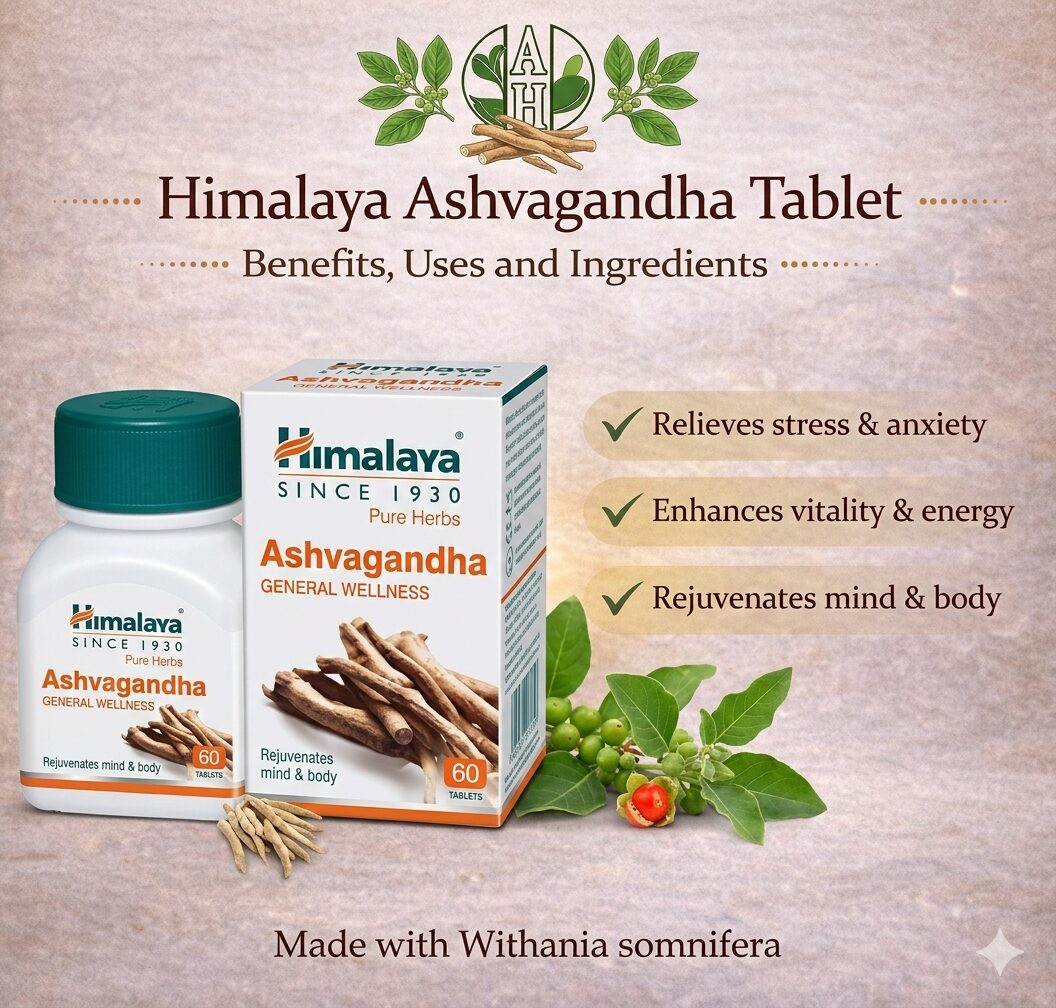
Himalaya Ashvagandha – Benefits, Uses and Ingredients
In the ancient Ayurvedic tradition, few herbs command the respect and scientific curiosity that Ashvagandha does. Often called the “Indian ginseng,” this adaptogenic root has been used for over 3,000 years to restore vitality, calm the mind, and strengthen the body at a systemic level. But Ashvagandha is not merely a stress herb or a wellness supplement. It is a Rasayana—an herb that rejuvenates tissues, enhances resilience, and supports longevity.
Himalaya Ashvagandha is a standardized herbal formulation designed to deliver the benefits of this classical root in a consistent, clinically studied form. Unlike raw powders or unstandardized extracts, this preparation aims to preserve the therapeutic spectrum of Ashvagandha while ensuring predictable potency and absorption.
Understanding why this herb remains one of the most researched Ayurvedic plants today requires understanding both what Ashvagandha is and how it influences the nervous, endocrine, immune, and musculoskeletal systems simultaneously.
What Is Himalaya Ashvagandha?
Ashvagandha (Withania somnifera) is a small shrub belonging to the Solanaceae family. The medicinal part is primarily the root, though leaves are also used in some traditional preparations. In Sanskrit, “Ashva” means horse and “Gandha” means smell—referring to the root’s distinctive aroma and the belief that it imparts horse-like strength and vitality.
Himalaya Ashvagandha is a herbal supplement developed by The Himalaya Drug Company, known for its standardized herbal extracts. The formulation uses Ashvagandha root extract standardized to specific withanolide content, ensuring consistent therapeutic activity.
Unlike crude powders, standardized extracts provide measured bioactive compounds, improving reliability for long-term use. The result is a concentrated, reproducible adaptogenic formulation that aligns traditional Ayurvedic wisdom with modern phytopharmacology.
The Ayurvedic Perspective on Ashvagandha
In Ayurveda, Ashvagandha is classified as:
- Rasayana (rejuvenative)
- Balya (strength-promoting)
- Vajikarana (vitality-supporting)
- Medhya (brain-supporting)
- Nidrajanana (sleep-promoting)
It balances Vata and Kapha dosha while mildly increasing Pitta when used excessively. This balancing action explains its broad systemic benefits—from calming the nervous system to strengthening muscles and immunity.
Ashvagandha is traditionally used in chronic weakness, fatigue, nervous disorders, age-related decline, and convalescence after illness.
Active Components and Mechanism of Action
Ashvagandha does not act through a single compound. Its therapeutic effects arise from a complex phytochemical matrix that influences multiple biological pathways.
1. Withanolides
These steroidal lactones are the primary active compounds responsible for:
- Adaptogenic effects
- Anti-inflammatory activity
- Neuroprotective properties
- Hormonal modulation
2. Alkaloids
Including withanine and somniferine, these compounds contribute to:
- Nervous system calming
- Sedative and anxiolytic properties
- Cognitive support
3. Saponins
Support:
- Immune modulation
- Anti-fatigue activity
- Cellular membrane protection
4. Polyphenols and Antioxidants
Provide:
- Free radical scavenging
- Anti-aging support
- Tissue protection
The synergy of these compounds explains why Ashvagandha cannot be reduced to a single isolated molecule without losing its holistic benefits.
Key Ingredient in Himalaya Ashvagandha
Ashvagandha Root Extract (Withania somnifera)
This is the sole primary ingredient. The root extract is standardized to a defined percentage of withanolides, ensuring consistent therapeutic potency.
Traditional actions of Ashvagandha root include:
- Nervine tonic
- Anti-stress adaptogen
- Strength and vitality enhancer
- Immune-supportive Rasayana
- Hormonal balancing herb
Himalaya uses controlled extraction methods to preserve bioactive compounds while removing impurities, ensuring safety and efficacy.
Health Benefits of Himalaya Ashvagandha
1. Stress Reduction and Adaptogenic Support
Ashvagandha is one of the most powerful natural adaptogens known.
How it works:
- Modulates cortisol levels (the primary stress hormone)
- Regulates the hypothalamic-pituitary-adrenal (HPA) axis
- Enhances stress resilience at a cellular level
Traditional indications:
- Chronic stress
- Anxiety and nervous tension
- Mental fatigue
- Burnout and overwork
Unlike sedatives, Ashvagandha does not blunt cognitive function. Instead, it improves stress tolerance while preserving mental clarity.
2. Nervous System and Brain Health
Ashvagandha is classified as a Medhya Rasayana, meaning it nourishes brain tissue and supports cognitive function.
Benefits include:
- Improved memory and learning capacity
- Neuroprotective antioxidant effects
- Reduced neuroinflammation
- Support for nerve regeneration
Traditionally used in:
- Memory decline
- Nervous weakness
- Post-illness neurological recovery
- Age-related cognitive changes
Modern research suggests Ashvagandha may support synaptic plasticity and protect neurons from oxidative damage.
3. Sleep Quality Improvement
Ashvagandha has mild sedative and anxiolytic properties without dependency risk.
Mechanism:
- Calms the central nervous system
- Reduces stress-induced insomnia
- Enhances sleep onset and sleep quality
Traditionally used in:
- Insomnia
- Restless sleep
- Nervous agitation before bedtime
Unlike synthetic sleep aids, it supports natural sleep architecture rather than forcing sedation.
4. Muscle Strength and Physical Performance
Ashvagandha is a classical Balya herb.
Benefits:
- Improves muscle mass and strength
- Enhances physical endurance
- Reduces exercise-induced muscle damage
- Supports recovery after physical exertion
Traditionally used by:
- Athletes and laborers
- Individuals recovering from illness
- Elderly experiencing muscle weakness
Clinical studies show Ashvagandha supplementation may increase lean muscle mass and reduce fatigue.
5. Hormonal Balance and Vitality
Ashvagandha influences endocrine function through adaptogenic mechanisms.
Traditional actions:
- Supports thyroid balance
- Enhances adrenal function
- Nourishes reproductive tissues (Shukra Dhatu)
- Supports vitality and energy levels
Used in:
- Chronic fatigue
- Hormonal imbalances
- General weakness and low energy
6. Immune System Support
Ashvagandha is considered an immunomodulator.
Benefits:
- Enhances immune cell activity
- Reduces chronic inflammation
- Improves resistance to recurrent infections
Traditionally used in:
- Chronic infections
- Weak immunity
- Recovery after prolonged illness
7. Anti-inflammatory and Joint Support
Ashvagandha contains compounds that reduce inflammatory markers.
Benefits:
- Joint comfort support
- Reduction of inflammatory responses
- Tissue repair and recovery
Traditionally used in:
- Joint stiffness
- Chronic inflammatory conditions
- Musculoskeletal discomfort
8. Anti-aging and Rejuvenation (Rasayana Effect)
As a Rasayana herb, Ashvagandha supports:
- Cellular regeneration
- Antioxidant protection
- Tissue nourishment
- Longevity support
It is traditionally used in rejuvenation therapies to improve overall vitality and slow age-related decline.
How to Use Himalaya Ashvagandha
General Dosage Guidelines
- Capsules/Tablets: As directed on the product label or by a qualified practitioner
- Typical adult dose: 1–2 capsules or tablets once or twice daily
Dosage varies based on age, constitution, and health goals.
Anupana (Adjuvant) in Traditional Use
In Ayurveda, Ashvagandha is often taken with:
- Warm milk (for strength and nervous system support)
- Honey (for vitality and immunity)
- Ghee (for rejuvenation and tissue nourishment)
- Warm water (for general wellness)
The adjuvant enhances absorption and directs the herb to specific tissues.
Precautions and Contraindications
Who Should Use with Medical Guidance
- Pregnancy and breastfeeding
- Thyroid disorders
- Autoimmune conditions
- Individuals on sedatives or hormonal medications
- Children and elderly with chronic illness
Ashvagandha is generally well tolerated, but individualized assessment is recommended for long-term use.
Potential Side Effects
When used correctly:
- Generally safe and well tolerated
- Mild gastrointestinal upset in sensitive individuals
- Excessive sedation at very high doses
Side effects are rare when taken at recommended dosages.
Frequently Asked Questions
1. Is Himalaya Ashvagandha safe for daily use?
Yes, when taken at recommended doses, it is generally safe for long-term use. It has a long history of traditional use and modern clinical research supporting its safety profile.
2. How is this different from raw Ashvagandha powder?
Standardized extracts ensure consistent withanolide content, better absorption, and predictable therapeutic effects compared to crude powders, which vary in potency.
3. How long does it take to see results?
Initial calming and sleep benefits may appear within 1–2 weeks. Strength, immunity, and cognitive benefits develop over 4–12 weeks with consistent use.
4. Can it be taken with other supplements or medicines?
Generally yes, but spacing doses and consulting a practitioner is advisable, especially with sedatives, thyroid medications, or hormonal therapies.
5. Is it addictive or sedative?
No. Ashvagandha supports natural stress adaptation and sleep without dependency or cognitive dulling when used appropriately.
Conclusion
Himalaya Ashvagandha represents a bridge between classical Ayurvedic Rasayana therapy and modern standardized herbal supplementation. It is not merely a stress-relief capsule or energy booster. It is a systemic adaptogen that strengthens resilience, calms the mind, nourishes tissues, and supports longevity.
What distinguishes Ashvagandha from many modern wellness supplements is its multi-system action. It does not target a single symptom; it strengthens the body’s capacity to adapt, repair, and thrive.
Used consistently, responsibly, and with individualized guidance, Ashvagandha offers a depth of benefits that few herbs can match—rooted in thousands of years of Ayurvedic tradition and increasingly validated by modern research.
Medical Disclaimer:
This article is for educational and informational purposes only. Himalaya Ashvagandha is not intended to diagnose, treat, cure, or prevent any disease. Individuals with medical conditions, pregnant or breastfeeding women, and those taking medications should consult a qualified healthcare professional before use. Individual results may vary.

Add comment