
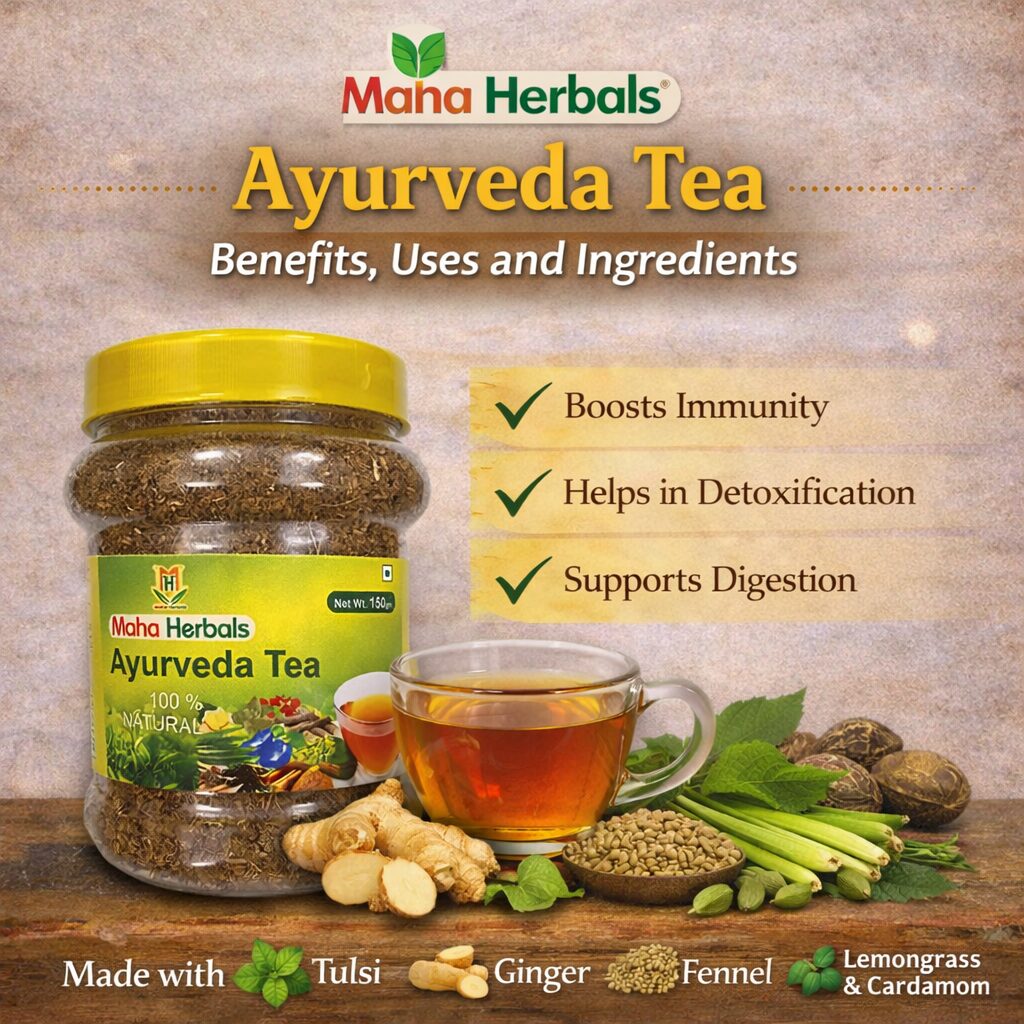
Maha Herbal Ayurveda Tea – Benefits, Uses and Ingredients
Ayurvedic herbal teas have been used for centuries as part of daily wellness routines in India and other parts of the world. These herbal blends are traditionally prepared using medicinal herbs, spices, roots, and leaves that support digestion, immunity, detoxification, and overall vitality. Maha Herbal Ayurveda Tea is one such herbal formulation designed to provide daily wellness support through a blend of classical Ayurvedic herbs.
In Ayurveda, herbal drinks are considered an easy and gentle way to introduce medicinal herbs into daily life. They are often recommended as part of Dinacharya (daily routine) and Ritucharya (seasonal routine) to maintain balance in the body and mind.
What is Maha Herbal Ayurveda Tea?
Maha Herbal Ayurveda Tea is a traditional herbal infusion prepared using multiple Ayurvedic herbs known for their digestive, detoxifying, and rejuvenating properties. Unlike regular black or green tea, this formulation is based on Ayurvedic principles and does not rely on caffeine-rich tea leaves. Instead, it focuses on herbs that help balance doshas, support metabolism, and promote overall wellness.
Such herbal formulations are commonly used as part of lifestyle routines, fasting practices, and detox regimens in Ayurveda. They are also preferred by people who want a caffeine-free beverage with herbal benefits.
Key Ingredients of Maha Herbal Ayurveda Tea
The exact formulation may vary by manufacturer, but Maha Herbal Ayurveda Tea generally contains a combination of classical Ayurvedic herbs and spices. Below are the commonly used ingredients and their traditional Ayurvedic significance.
Tulsi (Holy Basil)
Tulsi is considered one of the most sacred herbs in Ayurveda. It is traditionally used for supporting immunity, respiratory health, and stress balance. Tulsi leaves also help maintain clarity of mind and promote overall vitality.
Ginger (Zingiber officinale)
Ginger is widely used in Ayurvedic beverages for digestion and metabolism. It helps stimulate Agni (digestive fire) and supports appetite, digestion, and gut comfort. Ginger is also traditionally used to support respiratory comfort.
Cinnamon (Dalchini)
Cinnamon is known for its warming properties. It is used in Ayurveda to support circulation, metabolism, and digestion. It also adds a pleasant aroma and taste to herbal tea formulations.
Black Pepper (Kali Mirch)
Black pepper is a key herb in Trikatu formulation and is used to enhance bioavailability of other herbs. It supports digestion and metabolism and is commonly included in detox herbal blends.
Cardamom (Elaichi)
Cardamom is used for its aromatic and digestive properties. It helps reduce heaviness after meals and supports a fresh taste and breath.
Fennel (Saunf)
Fennel seeds are traditionally used to support digestion, reduce bloating, and promote gut comfort. They are commonly included in herbal drinks for digestive wellness.
Coriander Seeds (Dhaniya)
Coriander is used in Ayurveda to cool and balance Pitta dosha. It supports digestion and is often included in detox and cleansing formulations.
Lemongrass
Lemongrass is used for its refreshing aroma and digestive support. It is also traditionally used to reduce heaviness and support metabolism.
Triphala (Optional in Some Formulations)
Some Maha Herbal Tea formulations include Triphala extracts. Triphala is a classical Ayurvedic blend of Amla, Haritaki, and Bibhitaki, used for digestive cleansing and gentle detoxification.
Maha Herbal Ayurveda Tea Benefits
Maha Herbal Ayurveda Tea is traditionally consumed for general wellness. Below are some commonly associated benefits based on Ayurvedic principles.
Supports Digestion and Gut Health
Herbs like ginger, fennel, coriander, and black pepper help stimulate digestion and improve appetite. Regular consumption of herbal tea is often used to maintain healthy digestion and reduce heaviness after meals.
Helps in Detoxification
Ayurvedic herbal teas are often used during detox programs. Ingredients like Triphala, lemongrass, and spices support natural elimination processes and help cleanse the digestive system.
Boosts Metabolism
Spices such as cinnamon, ginger, and black pepper are known to support metabolic activity. Drinking herbal tea regularly can be part of a healthy lifestyle routine focused on maintaining energy and metabolism.
Supports Immunity
Tulsi and other herbs are traditionally used to support immunity. Regular intake of herbal drinks is often recommended in Ayurveda during seasonal changes to maintain resistance.
Reduces Stress and Fatigue
Aromatic herbs and spices provide a calming effect and can help reduce mental fatigue. Herbal tea without caffeine is also suitable for people sensitive to stimulants.
Supports Weight Management
Maha Herbal Ayurveda Tea is often included in weight management routines due to its digestive and metabolic supporting herbs. It is usually consumed along with balanced diet and lifestyle practices.
Improves Hydration
Herbal tea is a flavorful way to increase daily fluid intake. Proper hydration is essential for digestion, skin health, and overall well-being.
Caffeine-Free Alternative
Unlike black tea or coffee, herbal tea formulations do not rely on Camellia sinensis leaves, making them naturally caffeine-free and suitable for daily consumption.
Uses of Maha Herbal Ayurveda Tea
Maha Herbal Ayurveda Tea can be used in multiple ways as part of daily wellness routines.
Daily Wellness Drink
It can be consumed in the morning or evening as a refreshing herbal beverage.
After Meals
Drinking herbal tea after meals can help digestion and reduce heaviness.
Detox Routine
It is often included in Ayurvedic detox or Panchakarma-inspired lifestyle programs.
During Seasonal Changes
Ayurveda recommends herbal drinks during seasonal transitions to maintain dosha balance.
Stress Management
It can be consumed during work breaks to relax and refresh the mind.
How to Prepare Maha Herbal Ayurveda Tea
Preparation is simple and similar to other herbal infusions.
- Boil 1 cup of water.
- Add 1 teaspoon of Maha Herbal Tea blend or 1 tea bag.
- Simmer for 3–5 minutes.
- Strain and drink warm.
- Honey or lemon can be added as per taste.
Dosage and Consumption Guidelines
- Adults: 1–2 cups daily
- Best time: Morning or after meals
- Can be consumed warm or lukewarm
It is generally recommended to follow product label instructions or consult an Ayurvedic practitioner for personalized guidance.
Side Effects and Precautions
Maha Herbal Ayurveda Tea is generally considered safe for daily use when consumed in moderate amounts. However, certain precautions should be kept in mind:
- Pregnant or breastfeeding women should consult a healthcare professional.
- People with chronic medical conditions should seek medical advice before regular consumption.
- Excess consumption of spices may cause gastric irritation in sensitive individuals.
- Children should consume only under guidance.
Maha Herbal Ayurveda Tea Price
The price of Maha Herbal Ayurveda Tea varies depending on brand, packaging size, and ingredient quality. Typically, herbal tea blends range from affordable to premium depending on organic certification and sourcing.
Frequently Asked Questions
Is Maha Herbal Ayurveda Tea good for daily use?
Yes, it is commonly used as a daily herbal beverage and can be part of a wellness routine.
Can Maha Herbal Tea help in digestion?
Herbs like ginger, fennel, and coriander are traditionally used to support digestion.
Does Maha Herbal Tea contain caffeine?
Most herbal formulations are caffeine-free because they do not use tea leaves.
Can I drink Maha Herbal Tea at night?
Yes, herbal tea is suitable for evening consumption since it does not contain caffeine.
Final Thoughts
Maha Herbal Ayurveda Tea is a traditional herbal formulation designed to support daily wellness through Ayurvedic herbs and spices. It is commonly used for digestion, detoxification, immunity support, and overall vitality. As part of a balanced lifestyle, herbal tea can be a simple and natural way to incorporate Ayurvedic herbs into daily routines.
For best results, it should be consumed regularly along with a balanced diet, adequate hydration, and healthy lifestyle practices.
Disclaimer
The information in this article is for educational purposes only and does not constitute medical advice, diagnosis, or treatment. Always consult a qualified Ayurvedic practitioner or healthcare professional before using any herb or formulation, especially if you are pregnant, breastfeeding, or on medication. Individual results may vary. Ayurvedaholic does not claim to diagnose, treat, cure, or prevent any disease.
Add comment