
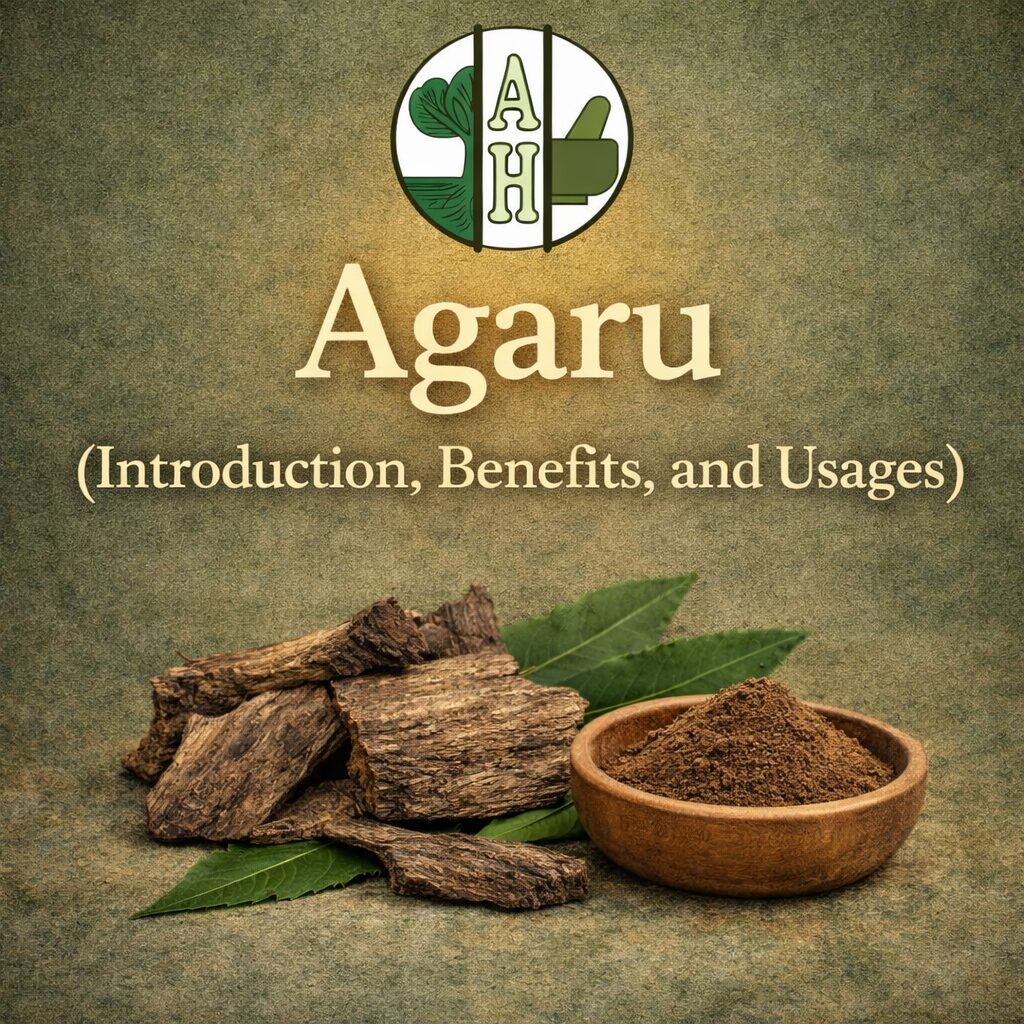
Agaru (Introduction, Benefits, and Usages)
Deep in the lush, humid forests of South and Southeast Asia grows one of the most revered and mysterious substances in the world of traditional medicine and spirituality — Agaru. Known by many names across cultures, including Oud in the Arab world, Agarwood in the West, and Aquilaria agallocha in botanical terminology, this extraordinary resinous heartwood has captivated healers, priests, and perfumers for thousands of years. From the incense trails of ancient temples to the apothecaries of Ayurvedic physicians, Agaru has held a place of deep reverence that few natural substances can claim.
What Is Agaru?
It is not simply a tree — it is a tree that has been transformed. The Aquilaria tree, native to the tropical forests of India, Bangladesh, Bhutan, Myanmar, and parts of Southeast Asia, produces a dark, resin-saturated heartwood when it becomes infected by a specific mold (Phialophora parasitica). This infection triggers a remarkable natural defense response, causing the tree to produce a dense, aromatic resin that gradually permeates its inner wood over many years. It is this resin-soaked wood that we know as Agaru or Agarwood — and it is among the most expensive natural raw materials on the planet.
In its raw form, Agaru appears as dark, irregular chunks of wood with a deep, complex fragrance that is difficult to put into words. It is earthy, sweet, slightly smoky, and carries an almost meditative warmth. This distinctive scent has made it a cornerstone of perfumery, spiritual ritual, and traditional medicine across Asia, the Middle East, and beyond.
Agaru’s Many Names
Across cultures and languages, Agaru is known by an astonishing variety of names — each reflecting the deep roots this herb has in different traditions. In Sanskrit, it is called Aguru, Krimija, or Loha. In Hindi, it is simply known as Agar. In English, it goes by Agarwood, Eaglewood, or Aloewood. The Arabs call it Oud or Oodh. In Tamil it is known as Aggalichandanam, in Malayalam as Akil, and in Bengali as Agaru. Each of these names tells a story — of trade routes, ancient healers, and the deep human desire to connect with nature’s most potent gifts.
Ayurvedic Properties of Agaru
In Ayurveda, every herb is understood not just by what it does, but by its intrinsic qualities — its Rasa (taste), Guna (physical properties), Virya (potency), and Vipaka (post-digestive effect). Understanding Agaru through this lens reveals why it is so highly prized in classical medicine.
It is classified as having Katu (pungent) and Tikta (bitter) Rasa. Its Guna is Laghu (light) and Teekshna (piercing and sharp). Its Virya is Ushna — meaning it carries a hot potency — making it one of the rare bitter herbs that generates warmth in the body rather than cooling it. Its Vipaka is also Katu, meaning it promotes digestive transformation. Most importantly for dosha balance, Agaru pacifies both Vata and Kapha doshas, making it particularly valuable in conditions where these two energies are disturbed — such as respiratory ailments, joint disorders, and sluggish digestion.
Agaru in History and Culture
The story of it is deeply woven into the fabric of human civilization. Ancient Sanskrit texts mention it as one of the most prized medicinal substances, and it finds mention in the Charaka Samhita and Sushruta Samhita — two of Ayurveda’s foundational texts — where it is described as a potent remedy for a wide range of ailments. In traditional Chinese medicine, it appears as Chen Xiang, used to calm the mind and support digestive health. In the Islamic tradition, the Prophet Muhammad is said to have used Oud for fumigation, cementing its sacred status across generations.
Even in the Bible, “aloes” referenced in the Old Testament is widely believed to refer to Agarwood, pointing to its trade and spiritual use across ancient civilizations. Royalty, monks, and merchants all prized it — and in many parts of the world, gifting Agaru was considered among the highest gestures of honor and respect.
The Benefits of Agaru
What makes ittruly remarkable is that its value is not just cultural or aromatic — it carries a wealth of genuine therapeutic benefits that have been verified both through centuries of traditional use and increasingly through modern scientific inquiry.
1. Calms the Mind and Relieves Stress
Perhaps the most celebrated benefit of Agaru is its deeply calming effect on the nervous system. The aromatic compounds released when Agaru is burned as incense or diffused as oil have been shown to promote a sense of mental tranquility and emotional balance. In Ayurveda, it is classified as a medhya herb — one that nourishes and strengthens the mind. Many people who struggle with anxiety, restlessness, or sleeplessness have found quiet comfort in the gentle, grounding fragrance of Agaru.
2. Supports Respiratory Health
It has long been used in traditional medicine to ease respiratory complaints. It is Kaphahara — meaning it reduces and expels excess Kapha from the body — making it useful for conditions like chronic cough, bronchitis, asthma, and excess mucus buildup. When Agaru churna is taken with honey, it works to clear the respiratory tract and soothe inflamed airways. In some classical formulations, 1–2 drops of Agaru oil sprinkled on a betel leaf and chewed is a traditional remedy recommended specifically for asthmatic conditions.
3. Aids Digestive Function
In both Ayurvedic and Chinese medicine, Agaru is recognized as a digestive tonic. It is Deepana (kindles digestive fire) and Pachana (aids in the digestion of unprocessed toxins or ama). It is used to relieve nausea, reduce bloating, and support the digestive organs — the stomach, intestines, and liver are all said to derive strength from its warming action. In classical practice, Agaru churna is often recommended after heavy meals to prevent the accumulation of Kapha in the gut.
4. Relieves Joint Pain and Supports the Musculoskeletal System
One of Agaru’s most important classical indications is in joint and bone disorders. Because it balances Vata — the dosha that governs movement and is seated in the bones and joints — regular application of Agaru oil mixed with coconut oil helps ease pain and inflammation associated with conditions like rheumatoid arthritis, osteoarthritis, and gout. Classical texts also describe Agaru lepa (paste) applied over painful joints as a reliable palliative. For deeper results, the paste is sometimes combined with warm water and applied as a poultice over the forehead for headaches or over joints for localized pain relief.
5. Anti-inflammatory and Antimicrobial Properties
Modern research has begun to shed light on what traditional healers always knew. Studies on Agarwood extracts have identified compounds with notable anti-inflammatory and antimicrobial properties. The resin contains sesquiterpenes — including agarol and jinkohol — and chromones, all bioactive molecules that contribute to these therapeutic effects. Laboratory studies have also confirmed agarwood oleoresin’s activity against pathogens like Staphylococcus aureus and Candida albicans, supporting its traditional use in throat infections and skin conditions.
6. Promotes Better Sleep
The sedative, calming nature of Agaru makes it a natural ally for those dealing with insomnia or poor sleep quality. Its mild anxiolytic properties help quiet Vata imbalances that often manifest as racing thoughts, restlessness, and broken sleep. Burning a small amount of Agaru incense before bedtime or using a few drops of its essential oil in a diffuser can create an atmosphere that encourages deep, restful sleep.
7. Supports Skin Health
Agaru has been used for centuries in managing skin conditions including eczema, urticaria, and general itching and inflammation. Its Ropan (healing) and Kushtaghna (skin disorder-relieving) properties make it useful both internally and externally. Agaru oil or paste applied to affected skin helps reduce inflammation, stop minor bleeding, and soothe irritated tissue. Agaru bark powder taken with cow’s ghee is also a classical recommendation for managing allergic skin reactions like urticaria.
8. Spiritual and Emotional Grounding
Beyond its physical benefits, Agaru holds deep value as a spiritual tool. Many traditions use it in meditation, prayer, and ritual to create a sacred atmosphere, clear negative energies, and elevate consciousness. Its scent is said to help quiet the mental chatter that keeps so many of us from experiencing inner stillness.
How to Use Agaru
Agaru can be used in several practical ways depending on your needs and preferences.
As Churna (Powder): The classical dose of Agaru churna is 1–3 grams, taken twice daily with warm water, honey, milk, or ghee depending on the condition being addressed. For cough and respiratory ailments, taking it with honey is most effective. For digestive issues, warm water or ghee works best.
As Kwath (Decoction): Simmer 3–5 grams of Agaru wood powder in approximately 200 ml of water until it reduces to about 60 ml. This concentrated decoction is the most potent form and is classically used for fever, chronic bronchitis, and acute respiratory conditions.
As Essential Oil: Oud oil, derived from Agarwood, can be applied to pulse points, added to a diffuser, or blended into massage oils. For joint pain, 2–5 drops in 1–2 teaspoons of coconut oil makes an effective massage blend.
As Incense: Burning small chips of Agaru wood over charcoal discs is the most traditional method. The smoke that rises is fragrant, purifying, and deeply calming — ideal for meditation and sleep rituals.
As a Lepa (External Paste): Mix Agaru powder with water to form a paste and apply to the forehead for headaches, or to joints for pain and inflammation. Leave on for at least one to two hours or until dry.
In Classical Formulations: Agaru is an important ingredient in several classical Ayurvedic preparations including Anu Tailam (used as nasal drops for ear, nose, and throat conditions), Arimedadi Thailam (used for oil pulling and dental health), and Himsagar Tailam (used in various Vata disorders).
Dosage and Safety
For internal use, Agaru churna is typically taken in doses of 1–3 grams twice daily for adults. The oil is used in very small quantities of 1–5 drops. Children above 5 years of age may take 5–10 ml of syrup preparations once daily. Pregnant women should avoid internal intake of Agaru unless specifically guided by a qualified practitioner, as its strong Ushna nature may be contraindicated. Excessive inhalation of Agaru incense smoke may cause mild respiratory discomfort in sensitive individuals. Always consult a qualified Ayurvedic Vaidya before beginning regular internal use.
Shop Agaru and Ayurvedic Products at Ayurvedaholic
If you are looking to bring the healing power of Agaru into your daily wellness routine, Ayurvedaholic is your trusted destination for authentic Ayurvedic products. The platform carries a wide range of products from India’s most reputable Ayurvedic brands including Patanjali, Dabur, Baidyanath, and Kottakkal — brands that have maintained the integrity and quality of classical Ayurvedic formulations for generations.
Whether you are looking for Agaru-based herbal powders, classical tailams (oils), or respiratory support formulas, Ayurvedaholic makes it easy to access time-tested remedies from the comfort of your home.
👉 Shop Ayurvedic Products at Ayurvedaholic 👉 Browse All Ayurvedic Medicines 👉 Explore Tailam (Herbal Oils) — ideal for Agaru oil-based joint and skin applications 👉 Explore Churna & Herbal Powders — for daily wellness and respiratory support
A Final Word
Agaru is one of those rare gifts from nature that seems almost too complete — healing the body, calming the mind, and elevating the spirit all at once. In a world that often pulls us in a hundred directions at once, there is something quietly powerful about turning to a substance that has grounded human beings for millennia. Whether you come to Agaru through curiosity, tradition, or a simple search for wellness, its deep, ancient warmth has a way of meeting you exactly where you are.
References
- Charaka Samhita — Sutrasthana, Chapter 25 (Yajja Purushiya Adhyaya)
- Sushruta Samhita — Classical Ayurvedic surgical compendium
- Bhavaprakasha Nighantu — Classical Ayurvedic Materia Medica
- The Ayurvedic Pharmacopoeia of India, Part 1, Volume 1
- Hashim YZ et al. — Aquilaria spp. (agarwood) as source of health beneficial compounds: A review of traditional use, phytochemistry and pharmacology. Journal of Ethnopharmacology, 2016; 189: 331–360
- Wang S et al. — Chemical Constituents and Pharmacological Activity of Agarwood and Aquilaria Plants. Molecules, 2018; 23(342)
- Alam J et al. — Hepatoprotective potential of ethanolic extract of Aquilaria agallocha leaves against paracetamol induced hepatotoxicity in SD rats. Journal of Traditional and Complementary Medicine, 2016; 7(1): 9–13
- Rahman H, Eswaraiah MC, Dutta AM — Anti-arthritic activity of leaves and oil of Aquilaria agallocha. Haya: Saudi Journal of Life Sciences, 2016; 1(1): 34–43
- Easy Ayurveda — Agaru (Aquilaria agallocha) Uses, Research, Side Effects — easyayurveda.com
- Ayur Times — Agaru — ayurtimes.com/agaru
- Planet Ayurveda — Agaru (Aquilaria agallocha) — planetayurveda.com
Add comment