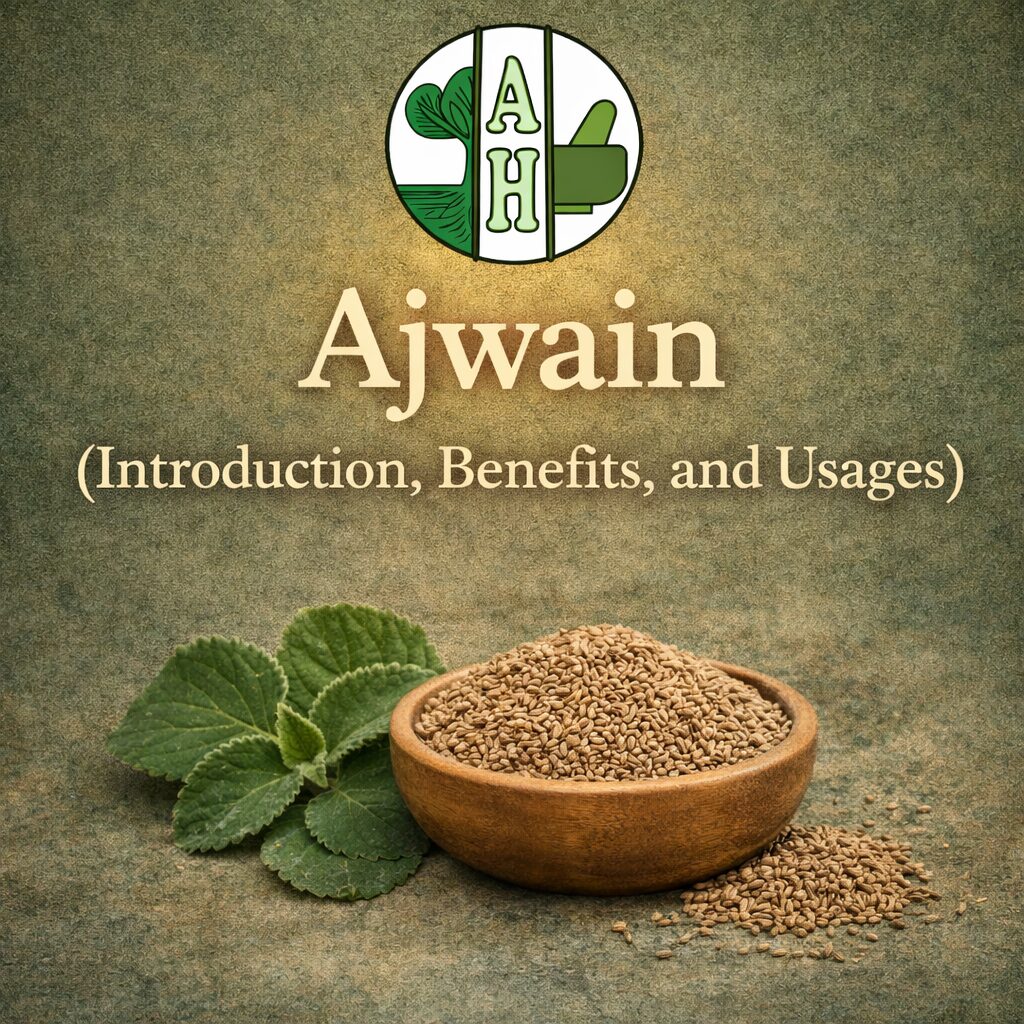
There are very few spices in the Indian kitchen that carry the dual identity of a beloved culinary ingredient and a powerful Ayurvedic medicine with equal grace. Ajwain is one of them. Tucked into the corner of almost every Indian household — in a small steel box alongside jeera and rai — these tiny, grey-green seeds punch well above their size. Their sharp, pungent aroma hits you the moment they touch heat, and their flavor lingers long after the meal is done. But Ajwain is far more than a flavor enhancer. It is a time-tested healer that has been trusted by generations of Indian families for everything from stomach pain to cold and cough — and Ayurveda has the classical texts to back every single one of those uses.
What Is Ajwain?
It, known botanically as Trachyspermum ammi, is a small annual herb belonging to the Apiaceae family — the same plant family that includes cumin, coriander, fennel, and dill. Though commonly called carom seeds in English, what we refer to as “seeds” are technically the dried fruits of the plant. Ajwain is also known as Bishop’s Weed or Ajowan Caraway in the West, and across India it is recognized by a host of regional names — Omam in Tamil and Malayalam, Vamu in Telugu, Oma in Kannada, Ajmo in Gujarati, and Javain in Punjabi.
In Sanskrit, Ajwain goes by the classical name Yavani — a name that appears across major Ayurvedic texts including the Charaka Samhita and Bhavaprakasha Nighantu. Other Sanskrit synonyms include Deepyaka (that which kindles digestive fire), Ugragandha (having a strong odor), and Brahmadarbha. These names themselves hint at the herb’s most celebrated quality — its profound ability to ignite and support Agni, the digestive fire at the center of all metabolic function in Ayurveda.
Though the plant is believed to have originated in Egypt and spread through ancient trade routes across the Middle East and South Asia, It has been cultivated in India since time immemorial. Today, India is one of its largest producers and consumers, with Rajasthan, Madhya Pradesh, and Gujarat being the major growing regions.
Ayurvedic Properties of Ajwain
To truly understand a herb in Ayurveda is to understand it through its fundamental qualities. It has a Katu (pungent) and Tikta (bitter) Rasa. Its Gunas are Laghu (light to digest) and Ruksha (dry). Its Virya is Ushna — it generates heat in the body — and its Vipaka is Katu (pungent post-digestive effect). These properties together make it a powerful pacifier of both Vata and Kapha doshas, while naturally increasing Pitta.
Its most important Ayurvedic actions include being Deepana (kindles digestive fire), Pachana (aids in the digestion of toxins or ama), Kaphahara (reduces excess Kapha), Shoolprashamana (relieves colic pain), Anulomana (promotes the downward movement of Vata), and Grahi (helps absorb excess moisture in the gut). In the Charaka Samhita, Ajwain is specifically listed under Shulaprashamana — herbs that relieve colic pain — making it one of Ayurveda’s most important herbs for abdominal health.
The Active Compounds Behind Ajwain’s Power
Modern science has validated much of what Ayurvedic physicians knew intuitively centuries ago. The primary active constituent of Ajwain is Thymol, a phenolic compound that constitutes approximately 35–60% of Ajwain’s essential oil. Thymol is a potent germicide, antifungal, and antispasmodic agent — and it is the same compound found in many modern antiseptic mouthwashes and dental preparations. Alongside Thymol, Ajwain contains Carvacrol, β-pinene, para-cymene, limonene, γ-terpinene, and β-terpinene — all bioactive molecules with measurable health-promoting properties. The seeds are also rich in fiber, protein, calcium, iron, phosphorus, riboflavin, niacin, and carotene, making them nutritionally dense despite their tiny size.
The Benefits of Ajwain
1. The Ultimate Digestive Herb
If there is one thing every Indian grandmother, Ayurvedic Vaidya, and modern nutritionist can agree on, it is that Ajwain is extraordinary for digestion. The active enzymes in Ajwain stimulate the secretion of gastric juices and improve the overall digestive process. It is a powerful carminative — it reduces gas formation in the intestines and helps expel existing gas — making it one of the most effective natural remedies for bloating, flatulence, and abdominal distension. According to Ayurveda, it is a potent Amanashak — meaning it actively reduces the accumulation of undigested toxins in the digestive tract. For everyday indigestion after heavy meals, even chewing a few seeds raw with a pinch of salt can bring remarkable relief within minutes.
2. Powerhouse for Respiratory Health
It’s role in managing respiratory conditions is deeply established in classical Ayurveda and supported by emerging clinical evidence. Because of its Ushna (hot) nature and Kaphahara action, it naturally loosens and expels thick mucus from the airways, reduces microbial growth in the respiratory tract, and acts as a bronchodilator — widening the airways to allow easier breathing. A combination of Ajwain and ginger is a classical recommendation in Ayurveda for chronic bronchitis and asthma. Even a simple home remedy of inhaling steam from Ajwain-infused hot water has been used for generations to relieve nasal congestion and chronic colds.
3. Powerful Antimicrobial and Antifungal Agent
The Thymol and Carvacrol in it have demonstrated impressive antimicrobial activity against several dangerous pathogens including Escherichia coli, Salmonella, Candida albicans, Candida krusei, and Streptococcus mutans. In fact, research has shown that Ajwain’s essential oil can be more effective against certain multidrug-resistant strains of bacteria and fungi than many conventional solvents — an important finding in an era increasingly challenged by antibiotic resistance.
4. Relieves Joint Pain and Arthritis
It’s anti-inflammatory properties make it a valuable remedy for conditions like rheumatoid arthritis and osteoarthritis. A paste made from crushed Ajwain seeds applied externally to swollen or painful joints helps reduce inflammation and ease discomfort. Internally, Ajmodadi Churna — a classical Ayurvedic formulation that features it — is commonly prescribed for joint pain, morning stiffness, back pain, and cervical spondylitis. Adding a handful of Ajwain seeds to a warm bath also provides systemic relief for muscle aches and joint soreness.
5. Supports Heart Health and Blood Pressure
Research suggests that Thymol in it may exert calcium-channel-blocking effects, which can help relax blood vessels and support healthy blood pressure levels. Animal studies have also demonstrated that Ajwain seed powder and extract can reduce total cholesterol, LDL (bad) cholesterol, and triglyceride levels while increasing heart-protective HDL (good) cholesterol — positioning it as a potential long-term ally for cardiovascular wellness.
6. Natural Relief for Toothache and Oral Health
It’s antimicrobial properties extend effectively to the mouth. Thymol is a standard active ingredient in many commercial mouthwashes and toothpastes — and in Ayurveda, Ajwain seeds have long been used to relieve toothaches, fight oral bacteria, and support gum health. Rinsing with Ajwain-boiled water or holding a small amount of warm Ajwain oil against a painful tooth is a widely practiced home remedy across India.
7. Skin Healing and Anti-inflammatory
It’s Ropan (healing) quality makes it effective for managing skin infections, eczema, psoriasis, and urticaria. A paste of Ajwain leaves mixed with honey can be applied to affected skin to reduce inflammation and promote healing. Ajwain oil mixed with mustard or sesame oil is used in traditional practice for massaging over inflamed or infected areas of the skin. It is also applied to the scalp with coconut oil to address dandruff and scalp infections.
8. Kidney Stone Prevention
Classical texts classify Ajwain as having diuretic properties — it promotes healthy urination and helps flush the urinary tract. This makes it helpful in preventing the formation of kidney stones and reducing the risk of urinary tract infections. The roots of the Ajwain plant specifically are noted in Ayurvedic practice for their diuretic action.
How to Use Ajwain
As Seeds (Raw or Roasted): The simplest way to use Ajwain is to chew 5–10 raw or lightly roasted seeds after meals to aid digestion and prevent gas. Dry roasting the seeds before use intensifies their aroma and effectiveness.
Ajwain Water (Ajwain Ark): Boil 1 teaspoon of Ajwain seeds in 1 glass of water for 5–8 minutes. Strain and drink warm. This is one of the most effective remedies for indigestion, acidity, bloating, and post-meal discomfort. Adding a pinch of black salt enhances its effectiveness for gas and colic pain.
As Churna (Powder): The classical dosage of Ajwain fruit powder is 1–3 grams, taken with warm water, honey, or buttermilk twice daily. For respiratory ailments, it is best combined with equal parts ginger powder.
Steam Inhalation: Add a tablespoon of Ajwain seeds to a bowl of boiling water and inhale the steam with a towel over your head for 5–10 minutes. This provides fast relief from nasal congestion, blocked sinuses, and chest heaviness.
As Oil: Ajwain oil can be diluted in a carrier oil like coconut, mustard, or sesame oil and massaged onto the chest for respiratory relief, over joints for pain, or onto the scalp for dandruff. Use 2–3 drops of essential oil in 1–2 teaspoons of carrier oil.
As Distillate (Ajamoda Arka): This is the classical steam-distilled water extract of Ajwain, often recommended for children and elderly individuals in doses of 5–10 ml for colic, indigestion, and gas.
In Cooking: Ajwain is a staple tempering spice in Indian cooking, added to dals, parathas, puris, samosas, pakoras, and pickles. Its addition to fried or heavy foods is not just culinary tradition — it is Ayurvedic wisdom, ensuring that difficult-to-digest foods are balanced with a digestive agent.
Dosage and Safety
The standard dose for adults is 1–3 grams of powder or 15–30 ml of decoction, taken twice daily. Ajwain oil should be used sparingly — 1–3 drops internally or 2–5 drops externally, diluted in a carrier. It is best avoided by pregnant women as it has traditionally been noted to stimulate uterine contractions. People with hyperacidity, active gastric ulcers, or diverticulitis should also use it cautiously and under guidance. Those with oligospermia or male infertility concerns are advised to avoid long-term regular intake.
Shop Ajwain and Ayurvedic Products at Ayurvedaholic
Ready to add the healing power of It to your daily wellness routine? Ayurvedaholic.com is your trusted online destination for authentic, quality-assured Ayurvedic products from India’s most reputable brands — including Patanjali, Dabur, Baidyanath, and Kottakkal. Whether you are looking for Ajwain churna, Ajmodadi Churna, classical Ayurvedic digestive formulas, or respiratory support preparations, Ayurvedaholic makes it simple to access time-honored remedies from the comfort of your home.
👉 Shop All Ayurvedic Products — Ayurvedaholic.com 👉 Browse Churna & Herbal Powders — Including Ajwain Churna and Ajmodadi Churna 👉 Explore Digestive Support Formulas — Classical remedies for gas, bloating, and indigestion 👉 Respiratory Health Products — Herbal support for cough, cold, and bronchitis
References
- Charaka Samhita — Shulaprashamana Adhyaya (Herbs for colic pain)
- Bhavaprakasha Nighantu — Haritakyaadi Varga
- Kaiyadeva Nighantu — Aushadi Varga
- Dhanvantari Nighantu — Shatapushpadi Varga
- The Ayurvedic Pharmacopoeia of India, Part 1, Volume 1
- Boskabady MH et al. — Pharmacological Effects of Trachyspermum ammi. Middle East Journal of Scientific Research, 2011; 10(1): 93–99
- Pathak A et al. — Antimicrobial Activity of Ajwain Essential Oil. Journal of Ethnopharmacology, 2012
- Gilani AH et al. — Antispasmodic and Blood Pressure Lowering Effects of Trachyspermum ammi. Archives of Pharmacal Research, 2005; 28(4): 460–465
- PharmEasy — Ajwain: Uses, Benefits, Side Effects — pharmeasy.in
- Easy Ayurveda — Ajwain (Carom Seeds) Uses, Benefits, Dosage — easyayurveda.com
- Ayur Times — Carom Seeds (Ajwain) Benefits and Side Effects — ayurtimes.com
- WebMD — Ajwain: Health Benefits, Nutrients and More — webmd.com