
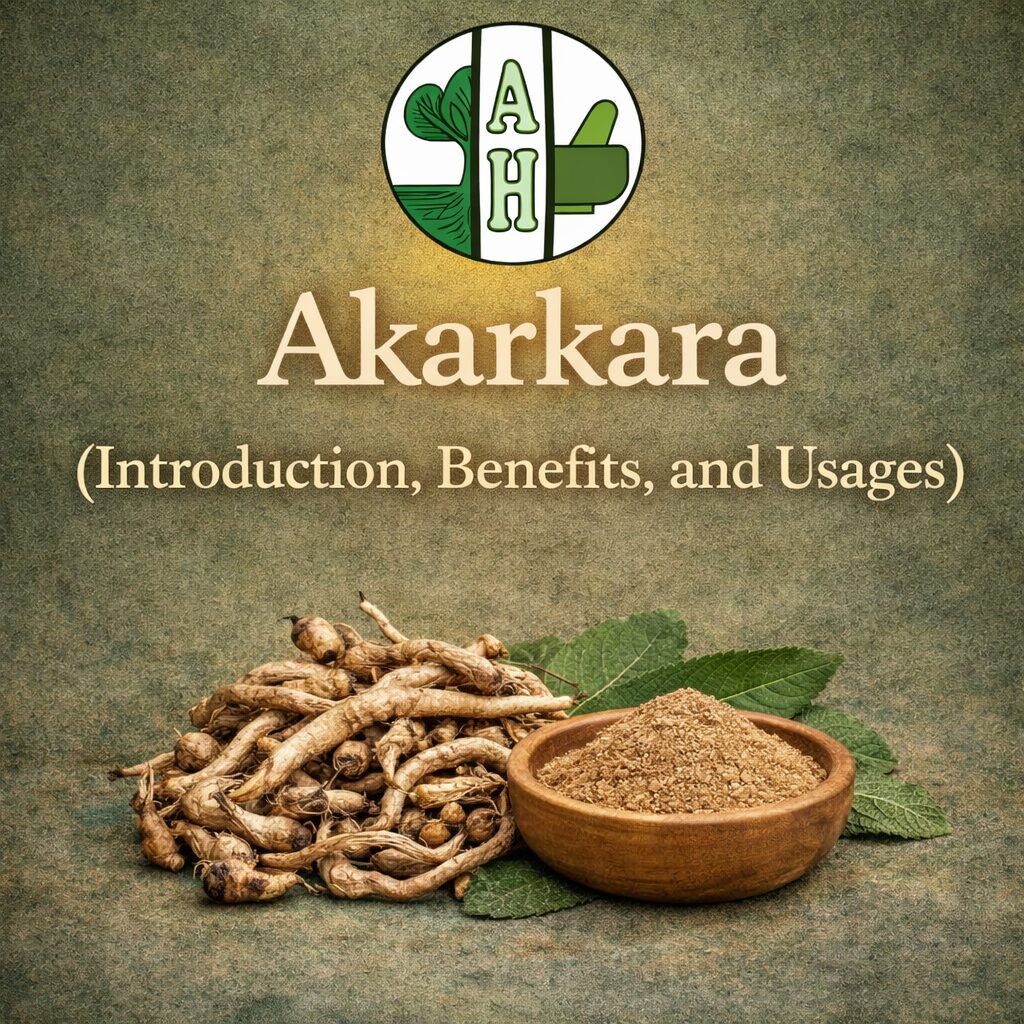
Akarkara (Introduction, Benefits, and Usages)
There are certain herbs in the world of Ayurveda and traditional medicine that carry with them an air of mystery — herbs that are not as commonly spoken about in daily kitchens and homes, yet have been whispered about in the chambers of classical Vaidyas and Hakims for centuries as some of the most potent remedies nature has ever produced. Akarkara is one such herb. Small, unassuming, and intensely powerful, this root has quietly earned its place as one of Ayurveda and Unani medicine’s most important nervine stimulants, aphrodisiacs, and digestive tonics — and its relevance in today’s world of stress, fatigue, and lifestyle disorders has only grown stronger.
What Is Akarkara?
Akarkara, known botanically as Anacyclus pyrethrum DC, is a small perennial herb belonging to the Asteraceae family — the same botanical family that includes chamomile and sunflower. The roots of the plant have good therapeutic value as per the traditional systems of medicine, and it is also known as the African pyrethrum. Nakraayurveda In appearance, the plant resembles chamomile closely, growing low to the ground with slender stems that rise to bear single flowers with white or pale yellow rays and a bright yellow disc at the center.
The plant is mainly native to Arabia and is distributed widely in North Africa, the Mediterranean region, Spain, and India. Easy Ayurveda In India, it is primarily found in Jammu and Kashmir and Bengal, though much of what is commercially used is imported from Algeria. The root — the primary medicinal part of the plant — is almost cylindrical, slightly twisted, and tapering downward, brown and wrinkled on the outside, with a notably pungent taste and a faint but distinctive aroma.
Akarkara is recognized by many names across the subcontinent. In Hindi it is Akarkara or Akkal Kara. In Tamil it is Akkirakaram. In Telugu it is Akarakaramu. In Marathi it is Akkalkara. In Bengali it is Akarkora. In Punjabi it is Pailitari. In English it goes by the names Pellitory Root, Spanish Chamomile, Mount Atlas Daisy, and Roman Pyrethrum. In Sanskrit, the classical texts refer to it by the names Akarakarabhah, Agragrahi, and Akulakrit — and it is also found in the Unani tradition under the name Aqarqarha.
Akarkara’s Journey Through History
Akarkara was mentioned for the first time in classical Ayurvedic literature by Sodhala, who included it in Gadanigraha as one of the potent aphrodisiac drugs. In Bhavaprakasha Nighantu, it has been mentioned as Vrishya — meaning an aphrodisiac. Ayurveda Holic While it did not find a place in the Brihattrayi — the three foundational texts of classical Ayurveda — it entered the Ayurvedic tradition robustly through the medieval period, largely via the rich exchange of knowledge between Indian and Arabic medicine. Its history traces back to early Ayurvedic treatises like the Bhaishajya Ratnavali and Rasaratna Samuchchaya, where it is described as a powerful Dipana (digestive stimulant) and Vata-anulomana (helps downward movement of wind). Riddhish Herbals
One remarkable fact about Akarkara that classical texts emphasize is that this plant does not lose its potency for seven years Ayurveda Holic — a quality that made it especially prized in an era before refrigeration and modern preservation methods. A medicinal root that retains full therapeutic strength for years was a treasure beyond compare for ancient physicians.
Ayurvedic Properties of Akarkara
Understanding Akarkara through the lens of Ayurvedic pharmacology reveals why it is such a powerful and versatile herb. Its Rasa (taste) is Katu (pungent). Its Guna (qualities) are Ruksha (dry in nature) and Teekshna (sharp and penetrating). Its Vipaka is Katu (undergoes pungent taste after digestion). Its Veerya (potency) is Ushna (hot). Its Karma (actions) include Kaphavata shamaka (reduces vitiated Kapha and Vata dosha) and Nadi uttejaka (stimulates the nerves). Ayurveda Holic
These properties make it a go-to herb in conditions dominated by Vata and Kapha imbalance — nerve weakness, joint pain, sluggish digestion, respiratory congestion, low libido, and mental fatigue all fall within this category. Its Teekshna (penetrating) quality allows it to reach deep tissues and act on the nervous system directly, which explains its classical reputation as one of Ayurveda’s premier nervine stimulants.
The Active Compounds Behind Akarkara’s Power
The exact biochemical composition of Anacyclus pyrethrum is not fully known, but studies suggest that Akarkara root contains the alkaloid Pellitorin (Pyrethrin) and Alkyl Amides. The Alkyl Amides in the root are composed of Tyramine amides and Isobutylamides, which have libido-stimulant and neuroprotective properties. The aerial parts of the Akarkara plant contain Anacyclin. Other active constituents include Inulin, Sesamin, and Hydrocarolin. 1mg
The pharmacological power of Akarkara comes from a blend of bioactive constituents: Alkamides such as Pellitorine give that characteristic tingling sensation and are linked to mild anesthetic and immunostimulant actions. Essential oils, rich in sesquiterpenes, yield the pungent aroma and help in bronchodilation. Inulin is a polysaccharide prebiotic that supports gut health and improves nutrient absorption. Riddhish Herbals Together, these compounds form the biochemical foundation of Akarkara’s wide-ranging therapeutic activity.
The Benefits of Akarkara
1. A Premier Herb for Male Sexual Health and Vitality
Akarkara is endowed with powerful aphrodisiac and libido-stimulant qualities and is extensively used for the treatment and management of sexual problems, erectile dysfunction, and loss of libido. Easy Ayurveda This is arguably Akarkara’s most celebrated indication in both Ayurveda and Unani medicine. The root extract of Anacyclus pyrethrum improved the sexual potential in animal trials and also showed a potent libido-enhancing ability along with fertility-enhancing effects. Nakraayurveda In classical Ayurvedic practice, Akarkara root powder taken with warm milk, ghee, or honey is one of the most widely used remedies for premature ejaculation, erectile dysfunction, and general loss of vigour in men. The herb works not just by directly stimulating libido but by nourishing the nervous system, balancing Vata, and supporting the body’s natural testosterone production pathways.
2. A Powerful Nervine Stimulant and Brain Tonic
One of Akarkara’s most important and underappreciated benefits is its action on the nervous system. Extract of Akarkara enhanced memory and showed improvement in cognitive processes by increasing the brain levels of the enzyme cholinesterase. Nakraayurveda It is described in classical texts as Nadi Uttejaka — literally a nerve stimulator — and modern research has begun confirming what this ancient classification implies. Akarkara is known to support cognitive function, improve memory, and reduce the risk of age-related cognitive decline. By inhibiting certain enzymes responsible for memory impairment, Akarkara helps in maintaining brain health and has shown promise in managing neurodegenerative diseases like Alzheimer’s. Ask Ayurveda It is also used in Ayurvedic practice as an adjuvant in managing epilepsy and seizures.
3. Oral Health and Toothache Relief
Pellitory root is widely used in Ayurveda because of its pungent efficacy in relieving toothache and in promoting a free flow of saliva. Ayurvedacart This is likely Akarkara’s most universally known application across both Indian and European traditional medicine — the British Pharmacopoeia itself historically directed its use as a masticatory for dryness of the mouth and throat. Akarkara might help in strengthening teeth and gums and relieve toothache as it possesses antibacterial, analgesic, and anti-inflammatory properties. Nakraayurveda A simple pinch of Akarkara root powder held at the base of an aching tooth, or a decoction used as a gargle for gingivitis and oral ulcers, delivers fast and measurable relief.
4. Digestive Health and Appetite Stimulation
Akarkara helps manage indigestion. According to Ayurveda, the main reason for indigestion is aggravated Kapha that causes Agnimandya (weak digestive fire). Akarkara helps improve Agni (digestive fire) which helps the food digest easily. Planet Ayurveda Akarkara roots aid in increasing and stimulating the secretion of saliva and other digestive juices, which help in improving digestive health. Nakraayurveda A small pinch of root powder taken with warm water before or after meals is one of the simplest and most effective ways to use Akarkara for everyday digestive complaints like bloating, flatulence, poor appetite, and nausea.
5. Respiratory Support
A randomized pilot study in 2018 showed that Akarkara syrup reduced cough frequency by 45% in participants with chronic bronchitis after four weeks. Riddhish Herbals Its Kaphahara and Ushna properties make it naturally suited to conditions of excess mucus, congestion, and bronchial inflammation. Mixing Akarkara churna with warm milk or honey to ease asthma symptoms is a classical home remedy that continues to be used across generations. Akarkara helps in expelling mucus from the respiratory tract due to its expectorant properties, making it effective in treating respiratory issues. Ask Ayurveda
6. Joint Pain and Arthritis Management
The abundance of anti-inflammatory and anti-arthritic properties of Akarkara makes it the ultimate choice for providing relief from pain and inflammation due to arthritis. Being a natural vasodilator, it is used to treat painful muscle spasms, sore muscles, arthritic conditions, and other inflammatory situations. Application of powdered paste of its root is extremely effective against Rheumatoid arthritis known as Amavata in Ayurveda — an ailment that stems from the vitiation of Vata doshas and accumulation of Ama in the joints. Easy Ayurveda Akarkara-infused medicated oils massaged over affected joints are a standard Ayurvedic prescription for conditions like sciatica, cervical spondylitis, and chronic knee pain.
7. Blood Sugar Management
Oral administration of the root extract of Akarkara was beneficial in bringing down spiked blood glucose levels in diabetic animal models. Nakraayurveda While human clinical trials are still awaited, this antidiabetic potential makes Akarkara a subject of growing scientific interest. Its pharmacological actions include anti-diabetic and cardiac stimulant activity Ayurveda Holic — both highly relevant in a modern disease landscape dominated by metabolic disorders.
8. Immune Stimulant and Adaptogen
It has been found to have excellent anti-inflammatory activity, antidepressant activity, memory-enhancing activity, and immune-stimulating activity. Ayurveda Holic A study evaluating its effect on suppressed immune systems found that immunostimulant activity increased significantly upon administration of its extract, with significant improvement observed in both the humoral and cellular components of immunity. This firmly positions Akarkara as both an immunomodulator and an adaptogen — a herb that helps the body respond to stress and maintain resilience against disease.
9. Diuretic and Detoxifying Action
The diuretic properties of it promote detoxification by increasing the frequency of urination. This helps the body eliminate toxins more effectively, supporting overall health. Ask Ayurveda In classical practice, the roots are specifically noted for this diuretic action and are recommended in conditions involving urinary retention, kidney sluggishness, and the need for systemic detoxification.
Classical Ayurvedic Formulations Containing Akarkara
It is not only used as a standalone herb but is an important ingredient in several time-tested classical formulations. Akarakarabhadi Churna, referenced in the Sharangdhar Samhita, is one of the most well-known compound preparations involving it. Akarakarabhadi Vati, referenced in the Bhaishajya Ratnavali, is used extensively for male reproductive health. In the Unani system, it is found in compound preparations like Majoon Arad Khurma and Roghan Akarkara — the latter being a medicated oil for external application in nervine disorders and joint complaints.
How to Use Akarkara
As Churna (Powder): The standard dose of Akarkara root powder is 0.5 to 1 gram Ayurveda Holic, taken once or twice daily depending on the condition. For sexual health and vitality, it is best taken with warm milk and a teaspoon of ghee. For toothache, apply directly to the gums. For digestion, take with warm water.
As Decoction: Boil 1–2 grams of Akarkara root powder in 200 ml of water until it reduces to approximately 60–80 ml. Strain and consume warm. This is most effective for respiratory conditions and general debility.
As Cold Infusion: The cold infusion of the root is given in a dose of 30–40 ml in cases of general debility caused by nerve weakness. Ayurveda Holic
As Medicated Oil: Akarkara root is used to prepare medicated oils that are applied externally over joints and muscles for pain relief, and along the spine and limbs for nervine disorders like tremors, sciatica, and paralysis.
As a Gargle: A decoction of Akarkara root used for gargling provides relief in cases of gingivitis, oral ulcers, dental caries, tonsillitis, and sore throat.
For Toothache: A pinch of root powder is taken and held at the base of the affected tooth or gum Ayurveda Holic to provide analgesic relief.
Dosage and Safety
The standard internal dose for adults is 0.5–1 gram of root powder, taken once or twice daily under professional guidance. It should always be used with appropriate anupana (vehicle) — milk and ghee for reproductive health, honey for respiratory conditions, and warm water for digestive support. Due to its penetrating ability and hot potency, It is usually not advised in larger doses for oral intake as it may cause or worsen ulceration, gastritis, colitis, mouth ulcers, or heartburn. Ayurveda Holic Pregnant women should avoid internal use. Those on anticoagulant medications should exercise caution as it may mildly inhibit platelet aggregation. Always consult a qualified Ayurvedic practitioner before beginning regular internal use.
Shop Akarkara and Ayurvedic Products at Ayurvedaholic
If you are ready to experience the deep, time-tested healing of it Ayurvedaholic.com is your trusted partner for authentic Ayurvedic products from India’s most reputable brands including Patanjali, Dabur, Baidyanath, and Kottakkal. Whether you are looking for Akarkara churna, Akarakarabhadi Vati, classical medicated oils for joint and nerve disorders, or male vitality formulas, Ayurvedaholic makes it easy to access genuine Ayurvedic remedies from the comfort of your home.
👉 Shop All Ayurvedic Products — Ayurvedaholic.com
Disclaimer
The information in this article is for educational purposes only and does not constitute medical advice, diagnosis, or treatment. Always consult a qualified Ayurvedic practitioner or healthcare professional before using any herb or formulation, especially if you are pregnant, breastfeeding, or on medication. Individual results may vary. Ayurvedaholic does not claim to diagnose, treat, cure, or prevent any disease.
References
- Bhavaprakasha Nighantu — Guduchyadi Varga (Vrishya classification of Akarkara)
- Bhaishajya Ratnavali — Akarakarabhadi Vati — View on Internet Archive
- Sharangdhar Samhita — Akarakarabhadi Churna
- Gadanigraha by Sodhala — first classical Ayurvedic mention of Akarkara
- The Ayurvedic Pharmacopoeia of India, Part 1, Volume 2
- Anacyclus pyrethrum — Wikipedia — View on Wikipedia
- Sharma V, Thakur M, Chauhan NS & Dixit VK — Immunomodulatory activity of petroleum ether extract of Anacyclus pyrethrum. Pharmaceutical Biology, 2010; 48(11): 1247–54 — View on PubMed
- Elazzouzi H et al. — Phytochemistry, Biological and Pharmacological Activities of Anacyclus pyrethrum (L.) Lag: A Systematic Review. Plants (Basel), 2022 — View on PubMed
Add comment