
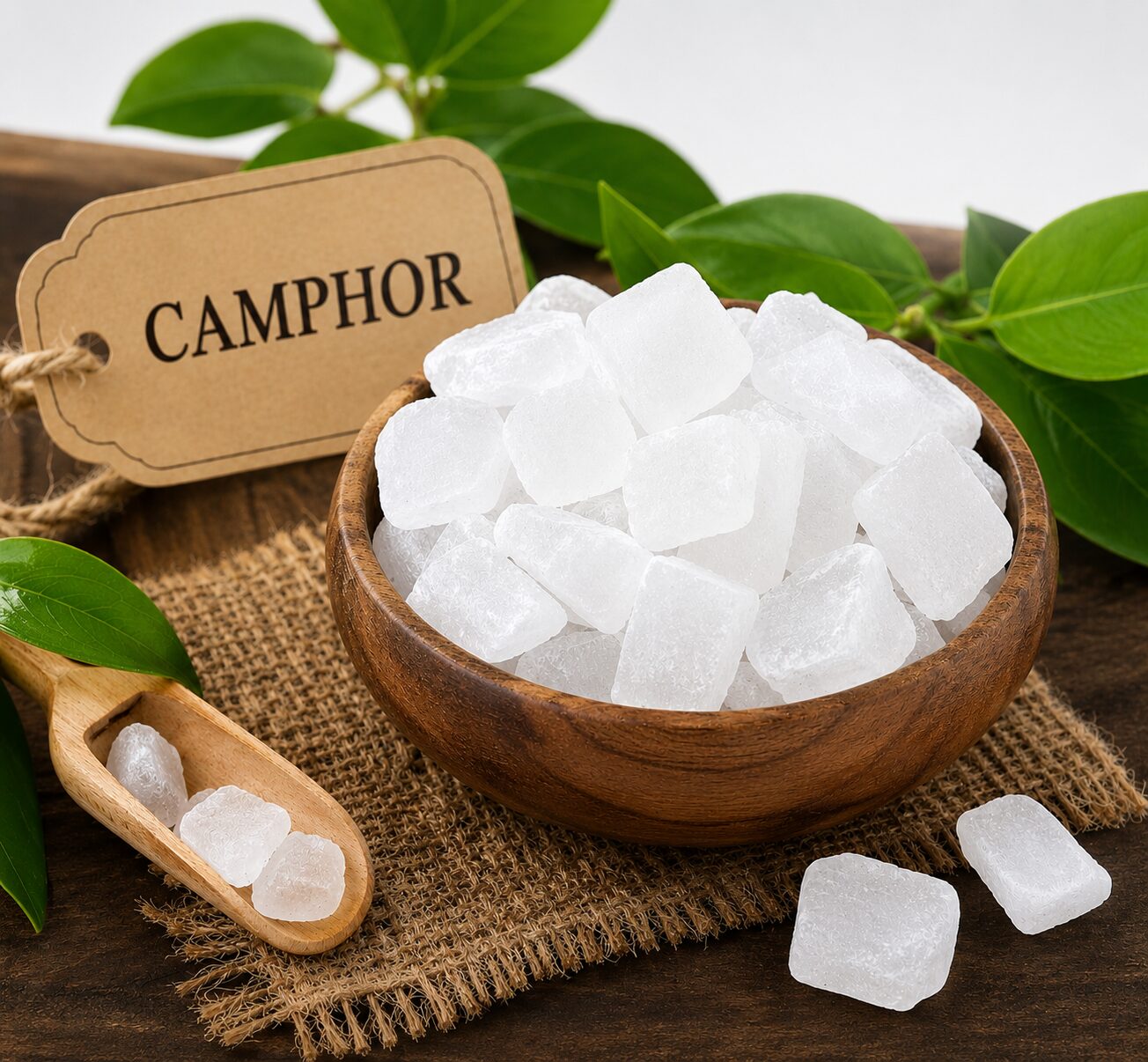
Camphor (Introduction, Benefits, and Usages)
Camphor benefits span a remarkable range — topical pain relief, respiratory decongestant, anti-inflammatory, antimicrobial, and anti-fungal applications — making Cinnamomum camphora one of the most widely used medicinal compounds in traditional Asian and Western medicine. Whether you know it as Kapoor in India, Zhang Nao in China, or simply as the distinctive-smelling white crystals in chest rubs, camphor has been used in medicine for over a thousand years. See Wikipedia: Camphor. For related aromatic medicinal plants, explore Eucalyptus and Peppermint.
What Is Camphor? A Complete Introduction
Origin and History of Camphor
Camphor is a waxy crystalline terpene (bicyclic monoterpenoid) derived primarily from the wood of Cinnamomum camphora — the camphor laurel tree native to China, Japan, and Taiwan. The word “camphor” derives from the Sanskrit “Karpura” via Arabic “Kafur.” Ancient trade routes carried camphor from East Asia to India, Persia, and eventually Europe, where it became a valuable medical and ritual commodity. In Ayurveda, Kapoor (camphor) is described in the Charaka Samhita and classical texts as a powerful aromatic medicine for fever, pain, skin conditions, and respiratory disorders. In medieval Europe, camphor was used for plague prevention and epidemic disease — a use that reflects its genuine antimicrobial properties.
Key Compounds and Pharmacology
Camphor is a bicyclic monoterpene ketone (C10H16O) that occurs naturally as D-camphor in camphor laurel, and as L-camphor in certain other plants. It’s highly volatile — the characteristic penetrating smell is due to rapid vapourisation at room temperature. Camphor activates TRPV1 and TRPA1 receptors in skin and mucous membranes, producing simultaneous cooling and warming sensations that modulate pain perception. It also inhibits TRPV3 receptors (reducing itch). At low concentrations, camphor inhibits bacterial and fungal cell membrane formation. See Wikipedia: Cinnamomum camphora.
Top Health Benefits of Camphor
Camphor Benefits for Pain Relief and Overall Health
Camphor’s topical analgesic benefits are its most clinically established application. Counter-irritant creams containing camphor (typically 0.1–11% camphor) are FDA-approved in the US for temporary relief of minor pain and itching. Multiple clinical trials confirm camphor-containing preparations (Vicks VapoRub being the most studied) significantly reduce musculoskeletal pain, joint pain, and arthritis pain compared to placebo. The counter-irritant mechanism — stimulating TRPV1 and TRPA1 to produce competing sensory signals — is well understood and effective.
For respiratory health, inhaled camphor vapour reduces nasal congestion by stimulating cold receptors in the nasal passages, reducing mucosal swelling, and improving airflow — a mechanism documented in clinical studies.
Camphor for Skin, Hair, and Beauty
Camphor is one of the most effective anti-itch agents available. It inhibits TRPV3 receptors in skin that generate itch signals, providing rapid relief for conditions including eczema, insect bites, contact dermatitis, and dry skin itch. For hair and scalp, camphor oil mixed in carrier oil (coconut or sesame) promotes scalp circulation, has antimicrobial activity against dandruff-causing fungi (Malassezia), and the cooling sensation provides immediate relief for itchy scalp conditions. Camphor is also used in hair growth preparations — its circulation-stimulating effect in the scalp may support follicle activity.
Medicinal Properties of Camphor
How Camphor Works as a Natural Remedy
Camphor’s analgesic mechanism involves counter-irritation and receptor activation. When applied topically, camphor activates TRPV1 (heat receptor) and TRPA1 (cold/irritant receptor) simultaneously — creating competing sensory inputs that override pain signals from deeper tissues (the gate control theory of pain). The anti-inflammatory mechanism involves inhibition of inflammatory mediators at the application site and possible systemic absorption contributing to central anti-inflammatory effects. Camphor’s antimicrobial activity involves disruption of bacterial and fungal cell membranes through its lipophilic properties, and its high volatility allows it to reach respiratory tract surfaces when inhaled as vapour.
Camphor in Ayurveda and Traditional Medicine
In Ayurveda, Kapoor (camphor) is classified as pungent, bitter, and astringent in taste, cooling in energy (despite its apparent heat), and reducing of all three Doshas — a relatively rare Tridoshic medicine. Classical Ayurvedic applications include Jwara (fever) treatment, Kasa (cough) and Shwasa (respiratory disease), Kushtha (skin diseases), and as an ingredient in numerous classical formulations. Karpooradi Choornam and Karpooradi Taila are classical preparations using camphor for respiratory and pain applications. In religious contexts, burning camphor in rituals (Aarti) has practical antimicrobial effects — camphor vapour has documented broad-spectrum antimicrobial activity relevant to purifying indoor air.
How to Use Camphor — Practical Usages
Camphor in Steam Inhalation, Oil, and Traditional Use
Steam inhalation for respiratory congestion: add 1–2 camphor crystals to a bowl of very hot (not boiling) water, tent a towel over your head, and inhale the steam for 5–10 minutes. Relieves nasal congestion, sinusitis, and chest congestion effectively. Camphor oil for pain: dissolve 1–2 camphor crystals in 30 ml of coconut or sesame oil. Apply to painful muscles, joints, or arthritic areas and massage gently. The warming sensation begins within minutes. Scalp treatment: add a camphor crystal to coconut oil, warm gently until dissolved, massage into scalp for dandruff and itchy scalp — leave 30 minutes before washing.
Camphor as a Supplement or Topical Application
Commercial topical preparations containing camphor include chest rubs (Vicks VapoRub), pain relief creams, and anti-itch lotions — all well-evidenced and FDA-regulated. Never take camphor internally — even small doses (as little as 1g in children) can cause severe toxicity including seizures and death. Camphor is strictly a topical and inhalation medicine. For aroma and air purification, burning camphor tablets produces vapour with antimicrobial properties — used traditionally in Indian households for centuries.
Side Effects and Precautions of Camphor
- NEVER ingest: camphor is highly toxic when swallowed — even small amounts cause nausea, vomiting, seizures, and can be fatal, especially in children; keep camphor products away from children
- Broken skin: avoid applying camphor preparations to broken, irritated, or damaged skin — the rapid absorption through broken skin can cause systemic toxicity
- Nasal application in infants: never apply camphor products to the face or nasal area of children under 2 — camphor can cause respiratory depression in infants and young children
- Pregnancy: avoid significant camphor exposure during pregnancy — camphor crosses the placenta; topical use in small areas is generally considered acceptable but high-dose steam inhalation should be avoided
Frequently Asked Questions About Camphor
What are the main camphor benefits for health?
Key camphor benefits: topical pain relief through TRPV1/TRPA1 counter-irritant mechanism (FDA-approved in the US), respiratory decongestant action through cold receptor stimulation in nasal passages, anti-itch effect through TRPV3 inhibition, broad-spectrum antimicrobial activity against bacteria and fungi, scalp circulation improvement for hair health, anti-inflammatory effects at application sites, and traditionally as a fever-reducing and antispasmodic medicine.
Is camphor safe to use on skin?
Topical camphor at concentrations of 0.1–11% is safe on intact adult skin and is FDA-approved for this use. The key safety rules: never apply to broken or damaged skin, never apply near the eyes or mouth, never use on infant skin or faces, and never ingest. Diluting camphor crystals in carrier oil (at approximately 1–3 camphor crystal per 30 ml oil) gives a safe topical concentration. If you notice skin irritation or burning, wash off immediately with soap and water — some people have contact sensitivity to camphor.
How to use camphor in Ayurveda?
Camphor in Ayurveda (Kapoor chikitsa) is used primarily topically and through inhalation. Classic preparations include Karpooradi Taila (camphor-infused medicated oil) for joint pain, headache, and skin conditions; steam inhalation with camphor for respiratory conditions; camphor as an ingredient in classical tablets like Lavangadi Vati for throat and respiratory conditions (in very small, prescribed doses); and camphor in Anjana (eye preparations) — now generally considered too risky for modern application. The burning of camphor in Aarti has antimicrobial air-purification benefits.
Does camphor help with hair growth?
There’s traditional support and a reasonable pharmacological rationale for camphor in hair growth preparations. Camphor stimulates scalp microcirculation (improving nutrient delivery to follicles), has antimicrobial activity against scalp fungi that cause dandruff and folliculitis (which inhibit hair growth), and the TRPV1 activation may directly stimulate follicle activity. Controlled clinical trials are limited, but the anecdotal and traditional evidence for camphor oil scalp massage supporting hair health is extensive and the mechanisms are plausible.
What are camphor medicinal properties for the respiratory system?
Camphor medicinal properties for respiratory health: inhaled camphor vapour stimulates cold receptors (TRPM8) in the nasal passages, which reflexively reduces mucosal swelling and increases the perception of nasal airflow even without actually changing the nasal passages much. It also has direct mild bronchodilator effects. The antimicrobial vapour can reduce microbial load in the upper respiratory tract. Steam inhalation with camphor for sinusitis and nasal congestion has been used for centuries and remains one of the most effective home remedies for these conditions.
Camphor benefits are immediate and sensory — you feel them working within minutes of application. It’s one of the most ancient and proven topical medicines in the world, used across Asian and Western traditions for pain, respiratory conditions, and skin. Use it correctly — topically and through inhalation only, never internally, never on broken skin, and keep it away from children’s faces. With those caveats firmly in place, camphor remains one of the most effective natural topical medicines available.

Add comment