
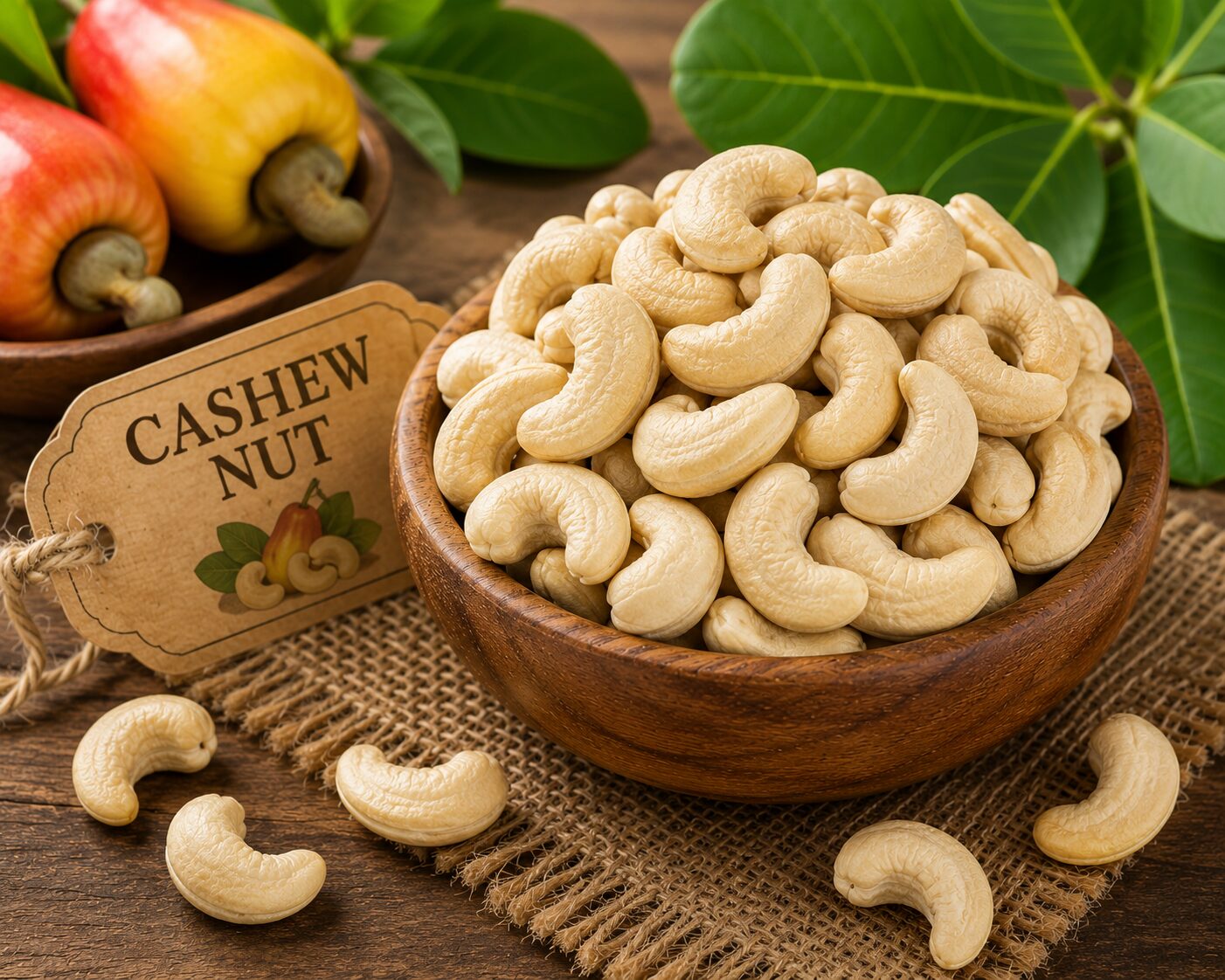
Cashew Nut (Introduction, Benefits, and Usages)
Cashew nut benefits are consistently underrated — people think of it as just a snack, not a medicinal food. But cashew’s nutritional and bioactive compound profile makes it one of the most therapeutically valuable nuts available, with documented effects on heart health, blood sugar, bone density, mental health, and skin. This guide covers what cashew actually contains, its top health benefits, Ayurvedic uses, and how to use it most effectively. See Wikipedia: Cashew. For related tree nuts with medicinal value, explore Chironji and Coconut.
What Is Cashew Nut? A Complete Introduction
Origin and History of Cashew Nut
The cashew tree (Anacardium occidentale) is native to northeastern Brazil, where indigenous peoples consumed the fruit and seeds long before European contact. Portuguese traders introduced cashew to Africa and Asia in the 16th century, and it rapidly integrated into Indian, Thai, and African cuisines and medicine traditions. Today, India, Vietnam, and Côte d’Ivoire are the world’s largest producers and processors.
Interestingly, what we call the cashew “nut” is botanically a seed — the true fruit of the cashew tree is the swollen peduncle (cashew apple) that grows above the seed. The seed grows in a double-shelled casing containing cashew nutshell liquid (CNSL), a caustic substance that must be removed during processing, which is why raw cashews in the shell aren’t sold commercially.
Key Compounds and Nutritional Profile
Cashews are nutritionally dense: approximately 18% protein, 44% fat (predominantly oleic acid — the same heart-healthy monounsaturated fat in olive oil), and 30% carbohydrate. The fat profile is excellent — high in oleic acid and low in saturated fat compared to other tree nuts. Key minerals: cashews are among the richest food sources of copper (essential for iron metabolism, antioxidant enzymes, and connective tissue), magnesium (muscle, nerve, and bone health), zinc (immunity, skin, and male reproductive health), and manganese.
Cashews also contain anacardic acids, cardanols, and cardols from the shell — these compounds have documented antimicrobial and anti-tumour properties in research. The kernel itself contains tocopherols (vitamin E) and plant sterols that contribute to cholesterol-lowering effects.
Top Health Benefits of Cashew Nut
Cashew Nut Benefits for Immunity and Overall Health
Cashew’s zinc and copper content directly supports immune function. Zinc is required for the development and function of immune cells, and deficiency significantly increases infection susceptibility. Copper is essential for superoxide dismutase — one of the body’s primary antioxidant defence enzymes. One serving of cashews (30g) provides over 30% of daily copper needs — making it one of the most copper-rich whole foods available.
Multiple meta-analyses of nut consumption show regular tree nut consumption (including cashews) is associated with significantly reduced all-cause mortality, cardiovascular disease risk, and type 2 diabetes incidence.
Cashew Nut for Skin, Hair, and Beauty
Copper from cashews is a co-factor for melanin synthesis — the pigment that colours skin and hair. Adequate copper intake supports even skin pigmentation and may delay premature greying. The copper and zinc in cashews also support collagen and elastin production — the structural proteins that keep skin firm and elastic.
Cashew nut oil (cold-pressed from the kernel) is used in traditional Indian skin care for moisturisation and treatment of dry, cracked skin. The oleic acid content makes it an excellent emollient that absorbs without leaving a greasy residue. See Coconut Oil for a complementary skin-nourishing oil.
Medicinal Properties of Cashew Nut
How Cashew Nut Works as a Natural Remedy
Cashew’s heart health benefits work through multiple mechanisms: oleic acid improves the LDL-to-HDL cholesterol ratio; plant sterols compete with cholesterol absorption in the intestine; and the magnesium content supports healthy blood pressure by relaxing blood vessel walls. Studies specifically on cashew consumption show reductions in LDL cholesterol without reducing beneficial HDL.
For blood sugar management, cashews have a low glycaemic index and contain compounds that appear to improve insulin sensitivity. A study in type 2 diabetics found that replacing 10% of daily calories with cashews improved insulin resistance markers. The magnesium in cashews also plays a key role in glucose metabolism — deficiency is common in type 2 diabetes and worsens insulin resistance.
Cashew Nut in Ayurveda and Traditional Medicine
In Ayurveda, cashew (Kaju) is classified as Brinhana (nourishing and weight-building), Balya (strength-giving), and Vata-reducing. It’s recommended for people who are underweight, exhausted, or recovering from illness. The nut is warming and heavy — ideal for Vata constitution types but should be used in moderation by Kapha types.
Traditional Brazilian medicine used cashew apple juice for anti-infective purposes, and cashew bark decoctions for throat infections and diabetes management. The CNSL from the shell has traditional applications for wart removal, ringworm, and skin infections — never used internally. See Wikipedia: Anacardium occidentale.
How to Use Cashew Nut — Practical Usages
Cashew Nut in Food, Tea, and Cooking
Eat a small handful (25–30g, roughly 18 cashews) daily as a snack — research benefits are typically observed at this serving size. Soaking cashews overnight improves digestibility by reducing phytic acid content, which otherwise binds minerals and reduces their absorption. Soaked cashews are also easier to blend into creamy sauces and dairy-free milk.
Cashew cream (blended soaked cashews with water) is an excellent dairy-free alternative in cooking — the fat and protein content creates a creamy texture without the allergen concerns of dairy. Cashews pair well with Cardamom and Saffron in traditional Indian milk-based sweets.
Cashew Nut as a Supplement or Topical Application
Cashew nut butter provides a concentrated, versatile way to increase daily cashew intake. A tablespoon in a smoothie or on toast delivers significant copper, magnesium, and zinc alongside healthy fats. Cashew nut oil applied topically moisturises dry skin, soothes cracked heels, and provides a natural emollient barrier for dry or sensitive skin conditions.
Side Effects and Precautions of Cashew Nut
- Tree nut allergy: cashew allergy is one of the most common tree nut allergies and can be severe — people with known tree nut allergies must avoid cashews entirely
- Calorie density: a handful of cashews contains about 160 calories — portion awareness matters if you’re managing weight
- Kidney stones: cashews are moderately high in oxalates — people prone to calcium oxalate kidney stones should moderate intake
- Kidney disease: high potassium and phosphorus content means people with kidney disease should consult their doctor about cashew intake
Frequently Asked Questions About Cashew Nut
What are the main cashew nut benefits for health?
The most documented cashew nut benefits are heart health support (oleic acid lowers LDL), blood sugar management (low GI, improves insulin sensitivity), bone health (magnesium, copper, manganese), immune support (zinc and copper), and skin and hair health through copper-dependent melanin and collagen synthesis.
How many cashews should I eat per day?
Research typically uses 30 grams (about 18 cashews) as the daily serving size where health benefits are observed. This provides meaningful amounts of copper, magnesium, zinc, and heart-healthy fats without excessive calorie intake. More isn’t necessarily better — consistency over time matters more than quantity.
Is cashew nut good for diabetes?
Yes — cashews have a low glycaemic index, and studies specifically show improved insulin resistance markers when cashews replace equivalent calories from refined carbohydrates. The magnesium content is particularly relevant for diabetes management, as magnesium deficiency is common in type 2 diabetes and worsens glucose metabolism. Always account for calories if managing weight alongside diabetes.
Are raw or roasted cashews healthier?
Both are nutritious. Dry-roasted cashews retain most nutrients. Oil-roasted adds unnecessary extra fat. The most important thing is choosing unsalted varieties to avoid excess sodium. Raw (heat-treated to neutralise CNSL) cashews are slightly higher in some vitamins, but the difference is small compared to the benefit of eating them consistently in either form.
What is cashew nut used for in Ayurveda?
In Ayurveda, cashew (Kaju) is used for building strength, nourishing weakened tissues, supporting healthy weight gain, and reducing Vata imbalances causing dryness, weakness, and nervous system disturbances. It’s incorporated into milk preparations and sweet dishes (like Kaju Katli) as a highly absorbable source of nourishment.
Cashew nut benefits are genuine and the food itself is one of the most nutritionally complete snacks available. A daily serving provides copper, magnesium, zinc, oleic acid, and plant protein — all in a form your body absorbs well. Eat them soaked or dry-roasted, in butter form or whole — just make them a consistent part of your diet rather than an occasional indulgence.



Add comment