
Dhataki (Introduction, Benefits, and Usages)
Dhataki – Introduction, Benefits, and Usages
Dhataki benefits are most specifically relevant to its role in classical Ayurvedic fermented preparations (Asava-Arishta) and its documented anti-haemorrhagic, anti-diarrhoeal, and wound-healing properties. Woodfordia fruticosa (fire flame bush) – called Dhataki in Sanskrit and Dhawai or Dhai in Hindi – is one of those Ayurvedic herbs that most people encounter without knowing it: its dried flowers are the primary fermentation catalyst in virtually every classical Ayurvedic Arishta formulation, including Dashmularishta, Ashwagandharishta, and hundreds of others. Understanding Dhataki reveals how Ayurvedic pharmaceutical science achieved sophisticated pharmacological fermentation centuries before modern biotechnology. See Wikipedia: Woodfordia fruticosa. For related Ayurvedic formulation herbs, explore Dashmularishta.
What Is Dhataki? A Complete Introduction
Origin and History of Dhataki
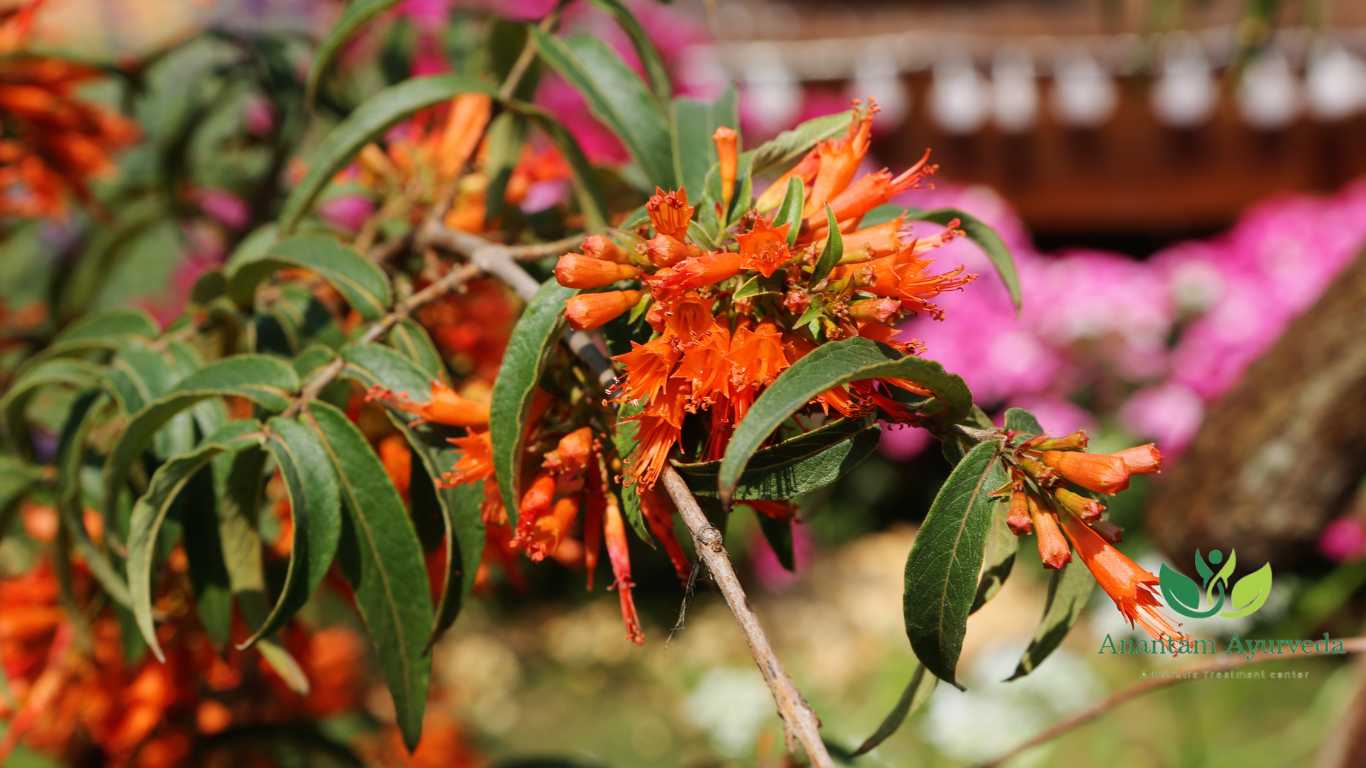
Dhataki (Woodfordia fruticosa), the fire flame bush or shiranjee, is a large deciduous shrub native to the Indian subcontinent, Southeast Asia, and parts of East Africa. It grows in dry deciduous forests and scrublands from sea level to about 1,500 metres elevation across India, Nepal, Sri Lanka, Myanmar, and China. The plant is striking in appearance – during flowering season, the entire shrub is covered in brilliant red tubular flowers that give it the “fire flame bush” name. In Ayurveda, Dhataki is mentioned in the Charaka Samhita and Ashtanga Hridayam as both a direct medicinal herb for gynaecological disorders, diarrhoea, and wounds, and as the essential fermentation activator (Sandhan karak) for all Asava-Arishta preparations. It has been used in Indian folk medicine, tribal medicine, and traditional Chinese medicine for centuries.
Key Compounds and Active Profile
Dhataki flowers contain a distinctive array of bioactive compounds. Tannins – including gallic acid, ellagic acid, and various hydrolysable tannins – are the primary astringent and anti-haemorrhagic compounds. Flavonoids include vitexin, orientin, quercetin, and kaempferol with antioxidant and anti-inflammatory activity. Oenothein A and B (macrocyclic ellagitannins) have demonstrated antifungal, antibacterial, and anti-inflammatory activity. Yeast cells naturally present on Dhataki flowers (primarily Saccharomyces cerevisiae and other wild yeasts) are the actual fermentation agents in Asava-Arishta preparations – Dhataki acts as a natural yeast delivery system, transferring wild yeast cultures into the fermenting preparations. This is an elegant piece of ancient biotechnology. See Wikipedia: Ellagitannins.
Top Health Benefits of Dhataki
Dhataki Benefits for Immunity and Overall Health
Dhataki’s most researched direct medicinal properties (separate from its fermentation role) are anti-diarrhoeal, anti-haemorrhagic, and antimicrobial. The high tannin content provides astringent action on the gut mucosa, reducing intestinal secretion and motility – the mechanism behind traditional use for diarrhoea and dysentery. The gallic acid and ellagic acid have documented antibacterial activity against enteric pathogens including E. coli, Salmonella, and Staphylococcus – providing both a mechanical astringent and a direct antimicrobial effect for infectious diarrhoea. Anti-haemorrhagic properties from the tannins are used in Ayurveda for uterine bleeding (Rakta Pradara), bleeding haemorrhoids, and other haemorrhagic conditions.
Dhataki for Skin, Hair, and Beauty
Dhataki’s tannin-rich flower preparations have traditional applications for skin and wound care. The astringent tannins promote wound contraction, reduce exudate, and provide antimicrobial protection at wound sites. Research confirms Dhataki extract promotes wound healing through increased collagen synthesis and faster epithelialisation compared to control preparations. For skin conditions, the ellagitannins and flavonoids provide anti-inflammatory and antioxidant protection. Gallic acid from Dhataki has documented anti-melanogenic activity – inhibiting tyrosinase enzyme and reducing melanin overproduction – potentially useful for hyperpigmentation treatments. Traditional use of Dhataki flower decoction as an astringent skin toner for oily and acne-prone skin is supported by its tannin chemistry.
Medicinal Properties of Dhataki
How Dhataki Works as a Natural Remedy
The fermentation role of Dhataki is its most distinctive pharmacological contribution. The wild yeast cells naturally present on Dhataki flowers (primarily Saccharomyces and related species) initiate and drive fermentation in Asava-Arishta preparations. This fermentation does multiple things: generates ethanol (5-10%) that acts as a natural preservative and bioavailability enhancer for the other herbs; creates fermentation byproducts (organic acids, esters, secondary metabolites) with their own therapeutic activity; and dramatically improves extraction of fat-soluble and poorly water-soluble phytochemicals from the other herbs in the formulation. The Dhataki tannins also interact with the proteins and polysaccharides in the fermenting mixture, modifying their structure and therapeutic properties. This is genuinely sophisticated pharmaceutical biology achieved empirically thousands of years before modern biotechnology.
Dhataki in Ayurveda and Traditional Medicine
In Ayurveda, Dhataki is classified as astringent and sweet in taste, cooling in potency, and Pitta-Kapha reducing. Primary Ayurvedic indications include Atisara (diarrhoea), Pravahika (dysentery), Rakta Pradara (uterine bleeding, menorrhagia), Arsha (haemorrhoids), and Vrana (wounds). The Charaka Samhita classifies Dhataki among the Sandhan karak (fermentation-initiating) substances – a unique category recognising its role in Asava-Arishta preparation. It’s also classified as a Grahi herb (one that absorbs excess moisture in the gut) – relevant for diarrhoea and malabsorption conditions. In Indian folk medicine, Dhataki bark decoction is used for fever; the flower decoction for gynaecological conditions; and the leaf paste for wound healing.
How to Use Dhataki – Practical Usages
Dhataki in Tea and Internal Use
Dhataki is primarily used medicinally rather than as a culinary herb. Dhataki flower decoction: boil 5-10g of dried Dhataki flowers in 400ml water, reduce to 100ml, strain and drink twice daily for diarrhoea, dysentery, or gynaecological bleeding conditions – the direct medicinal preparation. Indirectly through Arishtas: whenever you consume a classical Ayurvedic Arishta formulation (Dashmularishta, Ashwagandharishta, Saraswatarishta, etc.), you are already benefiting from Dhataki’s fermentation contribution to the bioavailability and preservation of the formulation. The flowers can also be used in home preparation of Asava-Arishtas following classical recipes under guidance from an Ayurvedic practitioner.
Dhataki as a Supplement or Topical Application
Wound care: dried and powdered Dhataki flowers applied to wounds provide astringent, antimicrobial, and wound-healing support – a traditional folk medicine application. Skin toner: prepare a concentrated Dhataki flower decoction, cool completely, strain well, and use as an astringent skin toner for oily or acne-prone skin – the tannins tighten pores and provide antimicrobial protection. Dhataki flower powder is available from Ayurvedic herb suppliers. Classical Ayurvedic formulations containing direct Dhataki (not just as fermentation catalyst) include Lodhradi churna and various gynaecological formulations for menorrhagia.
Side Effects and Precautions of Dhataki
- High tannin content: excessive internal use can cause constipation, reduce mineral absorption (iron, zinc, calcium), and irritate the gastric mucosa – use at therapeutic doses only
- Pregnancy: Dhataki has documented uterine-stimulant properties through its tannin and glycoside content – avoid therapeutic doses during pregnancy; it is actually used to stop abnormal uterine bleeding rather than promote it, but the uterine activity warrants caution
- Iron deficiency: the tannins inhibit iron absorption – separate from iron supplements or iron-rich meals by at least 2 hours
- Drug absorption: high tannin preparations can reduce absorption of certain drugs if taken simultaneously – separate medicinal Dhataki preparations from other oral medications by at least 1 hour
Frequently Asked Questions About Dhataki
What are the main Dhataki benefits?
Key Dhataki benefits: fermentation activation in classical Ayurvedic Arishta preparations (enhancing bioavailability of all other herbs), anti-diarrhoeal and anti-dysentery action through tannin astringency and antimicrobial activity, anti-haemorrhagic properties for uterine bleeding and haemorrhoids, wound healing promotion through collagen synthesis stimulation, astringent skin toning for oily and acne-prone skin, and potential anti-melanogenic benefits from gallic acid.
Why is Dhataki used in Arishta preparations?
Dhataki flowers carry natural wild yeast populations (primarily Saccharomyces species) on their surface. When added to the herb decoction with jaggery in Arishta preparation, these yeasts initiate fermentation, producing ethanol that preserves the formulation, enhances bioavailability of fat-soluble compounds, and creates beneficial fermentation byproducts. This is classical Ayurvedic biotechnology – using natural yeast cultures on flower surfaces to achieve controlled pharmaceutical fermentation. No Arishta formulation in classical Ayurveda is complete without Dhataki.
What is Dhataki used for in gynaecological conditions?
Dhataki is specifically indicated in Ayurveda for Rakta Pradara (excessive uterine bleeding/menorrhagia) through its astringent, haemostatic tannin content that reduces uterine blood flow. It’s also used for dysmenorrhoea (painful periods) and postpartum bleeding control. The classical Ayurvedic Stri Roga (women’s health) formulations commonly include Dhataki for these haemostatic applications. Always use under Ayurvedic physician supervision for gynaecological conditions.
Dhataki benefits represent two levels of medicine – the direct therapeutic applications for diarrhoea, bleeding, and wounds, and the indirect but equally important role as the biotechnological engine of classical Ayurvedic fermented medicine. Every time you take a classical Arishta preparation, you’re experiencing Dhataki’s contribution to Ayurvedic pharmaceutical science – a 2,000-year-old fermentation technology that modern pharmaceutical research is only beginning to fully appreciate.
Add comment