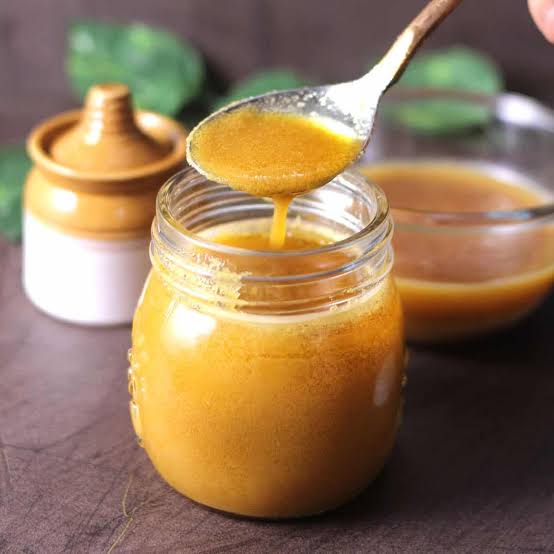
Ghee benefits go far beyond its role as a cooking fat – clarified butter (Ghrta in Sanskrit) occupies the highest position in Ayurvedic pharmacology of all foods, considered a genuine medicine that enhances digestion, strength, cognition, and longevity. Modern nutritional science has rehabilitated ghee from its wrongly maligned status as a “dangerous saturated fat” – the short and medium-chain fatty acids, fat-soluble vitamins, conjugated linoleic acid (CLA), and butyrate in ghee have documented benefits for gut health, brain function, and anti-inflammatory activity that are now supported by peer-reviewed research. See Wikipedia: Ghee. For complementary Ayurvedic fats, explore Coconut Oil.
What Is Ghee? A Complete Introduction
Origin and History of Ghee
Ghee (clarified butter) has been produced in the Indian subcontinent for at least 3,500 years – archaeological evidence suggests ghee production in the Indus Valley Civilisation. It holds the highest ritual and medicinal status of any food substance in Hinduism and Ayurveda – used in fire sacrifices (yajna), religious ceremonies, and as the primary therapeutic vehicle (anupana) in classical Ayurvedic pharmacology. The Vedas, Charaka Samhita, and Ashtanga Hridayam all describe ghee’s preparation, types, and extensive therapeutic applications. The traditional bilona method (from curd butter) is considered superior to direct cream ghee in Ayurvedic medicine.
Key Compounds and Nutritional Profile
Ghee is approximately 62% saturated fat, 29% monounsaturated fat, and 4% polyunsaturated fat. Its most therapeutically important components are: Butyrate (butyric acid) – a short-chain fatty acid that is the primary fuel source for colonocytes (gut lining cells), supports gut barrier integrity, inhibits histone deacetylases, and reduces colonic inflammation. Conjugated linoleic acid (CLA) – with documented anti-cancer, anti-diabetic, and body composition-improving properties. Fat-soluble vitamins A, D, E, and K2 (particularly in ghee from grass-fed cows). Short and medium-chain fatty acids (caproic, caprylic, capric acids) with rapid energy metabolism and antimicrobial properties. See Wikipedia: Butyric acid.
Top Health Benefits of Ghee
Ghee Benefits for Gut Health and Overall Health
Ghee’s most significant benefit is gut health through butyrate. Butyric acid constitutes about 4% of ghee and is the primary fuel for colonocytes. Adequate butyrate maintains the gut mucosal barrier, preventing intestinal permeability (“leaky gut”), and reduces colonic inflammation. Research shows butyrate supplementation reduces symptoms of inflammatory bowel disease (Crohn’s, ulcerative colitis) and IBS. Ghee stimulates bile secretion (Pachana effect in Ayurveda) – improving fat digestion, fat-soluble vitamin absorption, and liver function. The high smoke point (250 degrees Celsius) makes ghee the most stable cooking fat available – it doesn’t form harmful aldehydes or trans fats at normal cooking temperatures unlike most seed oils and butter.
Ghee for Skin, Hair, and Beauty
Ghee is one of Ayurveda’s most celebrated skin care substances. Applied topically, it is deeply moisturising (penetrating to deeper skin layers due to its short-chain fatty acid composition), anti-inflammatory (butyrate and CLA reduce skin inflammation), and wound-healing (promotes epithelialisation and collagen deposition). Cow ghee for lips – applied to chapped lips at bedtime – is a traditional Ayurvedic beauty remedy with genuine fatty acid rationale. For hair, ghee applied to scalp provides deep conditioning, anti-inflammatory scalp benefits, and fat-soluble vitamin A needed for healthy keratin synthesis. Ghee mixed with camphor is a classical Ayurvedic topical preparation for burns and skin rashes.
Medicinal Properties of Ghee
How Ghee Works as a Natural Remedy
Ghee’s role as Yogavahi (carrier/vehicle) in Ayurvedic pharmacology is its most pharmacologically sophisticated application. When herbs are processed with ghee (Sneha Paka), the fat-soluble components are efficiently extracted and carried in the ghee medium. When consumed, ghee acts as a bioavailability enhancer – its lipid medium enhances absorption of fat-soluble phytochemicals (curcumin in turmeric ghee absorbs far better in ghee than in water-based preparations). The CLA in ghee has documented anti-tumour activity against breast and colon cancer cell lines, improves insulin sensitivity, and modulates body composition by reducing fat mass while preserving lean mass.
Ghee in Ayurveda and Traditional Medicine
In Ayurveda, Ghrta (ghee) holds a uniquely exalted position – the Charaka Samhita states “of all fats, ghee is the best.” It is classified as sweet, cooling, heavy, and unctuous – reducing Vata and Pitta, strengthening Ojas (vital immunity), enhancing Medha (intellect), and serving as the universal anupana for all Pitta-type medicines. The classical Ashtanga Snehana tradition uses medicated ghees (Shatavari ghrita, Brahmi ghrita, Ashwagandha ghrita) as the primary therapeutic format for deep tissue rejuvenation in Panchakarma. Ghee is Tridosha-balancing at appropriate quantities – a rare distinction. It pairs with Turmeric, Ashwagandha, and Shatavari to enhance their bioavailability.
How to Use Ghee – Practical Usages
Ghee in Food and Cooking
Use ghee as your primary cooking fat – its high smoke point (250 degrees Celsius) makes it superior to butter, coconut oil, and most vegetable oils for high-heat cooking. 1-2 teaspoons daily is the Ayurvedic recommendation for adults for gut health, fat-soluble vitamin absorption, and cognitive function. Add a teaspoon of ghee to hot rice, roti, or dal at the table – the traditional Indian way of ensuring daily consumption. Take 1 teaspoon of ghee first thing in the morning on an empty stomach for gut health. Ghee is lactose and casein-free (removed during clarification), making it tolerable for most dairy-sensitive individuals.
Ghee as a Supplement or Topical Application
Medicated ghees (Shatavari ghrita, Brahmi ghrita, Ashwagandha ghrita) are available from Ayurvedic pharmacies – concentrated herb-ghee combinations for specific conditions including cognitive health, women’s health, and adaptogenic strength. Topically, apply plain ghee to dry lips, hands, elbows, and any dry inflamed skin areas – it absorbs well and provides lasting moisture. Nasya (nasal ghee drops) – 2-3 drops of warm ghee in each nostril in the morning – is a classical Ayurvedic practice for lubricating nasal passages, cognitive clarity, and reducing Vata in the head and neck region.
Side Effects and Precautions of Ghee
- High caloric density: ghee is pure fat (120 calories per tablespoon) – moderate consumption as part of a balanced diet is appropriate; large quantities will contribute to weight gain
- Cardiovascular concerns: moderate consumption (1-2 tsp daily) from grass-fed sources is unlikely to harm cardiovascular health and may benefit it through CLA and butyrate; discuss with physician if you have existing heart disease before increasing ghee intake significantly
- Kapha aggravation: excessive ghee consumption increases Kapha – causes weight gain, congestion, and sluggishness in Kapha-dominant individuals or consumed in excess
Frequently Asked Questions About Ghee
What are the main ghee benefits for health?
Key ghee benefits: gut health through butyrate (primary fuel for colonocytes, maintains gut barrier integrity); bioavailability enhancement as Yogavahi for fat-soluble herb compounds; superior cooking stability (high smoke point, no harmful oxidation products); fat-soluble vitamin delivery (A, D, E, K2); CLA for body composition and anti-tumour effects; skin and hair moisturisation and anti-inflammatory benefits topically; and cognitive support through Medhya (intellect-enhancing) classification in Ayurveda.
Can lactose-intolerant people eat ghee?
Yes – the clarification process that converts butter to ghee removes virtually all the lactose (milk sugar) and casein (milk protein) that cause dairy intolerance reactions. Most people with lactose intolerance and many with milk protein sensitivity can consume ghee without reaction. However, people with severe dairy allergies (IgE-mediated cow’s milk protein allergy) may still react to trace amounts of dairy proteins potentially present in ghee – individual tolerance varies and should be assessed carefully.
Is ghee good for weight loss?
Paradoxically, moderate ghee consumption may support rather than hinder weight management. The CLA in ghee reduces body fat while preserving lean muscle mass in research. The high fat content promotes satiety, potentially reducing overall caloric intake. Butyrate improves insulin sensitivity and metabolic function. However, ghee is calorie-dense – the quality of fat benefits metabolism, not unlimited quantity. The Ayurvedic recommendation of 1-2 teaspoons daily is a sensible moderate amount where benefits predominate over caloric concerns.
Ghee benefits reward consistent moderate daily use – not as an indulgence but as medicine. The Charaka Samhita’s designation of ghee as the best of all fats has held up remarkably well to modern nutritional scrutiny: butyrate for gut health, CLA for metabolic health, fat-soluble vitamins for micronutrient status, and the unique Yogavahi property for enhancing all other herbal medicines are genuine, evidence-supported benefits that position ghee as one of Ayurveda’s most foundational healing foods.