
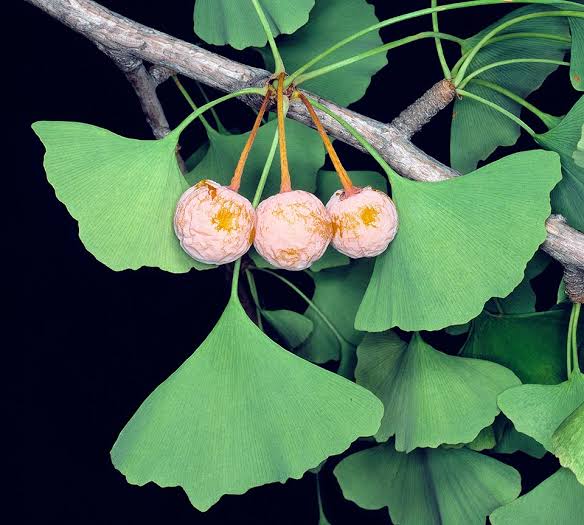
Ginkgo biloba (Introduction, Benefits, and Usages)
Ginkgo biloba benefits have been studied in over 400 clinical trials — making this ancient tree one of the most researched herbal medicines in the world. The primary applications are cognitive function, cerebral blood flow, peripheral circulation, tinnitus, and eye health. What makes Ginkgo unique is that its active compounds — ginkgoflavonglycosides and terpene lactones — occur nowhere else in nature. See Wikipedia: Ginkgo biloba. For related cognitive herbs, explore Brahmi and Ashwagandha.
What Is Ginkgo biloba? A Complete Introduction
Origin and History of Ginkgo biloba
Ginkgo biloba is a living fossil — a tree species unchanged for 270 million years. It survived the dinosaur extinction and even the Hiroshima atomic bomb (six trees survived near ground zero and are still alive today). Native to China, it was sacred in Buddhist and Taoist traditions, planted in temple grounds for centuries. Traditional Chinese medicine uses Ginkgo seeds (bai guo) for respiratory and urinary conditions, and the leaves (yin guo ye) for circulation and cognitive support. The standardised leaf extract EGb 761 — developed in Germany in the 1960s — is now one of the most prescribed herbal medicines globally.
Key Compounds and Nutritional Profile
Standardised Ginkgo extract (EGb 761) contains two key compound classes. Flavonol glycosides (24%) — quercetin, kaempferol, and isorhamnetin glycosides — provide antioxidant and vascular protective activity. Terpene lactones (6%) — ginkgolides A, B, C and bilobalide — are responsible for platelet-activating factor antagonism and neuroprotection. Ginkgolide B is one of the most potent natural PAF antagonists known. Bilobalide is a sesquiterpene found only in Ginkgo, with documented neuroprotective effects against multiple forms of neuronal damage. See Wikipedia: Ginkgolide.
Top Health Benefits of Ginkgo biloba
Ginkgo biloba Benefits for Immunity and Overall Health
Ginkgo’s cognitive benefits are its most studied application. A Cochrane review of 36 trials found EGb 761 at 120–240 mg daily significantly improved cognitive function, daily activities, and quality of life in people with Alzheimer’s disease and vascular dementia — with effects comparable to approved dementia medications. The 5-year GuidAge study (2,854 participants) found Ginkgo reduced conversion from memory complaints to Alzheimer’s disease by 50% in consistent users.
Does Ginkgo work for healthy adults too? Yes — meta-analyses confirm modest improvements in processing speed, attention, and executive function, particularly for age-related cognitive slowing.
Ginkgo biloba for Skin, Hair, and Beauty
The flavonol glycosides in Ginkgo protect skin cells from UV-induced oxidative damage and support microcirculation — improving skin tone and reducing the appearance of age-related changes. For hair, improved scalp microcirculation means better nutrient delivery to follicles. Ginkgo’s antioxidant activity also protects lipids in skin cell membranes from peroxidation, which is directly relevant for premature skin ageing. It’s now a common ingredient in anti-ageing skincare formulations.
Medicinal Properties of Ginkgo biloba
How Ginkgo biloba Works as a Natural Remedy
Ginkgo’s vascular mechanism centres on ginkgolide B’s PAF antagonism. Platelet-activating factor (PAF) promotes platelet aggregation, vasoconstriction, and inflammation. By blocking PAF receptors, ginkgolides reduce platelet clumping, promote vasodilation, and improve microvascular blood flow — in the brain, retina, cochlea, and limb circulation. The flavonol glycosides add antioxidant protection to vascular endothelium and neurons. Bilobalide protects neurons from ischaemic damage through GABA-A receptor modulation and mitochondrial protective effects.
Ginkgo biloba in Ayurveda and Traditional Medicine
Ginkgo isn’t a classical Ayurvedic herb — it’s native to China, not the Indian subcontinent. But it’s been integrated into contemporary Ayurvedic and integrative medicine practice for cognitive health, particularly for Vata-type neurological conditions. The principle of Medhya (cognitive-enhancing) therapy in Ayurveda aligns well with Ginkgo’s cerebrovascular mechanism. It pairs powerfully with Brahmi for comprehensive natural cognitive support — Brahmi providing adaptogenic neuroprotection while Ginkgo improves cerebral blood flow.
How to Use Ginkgo biloba — Practical Usages
Ginkgo biloba in Food, Tea, and Cooking
Ginkgo nuts (seeds) are consumed as food in China and Japan — roasted or in congee. Don’t eat more than 10 nuts per day — large quantities can cause seizures from 4-methoxypyridoxine, a vitamin B6 antagonist found in the seeds. Dried leaf tea is consumed traditionally but provides unpredictable active compound concentrations. For therapeutic use, standardised extract capsules are strongly preferred over raw leaf tea.
Ginkgo biloba as a Supplement or Topical Application
120–240 mg daily of standardised EGb 761 extract (24% flavonol glycosides, 6% terpene lactones) — divided into 2–3 doses with meals — is the evidence-based therapeutic dose. Allow 4–6 weeks for initial effects and 3–6 months for full benefit. Ginkgo’s vascular effects accumulate gradually. Choose brands with third-party standardisation verification. For topical use, Ginkgo extract is incorporated into anti-ageing serums and eye creams for antioxidant and circulation-boosting benefits.
Side Effects and Precautions of Ginkgo biloba
- Anticoagulant interaction: significant interaction risk with warfarin, aspirin, and clopidogrel — discuss with your doctor before using if on blood thinners
- Surgery: stop Ginkgo 2 weeks before any surgery due to antiplatelet effects and bleeding risk
- Seeds in large quantity: more than 10 ginkgo nuts can cause seizures; standardised leaf extract is safe
- Pregnancy: insufficient safety data — avoid during pregnancy
Frequently Asked Questions About Ginkgo biloba
What are the main Ginkgo biloba benefits?
Key Ginkgo biloba benefits: cognitive improvement in dementia and age-related decline (Cochrane evidence), improved cerebral blood flow, peripheral circulation support for intermittent claudication, tinnitus reduction, retinal and optic nerve circulation for glaucoma and macular degeneration, antioxidant protection through flavonol glycosides, and neuroprotection via bilobalide activity.
Can Ginkgo biloba improve memory?
Yes — with nuance. In people with Alzheimer’s disease and vascular dementia, EGb 761 significantly improves cognitive function and daily activities (Cochrane review of 36 trials). For people with age-related memory complaints, the GuidAge study found 50% reduced Alzheimer’s conversion risk with consistent long-term use. For healthy younger adults, the cognitive enhancement evidence is real but modest — improvements in processing speed and attention rather than dramatic memory enhancement.
How long does Ginkgo biloba take to work?
Initial effects on mood and mild cognitive changes may be noticed within 4–6 weeks. Meaningful vascular and cognitive improvements accumulate over 3–6 months. The GuidAge dementia prevention trial ran for 5 years — Ginkgo’s protective benefits appear to be cumulative over time, not a quick cognitive boost. Consistency matters far more than dose variation.
How to use Ginkgo biloba in traditional medicine?
In traditional Chinese medicine, Ginkgo seeds treat asthma, cough, and urinary conditions. The leaves are used for cardiovascular and cognitive applications. In contemporary integrative medicine, Ginkgo in traditional medicine contexts is typically used as a standardised extract for dementia, tinnitus, peripheral vascular disease, and normal-tension glaucoma — applications grounded in both traditional use and clinical evidence.
What is the best Ginkgo biloba supplement?
Look for standardised EGb 761 extract or equivalent — 24% ginkgoflavonglycosides and 6% terpene lactones. The most clinically studied commercial preparations include Tanakan, Rökan, and Tebonin — these specific EGb 761 formulations have the most robust trial evidence. Generic standardised Ginkgo at the same ratios is comparable. Always choose third-party verified products.
Ginkgo biloba benefits are best realised through consistent, long-term supplementation with a properly standardised extract. It’s one of the most evidence-supported herbal medicines for cognitive applications — if you’re concerned about memory, concentration, or age-related cognitive changes, Ginkgo is one of the first herbs to consider. Start at 120 mg daily with meals, increase to 240 mg after 6 weeks if needed, and commit to at least 3 months before assessing results.

Add comment