
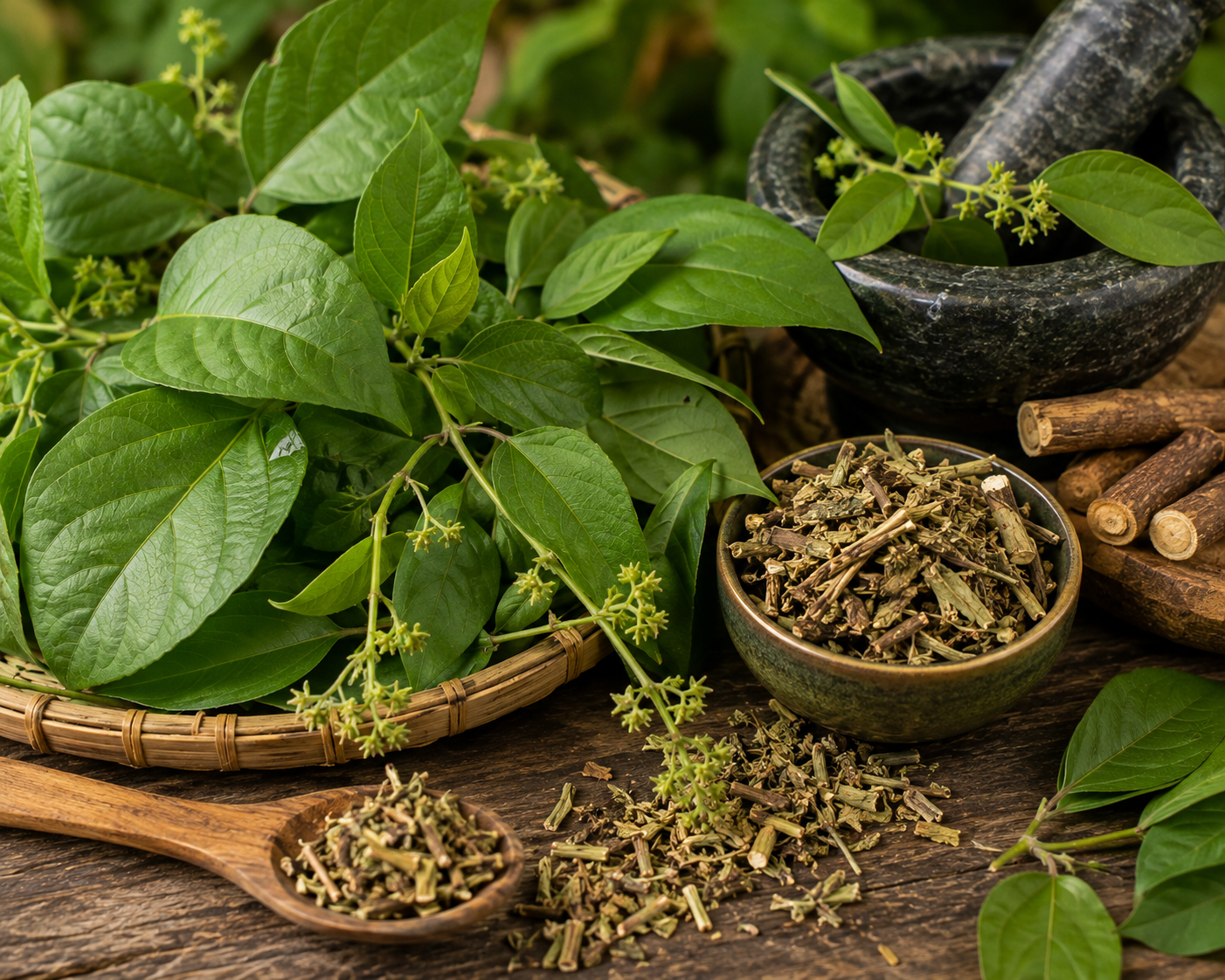
Gudmar (Introduction, Benefits, and Usages)
Gudmar benefits for blood sugar management are among the most impressive in herbal medicine — Gymnema sylvestre is called “Gurmar” (sugar destroyer) in Hindi for a reason. Its gymnemic acids physically block sweet taste receptors on the tongue AND inhibit intestinal glucose absorption AND stimulate insulin secretion AND regenerate pancreatic beta cells — a four-pronged anti-diabetic action that no single pharmaceutical drug matches. Ayurveda has used Gudmar for over 2,000 years for Madhumeha (diabetes). See Wikipedia: Gymnema sylvestre. For related diabetes herbs, explore Karela and Vijaysar.
What Is Gudmar? A Complete Introduction
Origin and History of Gudmar
Gudmar (Gymnema sylvestre) is a woody climbing plant native to the tropical forests of India, Sri Lanka, and parts of Africa. The Sanskrit name “Gurmar” (later Gudmar in common usage) means “destroyer of sugar” — precisely naming its primary therapeutic property. The Charaka Samhita and Sushruta Samhita both describe Meshasringi (Gudmar’s classical Ayurvedic name) for treatment of Madhumeha (honey-like urine/diabetes) and other urinary metabolic disorders. Traditional Ayurvedic healers apparently discovered that chewing the leaves temporarily blocks the ability to taste sweetness — an observation confirmed by modern receptor pharmacology. Japanese researchers extensively studied Gymnema beginning in the 1980s, identifying gymnemic acids and establishing the biochemical mechanisms for what Ayurvedic practitioners had used empirically for millennia.
Key Compounds and Active Profile
Gudmar’s primary bioactive compounds are gymnemic acids — a family of triterpenoid saponins structurally similar to glucose. This molecular similarity to glucose is why gymnemic acids block both sweet taste receptors (which recognise glucose-like structures) and intestinal glucose transporters (which normally move dietary glucose from gut into blood). Gurmarin is a polypeptide that additionally blocks sweet taste receptor binding. Other active compounds include gymnemasaponins, gymnemagenin, alternoside, and betaine. The combination of these compounds gives Gudmar its unique multi-site anti-diabetic profile. See Wikipedia: Gymnemic acid.
Top Health Benefits of Gudmar
Gudmar Benefits for Blood Sugar and Overall Health
Gudmar’s anti-diabetic evidence is exceptionally strong for a herbal medicine. A clinical study published in the Journal of Ethnopharmacology found Gymnema sylvestre extract (400 mg daily for 18–20 months) allowed type 2 diabetic patients on conventional antidiabetic drugs to significantly reduce their drug dosage — with some achieving normal blood sugar control without drugs. Fasting blood glucose dropped from an average of 174 mg/dL to 124 mg/dL. Glycosylated haemoglobin (HbA1c) reduced significantly. For type 1 diabetes, a separate study found similar benefit — reduced insulin requirements and improved HbA1c control.
What makes Gudmar uniquely effective? It works through four mechanisms simultaneously: blocking intestinal glucose absorption (reducing post-meal glucose spike), stimulating insulin secretion from pancreatic beta cells, improving insulin receptor sensitivity in peripheral tissues, and — most uniquely — potentially regenerating pancreatic beta cells through activation of specific regenerative pathways.
Gudmar for Weight Management, Skin, and Hair
Gudmar’s sugar craving reduction mechanism is straightforward and powerful — gymnemic acids block sweet taste receptors for 1–2 hours after application, making sweet foods less appealing. This directly reduces caloric intake from sugar in people trying to manage weight. Clinical studies confirm Gudmar supplementation reduces sugar cravings and sweet food intake. The metabolic benefits extend to skin — better blood sugar control reduces glycation (sugar-protein crosslinking that degrades collagen and elastin, causing premature skin ageing). Improved insulin sensitivity also reduces the insulin-stimulated sebum overproduction that contributes to acne.
Medicinal Properties of Gudmar
How Gudmar Works as a Natural Remedy
Gudmar’s mechanisms are unusually well-characterised for a herbal medicine. Intestinal glucose absorption inhibition: gymnemic acids are absorbed by intestinal cells alongside glucose through the same transport proteins — occupying SGLT1 without triggering glucose absorption, effectively reducing glucose uptake from the gut. Sweet taste blocking: gymnemic acids bind to the same receptor sites as glucose on taste buds, blocking sweet taste signals — this reduces palatability of sweet foods and sugar cravings. Insulin secretion: gymnemic acids stimulate membrane depolarisation in pancreatic beta cells, triggering insulin release through the same calcium-dependent mechanism as sulfonylurea drugs. Beta cell regeneration: animal studies show gymnemic acids activate beta cell regenerative genes — potentially restoring functional beta cell mass in diabetics.
Gudmar in Ayurveda and Traditional Medicine
In Ayurveda, Gudmar (Meshasringi) is classified as bitter, astringent, and pungent in taste, heating, and specifically targeting Medas (fat tissue) and Kleda (excess moisture/mucus) — the pathological elements central to Prameha (metabolic disorders including diabetes). Classical indications include Madhumeha (type 2 diabetes characterised by sweet urine), Medoroga (obesity), Kushtha (skin diseases), and conditions of excess Kapha in general. Gudmar churna (powder) or decoction before meals is the classical preparation. It pairs synergistically with Karela for comprehensive anti-diabetic management and with Vijaysar for blood sugar stabilisation.
How to Use Gudmar — Practical Usages
Gudmar in Tea and Traditional Preparations
Gudmar leaf chewing: chewing 2–4 fresh or dried Gudmar leaves before a sweet meal blocks sweet taste for 1–2 hours — this is the traditional “sugar destroyer” experience and practically reduces desire for sweet foods. Gudmar decoction: boil 5g of dried Gudmar leaf in 200ml water for 10 minutes, strain and drink 30 minutes before meals — the standard preparatory blood sugar management approach. Gudmar powder (Churna): 3–5g with warm water twice daily before meals is the standard Ayurvedic therapeutic dose for blood sugar management.
Gudmar as a Supplement
Standardised Gymnema sylvestre extract (standardised to 25% gymnemic acids, 400 mg daily) is the form used in clinical trials. Take 30 minutes before meals for best blood sugar management results. Critical caution: Gudmar can cause significant hypoglycaemia in people on antidiabetic medications — blood glucose must be monitored carefully and drug doses may need reduction under medical supervision. This isn’t a herb to add to diabetic medication without informing your doctor. It’s powerful enough to require dose adjustment of pharmaceuticals.
Side Effects and Precautions of Gudmar
- Hypoglycaemia risk: Gudmar’s potent blood sugar-lowering effects combined with antidiabetic drugs can cause dangerously low blood sugar — essential to monitor glucose and inform your doctor
- Drug interactions: potentiates insulin and sulfonylurea drugs significantly; possibly interacts with heart medication; inform all healthcare providers you’re using Gudmar
- Pregnancy and breastfeeding: insufficient safety data — avoid during pregnancy and breastfeeding
- Surgery: stop Gudmar at least 2 weeks before surgery — blood sugar management during and after anaesthesia needs to be carefully controlled
Frequently Asked Questions About Gudmar
What are the main Gudmar benefits for health?
Key Gudmar benefits: blood sugar reduction through four simultaneous mechanisms (intestinal glucose absorption inhibition, insulin secretion stimulation, insulin sensitivity improvement, potential beta cell regeneration), sugar craving suppression through taste receptor blocking, weight management support through reduced caloric intake from sugar, cardiovascular benefits through improved metabolic control, cholesterol reduction, and potential anti-obesity effects through Medas (fat tissue) reduction in Ayurvedic terms.
Can Gudmar replace diabetes medication?
Gudmar shouldn’t be used as a replacement for prescribed diabetes medication without medical supervision. However, the clinical evidence suggests that under medical supervision, Gudmar supplementation may allow dose reduction of antidiabetic drugs in type 2 diabetics — the 18-month clinical study showed patients reducing drug dosage while maintaining or improving blood sugar control. This is a decision that must involve your doctor, with careful blood glucose monitoring throughout. Never stop or reduce diabetes medication without medical guidance.
How does Gudmar block the taste of sugar?
Gymnemic acids and gurmarin in Gudmar are structurally similar to glucose. They bind to the same receptor sites on sweet taste buds that glucose and other sweeteners occupy, blocking these receptors without triggering a sweet signal. The result: for 1–2 hours after chewing Gudmar leaves or taking Gudmar extract, sweet foods taste flat and tasteless. This isn’t a trick — it’s receptor pharmacology. The blocking effect fades as gymnemic acids are cleared from receptor sites. It works on natural sugar, artificial sweeteners, and all sweet-tasting compounds.
How long does Gudmar take to work for blood sugar?
The acute blood sugar-lowering effect (from intestinal glucose absorption inhibition) occurs with the first dose taken before a meal. Meaningful blood sugar control improvements accumulate over 4–8 weeks of consistent use as insulin sensitivity and secretion improve. The most dramatic effects in clinical trials (including HbA1c reduction) developed over 3–6 months of continuous supplementation. Begin monitoring blood glucose from the first week if you’re on antidiabetic medication — the effects can be rapid and medication adjustment may be needed quickly.
Can Gudmar help with sugar cravings?
Yes — this is one of Gudmar’s most practical applications for non-diabetic users. Chewing Gudmar leaves or taking a Gudmar capsule 15–30 minutes before situations where you anticipate sugar cravings (after dinner, at parties, in the afternoon) blocks sweet taste perception for 1–2 hours. Sweet foods become less appealing, making it easier to choose less sweet options or reduce portion sizes. Clinical studies in overweight adults confirm Gudmar supplementation significantly reduces sugar and carbohydrate intake, supporting weight management goals.
Gudmar benefits are among the most clinically impressive in Ayurvedic medicine — this is a herb that genuinely competes with pharmaceutical anti-diabetic drugs in mechanism and clinical effect. If you’re managing blood sugar, managing weight through sugar reduction, or looking for a sugar craving tool, Gudmar deserves serious consideration. Just treat it with the respect it deserves: it’s powerful enough to interact with medication, powerful enough to require blood glucose monitoring, and powerful enough that 2,000 years of Ayurvedic “sugar destroyer” reputation isn’t an exaggeration.


Add comment