
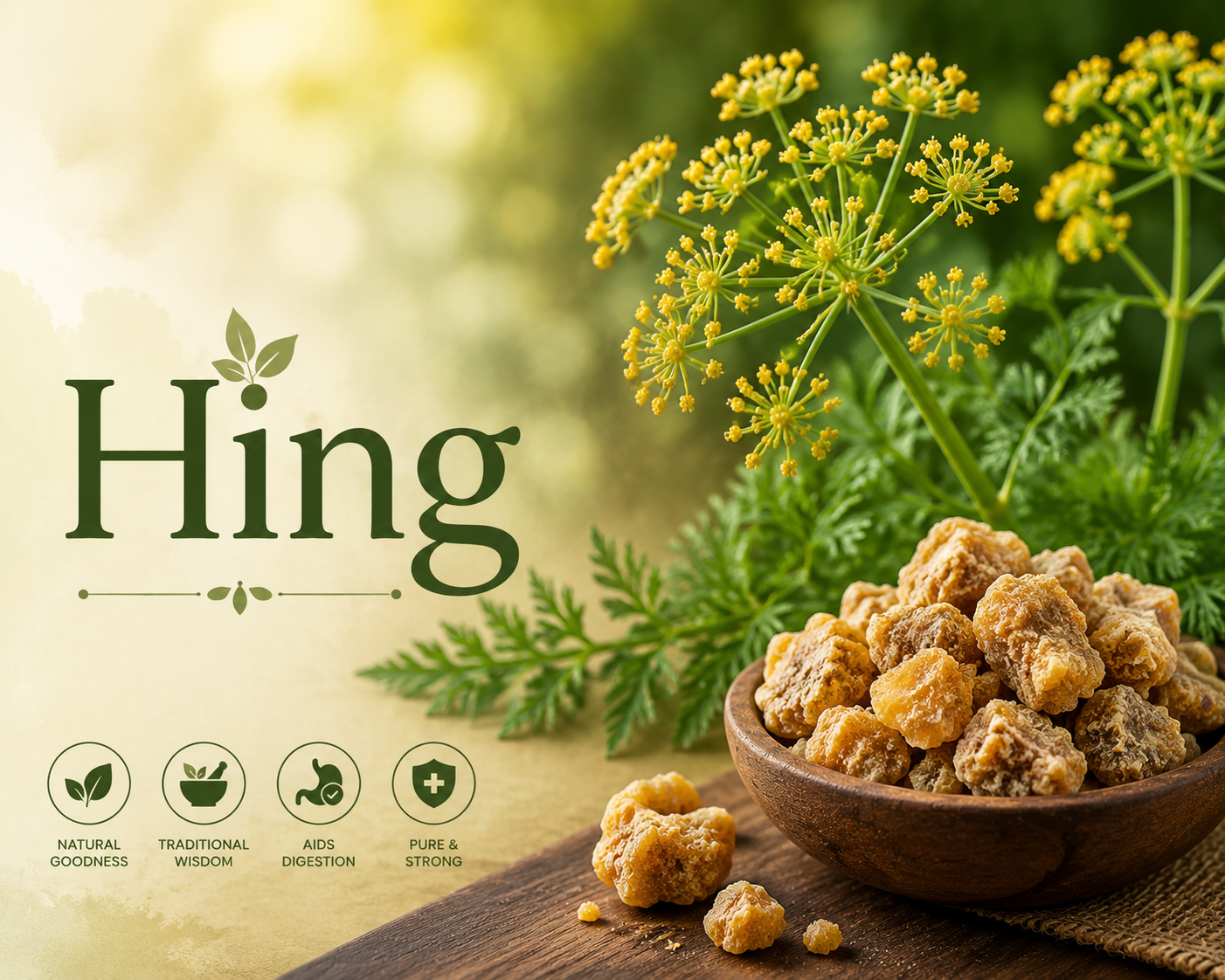
Hing (Introduction, Benefits, and Usages)
Hing benefits for digestive health are perhaps unmatched in the spice kingdom — Ferula assa-foetida (Hing, Asafoetida, Heeng) has been used for over 2,000 years to relieve flatulence, bloating, irritable bowel, and spasmodic gut conditions with near-universal consistency across Ayurvedic, Persian, Greek, and North African traditional medicine. Its pungent sulphur compounds instantly relax intestinal smooth muscle, reduce fermentation, and stimulate digestive secretions. Ayurveda calls it Hingu — one of the most potent Deepana (digestive fire kindlers) in the pharmacopoeia. See Wikipedia: Asafoetida. For related digestive herbs, explore Ajwain and Cumin.
What Is Hing? A Complete Introduction
Origin and History of Hing
Hing (Ferula assa-foetida) is a perennial herb in the carrot family (Apiaceae), native to the high mountain steppes of Iran, Afghanistan, and Central Asia. The gum resin is extracted from the plant’s large underground roots and stems, then dried into the familiar brownish-yellow granules used in cooking and medicine. The name “assa-foetida” derives from Persian “aza” (resin) and Latin “foetida” (stinking) — reflecting its powerful sulphurous aroma before cooking. Despite the raw smell, cooked Hing develops a remarkably pleasant onion-garlic-like flavour. It was so valued in ancient Rome that it was worth its weight in silver. Ayurveda has used Hingu (Hing) as one of the most important digestive medicines since Vedic times — the Charaka Samhita describes it extensively.
Key Compounds and Active Profile
Hing’s bioactive compounds include ferulic acid esters (particularly foetidin and assafoetidin) — the primary antispasmodic and antiflatulent compounds that relax intestinal smooth muscle. Sulphur-containing compounds (including secondary alkyl sulphides) provide the characteristic aroma and have antimicrobial, antiviral, and antiparasitic activity. Polysulphide derivatives have anticonvulsant and sedative properties. Coumarins and sesquiterpene coumarins (particularly farnesiferol A, B, C) have antispasmodic and calcium channel blocking activity relevant to gut spasm. Ferulic acid provides antioxidant, anti-inflammatory, and hepatoprotective activity. See Wikipedia: Ferulic acid.
Top Health Benefits of Hing
Hing Benefits for Digestion and Overall Health
Hing’s digestive benefits are its most clinically consistent and traditionally validated application. The ferulic acid esters and sesquiterpene coumarins in Hing relax intestinal smooth muscle spasm — directly relieving colic, bloating, and the cramping associated with irritable bowel syndrome. This antispasmodic action is comparable to pharmaceutical antispasmodics like hyoscine, but without the side effects. Hing also stimulates bile production (improving fat digestion), enhances gastric acid secretion (improving protein digestion), reduces fermentation in the gut by inhibiting the bacteria responsible for gas production, and has direct antiflatulent action through carminative compounds that prevent gas bubble coalescence.
Clinical studies confirm Hing extract reduces IBS symptoms — particularly bloating, flatulence, and abdominal pain — significantly more than placebo. It’s one of the best-evidenced natural antispasmodic and carminative medicines available.
Hing for Respiratory Health, Skin, and Hair
Hing’s sulphur compounds have documented antiviral activity against respiratory viruses and antimicrobial activity against respiratory bacteria. It’s been used traditionally for whooping cough, bronchitis, and asthma — the antispasmodic action relaxes bronchial smooth muscle (bronchodilation) while the antimicrobial compounds address the infectious component. For skin, Hing’s anti-inflammatory ferulic acid and antimicrobial sulphur compounds make it useful for acne — applied topically (small amount of Hing paste in water) on acne lesions, the antimicrobial and anti-inflammatory action reduces breakouts. The anti-inflammatory properties also reduce skin redness and irritation.
Medicinal Properties of Hing
How Hing Works as a Natural Remedy
Hing’s antispasmodic mechanism involves calcium channel blocking activity — sesquiterpene coumarins (farnesiferols) block L-type calcium channels in smooth muscle cells of the gut and bronchi, preventing the calcium influx required for muscle contraction. This directly relaxes intestinal and bronchial smooth muscle without affecting nerve transmission — a clean, peripheral antispasmodic mechanism. The antiflatulent mechanism involves inhibition of gut bacteria responsible for fermentation (particularly Clostridium and Bacteroides species) and prevention of gas bubble coalescence through surfactant-like activity. Hing’s anticoagulant action comes from coumarin compounds that inhibit platelet aggregation and thrombin activity.
Hing in Ayurveda and Traditional Medicine
In Ayurveda, Hingu (Hing) is classified as pungent and bitter in taste, hot in potency, and is the most powerful Vata-reducing culinary spice available. Classical indications include Adhmana (flatulence/bloating), Shula (colic pain), Kasa (cough), Shwasa (asthma), Krimi (intestinal parasites), and Vishuchika (cholera-like conditions). Hing is considered the primary Deepana (digestive fire stimulant) and Vata-Nashaka (Vata destroyer) spice — more potent than ginger for acute Vata-type digestive disturbances. Classical formulations include Hingwashtak Churna (eight Hing-combined digestive herbs), Hingu Traya Churna, and various gut-targeted formulations where Hing is the primary medicine. It pairs with Ajwain for synergistic antiflatulent and antispasmodic benefit.
How to Use Hing — Practical Usages
Hing in Food, Tea, and Cooking
A pinch (1/4 teaspoon) of Hing added to hot oil at the start of cooking — the most common Indian culinary use — blooms the sulphur compounds, developing the flavour and distributing the digestive-stimulating compounds through the entire dish. For immediate digestive relief: dissolve a tiny pinch of Hing (size of a lentil) in warm water with rock salt and drink as a digestive tonic. For gas and bloating: Hing roasted in ghee, mixed with warm water — one of Ayurveda’s fastest-acting digestive remedies. Adding Hing to legume dishes (dal, beans, lentils) during cooking is the traditional way to prevent the gas that legumes typically produce — it inhibits the gut fermentation of oligosaccharides from legumes.
Hing as a Supplement or Topical Application
Hing extract supplements (200–500 mg standardised extract daily) are available for IBS and functional digestive conditions. For acute digestive spasm or bloating, 1/4 teaspoon of food-grade Hing dissolved in warm water is faster-acting than capsules. Topical use: a very small paste of Hing in water or oil applied to the navel (Nabhi Chikitsa — Ayurvedic navel treatment) is a traditional therapy for infantile colic and adult digestive spasm — the transdermal absorption of antispasmodic compounds through the thin skin of the navel is a plausible mechanism. For acne: small amounts of Hing paste (diluted with water) applied topically to spots provides antimicrobial and anti-inflammatory benefit.
Side Effects and Precautions of Hing
- Blood thinning: Hing’s coumarin content has anticoagulant properties — avoid high doses if on warfarin or antiplatelet drugs; stop 2 weeks before surgery
- Pregnancy: traditionally used as an emmenagogue — avoid medicinal doses during pregnancy; culinary amounts in food are generally considered safe
- Infants under 5 years: avoid giving Hing supplements to very young children — individual sensitivity is high; topical navel application is traditional but seek advice before internal use in infants
- CNS medications: Hing’s sedative polysulphide compounds may interact with CNS depressants — avoid combining with sedatives, anxiolytics, or anticonvulsants
Frequently Asked Questions About Hing
What are the main Hing benefits for health?
Key Hing benefits: potent antiflatulent and carminative action for gas and bloating (fastest-acting natural remedy), antispasmodic intestinal smooth muscle relaxation for IBS and colic, digestive fire stimulation (Deepana) improving gastric and bile secretion, antimicrobial and antiparasitic effects from sulphur compounds, bronchodilatory antispasmodic action for asthma and cough, anticoagulant activity from coumarins, anti-inflammatory ferulic acid effects, and Vata-balancing as the most potent Vata-reducing culinary spice in Ayurveda.
Why does Hing smell so bad but taste good when cooked?
The raw smell comes from secondary alkyl sulphides — the same compound class that gives garlic its smell. When these sulphides are heated in fat (oil or ghee), they undergo thermal decomposition and oxidation, transforming into lighter, more volatile sulphur compounds with onion-like and savoury characteristics rather than the raw pungent smell. It’s the same reason cooked garlic smells and tastes entirely different from raw garlic. The Ayurvedic practice of tempering Hing in hot fat before adding other ingredients ensures this chemical transformation occurs, giving the pleasant flavour while still delivering the therapeutic sulphur compounds to the food.
How to use Hing for gas and bloating?
For immediate gas and bloating relief: dissolve a small pinch of Hing (rice-grain to lentil-size) in a tablespoon of warm water, add a pinch of Himalayan rock salt, and drink. Relief typically comes within 10–20 minutes. Alternatively, heat a tiny amount of Hing in 1 teaspoon of warm ghee, add to warm water and drink. For prevention during legume meals: add Hing to the cooking oil at the beginning of cooking beans or lentils. Using Hing in food consistently — especially in legume dishes — prevents chronic gas issues better than treating each episode reactively.
Is Hing safe for IBS?
Hing is one of the best-supported natural remedies for IBS. A clinical trial found Hing extract significantly reduced IBS symptoms — bloating, flatulence, and abdominal cramping — compared to placebo. The antispasmodic calcium channel blocking mechanism addresses the smooth muscle dysfunction central to IBS. The carminative and antiflatulent effects address the gas component. The antimicrobial activity may address the SIBO (small intestinal bacterial overgrowth) component present in many IBS cases. Hing is particularly well suited to IBS-C (constipation predominant) and IBS-M (mixed) types where Vata aggravation and gas are primary features.
What is the difference between Hing and Hingwashtak Churna?
Hing is the single herb (Ferula assa-foetida gum resin). Hingwashtak Churna is a classical Ayurvedic formulation of eight herbs centred on Hing, combined with Shunthi, Maricha, Pippali, Ajwain, Kala Jeera, Saindhava Lavana, and Sauvarchala Lavana. The formulation creates a synergistic digestive combination where Hing’s antispasmodic and antiflatulent properties are enhanced by the digestive stimulant, carminative, and Vata-reducing effects of the other seven herbs. Hingwashtak Churna is typically more appropriate for chronic digestive conditions, while plain Hing in warm water is better for acute gas and bloating episodes.
Hing benefits are immediate, accessible, and well-earned by 2,000 years of consistent traditional use and modern pharmacological validation. The next time you experience bloating, gas, or intestinal cramping, reach for Hing before you reach for simethicone — a pinch dissolved in warm salted water is one of the fastest natural digestive remedies available, with a mechanism as clearly understood as any pharmaceutical antispasmodic. And add it to your legume cooking as a matter of routine — you’ll notice the difference immediately.



Add comment