
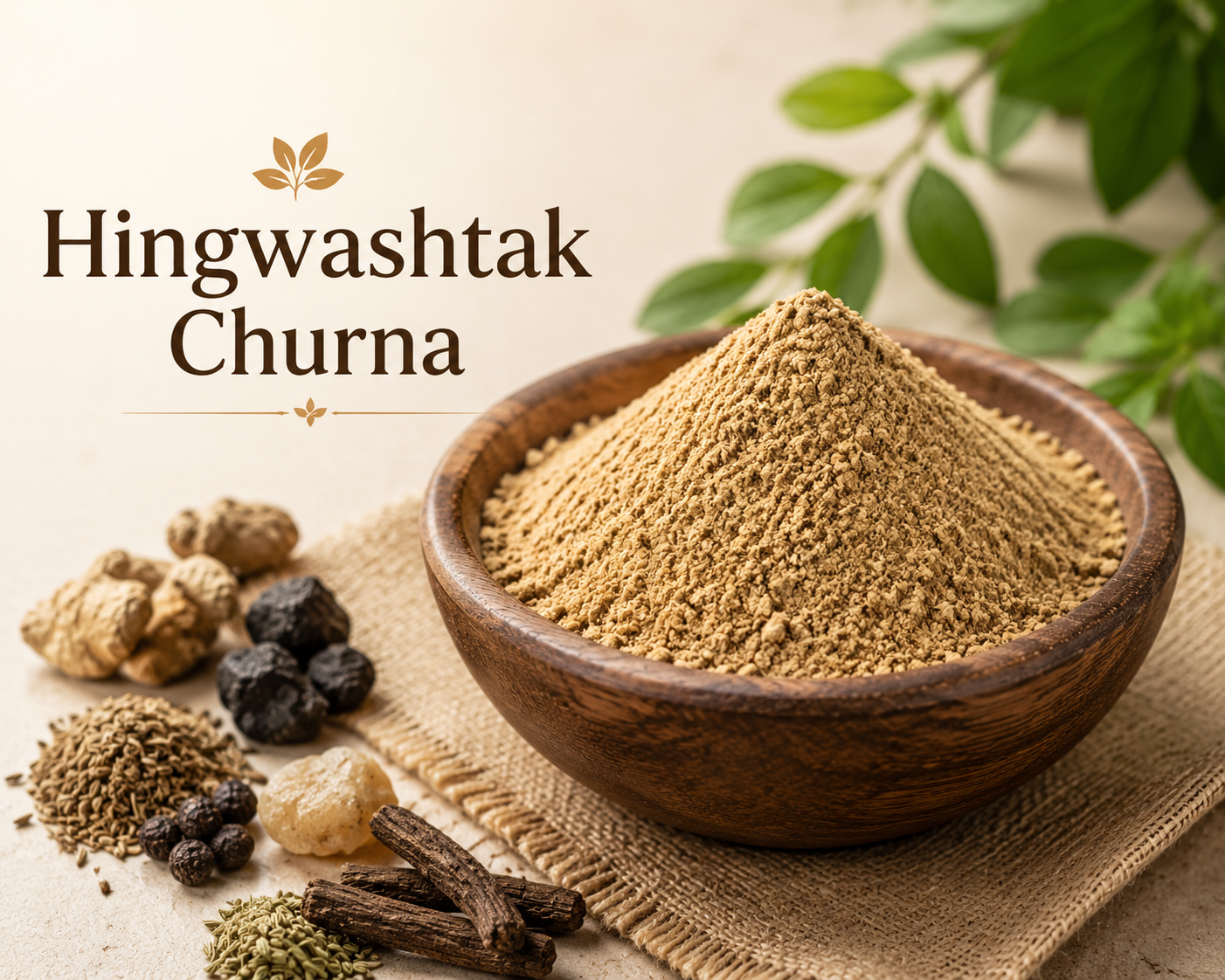
Hingwashtak Churna (Introduction, Benefits, and Usages)
Hingwashtak Churna benefits are centred on digestive health — this classical Ayurvedic eight-herb powder formulation is one of the most effective natural remedies for gas, bloating, colic, indigestion, and irritable bowel conditions. The name means “eight [ingredients] with Hing [Asafoetida]” — and Hing’s potent antispasmodic and carminative properties are the foundation of a formulation designed to address every angle of Vata-type digestive disturbance. See Wikipedia: Asafoetida. For related digestive formulations, explore Hing and Trikatu Churna.
What Is Hingwashtak Churna? A Complete Introduction
Origin and History of Hingwashtak Churna
Hingwashtak Churna is a classical Ayurvedic formulation described in texts including the Ashtanga Hridayam (Chikitsa Sthana) and Sharangadhara Samhita. It’s been used continuously in Ayurvedic clinical practice for over a thousand years for Vata-type digestive disturbances — conditions characterised by gas, bloating, colic, constipation, and abdominal pain. The eight ingredients work synergistically: Hing provides antispasmodic and antiflatulent action; Shunthi reduces inflammation and improves gastric emptying; Maricha stimulates digestive secretions; Pippali improves bioavailability and has bronchodilatory benefits; Ajwain provides thymol for antimicrobial and carminative action; Kala Jeera (black cumin) adds carminative and antimicrobial effects; Saindhava Lavana (Himalayan salt) stimulates gastric acid; and Sauvarchala Lavana adds digestive and laxative properties. The combination is more effective than any single ingredient.
Key Compounds and Active Profile
The eight ingredients and their primary active compounds:
Hing — ferulic acid esters and sesquiterpene coumarins (antispasmodic, antiflatulent);
Shunthi (dried ginger) — shogaols and gingerols (anti-inflammatory, prokinetic);
Maricha (black pepper) — piperine (digestive stimulant, bioavailability enhancer); Pippali (long pepper) — piperine and piperlongumine (bioavailability, expectorant);
Ajwain (carom seed) — thymol and carvacrol (carminative, antimicrobial);
Kala Jeera (black cumin/nigella) — thymoquinone (anti-inflammatory, antimicrobial);
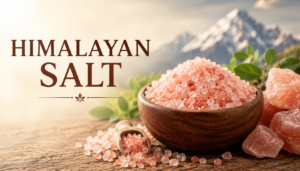
Saindhava Lavana (Himalayan salt) — sodium chloride with minerals (HCl stimulant); Sauvarchala Lavana (black salt) — sulphur compounds (digestive, laxative). See Wikipedia: Thymol.
Top Health Benefits of Hingwashtak Churna
Hingwashtak Churna Benefits for Digestion and Overall Health
Hingwashtak Churna’s primary benefit is comprehensive Vata-type digestive management. The formulation simultaneously: relaxes intestinal smooth muscle spasm (Hing, Ajwain), stimulates gastric acid and digestive enzyme secretion (Saindhava, Maricha, Shunthi), reduces fermentation and gas production (Hing, Ajwain, Kala Jeera antimicrobial activity), improves gastric emptying (Shunthi prokinetic action), and mildly promotes downward movement in the gut (Sauvarchala Lavana, Pippali). This multi-mechanism approach addresses all the pathological processes in Vata-type digestive disorders simultaneously. Clinical evidence includes individual ingredient studies showing efficacy for IBS, functional dyspepsia, and constipation, with traditional use providing the formulation-level evidence.
Hingwashtak Churna for Appetite and Metabolic Health
Hingwashtak Churna improves Agni (digestive fire) — in Ayurvedic terms, this means improved appetite, better nutrient absorption, and more efficient metabolic processing of food. The combined Deepana (digestive stimulant) and Pachana (digestive) actions of the eight ingredients together create a comprehensive digestive fire restoration that individual spices cannot match. For people with poor appetite — whether from illness, stress, or digestive weakness — Hingwashtak Churna before meals stimulates appetite and prepares the digestive system for efficient food processing. The metabolic benefit extends to improved assimilation of nutrients from food.
Medicinal Properties of Hingwashtak Churna
How Hingwashtak Churna Works as a Natural Remedy
The formulation’s multi-mechanism action covers the full digestive cascade:
Phase 1 (gastric) — Saindhava stimulates HCl secretion; Maricha and Pippali piperine stimulates gastric acid and pepsin; Shunthi reduces gastric inflammation.
Phase 2 (small intestinal) — Shunthi improves gastric emptying and duodenal motility; Pippali inhibits P-glycoprotein improving nutrient absorption; Ajwain thymol stimulates bile secretion.
Phase 3 (colonic) — Hing relaxes colonic smooth muscle spasm; Kala Jeera and Ajwain reduce colonic fermentation; Sauvarchala Lavana promotes colonic motility. The piperine from Maricha and Pippali simultaneously enhances the bioavailability of all other ingredients — a built-in bioavailability enhancement that makes the eight-herb combination perform far better than the sum of its parts.
Hingwashtak Churna in Ayurveda and Traditional Medicine
In Ayurveda, Hingwashtak Churna is the primary formulation for Vata-type digestive imbalances — specifically Vata Prakopa (Vata aggravation) in the Pakwashaya (large intestine), which is Vata’s primary seat. Classical indications include Adhmana (flatulence), Shula (colic), Aruchi (anorexia), Mandagni (weak digestive fire), Gulma (abdominal masses/gas accumulation), and Grahani (IBS-like chronic digestive disorder). It’s taken before or with meals in ghee to enhance the lipid absorption of its fat-soluble active compounds. The ghee also has its own digestive and Vata-reducing properties that complement the formulation. Compare with Trikatu Churna — simpler three-ingredient formulation for milder digestive stimulation.
How to Use Hingwashtak Churna — Practical Usages
Hingwashtak Churna Dosage and Preparation
Standard adult dose: 1–3g (approximately ¼–½ teaspoon) of Hingwashtak Churna taken with warm water or warm ghee before or with meals, 2–3 times daily. With ghee: mix 1–2g of churna in 1 teaspoon of warm ghee — this is the classical preparation that enhances fat-soluble compound absorption and adds ghee’s own digestive benefit. For acute gas and bloating: take ½ teaspoon in warm water immediately for fast relief. For constipation: 1–2g in warm water at bedtime. The churna should be freshly prepared or purchased from quality manufacturers — rancidity of the volatile oil components reduces both efficacy and palatability.
Hingwashtak Churna as a Supplement
Hingwashtak Churna is available from all major Ayurvedic manufacturers including Baidyanath, Dabur, Himalaya, Patanjali, and Arya Vaidya Sala. It can also be prepared at home from the eight individual ingredients if each is available — the formulation is well-documented in classical texts. For ongoing digestive management, consistent use before meals for 4–8 weeks is more effective than reactive use for acute episodes. People with Vata constitution or chronic Vata-type digestive conditions may benefit from seasonal or year-round use as a digestive tonic.
Side Effects and Precautions of Hingwashtak Churna
- Pitta aggravation: the heating nature of the formulation (Hing, pepper, ginger) can aggravate Pitta — people with acid reflux, gastritis, or Pitta constitution should use cautiously or under guidance
- Pregnancy: avoid during pregnancy — several ingredients (Hing, Pippali) have uterine-stimulating properties in larger amounts
- Bleeding disorders: the coumarin content from Hing has mild anticoagulant properties — caution with anticoagulant medications
- Hypertension: the salt components mean people on strict sodium restriction should factor this into their daily sodium calculations
Frequently Asked Questions About Hingwashtak Churna
What are the main Hingwashtak Churna benefits?
Key Hingwashtak Churna benefits: rapid relief of gas and bloating, intestinal smooth muscle antispasmodic action for colic and IBS cramping, digestive fire stimulation improving appetite and nutrient absorption, comprehensive Vata-type digestive disorder management, improved gastric emptying for post-meal heaviness, antimicrobial action reducing gut fermentation, mild laxative effect for Vata-type constipation, and synergistic bioavailability enhancement of all eight ingredients through piperine content.
How is Hingwashtak Churna different from plain Hing?
Plain Hing is primarily antispasmodic and antiflatulent — excellent for acute gas and bloating but limited in scope. Hingwashtak Churna adds seven complementary herbs that together address digestive fire stimulation, gastric acid production, bile secretion, gut motility, antimicrobial action, and bioavailability enhancement that Hing alone doesn’t provide. For acute gas relief, plain Hing in warm water works faster. For chronic digestive weakness, Mandagni (low digestive fire), or IBS management, Hingwashtak Churna’s comprehensive multi-mechanism action is significantly more effective than Hing alone.
Can Hingwashtak Churna be taken daily?
Yes — daily use before meals is the classical Ayurvedic protocol for digestive conditions. For most people with Vata-type digestive disorders, 1–3g with ghee before meals twice daily is safe and effective for extended periods. In Ayurveda, digestive spice formulations like Hingwashtak Churna can be used seasonally — particularly in Varsha (monsoon) and Hemanta (early winter) when Vata and digestive weakness tend to increase. Discontinue or reduce dose if signs of Pitta aggravation appear (heartburn, increased heat, skin rashes). For people without specific digestive conditions, using Hingwashtak Churna occasionally as needed rather than daily is appropriate.
Is Hingwashtak Churna good for IBS?
Hingwashtak Churna is particularly well-suited to IBS-C (constipation predominant) and IBS-M (mixed) with Vata-type features — bloating, gas, abdominal cramping, irregular bowel habits, and abdominal pain relieved by passing gas. The antispasmodic (Hing), carminative (Ajwain, Kala Jeera), prokinetic (Shunthi), and mild laxative (Sauvarchala) combination addresses the primary IBS pathology. For IBS-D (diarrhoea predominant) with Pitta features, the heating nature of this formulation may aggravate — in that case, consult an Ayurvedic physician for a more cooling digestive formulation.
How to make Hingwashtak Churna at home?
Home preparation: combine equal parts of Shunthi (dried ginger), Maricha (black pepper), Pippali (long pepper), Ajwain (carom seeds), and Kala Jeera (black cumin). Add twice the quantity of Saindhava Lavana (Himalayan salt) and Sauvarchala Lavana (black salt). Then add eight times the quantity of Hing (Asafoetida). Grind all ingredients to a fine powder and mix thoroughly. The Hing is typically roasted in ghee first before incorporating. Store in an airtight glass container away from moisture. The freshly prepared churna has better aromatic potency than commercially stored products.
Hingwashtak Churna benefits are immediate and practical for anyone dealing with gas, bloating, colic, or chronic digestive weakness. This is Ayurveda’s most comprehensive digestive spice formulation — eight herbs working together to address every stage of the digestive process. Take it with ghee before meals for 4–6 weeks as a digestive course, and you’ll likely find a noticeable improvement in digestion, reduction in bloating, and improved appetite. It’s one of those classical Ayurvedic formulations that works as well today as it did 1,000 years ago.


Add comment