Short answer. Jaggery (gur) is unrefined cane or palm sugar. Compared with white sugar, it keeps a few minerals. Ayurveda uses it after meals, in winter foods and as a base for many medicines. But it’s still mostly sugar. It raises blood sugar much like sugar does. So keep portions small, and take extra care if you have diabetes.
Jaggery benefits get talked up a lot. You’ll hear it’s a “superfood” or a cure for anaemia. It isn’t. It’s a traditional sweetener with a bit more going for it than white sugar. Here’s what’s real.
What jaggery is
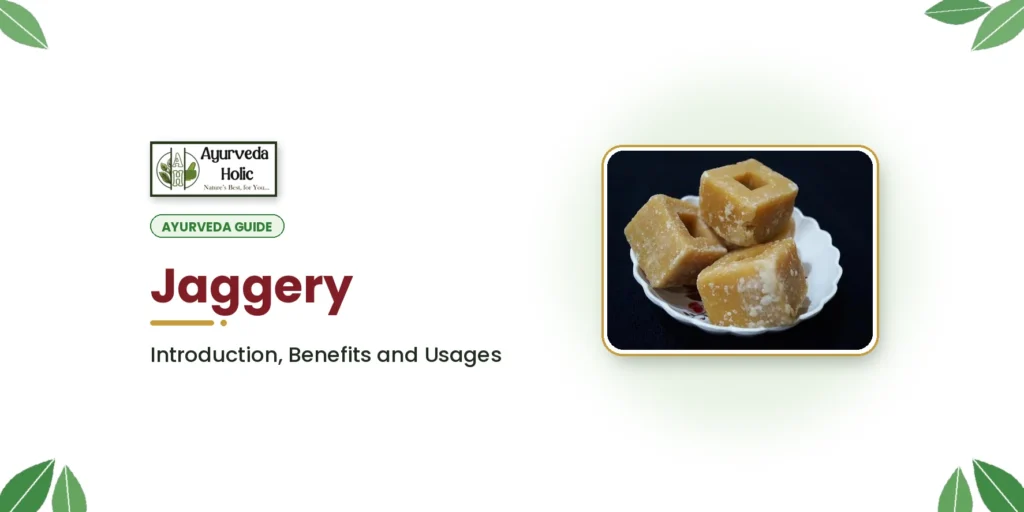
Jaggery is made by boiling sugarcane juice, or palm sap, until it thickens and sets. Nothing’s bleached or refined out. That’s why it’s brown and tastes of molasses.
There are a few kinds.
- Sugarcane gur. The most common in North India.
- Palm jaggery (karupatti). Made from palm sap. Popular in Tamil Nadu and Kerala.
- Date palm jaggery (nolen gur). A winter favourite in Bengal.
Jaggery in Ayurveda
Classical texts call jaggery guda. They make a clear difference between new and old jaggery.
- Purana guda (old jaggery). Aged for about a year. Described as lighter and easier to digest. It’s the kind Ayurveda prefers as medicine.
- Nava guda (fresh jaggery). Described as heavy. It’s said to increase Kapha and mucus.
Jaggery is also the sweet base of many classical medicines. Avalehas like Chyawanprash use it. So do arishtas, where it helps the fermentation.
Traditional jaggery benefits
Here’s how Indian homes and Ayurveda use it.
- After meals. A small piece of gur after lunch is an old habit. It’s said to help digestion and curb the urge for a heavier dessert.
- For coughs and colds. Gur with ginger, black pepper or ajwain is a classic home remedy.
- In winter foods. Til laddoo, gajak and chikki all use jaggery. Ayurveda sees it as warming and nourishing in the cold.
- As a carrier for herbs. Many churnas are taken with a little jaggery to make them easier to swallow.
What about iron?
This is where jaggery gets oversold. It does contain some iron. The amount varies a lot by type and how it’s made. Iron from old iron cooking pans can add to it too.
But you’d need to eat a lot of sugar to get a useful amount of iron. That’s not a trade worth making. Jaggery can’t treat anaemia. If you’re low on iron, get a blood test and follow your doctor’s advice. Iron-rich foods like greens, dals and dates help more. Pair them with vitamin C, such as lemon or amla.
Jaggery vs white sugar
| Jaggery | White sugar | |
|---|---|---|
| Processing | Unrefined | Refined and bleached |
| Minerals | Small amounts | Almost none |
| Effect on blood sugar | Similar to sugar | High |
| Calories | Similar | Similar |
| Taste | Molasses, caramel | Plain sweet |
So jaggery is a slightly better choice if you’re going to use a sweetener anyway. It isn’t a health food. Using less sweetener overall matters more than which one you pick.
How to use jaggery
- In tea or milk. Grate a little in once it’s off the boil. It can curdle very hot milk.
- In cooking. Dal, sambar, chutneys, kheer and halwa.
- After meals. A piece the size of a fingertip is plenty.
- With herbs. As your practitioner suggests.
How to spot good jaggery
- Colour. Dark golden to brown. Pale or bright yellow jaggery can be a sign of chemical cleaning.
- Texture. Slightly soft and crumbly, not glassy.
- Smell. Like molasses, not chemicals.
- Taste. Sweet, without a salty or bitter edge.
- Label. Look for “no chemicals” or “organic”, and buy from a brand you trust.
Some cheap jaggery is bleached with chemicals like hydrosulphite, or bulked up with chalk. Good gur doesn’t need either.
How to store it
Keep it in an airtight jar, in a cool, dry place. Jaggery pulls in moisture, so it can turn soft and sticky in the monsoon. In very humid weather, the fridge helps stop mould.
Who should be careful
- People with diabetes. Jaggery raises blood sugar much like sugar. Count it as sugar.
- People watching their weight. The calories are about the same as sugar.
- Children. Fine in small amounts, but brush teeth after sweets.
- People with Kapha-type congestion. Ayurveda suggests old jaggery, in small amounts, if any.
Common mistakes
- Eating “healthy” jaggery sweets in large amounts.
- Swapping sugar for jaggery and thinking diabetes risk drops.
- Relying on jaggery to fix low iron.
- Buying bright, pale jaggery that’s been chemically treated.
For another traditional sweetener, see our honey guide.
Frequently asked questions
What are the main jaggery benefits?
It keeps a few minerals that white sugar loses, and Ayurveda uses it after meals, in winter foods and as a base for medicines. It’s still mostly sugar.
Is jaggery better than white sugar?
Slightly, because it’s unrefined. It affects blood sugar in much the same way, so use it sparingly.
Can jaggery help with anaemia?
Not on its own. It contains some iron, but not enough to treat anaemia. See a doctor if you’re low on iron.
Can people with diabetes eat jaggery?
Treat it like sugar. Ask your doctor before adding it to your diet.
What is the difference between jaggery and palm jaggery?
Sugarcane jaggery comes from cane juice. Palm jaggery comes from palm sap and has a deeper, caramel taste.
Is jaggery good to eat in summer?
Ayurveda sees jaggery as warming. In summer, keep it to small amounts, and pair it with cooling foods like buttermilk or saunf.
Why does Ayurveda prefer old jaggery?
Classical texts describe old jaggery as lighter and easier to digest than fresh jaggery, which is said to increase Kapha.
Shop: Patanjali Chyawanprash made with jaggery (gur)
This article is for general information and isn’t medical advice. Please talk to a qualified doctor before starting any herb or changing any medicine.
Header photo of Jaggery by Mangosapiens, via Wikimedia Commons, licensed CC BY-SA 4.0.