
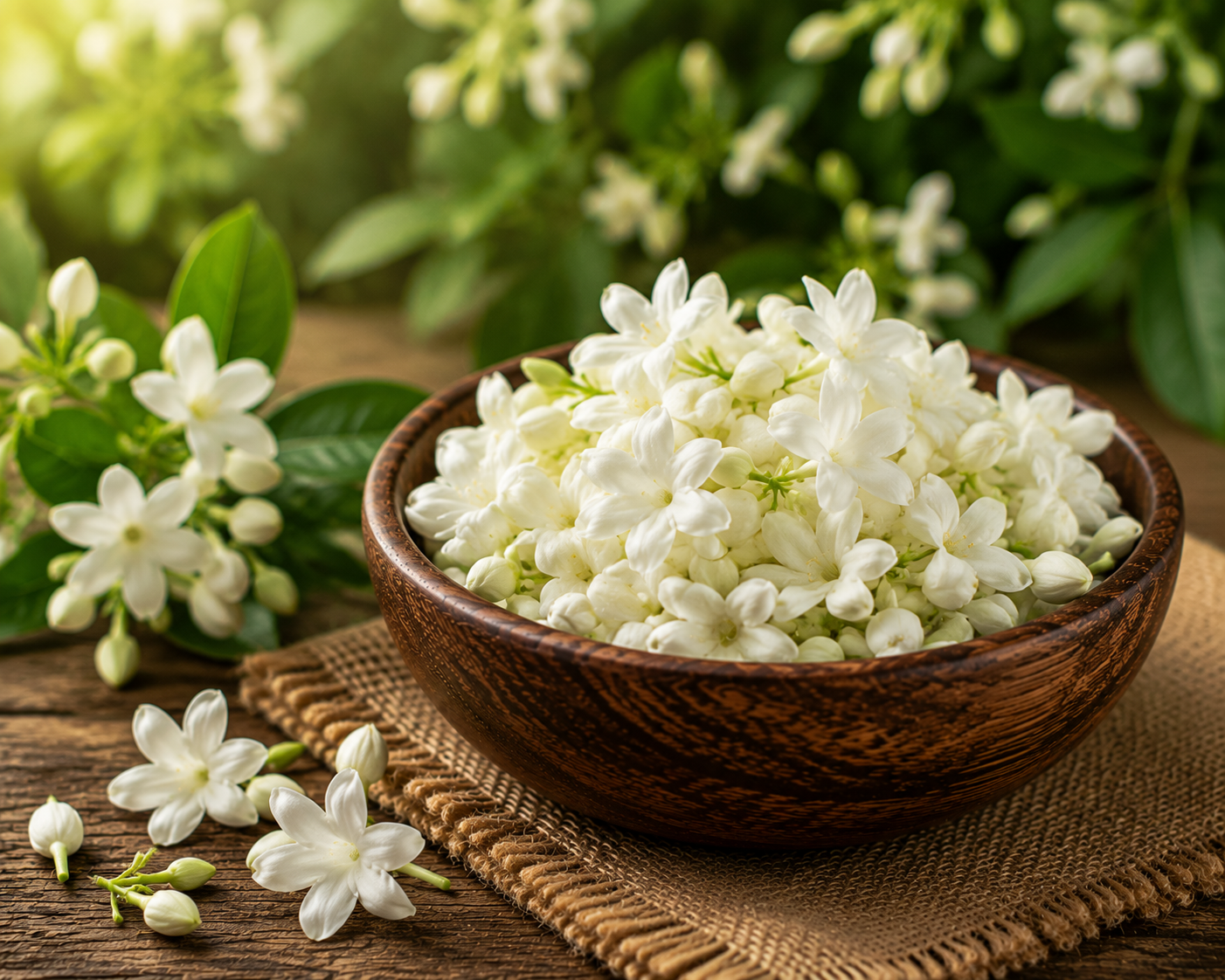
Jasmine (Introduction, Benefits, and Usages)
Jasmine benefits for mental health, skin, and sensory medicine are well-established across multiple traditional systems — Ayurveda, Traditional Chinese Medicine, and Unani all prize Jasmine (Jasminum species) for its anxiolytic, antidepressant, skin-beautifying, and aphrodisiac properties. Modern research has confirmed that Jasmine’s fragrance compounds directly modulate the nervous system through olfactory pathways, explaining its calming and mood-lifting effects. See Wikipedia: Jasmine. For related aromatic nervine herbs, explore Lavender and Rose.
What Is Jasmine? A Complete Introduction
Origin and History of Jasmine
Jasmine (Jasminum species) belongs to the olive family (Oleaceae) — a genus of over 200 species of shrubs and vines native to tropical and warm temperate regions of Asia, Africa, and Europe. The most medicinally significant species are Jasminum sambac (Mogra/Arabian Jasmine — sacred in Hindu worship and used in Ayurveda), Jasminum officinale (Common Jasmine — classical in Western herbal medicine and essential oil production), and Jasminum grandiflorum (Spanish/Royal Jasmine — primary commercial essential oil source). Jasmine has been cultivated for its extraordinary fragrance for over 3,000 years. In India, Mogra garlands are offered to deities, worn in hair, and used in traditional medicine. In China, Jasmine tea (green tea scented with Jasmine flowers) is a national institution. In Persia, Jasmine symbolised love and beauty. Medieval Arab physicians used Jasmine for eye diseases, skin care, and as an aphrodisiac.
Key Compounds in Jasmine
Jasmine’s aromatic compounds define its medicinal properties. The essential oil contains benzyl acetate (primary compound — sweet, floral, relaxing), linalool (anxiolytic, sedative), indole (intense, animal-like fragrance note with mood-elevating properties), benzyl alcohol (antimicrobial, analgesic), methyl jasmonate (plant signalling hormone with anti-cancer properties in research), and cis-jasmone (characteristic Jasmine fragrance note). The non-volatile constituents include iridoid glycosides (jasminin, jasmioside), flavonoids, and phenolic acids with antioxidant and anti-inflammatory properties. The flower’s alkaloids and phenolics contribute to its uterine-stimulating properties documented in traditional use and animal studies. See Wikipedia: Linalool.
Top Health Benefits of Jasmine
Jasmine Benefits for Mental Health and Overall Wellbeing
Jasmine’s most significant evidence-based benefit is its effect on the nervous system through aromatherapy. A landmark study published in the Journal of Biological Chemistry showed that inhaling Jasmine fragrance increases GABA receptor activity as powerfully as pharmaceutical anxiolytics — the olfactory neurons trigger the same inhibitory signalling as benzodiazepine drugs, but through a completely different (and non-addictive) pathway. Multiple clinical trials confirm that Jasmine essential oil inhalation reduces anxiety, improves mood, and promotes calm alertness (not sedation) — a unique effect different from sedating herbs like Valerian. Heart rate variability studies show Jasmine inhalation activates the parasympathetic nervous system (rest-and-digest mode), measurably reducing physiological stress markers.
Jasmine for Skin, Hair, and Reproductive Health
Jasmine’s skin benefits come from its antimicrobial, antioxidant, and emollient compounds. Jasmine oil is particularly suited to dry, sensitive, or mature skin — the benzyl acetate and linalool compounds are moisturising and anti-inflammatory, while benzyl alcohol provides antimicrobial activity helpful for acne without the drying effect of conventional acne treatments. For hair, Jasmine oil as a conditioning treatment adds fragrance, moisture, and scalp antimicrobial activity.
Traditional reproductive health use: in Ayurveda and Unani, Jasmine is used as an aphrodisiac and for menstrual regulation. Animal studies confirm uterine-stimulating activity — explaining the traditional prohibition during pregnancy and the traditional use for amenorrhoea (absent or delayed periods).
Medicinal Properties of Jasmine
How Jasmine Works as a Natural Remedy
The anxiolytic mechanism: Jasmine fragrance compounds (particularly linalool and benzyl acetate) bind to GABA-A receptors through olfactory nerve signalling — activating the same inhibitory receptors that benzodiazepines target, but via the olfactory bulb rather than direct blood-brain barrier penetration. This produces anxiolytic effects without addiction risk. The antidepressant mechanism: indole and other fragrance compounds activate monoamine signalling (serotonin, dopamine pathways) through olfactory-limbic system connections. The topical antimicrobial mechanism: benzyl alcohol and benzyl benzoate inhibit bacterial membrane function, making Jasmine oil effective against skin bacteria including Staphylococcus and Candida species. The uterotonic mechanism: alkaloids and phenylpropanoids stimulate uterine smooth muscle contraction.
Jasmine in Ayurveda and Traditional Medicine
In Ayurveda, Mallika/Jati (Jasmine species) is classified as Tikta (bitter), Kashaya (astringent), Katu (pungent), Madhura (sweet fragrance), Laghu (light), and Snigdha (unctuous). Properties include Chakshushya (beneficial for eyes), Hridya (cardiac tonic/pleasant to heart), Vrana Ropana (wound healing), Krimighna (antimicrobial), and Shiro Ruja Nashana (headache relieving). Classical applications include eye disorders (using Jasmine flower water as eye wash), skin diseases (Jasmine oil topically), headache and psychological disturbance (aromatherapy), and oral health (chewing Jasmine leaves for dental hygiene). Mogra (J. sambac) garlands have Sattvic (consciousness-purifying) properties in Ayurvedic and yogic tradition.
How to Use Jasmine — Practical Usages
Jasmine in Tea, Aromatherapy, and Traditional Use
Jasmine tea: traditional green tea scented with Jasmine flowers provides mild anxiolytic and antioxidant benefits — the green tea catechins and Jasmine linalool are synergistic. Drink 2–3 cups daily for mood support.
Aromatherapy for anxiety: inhale pure Jasmine essential oil from the bottle or via a diffuser (5–10 drops in 100ml water) for 15–30 minutes during anxious periods. Use in massage: dilute 2–3 drops in 10ml carrier oil (jojoba or almond) for a relaxing massage.
Fresh flower use: place fresh Jasmine flowers near your workspace or bedroom for ambient anxiolytic fragrance exposure — research shows ambient floral fragrance has measurable effects on mood and physiological stress markers.
Jasmine as a Topical Application and Supplement
For skin care: add 2–3 drops of Jasmine absolute or essential oil to your daily moisturiser or face oil — dilute in carrier oil first (never apply undiluted essential oil directly to skin). For dry or mature skin, Jasmine in rosehip oil is an excellent combination. For hair: add 5 drops of Jasmine essential oil to 2 tablespoons of coconut or sesame oil; massage into scalp; leave for 30 minutes before washing. Jasmine absolute (solvent-extracted, not steam-distilled) has the truest Jasmine fragrance and richest aromatic compound profile for topical and aromatherapy use — though it’s more expensive than essential oil. For eye wash: cold Jasmine flower water (water steeped with fresh Mogra flowers) can be used as a gentle eye wash for tired or irritated eyes, following the Ayurvedic Chakshushya tradition.
Side Effects and Precautions of Jasmine
- Pregnancy: avoid internal use of Jasmine flower preparations and medicinal doses during pregnancy — the uterotonic alkaloids can stimulate uterine contractions; Jasmine tea and ambient aromatherapy are generally considered safe
- Skin sensitisation: Jasmine essential oil is a common skin sensitiser — always perform a patch test and dilute in carrier oil before applying to skin; never use undiluted
- Fragrance allergy: Jasmine is among the most common fragrance allergens; people with perfume sensitivities should test cautiously before extended aromatherapy exposure
- Drug interactions: the GABA-A activity of Jasmine aromatherapy theoretically enhances sedative and anxiolytic medications — use cautiously alongside benzodiazepines or sedatives
Frequently Asked Questions About Jasmine
What are the main Jasmine benefits for health?
Key Jasmine benefits: anxiolytic effect through GABA-A receptor activation via olfactory pathway (research-confirmed), mood elevation and antidepressant action through olfactory-limbic system stimulation, parasympathetic nervous system activation measurably reducing stress physiology, antimicrobial skin care for acne and infections, moisturising and anti-inflammatory topical benefits for dry and sensitive skin, uterine stimulant for traditional menstrual regulation, eye wash and Chakshushya (eye-tonic) properties in Ayurveda, and headache relief through anxiolytic and vasodilatory aromatic compounds.
Is Jasmine good for anxiety and sleep?
Yes — Jasmine aromatherapy has strong evidence for anxiety reduction. A Journal of Biological Chemistry study established that Jasmine fragrance compounds activate GABA-A receptors through olfactory pathways. Multiple clinical aromatherapy trials confirm anxiety reduction, improved mood, and parasympathetic activation. Unlike sedating herbs (Valerian, Ashwagandha) that cause drowsiness, Jasmine produces calm alertness — making it suitable for daytime anxiety as well as pre-sleep relaxation. For sleep specifically, Jasmine’s parasympathetic activation and mild sedative action (via linalool) supports falling asleep and improves sleep quality — particularly when used as room diffusion at bedtime.
What is the difference between Jasmine essential oil and Jasmine absolute?
Jasmine essential oil is extracted by steam distillation — a process that partially degrades Jasmine’s delicate aromatic compounds, resulting in a less authentic fragrance. Jasmine absolute is solvent-extracted (typically with hexane, followed by alcohol wash) — a gentler process that preserves more of the complex aromatic profile including the heat-sensitive indole compounds. Jasmine absolute smells closer to the actual flower and contains a broader range of bioactive aromatic compounds. It’s also more expensive. For therapeutic aromatherapy, Jasmine absolute is preferred for its fuller compound profile. For topical skin use, Jasmine absolute in carrier oil is preferred. The synthetic “jasmine” fragrance in many products contains none of the therapeutic compounds and should not be used medicinally.
Can Jasmine be used during pregnancy?
Caution is needed. Jasmine flower alkaloids have documented uterotonic (uterine-contracting) properties in animal studies — this is why Jasmine is traditionally used to stimulate labour in some cultures (and why it’s traditionally avoided during pregnancy). Jasmine tea and ambient aromatherapy (low-level diffusion) are generally considered safe during pregnancy by most practitioners — the systemic exposure from fragrance inhalation is minimal. However, medicinal doses of Jasmine flower preparations, Jasmine essential oil used in large amounts, or Jasmine massage oil in large quantities should be avoided during pregnancy, particularly in the first trimester.
Jasmine benefits make it one of the most pleasant medicines in Ayurveda’s repertoire — you get to treat anxiety, improve mood, care for your skin, and support sleep, all while experiencing one of the world’s most beloved fragrances. Use fresh Mogra flowers when in season. Keep Jasmine essential oil or absolute at your desk and inhale during stressful moments. Add it to your evening skincare routine. These are small, accessible practices with genuine physiological effects that the research increasingly validates.


Add comment