
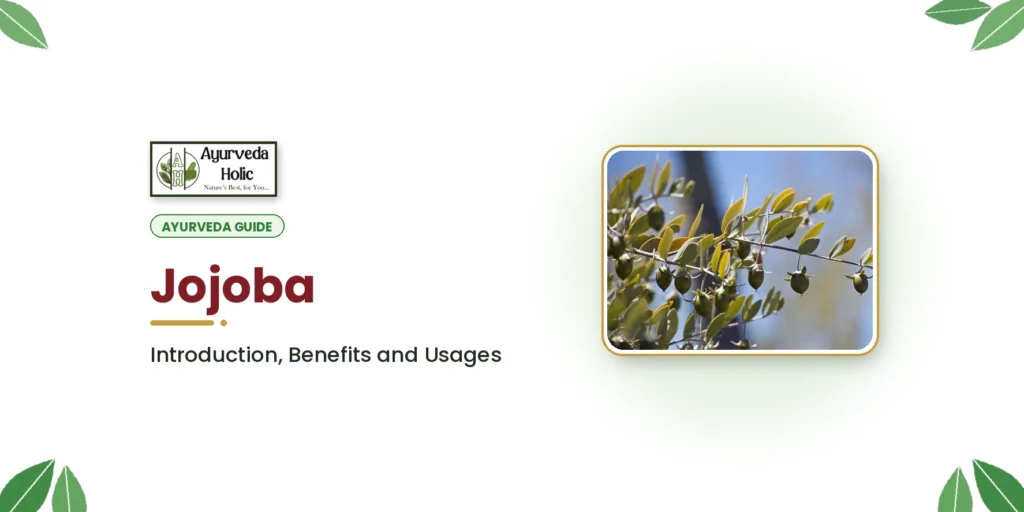
Short answer. Jojoba oil is a liquid wax pressed from jojoba seeds. It feels a lot like your skin’s own oil. That’s why it’s light, non-greasy and suits most skin types, oily skin included. Use it as a face moisturiser, a scalp oil or a carrier for stronger oils. Patch test first. And never swallow it.
Jojoba oil benefits get a lot of hype online. You’ll read that it “repairs” skin, kills acne and stops hair loss. Some of that’s stretched. Here’s what jojoba is, what it’s good for, and where it falls short.
What jojoba is
Jojoba (Simmondsia chinensis) is a tough desert shrub. It grows wild in the Sonoran Desert of the US and Mexico. It’s now farmed in Israel, Argentina, Peru and parts of India too.
Its seeds give a golden liquid. People call it oil. Technically it’s a wax. Most of it is made of wax esters, not the fats found in coconut or olive oil.
Despite the name chinensis, it has nothing to do with China. That was a labelling mix-up by an early botanist.
Is jojoba an Ayurvedic herb?
No. Jojoba comes from the Americas, so it isn’t in the classical Ayurvedic texts. Native peoples of the Sonoran Desert used it on skin, hair and sores.
It still fits well with Ayurvedic skin care. Ayurveda uses oils for abhyanga (oil massage) and for the scalp. Jojoba is a light option for people who find sesame or coconut oil too heavy, especially Pitta and Kapha types.
Why jojoba suits so many skin types
Your skin makes its own oil, called sebum. Part of sebum is made of wax esters. Jojoba is made of similar wax esters. So it sits on the skin in a way that feels natural, without that heavy, greasy layer.
It’s also rated low for clogging pores. That’s why people with oily or acne-prone skin can often use it when other oils cause breakouts.
And it lasts. Jojoba resists going rancid far better than most plant oils.
Jojoba oil benefits for skin
- Light moisturising. A few drops on damp skin soften it without shine.
- Dry patches. Helps on elbows, heels and cuticles.
- Makeup removal. It dissolves oily makeup, including mascara. Wipe off with a warm cloth.
- Calming dryness from harsh products. Many people use it alongside drying acne treatments.
- After shaving. A drop or two soothes the skin.
What about acne? A small study found that a clay and jojoba mask reduced acne spots. That’s encouraging, but it’s one study, and the mask had clay too. Jojoba isn’t an acne treatment. It’s a moisturiser that tends not to make acne worse.
Jojoba oil benefits for hair and scalp
- Dry, flaky scalp. Massage in, leave for an hour, then wash.
- Frizz and dry ends. Rub one or two drops between your palms and smooth over the ends.
- Pre-wash treatment. Protects hair from drying out in shampoo.
- Beards. A light beard oil on its own or mixed with others.
Can it help hair loss? There’s no good evidence that it does. It can make the scalp and hair feel better. Hair loss has many causes, from thyroid problems and low iron to genetics. See a doctor if your hair’s thinning fast.
How to use jojoba oil
| Use | How |
|---|---|
| Face | Two or three drops on damp skin after washing |
| Body | Mix into your lotion, or apply after a bath |
| Scalp | A teaspoon, massaged in, left for an hour, then washed |
| Hair ends | One or two drops, smoothed over dry ends |
| Carrier oil | Mix a few drops of essential oil into a teaspoon of jojoba |
Start small. A little goes a long way.
Blending jojoba with Ayurvedic oils
Jojoba mixes well with traditional oils.
- With Kumkumadi oil. Some people dilute this rich face oil with jojoba for oily skin.
- With Bhringraj or Brahmi oil. Makes a heavy hair oil lighter to wash out. See our Brahmi guide.
- With tea tree oil. For spot treatment, mix one drop of tea tree into a teaspoon of jojoba.
How to buy good jojoba oil
- Look for “cold-pressed”. It keeps more of the natural content.
- Golden colour. Clear jojoba has been refined. It’s fine, but plainer.
- Dark glass bottle. Protects it from light.
- Pure, not blended. Some cheap “jojoba oil” is mixed with other oils. Check the label.
Precautions
- Don’t swallow it. Jojoba isn’t a food oil. It contains compounds your body can’t digest well.
- Patch test. Allergy is rare, but it happens. Try a drop inside your wrist first.
- Keep it out of your eyes. Rinse with water if it gets in.
- Stop if you break out. Every skin is different.
- Children. Ask a doctor before using it on babies.
Common mistakes
- Using too much and expecting it to sink in.
- Buying cheap blends sold as pure jojoba.
- Expecting it to cure acne or stop hair loss.
- Storing it in a hot bathroom window.
Frequently asked questions
What are the main jojoba oil benefits for skin?
It moisturises without feeling greasy, suits most skin types and removes makeup gently. It tends not to clog pores.
Is jojoba oil good for oily skin?
Yes, for many people. It’s light and rated low for clogging pores. Patch test first.
Can jojoba oil help hair loss?
There’s no good evidence that it does. It can help a dry scalp and frizzy ends.
Is jojoba oil good for acne?
It’s not an acne treatment. It’s a light moisturiser that tends not to make acne worse.
What is the difference between jojoba oil and jojoba wax?
Jojoba oil is the liquid. Jojoba wax is the same thing hardened, used in balms and lip sticks.
Can I use jojoba oil every day?
Yes, most people can use a few drops daily on skin or hair.
This article is for general information and isn’t medical advice. Please talk to a qualified doctor before starting any herb or changing any medicine.
Header photo of Jojoba by Kenneth Bosma, via Wikimedia Commons, licensed CC BY 2.0.


