
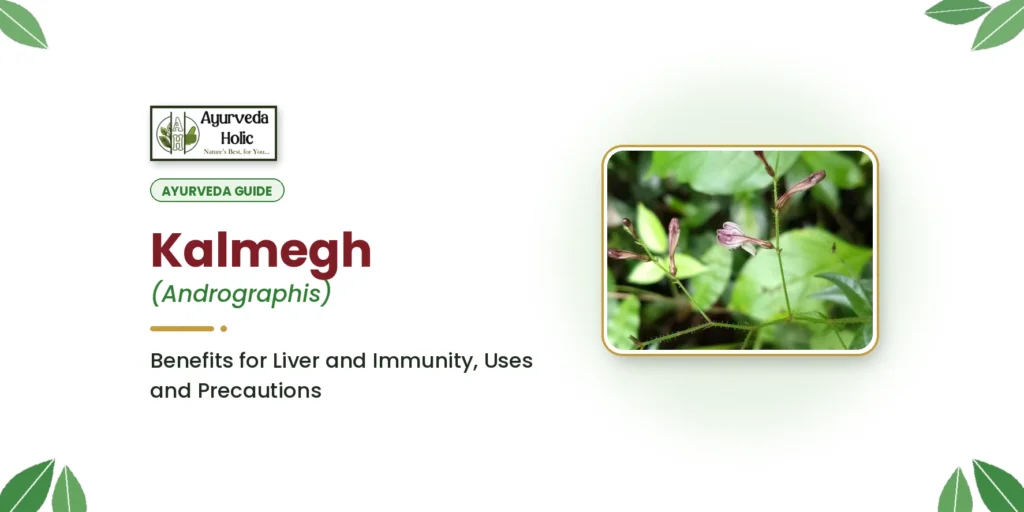
Short answer. Kalmegh is called the king of bitters. It’s one of the most bitter herbs in Ayurveda. It’s traditionally used for the liver, seasonal fevers, colds and sluggish digestion. Its main compound, andrographolide, has been studied for colds, with some good results. Take it in short courses at the label dose. Skip it if you’re pregnant or trying to conceive.
Taste a kalmegh leaf once and you won’t forget it. The bitterness is the whole point in Ayurveda. Here’s what kalmegh benefits look like, where the evidence stands, and who should stay away.
What kalmegh is
Kalmegh is a small plant that grows all over India. The name means “dark cloud”. Every part of it is fiercely bitter. That’s why Ayurveda uses it for Pitta and Kapha problems, like heat, fever and a sluggish liver.
| Feature | Detail |
|---|---|
| Botanical name | Andrographis paniculata |
| Common names | Kalmegh, bhunimba, king of bitters |
| Part used | Leaves and whole plant |
| Ayurvedic nature | Bitter, cooling, light |
| Dosha | Reduces Pitta and Kapha |
Kalmegh in the Ayurvedic tradition
Kalmegh shows up more in folk medicine and later Ayurvedic practice than in the oldest classical texts. It’s sometimes linked with the classical herb bhunimba. Its bitterness is said to cool fever, calm Pitta and Kapha, and support the liver. You’ll find it in a lot of Indian formulas for fever, digestion and the liver, usually alongside other bitters.
Kalmegh benefits in Ayurveda
- Liver support. It’s in many classical and modern liver formulas.
- Seasonal fevers. Often with Giloy and Chirayita.
- Colds and sore throats. In the early stage.
- Poor appetite and slow digestion.
- Skin problems linked with heat.
What research says
Andrographis has been tested for the common cold. Several trials and reviews suggest it can ease symptoms and shorten colds. Study quality varies, though. Lab and animal studies have looked at liver protection. Human evidence for liver problems is thin.
Kalmegh vs other bitter herbs
| Herb | Main traditional use | Nature |
|---|---|---|
| Kalmegh | Fever, liver, colds | Very bitter, cooling |
| Giloy | Fever, immunity, joints | Bitter, mildly warming |
| Neem | Skin, blood purification | Bitter, cooling |
| Kutki | Liver, digestion | Very bitter, cooling |
Products that contain kalmegh
| Product | Traditional use |
|---|---|
| Patanjali Divya Livamrit Advance | Liver support |
| Patanjali Livamrit Tablet | Liver support |
| Patanjali Divya Jwar Nashak Vati | Seasonal fevers |
| Patanjali Divya Mahasudarshan Ghanvati | Classical bitter formula |
How to take kalmegh
- Dose. As printed on the pack, or as your doctor says.
- When. After meals, with water.
- How long. Short courses. A week or two during a cold or fever is typical. Longer only with a vaidya’s advice.
It’s very bitter, so tablets are easier than powder. A little honey helps if you’re using powder. Not for babies under one.
Through the year
- Monsoon. In fever and digestion formulas, when infections spike.
- Seasonal colds. A short course at the label dose, with rest and warm fluids.
- After heavy food. Small doses in liver and digestive formulas, on a practitioner’s advice.
Who should avoid kalmegh
- Pregnant women. It’s traditionally avoided.
- People trying to conceive. Animal studies hint at effects on fertility. Ask your doctor.
- People on BP or blood-thinning medicines. It can add to their effect.
- People with diabetes on medication. It can lower blood sugar.
- People with autoimmune conditions or on immunosuppressants. Ask first.
- People with acidity or a touchy stomach. Bitters can upset it.
Side effects
Stomach upset, loss of appetite and headache can happen. Allergic reactions are rare. Stop and see a doctor if you get a rash, swelling or trouble breathing.
Common mistakes
- Taking high doses for weeks without advice.
- Treating a high fever at home instead of getting tested for dengue, malaria or typhoid.
- Stacking several bitter herbs at once.
- Giving adult formulas to children.
When to see a doctor
See a doctor for a fever above 102°F, a fever that lasts over three days, yellow eyes or skin, or any severe illness. Herbs don’t replace a diagnosis.
Frequently asked questions
What are the main kalmegh benefits?
Ayurveda uses it for the liver, seasonal fevers, colds and sluggish digestion.
Is kalmegh good for the liver?
It’s a traditional liver herb and it’s in many liver formulas. If you have liver disease, use it only with your doctor’s okay.
Can I take kalmegh for a cold?
Some research suggests it eases cold symptoms. Take it at the label dose for a few days.
Is kalmegh safe in pregnancy?
No. Avoid it during pregnancy.
Why is kalmegh so bitter?
Its main compounds, like andrographolide, are intensely bitter. Hence the nickname.
Can kalmegh lower blood pressure?
Some studies suggest it can. Ask your doctor first if you take BP medicines.
How long can kalmegh be taken?
Usually a week or two for a cold or fever. Longer use needs supervision.
Shop: Patanjali Divya Livamrit Advance · Patanjali Divya Jwar Nashak Vati
This article is for general information and isn’t medical advice. Talk to a doctor before using kalmegh, especially if you’re pregnant or take regular medicines.
Header photo of Kalmegh by Renjusplace, via Wikimedia Commons, licensed CC BY-SA 4.0.


