
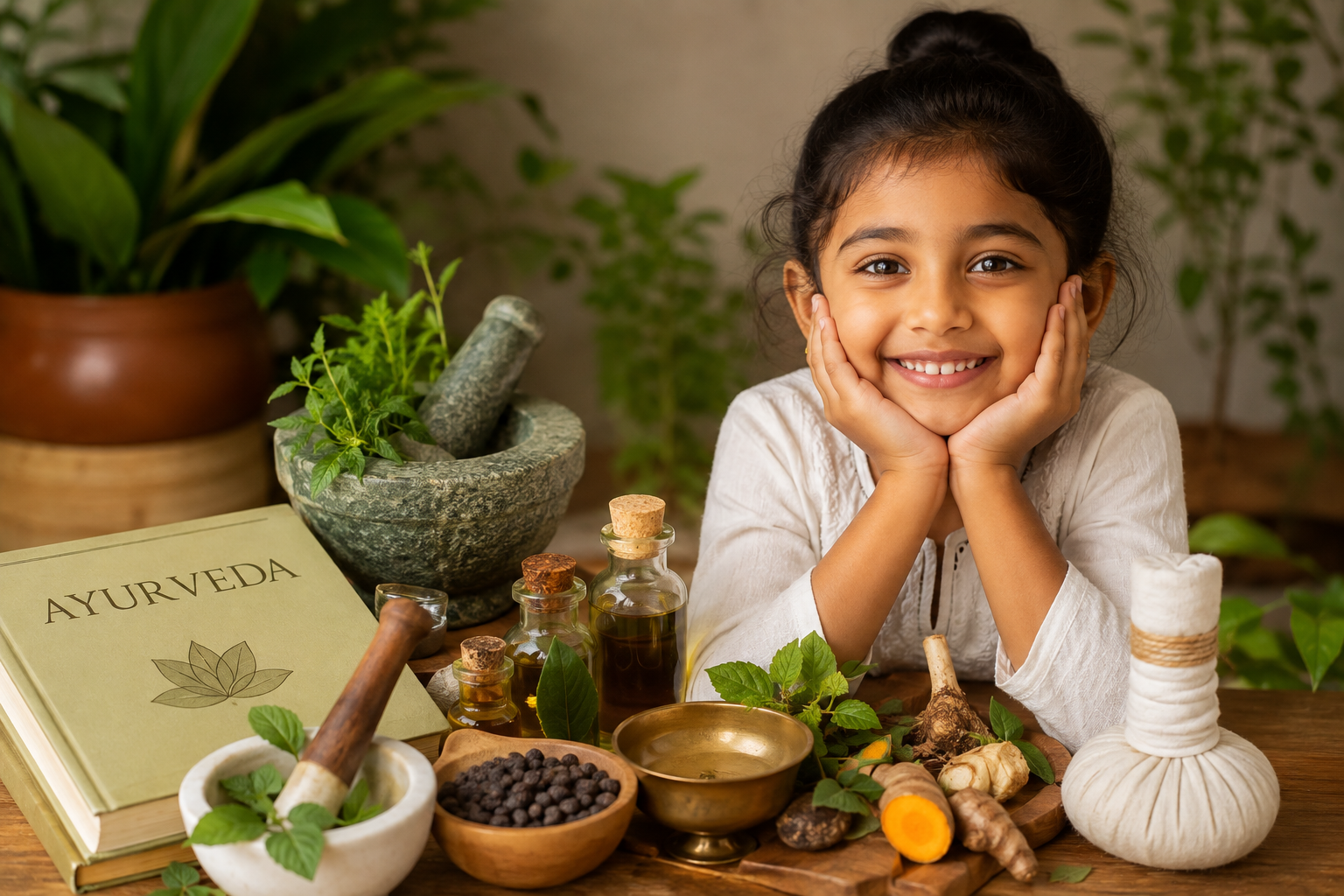
Ayurveda for Kids: Is It Safe and Effective? (Parent’s Guide)
Children grow quickly, and naturally, parents want to give them the healthiest possible start. Along with nutritious food, adequate sleep, exercise, vaccinations, and regular pediatric care, many families also look toward traditional wellness systems such as Ayurveda.
Ayurveda has been practiced in India for centuries and involves much more than herbal medicines. Ayurvedic traditions also emphasize food, digestion, sleep, massage, daily routines, seasonal habits, physical activity, and mental well-being.
But when Ayurveda is being considered for babies or children, an important question comes first:
Is Ayurveda for kids safe and effective?
The answer requires some balance.
Many gentle, lifestyle-based Ayurvedic principles can complement a healthy family routine. However, Ayurvedic medicines, herbal supplements, mineral preparations, and concentrated formulations deserve considerably more caution—especially in children.
Children are not simply smaller adults. Their bodies are still developing, and medicines or herbs that may be tolerated by an adult may not necessarily be appropriate for a baby or young child.
Here is what parents should know.
What Does Ayurveda Say About Children’s Health?
Ayurveda traditionally includes a branch devoted specifically to children’s care known as Kaumarabhritya.
It addresses areas such as childhood nutrition, development, daily care, digestion, and wellness from an Ayurvedic perspective.
Ayurvedic philosophy generally approaches children’s health through several interconnected factors:
- Digestion or Agni
- Nutrition and nourishment
- Sleep
- Physical development
- Daily routine
- Emotional well-being
- Seasonal changes
- Individual constitution or Prakriti
An important point is that traditional Ayurvedic child care does not necessarily begin with medicine.
Simple habits—including regular meals, appropriate sleep, fresh food, active play, and a predictable daily routine—can form a large part of an Ayurveda-inspired lifestyle.
Ayurveda for Kids Doesn’t Always Mean Herbal Medicine
One of the most common misconceptions is that following Ayurveda means taking herbal powders, tablets, syrups, or tonics.
That isn’t necessarily the case.
For parents interested in Ayurveda, the safest starting point is usually to focus on healthy lifestyle principles rather than medicinal products.
These may include:
- Serving balanced, freshly prepared meals
- Keeping meal times reasonably consistent
- Maintaining a regular sleep schedule
- Encouraging outdoor play and exercise
- Reducing excessive screen exposure
- Creating a calm bedtime routine
- Encouraging mindful eating
- Supporting healthy digestion through food and hydration
Many of these habits also overlap with mainstream recommendations for healthy childhood development.
Is Ayurveda Safe for Children?
It depends on what is being used.
There is a significant difference between incorporating Ayurvedic lifestyle ideas and giving a child medicinal formulations.
For example, these activities should not automatically be placed in the same safety category:
- Eating nutritious home-cooked food
- Following a regular bedtime
- Practicing simple stretching
- Receiving a gentle massage
- Taking concentrated herbal extracts
- Taking multi-herb Ayurvedic medicines
- Taking preparations containing processed metals or minerals
Lifestyle practices are generally easier to incorporate conservatively.
Medicinal preparations require professional guidance.
Lower-Risk Ayurveda-Inspired Practices for Children
Parents who want to incorporate Ayurveda into family life can begin with simple practices.
1. Regular Meal Times
Ayurveda traditionally values regular eating patterns.
Children should generally be encouraged to eat nutritious meals according to their age, appetite, growth requirements, and medical needs rather than being forced to finish excessively large portions.
A predictable routine can also help children develop healthy eating habits.
2. Fresh and Varied Foods
Instead of depending on supplements to provide nutrition, focus first on a varied diet containing appropriate sources of:
- Fruits
- Vegetables
- Whole grains
- Protein
- Healthy fats
- Dairy or suitable alternatives
The American Academy of Pediatrics states that healthy children eating a normal, well-balanced diet generally do not need vitamin supplements beyond recommended dietary allowances, although individual circumstances and specific nutrients may require professional guidance. You can read its guidance at HealthyChildren.org – Vitamin Supplements for Children.
The same principle is worth remembering when looking at Ayurvedic supplements: more supplementation does not automatically mean better health.
3. Healthy Sleep
Ayurveda places considerable value on sleep as one of the foundations of well-being.
Children need adequate sleep for physical growth, learning, mood, concentration, and recovery.
A calming bedtime routine may include:
- Limiting screens before bed
- Keeping bedtime reasonably consistent
- Reading
- Quiet conversation
- Gentle relaxation
These practices can fit easily into an Ayurveda-inspired family routine without requiring medicines.
4. Age-Appropriate Physical Activity
Movement supports children’s physical and emotional health.
Outdoor play, walking, sports, stretching, and age-appropriate yoga can all encourage activity.
Yoga for children should remain enjoyable and developmentally appropriate rather than focusing on difficult postures or intensive breathing techniques.
5. Gentle Massage
Oil massage is traditionally used in many Indian households.
A gentle massage may be relaxing, but parents should choose products appropriate for children’s skin.
Patch testing can be helpful when trying a new oil, and use should stop if redness, itching, swelling, or irritation occurs.
What About Ayurvedic Herbs for Children?
This is where greater caution becomes necessary.
Herbs contain biologically active substances. Something being described as “herbal” or “natural” does not automatically make it safe for children.
Potential concerns include:
- Incorrect dosage
- Allergic reactions
- Drug interactions
- Poor-quality ingredients
- Contamination
- Incorrect identification of herbs
- Multiple ingredients in one formula
- Limited research in children
Parents should therefore avoid calculating a child’s dosage simply by reducing an adult dosage.
A child’s:
- Age
- Weight
- Medical history
- Allergies
- Current medications
- Nutritional status
- Exact product being used
can all influence safety.
Before regularly giving a child an Ayurvedic herbal product, it is sensible to discuss it with a pediatric healthcare professional and an appropriately qualified Ayurvedic practitioner.
Does Ayurvedic Medicine Work for Kids?
Ayurveda has a long traditional history, but traditional use and modern scientific evidence are not the same thing.
Some Ayurvedic practices may be useful as complementary wellness approaches, but evidence for specific Ayurvedic treatments varies significantly.
The U.S. National Center for Complementary and Integrative Health notes that although Ayurveda uses diet, herbs, exercise, and lifestyle approaches, relatively few well-designed clinical studies have examined Ayurvedic medicine compared with many conventional treatments.
Parents can read the full overview at the NCCIH guide to Ayurvedic medicine.
This is particularly important when products are marketed with strong claims such as:
- “Prevents every infection”
- “Guaranteed immunity booster”
- “Makes children more intelligent”
- “Permanently cures allergies”
- “Replaces antibiotics”
- “Treats asthma naturally”
- “Improves school grades”
Claims like these should be viewed carefully unless supported by strong clinical evidence.
The Important Issue of Heavy Metals
One of the most serious safety considerations surrounding some Ayurvedic medicines is the possible presence of metals.
Certain traditional Ayurvedic preparations may intentionally use processed metals or minerals, while other products may become contaminated during manufacturing.
NCCIH specifically notes that some Ayurvedic preparations may contain lead, mercury, or arsenic in potentially toxic amounts.
For this reason, parents should be especially cautious about:
- Products with unclear ingredient lists
- Unverified sellers
- Medicines without appropriate manufacturing information
- Imported products of uncertain origin
- Metal- or mineral-containing formulations
Children should not be given such preparations simply because a product is labeled “Ayurvedic” or “natural.”
What Is Swarna Prashan?
Parents exploring Ayurveda for children may encounter Swarna Prashan, also called Suvarnaprashana.
It is a traditional Ayurvedic practice involving preparations associated with processed gold and other ingredients.
Ayurvedic traditions associate Swarna Prashan with children’s wellness, immunity, learning, and development.
If you want to understand how such products are traditionally described, you can read Ayurvedaholic’s detailed guide to Dabur Swarna Prashan – Benefits, Ingredients & Uses. This is a live internal Ayurvedaholic resource discussing the product, ingredients, traditional use, and administration.
However, parents should distinguish traditional claims from clinically established outcomes.
Claims that Swarna Prashan will reliably increase immunity, intelligence, memory, academic performance, or prevent infections should not be considered proven pediatric medical outcomes without sufficient high-quality clinical evidence.
Because these formulations may involve concentrated ingredients or mineral preparations, professional supervision is particularly important.
Ayurveda for Children’s Digestion
Digestive health occupies an important place in Ayurvedic philosophy.
The concept of Agni, often translated as digestive fire, describes the body’s capacity for digestion and metabolic transformation within the traditional Ayurvedic framework.
For children, supporting digestion should begin with simple fundamentals:
- Age-appropriate portions
- Adequate water
- Fruits and vegetables
- Sufficient dietary fiber
- Regular physical activity
- Consistent meal times
- Limiting excessive ultra-processed foods
Parents should avoid assuming that every stomach problem represents “weak Agni.”
Persistent digestive problems may require medical evaluation.
Seek professional advice if a child experiences:
- Recurrent abdominal pain
- Persistent constipation
- Chronic diarrhea
- Blood in stool
- Frequent vomiting
- Poor growth
- Unexplained weight loss
- Persistent loss of appetite
These symptoms can have many possible causes and should not be managed solely with home remedies.
Can Ayurveda Boost Children’s Immunity?
“Immunity boosting” is one of the most widely used phrases in the health and supplement industry.
The immune system, however, is complex.
There is no single food, herb, syrup, or supplement that can simply turn immunity “up.”
For most children, healthy immune function is supported by fundamentals such as:
- Balanced nutrition
- Adequate sleep
- Regular physical activity
- Recommended vaccinations
- Good hygiene
- Appropriate healthcare
HealthyChildren.org emphasizes the importance of adequate nutrition and notes that routine supplementation generally isn’t necessary for otherwise healthy children consuming balanced diets.
Ayurveda-inspired food and lifestyle practices can complement these foundations but should not replace them.
Should Children Take Chyawanprash?
Chyawanprash is a popular Ayurvedic Rasayana traditionally consumed for general nourishment and vitality.
Whether a specific Chyawanprash is suitable for a particular child depends on factors including:
- Age
- Product ingredients
- Allergies
- Sugar content
- Existing medical conditions
- Other medicines
- Product quality
- Recommended serving size
Parents should not assume that every Chyawanprash product is suitable for every age group.
Check the manufacturer’s age recommendations and ingredient label carefully, and discuss regular use with a pediatrician if the child has any medical condition.
Ayurveda for Babies: Extra Caution Is Essential
Babies require considerably greater caution than older children.
Parents should not independently give infants:
- Herbal powders
- Concentrated herbal extracts
- Medicated ghee
- Mineral preparations
- Ayurvedic pills or tablets
- Unverified tonics
without suitable professional guidance.
Infant feeding practices and nutritional supplementation should follow appropriate pediatric recommendations.
Traditional use by itself does not establish a safe dosage for an infant.
Ayurveda Should Not Replace Necessary Medical Care
Perhaps the most important rule for parents considering Ayurveda is:
Do not allow complementary treatment to delay necessary pediatric care.
NCCIH advises people not to use Ayurvedic medicine to postpone seeing a conventional healthcare provider about a medical problem.
Seek urgent medical attention when a child develops symptoms such as:
- Difficulty breathing
- Severe allergic reaction
- Seizures
- Severe dehydration
- Extreme drowsiness
- Persistent high fever
- Severe abdominal pain
- Serious injury
- Repeated vomiting
- Rapidly worsening symptoms
Home remedies should never delay emergency medical assessment.
How Parents Can Use Ayurveda More Safely
A sensible approach is to begin with lifestyle rather than medicine.
Consider these principles:
- Focus first on food, sleep, exercise, and routine.
- Avoid giving herbs simply because they are marketed for immunity.
- Tell your pediatrician about every supplement your child takes.
- Check complete ingredient labels.
- Choose reputable manufacturers.
- Avoid products with unclear ingredients.
- Never estimate children’s doses from adult recommendations.
- Discuss medicinal Ayurvedic products with qualified professionals.
- Watch for allergic reactions or unexpected symptoms.
- Never replace necessary prescribed treatment without speaking to the child’s healthcare provider.
Is Ayurveda Effective for Kids? The Balanced Answer
Ayurveda can provide families with useful ideas about routine, mindful eating, sleep, digestion, activity, and overall balance.
These principles can complement conventional approaches to healthy living.
However, Ayurveda should not be treated as a single proven treatment for every childhood illness.
Lifestyle practices, herbal products, supplements, and mineral medicines have very different levels of risk and evidence.
A balanced approach respects Ayurvedic tradition while applying modern pediatric safety standards.
Parents do not necessarily need to choose between Ayurveda and conventional healthcare.
The safer approach is to use appropriate traditional wellness practices alongside evidence-based pediatric care.
Frequently Asked Questions
Is Ayurveda safe for children?
Some lifestyle-based Ayurvedic practices—such as healthy meals, regular sleep, appropriate activity, and simple daily routines—can be incorporated conservatively. Herbal medicines and supplements require greater caution and professional guidance.
Can children take Ayurvedic medicine every day?
It depends on the specific medicine, ingredients, child’s age, weight, health condition, and other medications. Parents should not begin long-term Ayurvedic medication without appropriate professional advice.
Are herbal medicines safer than conventional medicines?
Not automatically. Herbal products contain active substances and may cause side effects, allergic reactions, interactions, or toxicity.
Can Ayurvedic medicines increase children’s immunity?
Some formulations are traditionally marketed or used for immune support, but strong immunity claims should be distinguished from scientifically established clinical evidence.
Can Ayurveda replace a pediatrician?
No. Ayurveda should not replace necessary medical diagnosis, vaccination, emergency treatment, or ongoing pediatric care.
Final Thoughts
Ayurveda offers a broad approach to wellness that extends beyond medicines.
Its emphasis on nourishing foods, regular routines, digestion, sleep, physical activity, and balance can inspire healthier family habits.
For parents, however, the key distinction is between Ayurvedic lifestyle practices and Ayurvedic medicinal products.
Creating a regular bedtime or serving wholesome meals is fundamentally different from giving a child concentrated herbs, mineral preparations, or supplements.
When medicinal products are involved, professional guidance becomes essential.
Parents should also be careful with dramatic marketing promises. A practice having a long traditional history does not automatically establish its effectiveness for a specific childhood disease, and the word “natural” does not guarantee safety.
The most sensible approach combines respect for Ayurveda with appropriate pediatric care, reliable product information, good nutrition, preventive healthcare, and evidence-based decision-making.
Used thoughtfully, Ayurveda can become part of a family’s broader approach to wellness—while keeping the child’s safety, growth, and long-term health at the center of every decision.
Disclaimer: This content is for educational and informational purposes only. It is not intended to diagnose, treat, cure, or prevent any medical condition and should not replace professional pediatric advice. Always consult an appropriately qualified healthcare professional before giving a child Ayurvedic medicines, herbs, supplements, or mineral preparations.




Add comment