
Nutrition basics
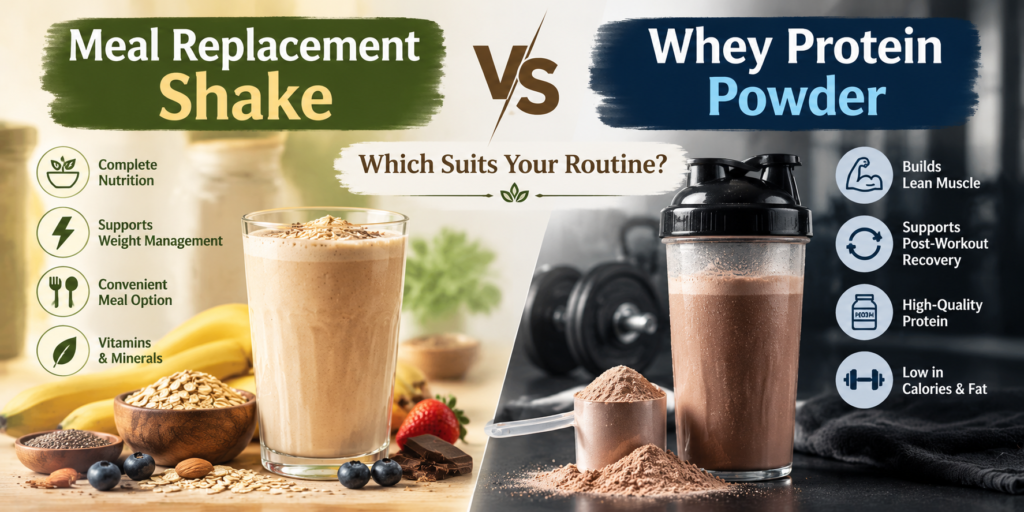
Meal Replacement vs Whey Protein
Two powders, two different jobs. Here is how to choose.

We get this question often, usually from someone who has started going to the gym and also wants to lose a few kilos. Should they buy a whey protein or a meal replacement shake? Both are powders, both go into a shaker, and both promise to help. They are designed for quite different purposes, though, and using the wrong one can work against you.
What each one is
A meal replacement shake is meant to stand in for a meal. It is formulated to give you a balance of nutrients in a controlled number of calories: protein, carbohydrates, some fat, fibre, vitamins and minerals. The idea is that you replace one meal a day (often breakfast or dinner) with a shake, which makes it easier to stay within a calorie target without losing nutrition.
Whey protein is a protein supplement made from the liquid left over when milk is turned into cheese or paneer. It is mostly protein with small amounts of carbohydrate and fat. Whey concentrate is typically around 70 to 80 percent protein, and whey isolate is higher. It is meant to top up your protein intake, most often to support muscle recovery after exercise. It is not designed to be a complete meal.
Side-by-side
| Meal replacement shake | Whey protein powder | |
|---|---|---|
| Main purpose | Replace a meal in a calorie-controlled plan | Add protein, often after exercise |
| Protein | Moderate | High |
| Carbohydrates | Included | Low |
| Fibre | Usually included | Usually little or none |
| Vitamins and minerals | Usually added | Varies, often not much |
| Keeps you full | Designed to | Less so on its own |
| Typical user | Someone following a weight-management plan | Someone training for strength or muscle |
When a meal replacement makes sense
- You want to lose weight and find it hard to control portions at one particular meal.
- You often skip meals on busy days and end up overeating later.
- You want a quick, measured option that still gives you some fibre and micronutrients.
Patanjali Nutrela Slim Choice is designed for this kind of planned weight-management routine. It provides protein, fibre, vitamins and minerals and is mixed with water or low-fat milk. We have a full guide to Nutrela Slim Choice benefits and use and step-by-step instructions for preparing it.
A meal replacement works best for one meal a day, not all of them. Your other meals still need to be balanced, home-cooked food with plenty of vegetables, pulses and whole grains.
When whey protein makes sense
- You do regular strength training and struggle to reach your daily protein target from food.
- You are vegetarian and find it hard to get enough protein from dal, paneer and curd alone.
- You want a quick protein source after a workout.
Whey does not make you lose weight by itself. It adds calories. If you add two scoops a day on top of your normal diet without any change in activity, you may gain weight. For gym beginners, our article Is Patanjali Whey Protein good for gym beginners? is a good starting point, and we also cover Patanjali Nutrela Whey Protein nutrition.
Can you use both?
Some people do: a meal replacement shake for breakfast on work days and a scoop of whey after training. This can work, but add up the calories and protein across the day so you do not overshoot. If you are unsure, a registered dietitian can help you set targets.
Reading the label
Whichever you choose, turn the pack over and check:
- Calories per serving. For a meal replacement, this tells you how much of your daily target it uses.
- Protein per serving, in grams.
- Sugar. Some flavoured powders contain a lot of added sugar.
- Fibre. Higher fibre helps you feel full.
- Serving size. Many people use bigger scoops than the label assumes.
- Allergens. Both often contain milk. Some contain soy.
- FSSAI licence number, batch number and expiry. Buy only sealed packs.
Safety notes
- Pregnant or breastfeeding women, children and teenagers should not use meal replacements or protein supplements without medical advice.
- People with kidney disease should not increase their protein intake without their doctor’s approval.
- People with diabetes should check with their doctor before using a meal replacement, as it can change how meals affect blood sugar.
- Very low calorie diets can cause tiredness, dizziness and nutrient gaps. Do not go below what your doctor or dietitian advises.
- Neither product is a medicine. Neither will work on its own without changes to your food and activity.
Frequently asked questions
Which meal replacement powder in India should I choose?
Look for a clear nutrition label, enough protein and fibre per serving, little added sugar and an FSSAI licence number. Patanjali Nutrela Slim Choice is one option designed for a planned weight-management routine.
Is a meal replacement shake better than whey protein for weight loss?
For weight loss, a meal replacement used for one meal a day as part of a calorie-controlled plan is usually the better fit. Whey is designed for adding protein, not for replacing meals.
Can I drink whey protein instead of a meal?
It is not ideal. Whey lacks the carbohydrates, fibre and micronutrients of a balanced meal.
Can I take Nutrela Slim Choice after a workout?
It is designed as a meal replacement, not specifically as a post-workout drink. If you train hard, speak to a dietitian about your protein needs.
How many meal replacement shakes can I have in a day?
Usually one, sometimes two, as directed on the pack and with balanced meals for the rest. Do not replace all your meals.
This article is general nutrition information, not medical advice. If you have a health condition, speak to your doctor or a registered dietitian before changing your diet.