
Starting Ayurvedic medicine can feel confusing — churnas, tablets, oils, decoctions, and advice to take them “with warm milk” or “before food.” But there is a clear logic to it, and getting the basics right — the right dose, the right timing, and the right carrier — often decides whether a remedy works. This beginner’s guide covers how to take Ayurvedic medicine safely, so you get the benefit without the guesswork.
The forms of Ayurvedic medicine
| Form | What it is |
|---|---|
| Churna | Herbal powder — potent, traditional, taken with a carrier |
| Vati / Gutika | Tablets — convenient, precise dosing |
| Kwath / Kashaya | Herbal decoction (tea) |
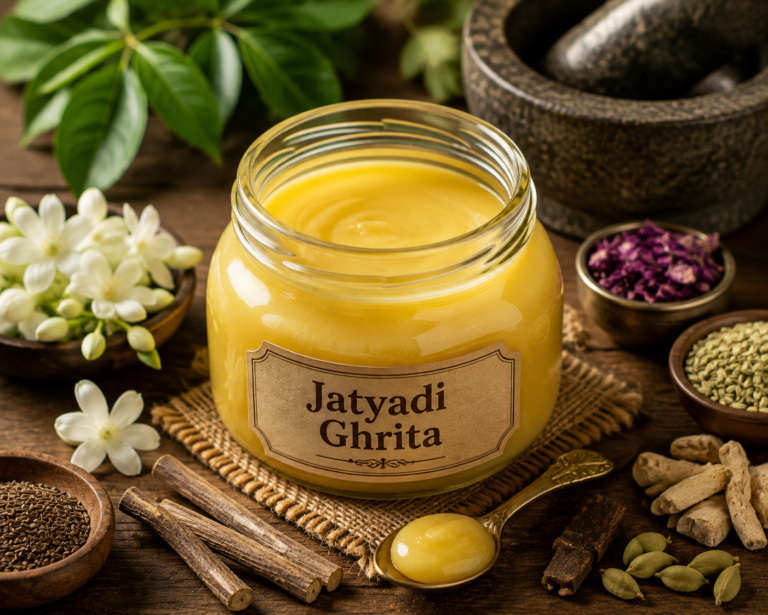
| Taila / Ghrita | Medicated oils and ghee — external or internal |
| Asava / Arishta | Fermented herbal tonics |
| Bhasma | Mineral preparations — potent; use only under guidance |
Dosage: start low, be consistent
Follow the dose on the pack or your practitioner’s advice, and when in doubt, start at the lower end for a few days to check tolerance before building up. More is rarely better in Ayurveda — especially with potent or mineral formulas. Consistency matters more than a big dose: most Ayurvedic medicines work gradually over weeks, so a steady daily habit beats an intense burst.
Timing: when to take it
Ayurveda times medicine to its purpose. Common patterns include:
- Before food — for weight, Kapha and lower-body conditions.
- After food — for most tonics and to protect the stomach.
- On an empty stomach / early morning — for cleansing and detox actions.
- At night — for laxatives (like Triphala) and calming, sleep-supporting herbs.
If a product or practitioner specifies a time, follow it — timing genuinely changes the effect.
The carrier (Anupana) matters
Ayurveda pairs medicines with a carrier (Anupana) that directs and enhances their action. Common carriers:
- Warm water — the default; good for most and for clearing Ama.
- Warm milk — nourishing and grounding; for tonics, Vata and rebuilding.
- Honey (never heated) — for weight and Kapha support.
- Ghee — for deep nourishment and Pitta.
The same herb can act differently depending on its carrier — which is why instructions specify one.
A simple way to begin
If you are brand new, start gently rather than with a cabinet of remedies. Pick one well-chosen, genuine product for your main concern, take it at the recommended dose, timing and carrier, and give it a fair few weeks while you also tidy up the basics — warm food, regular meals, good sleep. Adding herbs on top of a chaotic routine rarely works; herbs plus good habits works far better. Once you see how one remedy suits you, you can build from there, ideally with a practitioner’s guidance for anything targeted.
Common beginner mistakes
- Taking too many things at once — you cannot tell what is working.
- Ignoring the timing and carrier — these genuinely change the effect.
- Quitting after a week — most remedies need weeks to act.
- Buying the cheapest unbranded product — especially risky with mineral medicines.
- Not telling their doctor — interactions with medications are real.
Safety essentials
- Buy genuine, licensed products — check the AYUSH licence, batch and expiry.
- Be extra careful with bhasma (mineral) medicines — use only established brands under practitioner guidance.
- Tell your doctor what you take — some herbs interact with medications (thyroid, blood thinners, diabetes drugs).
- Do not self-prescribe for serious conditions — use Ayurveda alongside, not instead of, medical care where needed.
- Avoid or seek advice in pregnancy, breastfeeding, and for children — not all herbs are suitable.
Frequently asked questions
How should I take Ayurvedic medicine?
Follow the dose, timing and carrier specified. Generally: start low, be consistent, take tonics after food and cleansing herbs on an empty stomach, and use the recommended carrier (warm water, milk, honey or ghee).
Why does the carrier (Anupana) matter?
The carrier directs and enhances a herb’s action — warm milk nourishes, honey supports weight loss, warm water cleanses. The same herb can act differently with a different carrier.
Can I take Ayurvedic medicine with modern medicine?
Often, but always tell your doctor, since some herbs interact with medications. Keep a time gap, and get professional advice for prescription drugs and serious conditions.
How long before Ayurvedic medicine works?
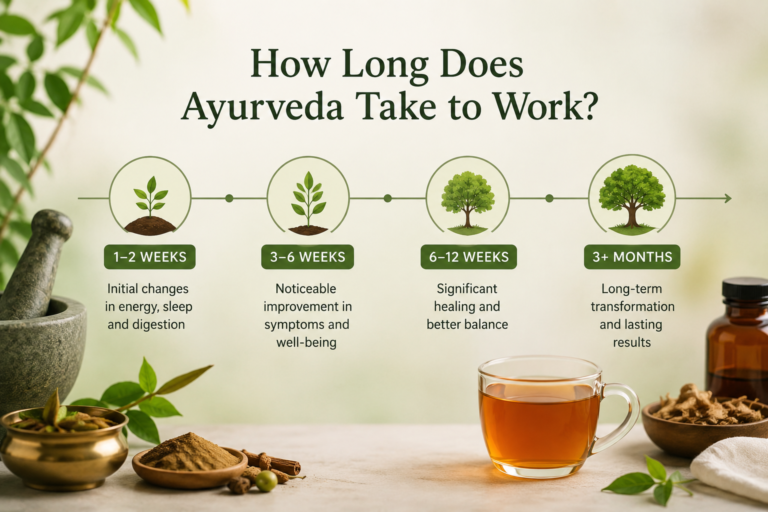
Most work gradually — a first response in 2–3 weeks and fuller benefit over 6–12 for chronic issues. Consistency over weeks is key.
The bottom line
Taking Ayurvedic medicine well comes down to a few basics: the right dose (start low, stay consistent), the right timing (matched to purpose), and the right carrier (Anupana). Buy genuine products, respect the extra caution mineral medicines need, tell your doctor what you take, and use Ayurveda alongside medical care for anything serious. Get the basics right and you give every remedy its best chance.
Related reading
- How to Choose Quality Ayurvedic Supplements
- How Long Does Ayurveda Take to Work?
- Rasa, Virya, Vipaka: How Herbs Work
- More Ayurveda Basics
Disclaimer
This article is for general information and educational purposes only and is not medical advice. Always consult a qualified doctor or registered Ayurvedic practitioner before starting any medicine, especially if you are pregnant, breastfeeding, taking medication, managing a health condition, or giving anything to a child.