
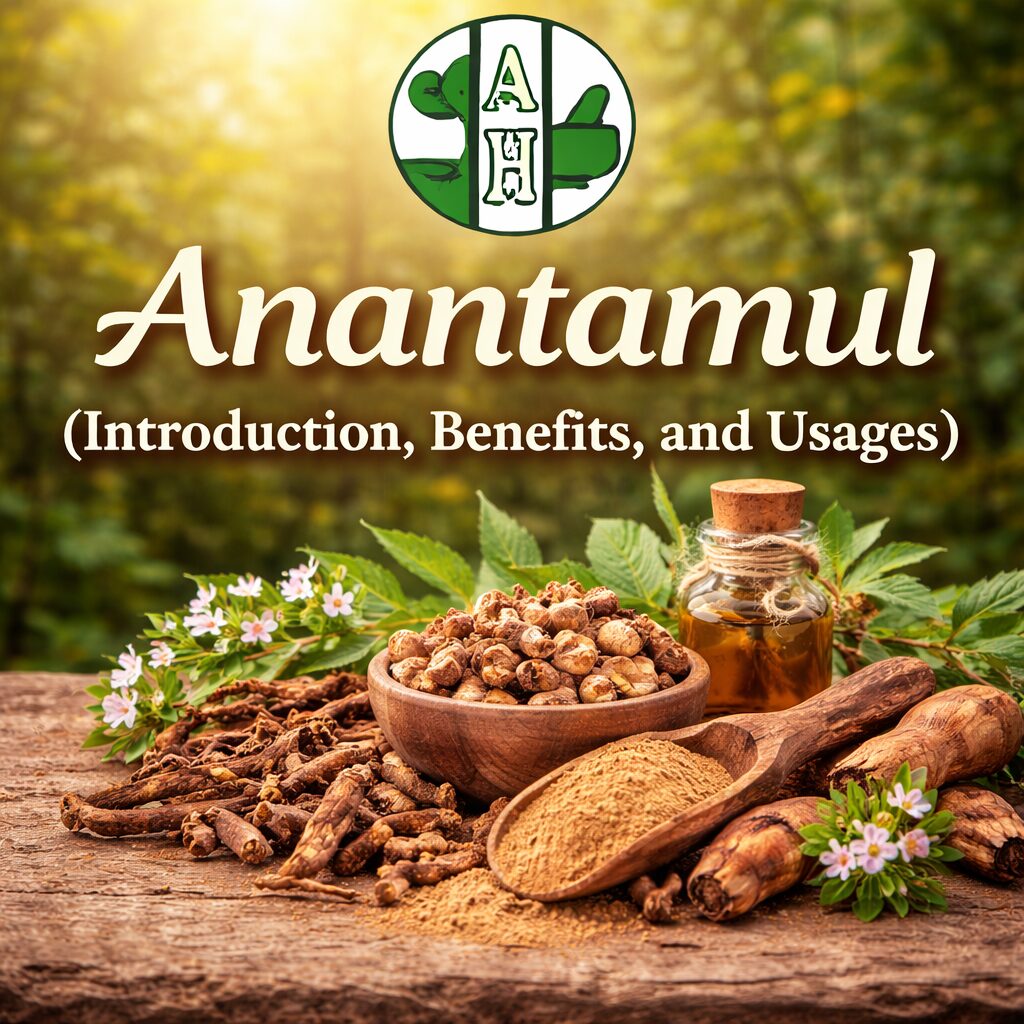
Anantamul (Introduction, Benefits, and Usages)
There’s a scent that almost every Indian child has experienced at least once — the earthy, aromatic fragrance of root sherbet on a sweltering summer day. In many schoolyards and festival paths, that dark, cooling drink called nannari sharbat has been a tiny oasis of relief and nostalgia. And hidden within that comforting taste is a root whose ancient legacy stretches far beyond refreshment into the heart of Ayurvedic medicine. That root is Anantamul — the eternal root — a botanical gem woven into the story of traditional Indian healing.
To sit with Anantamul is to be rooted in centuries of herbal wisdom. Scholars, village healers, and Ayurvedic physicians alike have sung praises of its life-affirming qualities — from its cooling embrace to its ability to purify and restore. Today, as we grapple with stress, inflammation, and imbalance in modern life, this age-old ally is resurging once more — not as a relic of the past, but as a gentle companion for ongoing wellness.
What Is Anantamul?
Anantamul is the root of the plant Hemidesmus indicus (family Apocynaceae), a slender, twining climber with woody, aromatic roots. These roots — long, fragrant, and rich in earthy sweetness — are the part used medicinally and are especially treasured for their cooling nature. The plant thrives across the Indian subcontinent, growing wild in fields, hedges, and forest fringes, especially in the dry tropical regions from Rajasthan to the Eastern Ghats and beyond.
Across India and its many languages, Anantamul is known by diverse names that reflect its cultural reach: in Hindi as Anantamul or Kapuri, in Tamil and Telugu as Nannari, in Kannada as Sogade Beru, in Gujarati as Kapuri or Madhuri, and in Sanskrit as Sariva or Anantamula. In English it’s often called Indian Sarsaparilla — although botanically distinct from the New World sarsaparillas — and affectionately appreciated for its aromatic roots.
Anantamul in History and Culture
Anantamul’s tale stretches deep into Ayurvedic texts and cultural practices. Traditional Ayurvedic treatises such as the Charaka Samhita and Sushruta Samhita classify this herb among those with detoxifying and cooling effects, often included in preparations to pacify excess Pitta (heat) and support digestive fire (Agni). Its role as a blood purifier (rakta shodhana) and cooling tonic has long placed it in seasonal cleansing regimens. Classical compilations like the Bhavaprakasha Nighantu and Bhaishajya Ratnavali describe its use for treating fever, inflammation, and skin disorders. (While direct citations from these texts vary by manuscript, the herb’s presence across Ayurvedic literature is well recognized.)
Historically, Anantamul also traveled beyond medicine into commerce and culture. During colonial times its aromatic roots were one of the Indian exports that intrigued European herbalists, drawing comparisons with New World sarsaparilla and earning a place in various folk remedies — sometimes even as flavoring or tonic ingredients. Today, the herb’s cultural echo lives on in regional drinks, seasonal remedies, and Ayurvedic pantry staples.
Ayurvedic Properties
In Ayurveda, Anantamul is primarily considered sweet (madhura) and bitter (tikta) in taste (rasa), light (laghu) and dry (ruksha) in quality (guna), with a cooling potency (shita virya) and a sweet post‑digestive effect (madhura vipaka). It pacifies both Pitta and Kapha doshas, gently balancing excess heat and fluid stagnation. Ayurvedic actions (karma) include Rasayana (rejuvenative), Pittahara (Pitta‑pacifying), Amapachana (digestive support), and Shothahara (anti‑inflammatory).
Active Compounds and Modern Research
Phytochemical studies of Anantamul have identified phenolic acids, flavonoids, triterpenoids, and aromatic aldehydes in its roots — compounds often linked with antioxidant, anti‑inflammatory, and metabolic benefits. These bioactive constituents support many of the herb’s traditional uses, and modern research has explored these properties in laboratory and animal models, underlining antioxidant activity and metabolic effects that resonate with Ayurvedic descriptions.
Benefits of Anantamul
Cooling and Detoxifying Action
One of Anantamul’s hallmark qualities is its natural cooling effect on the body, especially useful during hot climates or inflammatory imbalances. Ayurveda has long recommended it for conditions linked with excess Pitta, such as heat rash, burning sensations, and irritated digestion. Modern phytochemical studies showing antioxidant activity help support these traditional cooling and detoxifying roles.
Antioxidant and Cellular Protection
Research on root extracts of Hemidesmus indicus has demonstrated strong antioxidant capacity, neutralizing free radicals and protecting cellular integrity. This aligns with Ayurvedic teachings about herbs that strengthen Ojas — the subtle essence tied to vitality and immunity — and may help explain traditional uses in stress and aging.
Digestive Harmony
Anantamul’s bitter and sweet tastes stimulate digestive enzymes and soothe the gastrointestinal tract. In Ayurvedic practice, a decoction (kwath) or fresh juice is often used to support digestion, reduce discomfort after heavy meals, and balance metabolic heat. This traditional wisdom finds modern resonance in studies exploring phenolic compounds and their effects on gut‑associated inflammation.
Blood Purification and Skin Health
Classically prized as a blood purifier (rakta shodhana), Anantamul is used in external pastes and internal remedies aimed at skin conditions like eczema, psoriasis, and acne. Contemporary research hints at antimicrobial and anti‑inflammatory potential in its extracts, which may contribute to such effects, though large‑scale clinical trials are still limited.
Metabolic Support
Emerging research indicates that Anantamul may play a role in supporting healthy blood sugar levels and lipid metabolism, echoing Ayurvedic uses for digestive and metabolic balance (Agni and Meda). For example, studies on the herb’s phenolic and flavonoid content suggest pathways for influencing glucose metabolism and oxidative stress.
Immune and Anti‑Inflammatory Effects
Both traditional texts and laboratory research note Anantamul’s roles in immune modulation and inflammation reduction. In models of oxidative stress and inflammatory response, extracts show promise in limiting pro‑inflammatory markers — a finding that parallels Ayurvedic descriptions of the herb pacifying Pitta and soothing internal swelling.
Support for Joint Comfort
Animal studies exploring root extracts have found beneficial effects in models of arthritis and joint inflammation, lending scientific interest to the age‑old use of Anantamul in conditions associated with pain and stiffness.
Classical Ayurvedic Formulations
Ayurveda interweaves Anantamul into several revered remedies. For instance, Sarivadi Kashaya is a traditional decoction used for digestive and inflammatory conditions, and Drakshadi Gutika often includes Anantamul for metabolic support and cooling benefits. These classical formulations harness synergistic effects of multiple herbs, each enhancing the overall therapeutic impact.
How to Use Anantamul
1. Churna (Powder)
Take ¼ to ½ teaspoon of Anantamul churna with warm water or honey twice daily before meals to support digestion and cooling balance. For children, reduce to ⅛–¼ teaspoon with warm water.
2. Kwath (Decoction)
Simmer 1–2 teaspoons of root in 300 ml of water until reduced by half. Strain and sip ¾ cup twice a day for detoxification and digestive support. Anupana (vehicle) can be warm water or a splash of lemon juice for added digestive uplift.
3. Fresh Juice
Extract fresh root juice and take 1–2 teaspoons diluted in warm water once daily to soothe Pitta imbalances and nourish metabolism.
4. Topical Paste
Mix Anantamul powder with rose water or aloe vera gel and apply lightly to affected skin areas for soothing outcomes related to heat and inflammation.
5. Herbal Sharbat
Anantamul sherbet prepared with root decoction and natural sweeteners can be enjoyed as a cooling tonic in hot seasons — always alongside mindful moderation of sugar.
Dosage and Safety
Typical adult dosing ranges from ¼ to ½ teaspoon of powder or ¾ cup of decoction twice daily. In traditional practice, lower doses are recommended for sensitive individuals. Caution is advised during pregnancy and breastfeeding, and with concurrent medications (especially diuretics or metabolic drugs), so consult a qualified Ayurvedic practitioner for personalized guidance. Excessive use may lead to digestive discomfort or mild allergic reactions in some individuals.
Shop Section
If you are looking to bring the healing power of Anantamul into your daily wellness routine, Ayurvedaholic is your trusted destination for authentic Ayurvedic products. The platform carries a wide range of products from India’s most reputable Ayurvedic brands including Patanjali, Dabur, Baidyanath, and Kottakkal.
👉 Shop All Ayurvedic Products — Ayurvedaholic
Anantamul is more than a herb — it’s a thread that connects ancient Ayurvedic insight with modern aspirations for balanced health. In a world filled with noise and haste, its cool, grounding wisdom reminds us to slow down, listen to our bodies, and engage with healing that feels both timeless and tender.
References
References
- Charaka Samhita, Sutra Sthana, Chapter 26
- Bhavaprakasha Nighantu, Haritakyadi Varga
- Bhaishajya Ratnavali, Volume 2, Vatavyadhi Chikitsa — View on Internet Archive
- Hemidesmus indicus (Anantamul) — Wikipedia — View on Wikipedia
- Anoop A. & Jegadeesan M. — “Biochemical studies on the anti-ulcerogenic potential of Hemidesmus indicus.” Journal of Ethnopharmacology, 2003 — View on PubMed
- Ravishankara MN. et al. — “Evaluation of antioxidant properties of root bark of Hemidesmus indicus.” Phytomedicine, 2002 — View on PubMed
Disclaimer
The information in this article is for educational purposes only and does not constitute medical advice, diagnosis, or treatment. Always consult a qualified Ayurvedic practitioner or healthcare professional before using any herb or formulation, especially if you are pregnant, breastfeeding, or on medication. Individual results may vary. Ayurvedaholic does not claim to diagnose, treat, cure, or prevent any disease.
Add comment