Jhau benefits for liver health, spleen disorders, and skin conditions are well-established in Ayurvedic medicine — Tamarix gallica (Tamarisk, Jhau, Farash) is a shrubby tree used in Ayurveda and Unani for liver enlargement, splenomegaly, jaundice, skin diseases, and as a diuretic. Modern research has confirmed hepatoprotective, antioxidant, and anti-inflammatory properties that align with these classical applications. See Wikipedia: Tamarix.
What Is Jhau? A Complete Introduction
Origin and History of Jhau
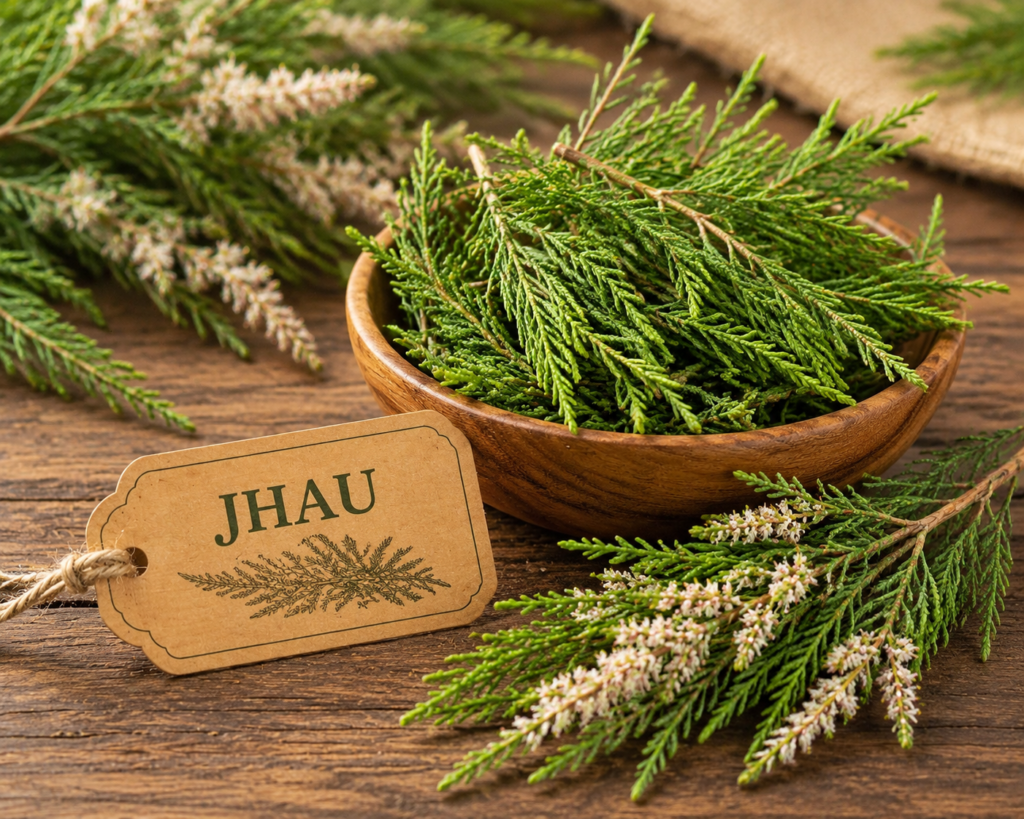
Jhau (Tamarix gallica, family Tamaricaceae) — also known as Tamarisk, French Tamarisk, Farash (in Hindi and Urdu), or Shara (in Sanskrit) — is a feathery, deciduous shrubby tree native to Western Asia, the Mediterranean, and the Indian subcontinent. It thrives in dry, sandy, and saline environments — riverbanks, desert margins, and coastal areas — and is widely distributed across Rajasthan, Punjab, Gujarat, and other arid regions of India. The tree is recognised by its scale-like leaves, wispy pink flowers, and ability to survive in harsh environmental conditions. In Ayurveda, Jhau (Shara) is described in classical texts for Yakritvikara (liver disease), Pleeha Roga (spleen disease), Kushtha (skin diseases), Shotha (oedema), and Prameha (urinary disorders). In Unani medicine, Farash is similarly used for liver and spleen conditions, fever, and skin disease. The bark, branches, and galls are the primary medicinal parts.
Key Compounds in Jhau
Jhau’s medicinal properties are attributed to its polyphenol-rich composition. Key compounds include: Tamarixin (a flavonoid glycoside) and tamarixetin — primary flavonoids with antioxidant and anti-inflammatory activity; Gallic acid and ellagic acid — polyphenolic acids with antioxidant, hepatoprotective, and antimicrobial properties; Tamaridine — an alkaloid; Quercetin and isorhamnetin — flavonols with anti-inflammatory and antiviral activity; Tannins — astringent compounds with antimicrobial and antidiarrhoeal properties; and Ferulic acid — with anti-inflammatory and skin-protective properties. The high total phenolic content of Jhau bark explains its strong antioxidant capacity documented in laboratory analyses. The galls (formed by insect action on branches) are particularly rich in gallic acid and tannins. See Wikipedia: Gallic acid.
Top Health Benefits of Jhau
Jhau Benefits for Liver and Spleen Health
Jhau’s most important classical application is liver and spleen disease — its Ayurvedic category as a Yakrit-Plihari (liver-spleen) herb reflects its primary clinical use. Animal studies confirm hepatoprotective activity: Jhau bark extract significantly reduces liver enzyme elevation (ALT, AST) in chemically-induced hepatotoxicity models, reduces liver lipid peroxidation, and preserves liver cell architecture. The mechanism involves the antioxidant polyphenols (gallic acid, ellagic acid, flavonoids) quenching reactive oxygen species that damage liver cells, and the anti-inflammatory flavonoids reducing hepatic inflammatory infiltration. For splenomegaly associated with malaria (historically common in Jhau’s native regions), the combination of antimalarial activity documented in some studies and anti-inflammatory properties provides a rational basis for the traditional spleen-reducing use.
Jhau for Skin Conditions and Wound Healing
Jhau’s bark and gall preparations have documented antimicrobial and astringent properties valuable for skin conditions and wound healing. The tannins provide astringent, antiseptic, and barrier-protective functions that accelerate wound closure and reduce infection risk. For skin diseases (Kushtha), the antimicrobial and anti-inflammatory compounds address both infectious and inflammatory components. For leucoderma (vitiligo): traditional Unani formulations use Farash galls as part of topical preparations. The psoralen-like compounds potentially found in Tamarix species may provide photosensitising activity relevant to vitiligo treatment — though this requires qualified practitioner guidance. Externally, Jhau bark decoction as a wash has traditional use for eczema, dermatitis, and infected skin wounds.
Medicinal Properties of Jhau
How Jhau Works as a Natural Remedy
Jhau’s hepatoprotective mechanism involves multiple antioxidant pathways: gallic acid and ellagic acid directly scavenge reactive oxygen species and upregulate endogenous antioxidant enzymes (superoxide dismutase, catalase, glutathione peroxidase). The flavonoids (tamarixin, quercetin) inhibit NF-kB inflammatory signalling that drives hepatic inflammation. The diuretic action (promoting urine output) relates to flavonoid effects on renal tubular reabsorption — useful for fluid retention in liver disease (ascites management). The antimicrobial activity is attributed to the tannin-mediated protein precipitation that disrupts bacterial and fungal cell membrane integrity — a broad-spectrum mechanism.
Jhau in Ayurveda and Traditional Medicine
In Ayurveda, Jhau (Shara, Tamarika) is classified as Kashaya (astringent), Tikta (bitter), Katu (pungent) in taste, Laghu (light) and Ruksha (dry) in quality, and Ushna (hot) in potency. This combination makes it particularly suited to Kapha and Pitta reducing applications — liver inflammation, spleen enlargement, oedema, and skin diseases are primarily Kapha and Pitta conditions in Ayurvedic nosology. The classical formulation Rohitakarishta (for liver disease) contains Rohitaka (Tecomella undulata) as the primary herb, but Jhau is used in combination formulations for similar conditions. In Unani medicine, Farash decoction is a standard prescription for liver and spleen enlargement, particularly in the context of malaria-associated splenomegaly that was historically prevalent in arid regions of South Asia.
How to Use Jhau — Practical Usages
Jhau Bark Decoction and Traditional Preparations
Bark decoction for liver and spleen conditions: boil 10–15g of dried Jhau bark in 400ml water until reduced to 100ml; strain and drink 50ml twice daily before meals. This is the classical Kwatha (decoction) preparation. For liver conditions, combine with other hepatoprotective herbs like Kutaki, Bhumyamalaki, or Punarnava under Ayurvedic physician guidance. External wash for skin diseases: prepare a stronger bark decoction (20g in 500ml reduced to 250ml), cool, and use as a wash for eczema, dermatitis, or infected skin wounds twice daily. Powder (Churna): 1–3g of dried Jhau bark powder in warm water twice daily as an alternative to decoction.
Jhau as a Supplement
Jhau is a less-commonly commercialised herb compared to mainstream Ayurvedic herbs — it’s typically available through specialist Ayurvedic pharmacies and practitioners rather than major commercial brands. It appears in compound formulations for liver and spleen conditions from classical Ayurvedic manufacturers. For people in regions where Jhau grows (Rajasthan, Gujarat, Punjab), fresh bark decoction prepared from clean, properly sourced bark is the most economical approach. When buying dried bark, ensure it’s from Tamarix gallica or T. indica — both used medicinally in Indian Ayurveda — and not invasive North American Tamarix species that have different chemistry.
Side Effects and Precautions of Jhau
- Pregnancy: avoid medicinal doses during pregnancy — insufficient safety data and the Ushna (hot) properties are contraindicated in Pitta-aggravating pregnancy conditions
- Dryness and constipation: the Ruksha (dry) and Kashaya (astringent) nature of Jhau can cause dryness and constipation in Vata-predominant individuals — balance with adequate fluids and Snigdha (unctuous) foods
- Drug interactions: the flavonoids in Jhau may interact with cytochrome P450 drug metabolism enzymes — consult physician if on multiple medications
- Liver disease severity: while hepatoprotective in mild to moderate conditions, advanced cirrhosis or acute liver failure requires conventional medical management — Jhau is supportive, not curative for severe disease
Frequently Asked Questions About Jhau
What are the main Jhau benefits for health?
Key Jhau benefits: hepatoprotective antioxidant activity reducing liver enzyme elevation and oxidative damage, spleen-reducing (anti-splenomegaly) anti-inflammatory activity, diuretic action supporting fluid management in liver disease, antimicrobial and astringent properties for skin conditions and wound healing, anti-inflammatory flavonoid activity for inflammatory conditions, and traditional Yakrit-Plihari (liver-spleen) tonic function in Ayurvedic and Unani medicine.
Is Jhau the same as Tamarisk?
Yes — Jhau is the common Hindi name for Tamarisk trees of the genus Tamarix, primarily Tamarix gallica and Tamarix indica in Indian Ayurvedic contexts. The Sanskrit name Shara or Tamarika refers to the same plant. “Farash” is the Urdu/Persian name used in Unani medicine. Tamarisk is the common English name. The genus has over 50 species worldwide — the Indian medicinal species should not be confused with Tamarix ramosissima or other species considered invasive weeds in the American Southwest, which have not been studied for the same medicinal properties.
Can Jhau help with jaundice?
Jhau is traditionally used for jaundice in both Ayurvedic and Unani systems, particularly as a liver-protective herb reducing hepatocellular damage. The hepatoprotective polyphenols reduce liver inflammation and oxidative damage that worsen jaundice. The diuretic action helps mobilise bile and waste products. However, jaundice has multiple causes — viral hepatitis, bile duct obstruction, haemolytic conditions — and requires proper medical diagnosis before treatment. Jhau can be a supportive herb for jaundice from hepatitis or mild liver inflammation alongside appropriate medical management, not a standalone treatment for jaundice of any serious cause.
Where can Jhau be found in India?
Jhau (Tamarix species) grows widely in arid and semi-arid regions of India — Rajasthan, Gujarat, Haryana, Punjab, and parts of Maharashtra. It’s commonly found along riverbanks, canal sides, and desert margins. In its native habitat, the feathery pink-flowered Jhau tree is a familiar sight along desert roadsides and river edges of Rajasthan and Gujarat. Local traditional medicine practitioners (Vaids, Hakeems) in these regions commonly use freshly prepared Jhau bark decoctions and have centuries of direct clinical experience with its applications for liver and spleen conditions prevalent in these areas.
Jhau benefits highlight the depth of Ayurvedic regional plant knowledge — a common arid-landscape tree providing genuine hepatoprotective, anti-inflammatory, and antimicrobial medicine. For liver health support, skin conditions, and spleen disorders, Jhau bark decoction is an accessible, evidence-aligned traditional preparation particularly valuable in the Indian regions where it grows abundantly. Combine with Kutaki, Punarnava, and Bhumyamalaki for a comprehensive Ayurvedic liver protocol.