
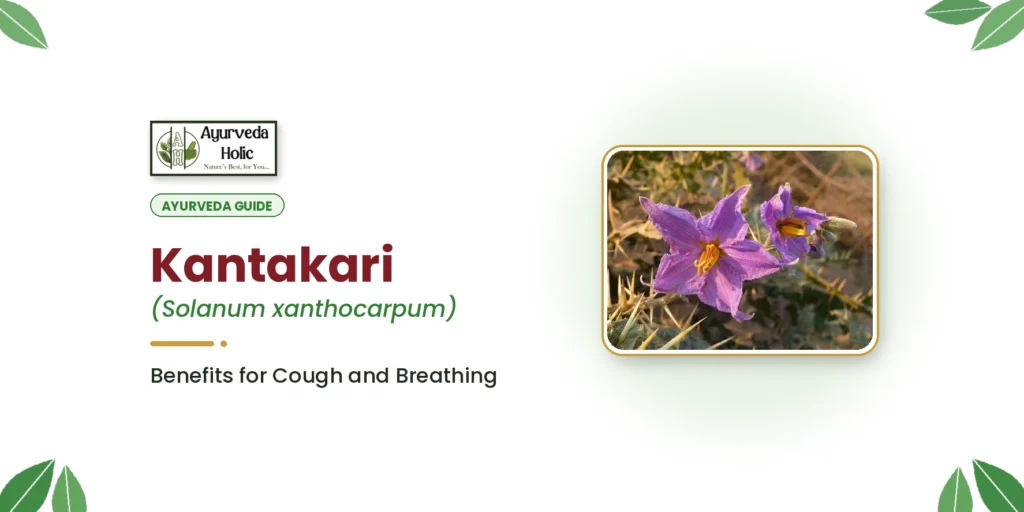
Short answer. Kantakari, or chhoti kateli, is a thorny little plant with yellow berries. Ayurveda uses it mainly for the lungs. The traditional kantakari benefits are for cough with mucus, chest congestion and easier breathing. It’s one of the ten roots in the classical Dashamoola. You’ll usually take it inside a formula, like Swasari. See a doctor for a cough that’s lasted over three weeks, wheezing or breathlessness.
You’ve probably walked past kantakari without noticing. It grows wild by roadsides and in dry fields. Ayurveda, though, treats it as one of its key lung herbs. Here’s why.
What kantakari is
It’s a small, spiny plant. The name means “the one with thorns”. It has purple flowers and yellow berries that look like tiny tomatoes.
| Feature | Detail |
|---|---|
| Botanical name | Solanum xanthocarpum (S. virginianum) |
| Common names | Kantakari, chhoti kateli, yellow-berried nightshade |
| Part used | Whole plant, especially root and fruit |
| Ayurvedic nature | Bitter, pungent, warming |
| Dosha | Reduces Kapha and Vata |
Kantakari benefits in Ayurveda
- Cough with mucus (kasa).
- Breathing trouble (shwasa). In Kapha conditions, inside formulas.
- Sore throat and hoarseness.
- Fever with a cold.
- Digestion. As a warming herb.
Kantakari in classical formulas
- Dashamoola. The ten roots. Kantakari is in the small-root group, with brihati, shalaparni, prishniparni and gokshura.
- Kantakari avaleha. A classical jam-like preparation for cough and breathlessness.
- Vyaghri haritaki. Vyaghri is another name for kantakari. This avaleha pairs it with haritaki for cough and cold.
- Kantakari ghrita. A medicated ghee for long-standing cough.
What research says
Lab and animal studies have looked at kantakari for relaxing the airways and calming inflammation. The plant contains alkaloids like solasodine. One small study in asthma found better breathing scores. It was small and short. No large trials exist. So treat it as traditional support for cough and congestion. Not a replacement for asthma care or treatment of a chest infection.
Products that contain kantakari
| Product | Traditional use |
|---|---|
| Patanjali Divya Swasari Avaleha | Cough and breathing comfort |
| Patanjali Swasari Pravahi | Herbal cough syrup (chhoti kateli) |
| Patanjali Divya Punarnavarishta | A supporting herb |
| Kottakkal Mahatiktaka Ghritam | Classical ghee formula |
How kantakari is taken
- In formulas. At the dose on the pack. This is the simplest way.
- With honey. A common carrier for cough formulas.
- As a decoction. Only from properly identified, dried herb from a pharmacy, and only on a vaidya’s advice. It’s a nightshade, and the dose matters.
Kantakari vs other cough herbs
| Herb | Traditional strength |
|---|---|
| Kantakari | Cough with mucus, breathing comfort |
| Vasaka (adulsa) | Thick phlegm, bronchitis |
| Mulethi | Dry cough, sore throat |
| Pippali | Long-standing cough, weak digestion |
| Tulsi | Cold, cough and fever |
Who should be careful
- Pregnant and breastfeeding women. Ask your doctor.
- People with diabetes. Syrups and avalehas contain sugar.
- People on regular medicines. Ask first.
- People with acidity. It’s warming.
Never use the wild berries or plant parts yourself. Many plants in this family are toxic raw.
When a cough needs a doctor
- A cough that’s lasted more than three weeks. In India, that should be tested for TB.
- Breathlessness, wheezing or chest pain
- High fever, or fever that lasts beyond three days
- Blood in the phlegm
- Weight loss or night sweats
If you have asthma, never swap your inhalers for herbs.
Frequently asked questions
What are the main kantakari benefits?
Ayurveda uses it for cough with mucus, congestion and easier breathing.
Is kantakari the same as chhoti kateli?
Yes. Chhoti kateli is its everyday Hindi name.
Is kantakari good for asthma?
It’s used in traditional breathing formulas. Asthma still needs a doctor’s care. Don’t stop prescribed inhalers.
Can kantakari be used for dry cough?
It’s mainly for cough with mucus. For a dry, tickly cough, Ayurveda leans on mulethi or honey-based remedies.
Is kantakari the same as brihati?
No. Both are spiny plants in Dashamoola. Brihati, or badi kateli, is a bigger, different species.
Can kantakari be taken with honey?
Yes. Honey’s the classic carrier for cough formulas with kantakari. If you have diabetes, remember both honey and avalehas contain sugar.
Which products contain kantakari?
Swasari Avaleha, Swasari Pravahi and several classical formulas, like Dashamoola-based ones.
Is kantakari safe for children?
Some kids’ cough syrups contain it. Give children herbal cough products only on a doctor’s advice.
How long can I take kantakari formulas?
For an ordinary cough, a week or two at the label dose. A cough lasting over three weeks needs a doctor, not a longer course.
Are kantakari berries edible?
No. Raw berries and plant parts can be toxic. Use only properly made formulas.
Shop: Patanjali Divya Swasari Avaleha · Patanjali Swasari Pravahi
This article is for general information and isn’t medical advice. See a doctor for a persistent cough or breathing problems.
Header photo of Kantakari by gailhampshire, via Wikimedia Commons, licensed CC BY 2.0.


