
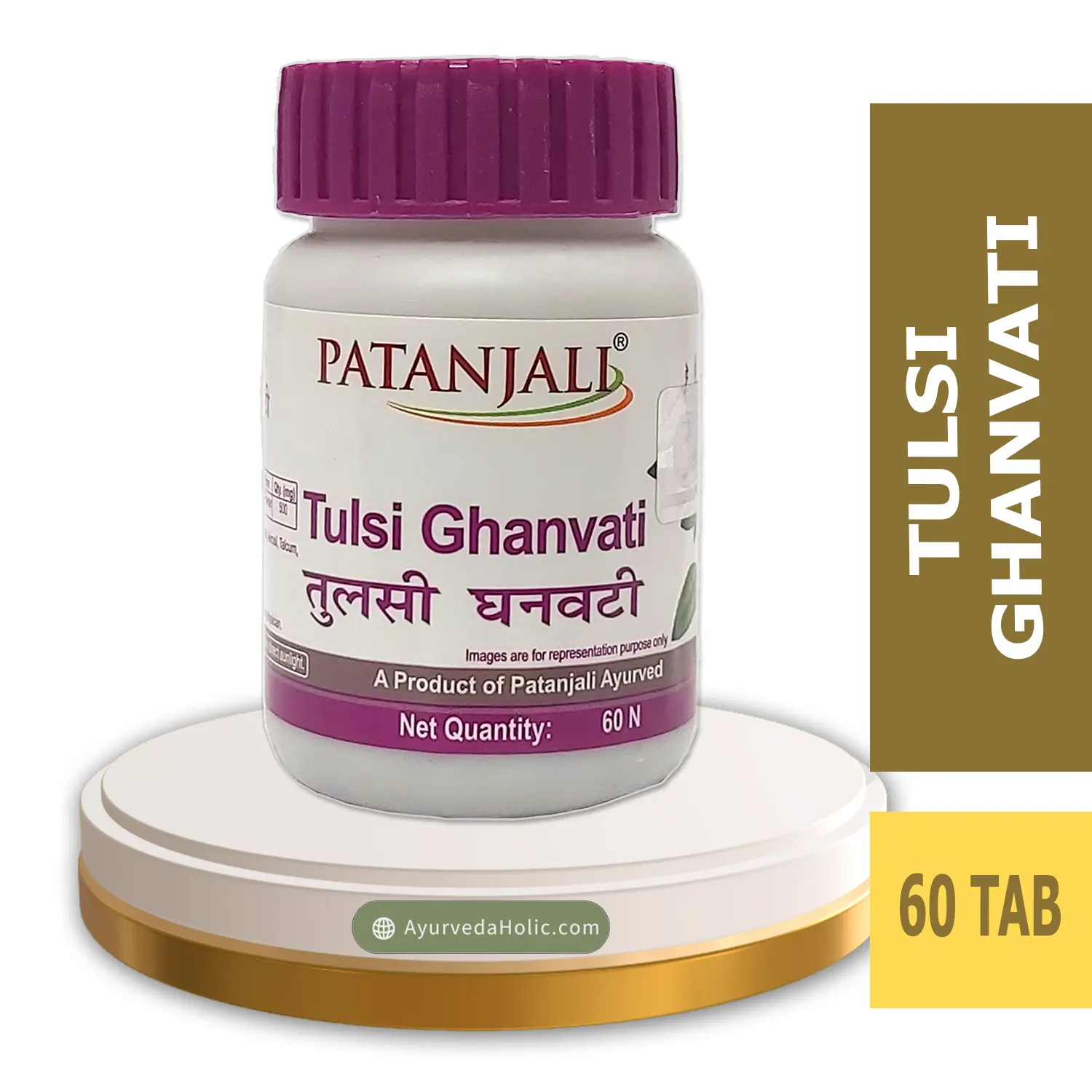
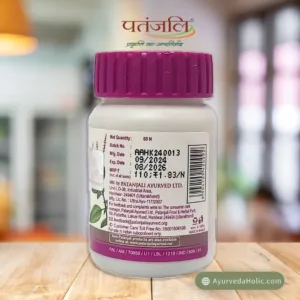

Patanjali Tulsi Ghanvati
Patanjali Tulsi Ghanvati is an Ayurvedic herbal tablet prepared mainly with Tulsi, also known as Holy Basil. It is commonly used as a daily wellness support product for immunity, respiratory comfort, seasonal health, throat comfort, and overall internal balance.
Patanjali Tulsi Ghanvati may help support the body during seasonal changes, cough and cold tendency, low immunity, and general weakness when used as directed by a qualified physician. Tulsi is traditionally valued in Ayurveda for its role in supporting respiratory wellness, digestion, immunity, and natural vitality. Naturally, it may support your health routine, but it still cannot convince the weather to behave properly.
This product should not be promoted as a guaranteed cure for cough, cold, fever, asthma, allergy, viral infection, dengue, chikungunya, COVID-19, respiratory disease, immunity disorder, or any chronic medical condition. Immunity and respiratory health depend on diet, sleep, hydration, hygiene, weather exposure, pollution, stress, age, and existing health conditions.
You can read more about Tulsi here: Tulsi.
Patanjali Tulsi Ghanvati Benefits
The benefits of Patanjali Tulsi Ghanvati are mainly associated with its Tulsi-based Ayurvedic formulation and traditional use for immunity, respiratory comfort, throat wellness, digestion, and general health support. It may be useful for people looking for herbal support during seasonal changes.
Patanjali Tulsi Ghanvati contains Tulsi extract as the key ingredient. Tulsi is traditionally used in Ayurveda for supporting immunity, respiratory wellness, natural detoxification, digestion, stress balance, and overall vitality.
It may help support respiratory comfort, throat freshness, immune balance, digestion, and general wellness. However, it should not be treated as an instant medicine for cough, cold, fever, breathing difficulty, or infection. Tulsi can support your routine, but it cannot replace rest, hydration, medical care, and common sense during illness.
People with diabetes, low blood sugar, bleeding disorders, thyroid problems, liver disease, kidney disease, asthma, allergy, pregnancy, breastfeeding, children, elderly people, or long-term medicine use should take this product only after consulting a qualified healthcare professional.
Patanjali Tulsi Ghanvati Uses
Patanjali Tulsi Ghanvati is commonly used as an Ayurvedic support product for immunity, cough and cold season support, throat comfort, respiratory wellness, digestion, and general vitality. It may be included in a wellness routine by people who prefer herbal tablets for daily health support.
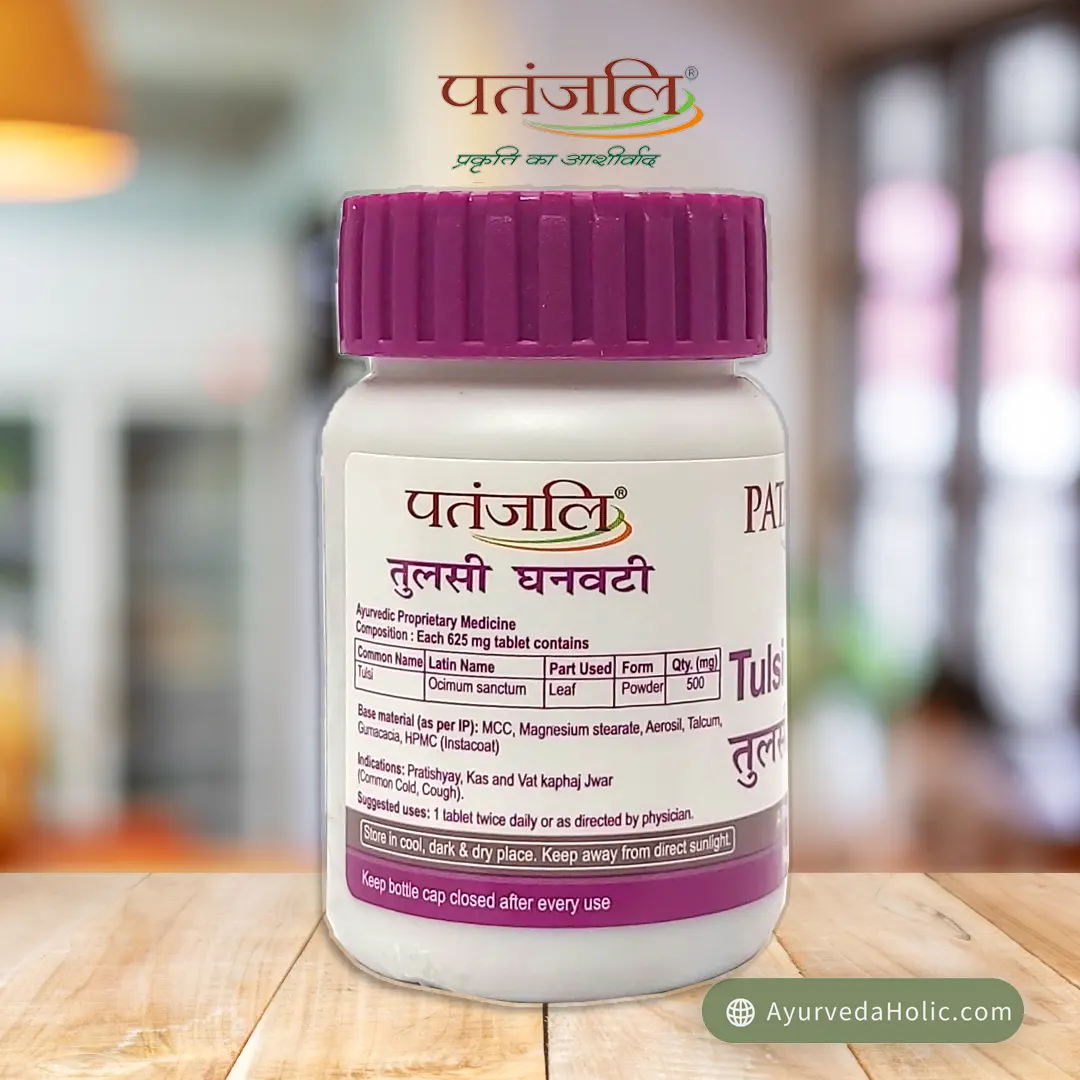
The commonly mentioned dosage is 1–2 tablets twice daily, or as directed by a qualified physician. The exact dosage, timing, and duration should be decided based on age, health condition, digestive strength, symptoms, medical history, and current medicines.
Do not exceed the recommended dose. Do not use this product as a substitute for medical treatment, prescribed medicines, emergency care, proper nutrition, hydration, or rest. For best results, it should be used along with a balanced diet, adequate water intake, proper sleep, steam inhalation when suitable, and healthy lifestyle habits.
Store the product in a cool and dry place, away from direct sunlight. Keep it out of reach of children.
Patanjali Tulsi Ghanvati Ingredients
The key ingredient in Patanjali Tulsi Ghanvati is Tulsi extract. Some product listings may also mention excipients, fillers, natural preservatives, and purified water as supporting formulation components.
Tulsi, also known as Holy Basil, is one of the most respected herbs in Ayurveda. It is traditionally used for supporting respiratory health, immunity, throat comfort, digestion, stress balance, and overall wellness. Tulsi is also commonly used in herbal teas, kadhas, and Ayurvedic tablets for seasonal wellness support.
This herbal formulation may support the body indirectly by helping maintain immunity, respiratory comfort, and internal balance. However, the product should not be described as a direct cure for fever, cough, cold, infection, asthma, allergy, dengue, chikungunya, or viral disease. Even Tulsi, with all its traditional respect, cannot replace a doctor when symptoms are serious.
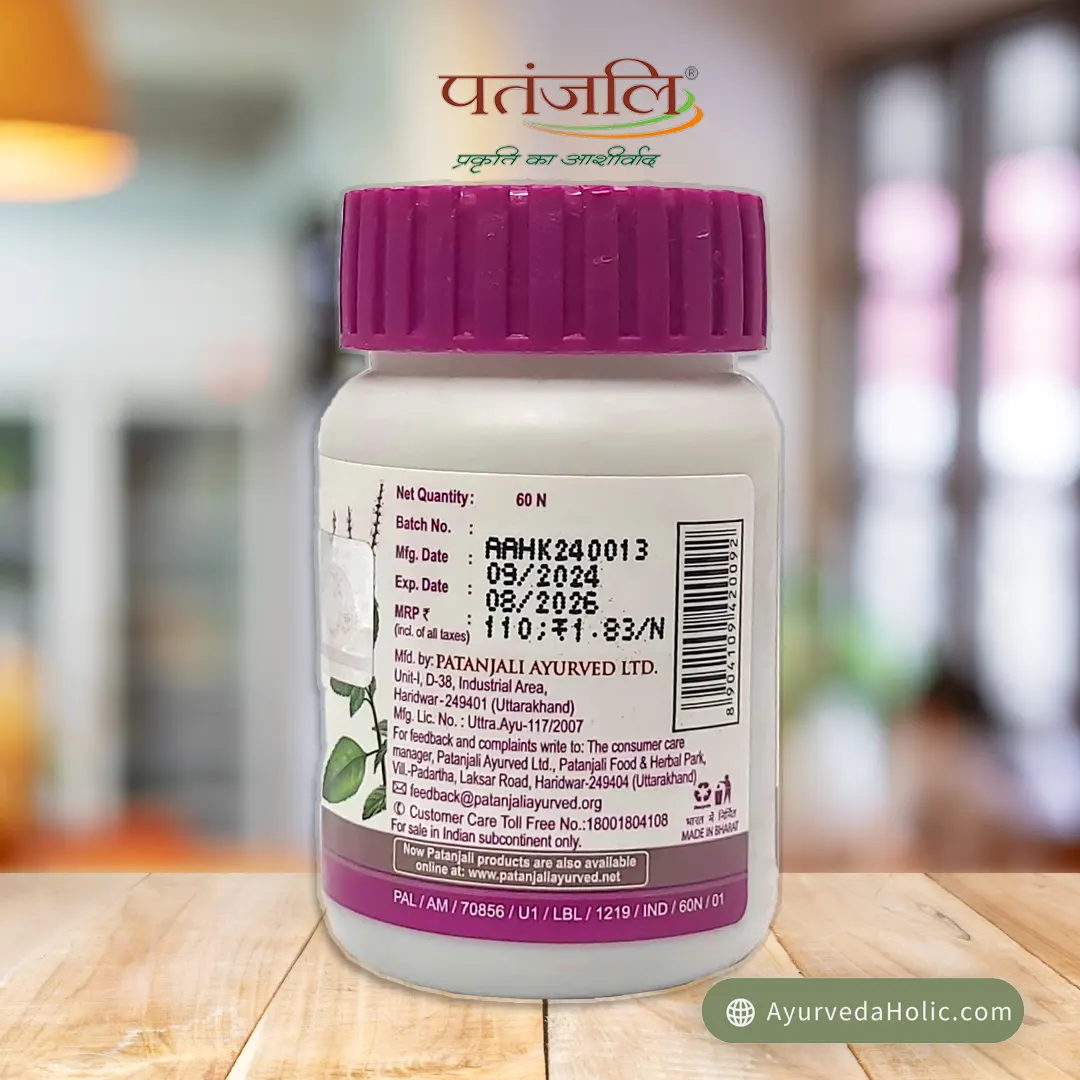
Always read the actual product label before use because ingredient details, dosage directions, warning statements, price, pack size, and formulation information may change by batch or manufacturer update.
FAQs About Patanjali Tulsi Ghanvati
1. What is Patanjali Tulsi Ghanvati used for?
Patanjali Tulsi Ghanvati is used as an Ayurvedic support product for immunity, respiratory comfort, throat wellness, cough and cold season support, digestion, and general wellness. It should be used as supportive care, not as a replacement for medical treatment.
2. What are Patanjali Tulsi Ghanvati benefits?
Patanjali Tulsi Ghanvati benefits may include support for immunity, respiratory wellness, throat comfort, digestion, seasonal health, and overall vitality when used as part of a healthy lifestyle routine.
3. How should I take Patanjali Tulsi Ghanvati?
The commonly mentioned dosage is 1–2 tablets twice daily, or as directed by a qualified physician. Always follow the dosage printed on the product label or prescribed by your healthcare professional.
4. Can Patanjali Tulsi Ghanvati cure cough and cold?
Patanjali Tulsi Ghanvati should not be promoted as a cure for cough or cold. It may support throat comfort and respiratory wellness, but persistent cough, fever, chest congestion, breathing difficulty, or worsening symptoms require medical advice.
5. Can I take Patanjali Tulsi Ghanvati daily?
Daily use should be done only as per label directions or medical advice. Do not take it continuously for long periods without professional guidance, especially if you have any existing health condition or take regular medicines.
6. Is Patanjali Tulsi Ghanvati safe?
It is generally used as an Ayurvedic herbal tablet, but safety depends on the person’s age, health condition, allergies, current medicines, and dosage. People with chronic health issues should consult a healthcare professional before use.
7. Who should avoid Patanjali Tulsi Ghanvati?
Children, pregnant women, breastfeeding mothers, and people with diabetes, thyroid disease, bleeding disorders, kidney disease, liver disease, asthma, allergy, low blood sugar, or long-term medication use should avoid self-use and consult a doctor before taking it.
8. Does Patanjali Tulsi Ghanvati boost immunity?
Patanjali Tulsi Ghanvati may support immune wellness as part of a healthy routine. However, immunity depends on sleep, nutrition, hydration, hygiene, exercise, stress control, age, and existing medical conditions. It should not be promoted as a guaranteed immunity booster or disease-prevention medicine.
Disclaimer
This information is for general product awareness only. Patanjali Tulsi Ghanvati is not intended to diagnose, treat, cure, or prevent any disease. It should not be used as a substitute for medical advice, prescribed medicines, emergency care, proper nutrition, hydration, or rest. People with diabetes, thyroid disease, bleeding disorders, kidney disease, liver disease, asthma, allergy, low blood sugar, pregnancy, breastfeeding, or long-term medicine use should consult a qualified healthcare professional before using this product. Always read the product label carefully before use.
You can view the product here: Buy Patanjali Tulsi Ghanvati on Ayurvedaholic.


Reviews
There are no reviews yet.