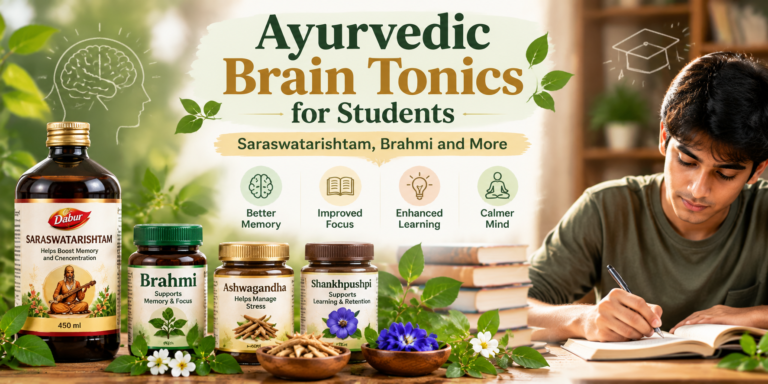
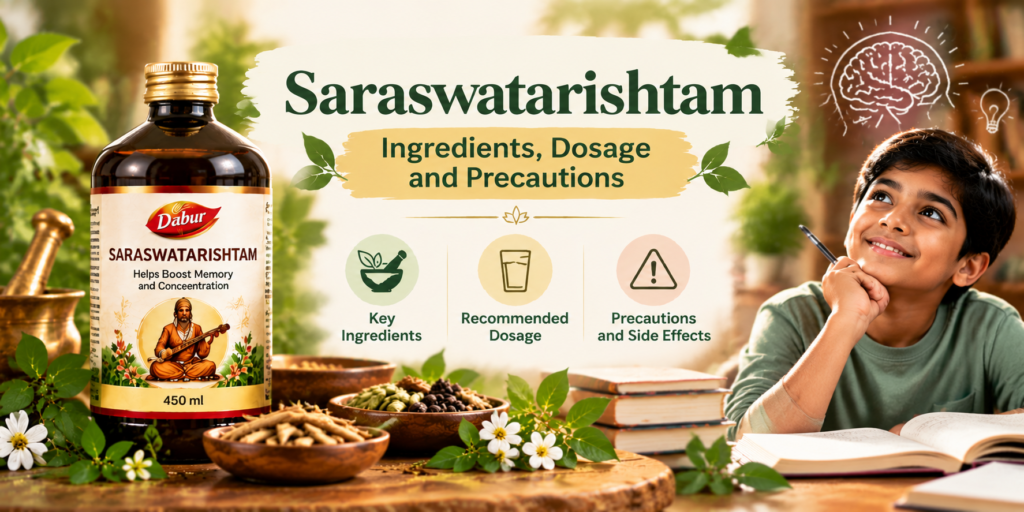
Saraswatarishtam is a traditional Ayurvedic liquid preparation made using a combination of herbs and other ingredients. It has a long-standing place in Ayurvedic practice, where it is traditionally associated with mental wellbeing, speech and intellectual functions. Today, people researching classical Ayurvedic formulations often want to understand its ingredients, traditional uses, method of preparation and precautions before considering a product.
If you are searching for Saraswatarishtam, it is helpful to understand what the name means, how an Arishta preparation differs from other Ayurvedic formulations, and why the recommended quantity should be determined with appropriate professional guidance.
Kottakkal Saraswatarishtam is one commercially available formulation associated with Arya Vaidya Sala Kottakkal. Its listed ingredients include Brahmi, Shatavari, Abhaya, Usira, ginger and several other traditional ingredients. The formulation also includes sugarcane-derived sugar and honey, which are relevant when reviewing its composition and suitability.
This guide explains the traditional background of Saraswatarishtam, its ingredient profile, how it is generally taken under professional guidance, and the precautions worth understanding before use. The aim is to provide clear product information without treating traditional uses as guaranteed medical benefits.
What Is Saraswatarishtam? Understanding Arishta in Ayurveda
In Ayurveda, an Arishta is a type of liquid preparation traditionally produced through fermentation. The process generally involves preparing a herbal decoction or other prescribed liquid base, adding suitable ingredients and allowing fermentation to occur under controlled conditions.
During fermentation, naturally occurring sugars can be converted into alcohol. Consequently, Arishta preparations may contain self-generated alcohol, which is relevant when considering their use.
Saraswatarishtam is a classical Ayurvedic formulation whose name is associated with Saraswati, a figure traditionally connected with knowledge, learning and speech in Indian culture.
What is the traditional significance of Saraswatarishtam?
Within Ayurvedic practice, Saraswatarishtam is traditionally associated with formulations intended to support mental and intellectual functions. Its ingredients have individual histories of use in Ayurvedic preparations, although the traditional rationale for a complete formulation is not the same as proof of clinical effectiveness.
The formulation should not be understood as a guaranteed treatment for memory problems, anxiety, depression, neurological conditions or any other medical disorder. Such conditions can have different causes and may require professional assessment and evidence-based treatment.
What makes Saraswatarishtam different from other Ayurvedic preparations?
The main distinguishing feature is its liquid Arishta form and traditional fermentation-based preparation. This differs from powders, tablets, capsules and non-fermented herbal liquids.
Because fermented preparations may contain alcohol and residual sugars, their composition is important when deciding whether they are appropriate for an individual.
The exact ingredient quantities, preparation details and directions can vary between formulations. For this reason, the label for the specific product should always take priority over general information about Saraswatarishtam.
Classical Ayurvedic Reference and Traditional Context
Saraswatarishtam belongs to the broader tradition of classical Ayurvedic formulations, in which combinations of herbs are prepared according to established methods and used under the guidance of trained practitioners.
The classical Ayurvedic approach considers more than the name of a medicine. Practitioners may assess the individual’s constitution, symptoms, digestion, general health and other relevant circumstances before deciding whether a particular formulation is suitable.
Understanding the concept of traditional use
The ingredients in Saraswatarishtam are discussed in Ayurvedic literature in different contexts. Brahmi, for example, is a recognised Ayurvedic herb, while Shatavari and other ingredients have their own traditional roles in herbal formulations.
These traditional descriptions help explain why particular ingredients may be combined. However, they should not be interpreted as proof that the finished product produces a specific result in every person.
It is also important to distinguish between a classical formulation and the commercial product sold under that name. A product’s actual composition, manufacturing standards and label directions determine what consumers are receiving.
Why should the formulation be verified?
Different manufacturers may use different product descriptions, and online ingredient lists may contain transcription errors or incomplete information. A name appearing in a retailer’s description is not enough to establish the exact quantity or botanical identity of every ingredient.
For Kottakkal Saraswatarishtam, check the original packaging or manufacturer-provided information for the complete declaration. This is especially important if you have allergies, follow dietary restrictions or need to avoid particular ingredients.
A qualified Ayurvedic practitioner can also explain the traditional context of the preparation and help determine whether it is appropriate for your circumstances.
Saraswatarishtam Ingredients: A Closer Look
The ingredient information available for Kottakkal Saraswatarishtam identifies a combination of herbs, sugarcane-derived sugar, honey and other traditional ingredients. The following overview explains some of the principal ingredients and their traditional context.
The list is intended as an ingredient guide, not a substitute for the complete label. Botanical names and quantities should be checked against the packaging of the specific 450 ml product.
| Ingredient | Botanical name or description | Traditional context |
|---|---|---|
| Brahmi | Bacopa monnieri | Used in traditional Ayurvedic herbal preparations |
| Shatavari | Asparagus racemosus | Included in a variety of classical formulations |
| Vidari | Pueraria tuberosa | A traditional Ayurvedic plant ingredient |
| Abhaya | Terminalia chebula | Also known as Haritaki |
| Usira | Vetiveria zizanioides | Commonly known as vetiver |
| Ardraka | Zingiber officinale | Ginger |
| Dhataki | Woodfordia fruticosa | A traditional ingredient used in fermented preparations |
| Misi | Anethum graveolens | Dill |
| Sita | Sugarcane-derived sugar | Used in the preparation as a base ingredient |
| Makshika | Honey | A traditional ingredient in the formulation |
The product’s full ingredient declaration includes additional components, such as Pippali, Vacha, Ela, Twak, Vibhitaki and other traditional ingredients. The precise list and quantities should be verified from the manufacturer’s packaging.
Brahmi
Brahmi is one of the best-known herbs in traditional Ayurvedic discussions of learning, memory and intellectual functions. It appears in various herbal preparations, including Saraswatarishtam.
Its traditional reputation should not be taken as evidence that every Brahmi-containing product improves memory or treats a neurological condition. Research on an individual herb cannot automatically establish the effectiveness of a multi-ingredient fermented formulation.
Shatavari
Shatavari is used in a range of Ayurvedic preparations. Its inclusion contributes to the formulation’s overall traditional ingredient profile.
The presence of Shatavari does not establish a particular benefit from the finished product. Suitability depends on the full formulation, individual circumstances and professional assessment.
Abhaya and Vibhitaki
Abhaya, commonly identified as Haritaki, and Vibhitaki are traditional plant ingredients used in Ayurvedic preparations.
Their inclusion reflects the formulation’s multi-ingredient nature. It is important to review the complete combination rather than assessing the product solely by the reputation of one or two herbs.
Ginger, Pippali and other ingredients
Ginger, Pippali, Ela and Twak are among the ingredients identified in available descriptions of the formulation. These are familiar names in traditional herbal preparations and culinary use, although their role and quantities in a finished Ayurvedic product are specific to its recipe.
Sugar and honey: Why they matter
Sugarcane-derived sugar and honey are important parts of the listed composition. In a fermented liquid, sugars may be involved in the preparation process, but the finished product’s remaining sugar content should not be assumed without suitable product information.
People managing diabetes or monitoring sugar intake should discuss the product’s composition with a qualified healthcare professional before use.
Important: This section is a summary of reported ingredient information, not an independently verified manufacturing formula. Use the actual product label to confirm the complete ingredients and quantities.
How Saraswatarishtam Is Traditionally Taken
Saraswatarishtam is a liquid preparation generally taken orally according to the directions for the specific product and the advice of a qualified practitioner.
There is no single dosage that should automatically be applied to every person. The appropriate amount and duration depend on individual circumstances, the exact preparation and the reason for considering it.
What is the recommended dosage?
For Kottakkal Saraswatarishtam, follow the instructions on the current product label or the directions provided by your qualified Ayurvedic practitioner.
Do not copy a dosage from another website or another person’s prescription. Online instructions may refer to a different manufacturer, product version or clinical circumstance.
If the label and the advice you received differ, ask the prescribing professional to clarify the instructions before taking the preparation.
Should it be taken before or after food?
The timing should follow the specific product’s directions and professional advice. Some Ayurvedic liquid formulations are traditionally taken after meals, but that should not be assumed to be the correct instruction for every product or individual.
If you are unsure about timing, whether dilution is required, or how often the preparation should be taken, seek clarification before use.
How long should you take it?
The duration should be determined with professional guidance. Do not continue taking the preparation indefinitely because you have not noticed a change, and do not increase the quantity in the expectation of achieving faster results.
If you are considering Saraswatarishtam for persistent memory difficulties, changes in mood, sleep problems or other ongoing symptoms, seek an appropriate health assessment rather than relying on self-treatment.
Saraswatarishtam Precautions: Who Should Consult a Physician?
Although Saraswatarishtam is a traditional Ayurvedic preparation, it should not automatically be considered suitable for everyone. Its ingredients, fermentation process and individual health circumstances all matter.
People with diabetes or concerns about blood sugar
The listed formulation includes sugarcane-derived sugar and honey. People with diabetes or those who need to monitor their sugar intake should review the product’s composition with their healthcare professional before use.
Do not assume that fermentation removes all sugar from the finished preparation.
People with liver conditions or alcohol-related restrictions
Arishta preparations can contain alcohol produced during fermentation. People with liver conditions, a history of alcohol-related problems, or medical, personal or religious reasons to avoid alcohol should discuss the product with an appropriate healthcare professional before considering it.
If you must avoid alcohol completely, do not assume that a fermented Ayurvedic preparation is alcohol-free.
Pregnant or breastfeeding individuals
Safety during pregnancy and breastfeeding should not be assumed. Consult a qualified healthcare professional before considering Saraswatarishtam during these periods.
People taking prescription medicines
Tell your healthcare professional about all medicines, supplements and Ayurvedic products you use. Potential interactions may depend on the exact ingredients and your current treatment.
Do not discontinue prescribed medication or substitute Saraswatarishtam for treatment recommended by your doctor.
Children and older adults
Do not give the preparation to children without appropriate professional advice. Older adults, particularly those managing chronic conditions or taking several medicines, should also seek an individual assessment.
People with allergies or ingredient sensitivities
Review the complete ingredient declaration before use. If you have known allergies or have experienced reactions to herbal preparations, discuss the ingredients with your healthcare professional.
When should you seek medical attention?
Persistent or sudden changes in memory, confusion, significant mood changes or other concerning symptoms should not be self-treated with an Ayurvedic formulation. Seek an appropriate medical assessment, especially when symptoms are new, worsening or interfering with daily activities.
Stop using a product and seek medical advice if you experience an unexpected reaction after taking it.
Where to Buy Kottakkal Saraswatarishtam Online
When purchasing an Ayurvedic formulation, check the product name, manufacturer, bottle size and packaging details before ordering. A familiar brand name alone is not sufficient to establish the authenticity or quality of an individual pack.
What should you check before buying?
- Product name: Confirm that the product is Kottakkal Saraswatarishtam.
- Bottle size: Verify that the selected pack is 450 ml.
- Ingredient declaration: Review the label for the complete list of ingredients.
- Manufacturer information: Check the manufacturing details and applicable licence information.
- Batch number and expiry: Ensure the information is readable and the product is within its stated shelf life.
- Packaging: Avoid bottles with damaged seals, leakage or signs of tampering.
- Invoice: Retain your order confirmation and purchase receipt.
Kottakkal Saraswatarishtam on Ayurvedaholic

Kottakkal Saraswatarishtam
Pack size: 450 ml
Review the product description, current price and available packaging information before ordering.
View Kottakkal Saraswatarishtam on Ayurvedaholic
The product page is a starting point for reviewing the available product information. Check the current listing and confirm the label details when the product arrives. A retailer listing alone is not independent proof of authenticity, safety or clinical effectiveness.
Frequently Asked Questions
1. What is Saraswatarishtam used for in Ayurveda?
Saraswatarishtam is traditionally associated with formulations intended to support mental and intellectual functions. These traditional uses do not establish that the finished product treats memory disorders, anxiety, depression or other medical conditions.
2. What are the main ingredients in Kottakkal Saraswatarishtam?
Reported ingredients include Brahmi, Shatavari, Vidari, Abhaya, Usira, ginger, Dhataki, Pippali, Vacha, Ela and other traditional components. Sugarcane-derived sugar and honey are also listed. Check the actual product label for the complete verified composition.
3. What is the correct Saraswatarishtam dosage?
The dosage should follow the current product label and the advice of a qualified practitioner. Do not assume that a quantity recommended for another formulation is appropriate for Kottakkal Saraswatarishtam.
4. Can Saraswatarishtam be taken daily?
Whether daily use is appropriate depends on the individual, the product and the reason for considering it. Seek professional advice about the recommended quantity, timing and duration before starting regular use.
5. Does Saraswatarishtam contain alcohol?
Arishta preparations are traditionally produced through fermentation and can contain self-generated alcohol. The actual alcohol content of a specific product should be confirmed through reliable product information or the manufacturer.
6. Is Saraswatarishtam suitable for people with diabetes?
The listed formulation includes sugarcane-derived sugar and honey. People with diabetes should consult their healthcare professional and review the product’s sugar information before use.
7. Where can I buy Kottakkal Saraswatarishtam 450 ml?
You can review the Kottakkal Saraswatarishtam product listing on Ayurvedaholic. Check the current price, bottle size, packaging and product details before ordering.
Conclusion
Saraswatarishtam is a traditional fermented Ayurvedic preparation made from a combination of herbs and other ingredients. Understanding its Arishta preparation method, ingredient profile and traditional context can help you evaluate the product more carefully.
If you are researching Saraswatarishtam, remember that traditional use is not the same as established clinical evidence. The preparation’s ingredients, possible alcohol content, sugar-related considerations and individual health circumstances should all be taken into account before use.
Follow the instructions for the specific product, seek guidance from a qualified healthcare professional and avoid using it as a substitute for appropriate medical care.
To review the product details, visit Kottakkal Saraswatarishtam 450 ml on Ayurvedaholic