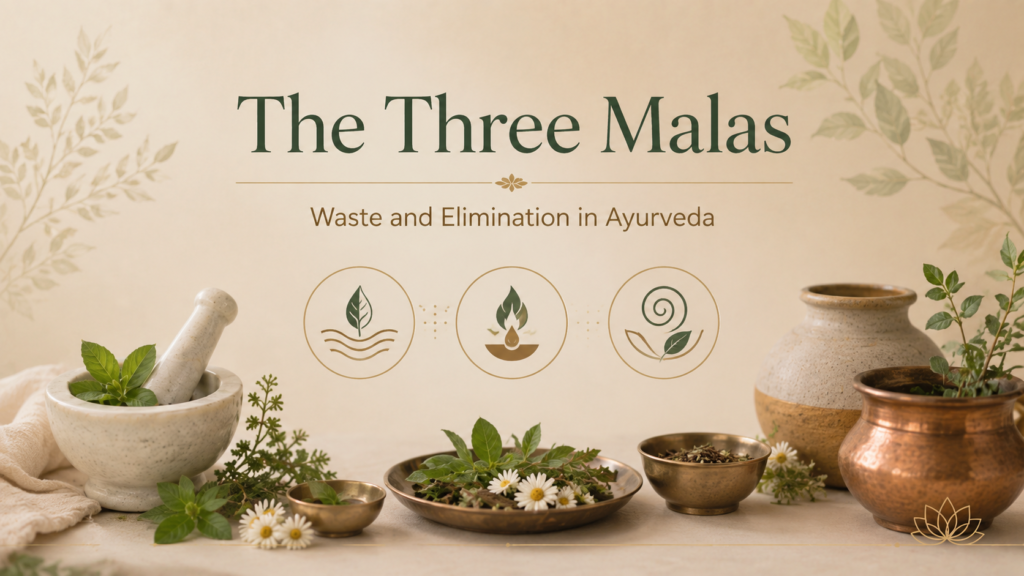
Ayurveda judges your health not only by what goes in, but by what comes out. The three Malas — stool (Purisha), urine (Mutra) and sweat (Sweda) — are the body’s waste products, and their healthy elimination is considered essential to wellbeing. Blocked or disturbed Malas signal trouble; smooth elimination signals health. This beginner’s guide explains the three Malas and how to keep them balanced.
What are the Malas?
Mala means “waste.” As the body digests food and builds tissue, it produces three main waste products that must be eliminated properly for health to continue. Ayurveda takes these seriously: they are not just “leftovers” but active indicators of how well your whole system is working. In fact, a practitioner learns a great deal simply by asking about your bowels, urine and sweating — the Malas are a daily report card on your inner health.
The three Malas
| Mala | Waste | Healthy sign |
|---|---|---|
| Purisha | Stool / faeces | Regular, well-formed, easy, once or twice daily |
| Mutra | Urine | Clear to pale yellow, adequate, comfortable |
| Sweda | Sweat | Present with activity/heat, not excessive or absent |
Why healthy elimination matters
Each Mala has a job. Stool gives bulk and support to the colon and carries out solid waste; incomplete elimination lets toxins build. Urine removes water-soluble waste and regulates fluid balance. Sweat clears waste through the skin, regulates temperature and keeps the skin healthy. When any Mala is blocked, excessive or deficient, waste backs up or balance is lost — which Ayurveda links directly to disease. This is also why Ayurveda is so firm about not suppressing natural urges: holding back elimination disturbs the Malas and the channels.
Signs of Mala imbalance
- Stool: constipation, diarrhoea, incomplete evacuation, a coating or bad odour (often Ama).
- Urine: too little or too much, dark, cloudy, burning or urgent.
- Sweat: excessive sweating, or an inability to sweat; strong body odour.
How to support healthy Malas
- Never suppress the natural urges to pass stool, urine, wind or sweat — Ayurveda is emphatic on this.
- Eat enough fibre and warm, whole food, and drink adequate warm water for regular, easy stools.
- Support digestion — good Agni means less Ama in the stool.
- Move and let yourself sweat a healthy amount through exercise and warmth.
- Use gentle helpers when needed — Triphala at night supports regular elimination.
Reading the Malas as feedback
The most practical use of this idea is treating your Malas as daily feedback. A well-formed, easy morning stool, clear urine and healthy sweating tell you digestion and hydration are on track. A coated, sluggish stool suggests Ama; dark, scanty urine suggests dehydration or heat; a sudden change in any of them is worth noticing. You do not need to obsess — just glance at the report card and adjust: more warm water, lighter food, better routine, as the signs suggest.
When to see a doctor
Everyday variation is normal, but some changes need professional attention rather than home remedies: blood in stool or urine, persistent constipation or diarrhoea, significant pain, a marked change in urinary habits, or drenching night sweats. Ayurveda’s Mala wisdom is excellent for everyday balance, but it complements, not replaces, medical assessment when something is clearly wrong.
Frequently asked questions
What are the three Malas in Ayurveda?
Stool (Purisha), urine (Mutra) and sweat (Sweda) — the body’s three main waste products, whose healthy elimination Ayurveda considers essential to health.
Why does Ayurveda care about waste products?
Because their quality reflects how well the whole system is working, and because blocked or disturbed elimination lets toxins build and disturbs the channels — a root of disease.
Is it bad to hold in urine or stool?
Yes — Ayurveda strongly advises never suppressing natural urges, as it disturbs the Malas and channels and can lead to imbalance over time.
How do I improve elimination naturally?
Eat warm whole food with enough fibre, drink warm water, support digestion, move and sweat healthily, honour natural urges, and use Triphala at night if needed.
The bottom line
The three Malas — stool, urine and sweat — are Ayurveda’s daily report on your health, and their smooth elimination is as important as good nutrition going in. Support them by never suppressing natural urges, protecting digestion, eating and drinking well, and moving your body. Healthy elimination is quietly one of the surest signs — and foundations — of good health.
Related reading
- Ama: Ayurveda’s Concept of Toxins
- Ayurvedic Digestion Remedies
- Triphala: The Complete Digestive Guide
Disclaimer
This article is for general information and educational purposes only and is not medical advice. Seek medical care for persistent changes in bowel or urinary habits, blood, pain, or other concerning symptoms. Always consult a qualified doctor or practitioner if managing a health condition.