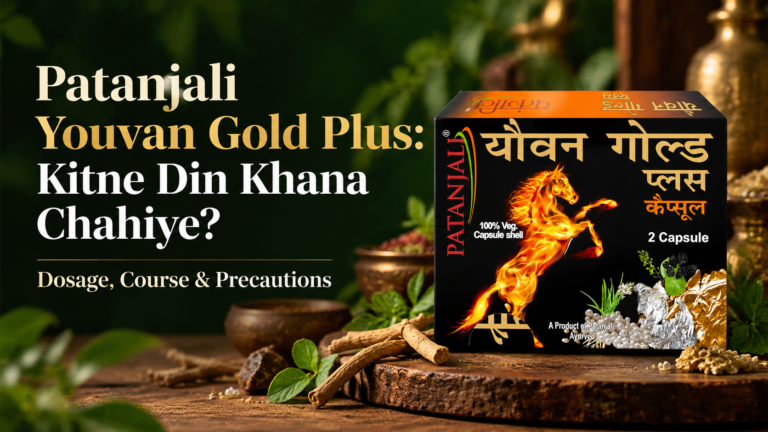
When exploring traditional Ayurvedic remedies for neurological and muscular health, Yogendra Ras stands out as a remarkable formulation. This classical Ayurvedic formulation mentioned in Bhaishajya Ratnavali has been helping people manage various health conditions for centuries, combining the wisdom of Ayurveda with potent mineral ingredients. This guide covers Patanjali Yogendra Ras 1 g.
What is Yogendra Ras?
Yogendra Ras is an Ayurvedic medicine, with herbal and mineral ingredients, in tablet form. It is used in treating neuro-muscular conditions and various other health disorders. This Patanjali medicine gives results in very small quantities, making it a highly concentrated therapeutic preparation.
The formulation belongs to the category of Ras medicines in Ayurveda, which typically contain processed minerals and metals. These Patanjali preparations are known for their effectiveness even in minimal doses, making them valuable additions to traditional treatment protocols.
Key Ingredients of Yogendra Ras (Classical References)
Understanding the ingredients helps appreciate why this Patanjali Ayurvedic medicine works so effectively. The key ingredients include Parada (Purified mercury), Loha bhasma (Iron bhasma), Gandhaka (Purified sulphur) along with Rasa sindoor, Swarna Bhasma (Gold bhasma), Shuddha Mukta (Purified pearl), Abhrak Bhasma (Purified silica), and Vanga Bhasma (Bhasma of tin). Reference: Bhaishajya Ratnavali
Primary Mineral Components:
- Ras Sindoor (processed mercury and sulfur combination) – 10 grams each
- Swarna Bhasma (gold ash) – 5 grams – enhances overall vitality
- Loha Bhasma (iron ash) – 5 grams – supports blood circulation
- Abhrak Bhasma (mica ash) – 5 grams – benefits nervous system
- Mukta Bhasma (pearl ash) – promotes mental clarity
- Vanga Bhasma (tin ash) – supports metabolic functions
Processing Method: The main ingredient used is the purified mercury. It is mixed with the other herbs mentioned above. The formulation is then grounded well in the powdered form. The fine powder is mixed with aloe vera juice. They are then made into tablet form, ensuring proper integration of all components following traditional Ayurvedic methods.
Health Benefits of Yogendra Ras
Neurological Support
This Patanjali medicine is particularly useful in paralysis, epilepsy, and mental disorders. Yogendra ras has potent ingredients like Loha bhasma, which improves blood circulation and oxygen supply to the brain, and Abhrak bhasma, which improves nerve conductivity, reaction time, and reflexes. This can prove helpful in conditions like Paralysis, Tremors, and Epilepsy.
Diabetes Management
This tablet contains more mineral ingredients and fewer herbs and proves particularly effective for diabetes management. The formulation helps regulate blood sugar levels through its carefully balanced mineral composition.
Mental Health Support
This traditional Ayurvedic medicine contains the powerful ingredients Swarna Bhasma (incinerated gold) and Mukta Bhasma (incinerated pearl), known for their beneficial effects on the brain and body. The gold and pearl components traditionally support cognitive function and emotional balance.
Muscular Disorders
People experiencing weakness, tremors, or muscular coordination issues may find relief through regular use of this Patanjali medicine under proper medical supervision.
Uses of Yogendra Ras
This versatile Patanjali Ayurvedic preparation addresses multiple health conditions effectively:
Primary Applications:
- Neurological disorders including paralysis
- Epilepsy and seizure management
- Diabetes and related complications
- Mental health support
- Muscular weakness and coordination issues
Secondary Benefits: Yogendra rasa can treat bleeding disorders, sexual debilities and digestive problems. It can be used in the treatment of neuromuscular conditions, expanding its therapeutic scope beyond neurological applications.

Proper Dosage and Administration
Take 250-500 mg (approximately 1/4 to 1/2 teaspoon) of Yogendra Ras. Mix this Patanjali medicine with honey, water, or as directed by a healthcare professional. Consume the mixture twice a day, preferably after meals.
Important Dosage Guidelines:
- Always consult an Ayurvedic practitioner before starting this Patanjali medicine
- Never exceed recommended doses
- Take with natural adjuvants like honey for better absorption
- Maintain consistent timing for optimal results
Safety Considerations and Side Effects
Since this Patanjali formulation contains processed minerals and metals, proper medical supervision becomes essential.
Potential Side Effects:
- Digestive discomfort if taken inappropriately
- Allergic reactions in sensitive individuals
- Metallic taste with excessive consumption
Who Should Avoid:
- Pregnant women and nursing mothers
- Children unless specifically recommended
- People with known metal allergies
Who Should Consider Yogendra Ras?
Individuals experiencing neurological symptoms, diabetic complications, or those seeking comprehensive support for mental and physical health may benefit from this traditional Patanjali preparation. However, proper evaluation by an Ayurvedic physician ensures appropriate application.
Lifestyle Recommendations While Using Yogendra Ras
Patanjali medicines work best when combined with appropriate lifestyle practices. Maintaining regular sleep patterns, practicing stress management techniques, and following a balanced diet enhances the medicine’s effectiveness.
Regular gentle exercise, meditation, and avoiding excessive mental stress create an environment where the therapeutic benefits of this Patanjali product can manifest optimally.
The Science Behind Traditional Formulation
Modern research continues exploring how traditional Ayurvedic preparations like Yogendra Ras work at cellular levels. The mineral components in this Patanjali medicine may support neurological function through various mechanisms, though more research helps understand complete therapeutic pathways.
Storage and Shelf Life
Store this Patanjali medicine in a cool, dry place away from direct sunlight. Keep the container tightly closed to maintain potency. Follow the expiration date mentioned on the Patanjali packaging for optimal effectiveness.
Classical Reference: Is Yogendra Ras Mentioned in Bhaishajya Ratnavali?
Yogendra Ras is commonly attributed to Bhaishajya Ratnavali, a classical Ayurvedic text that describes numerous formulations and their traditional applications.
Some modern Ayurvedic references place Yogendra Ras in the section on Vatavyadhi Chikitsa, which discusses conditions traditionally associated with Vata disorders. However, chapter and verse references vary between secondary sources. The exact reference should be checked against a specified edition of the original text before publishing a precise verse citation.
What does the classical reference tell us?
Classical texts provide historical context for how a formulation was understood and used within traditional Ayurveda. They can describe ingredients, preparation methods, traditional indications and directions for administration.
However, a classical reference is not equivalent to a modern clinical trial. It does not independently establish that the formulation is effective for a particular disease, nor does it confirm the safety or quality of every commercially available product.
Understanding Rasashastra
Rasashastra is a specialised branch of Ayurveda concerned with the processing and use of metals, minerals and other substances in traditional formulations.
The preparation of such medicines involves specific traditional procedures. Nevertheless, traditional processing should not be assumed to eliminate all toxicological risks. The finished product’s composition, manufacturing quality and appropriate clinical supervision remain important.
For this reason, Yogendra Ras should be approached differently from a general herbal supplement that someone might choose to take without professional advice.
Dabur Yogendra Ras with Gold vs Patanjali Yogendra Ras
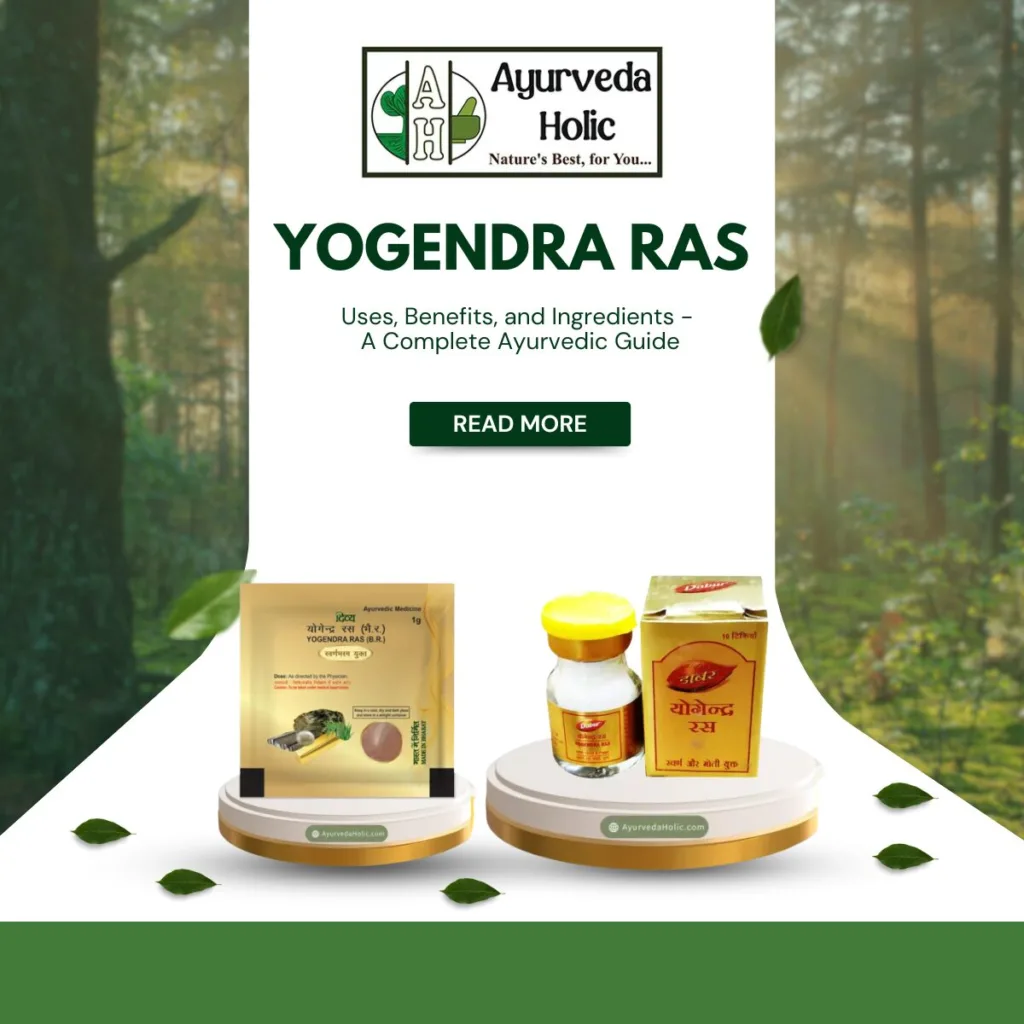
Dabur and Patanjali both offer products marketed under the Yogendra Ras name. Ayurvedaholic lists the Dabur gold-containing formulation in a 10-tablet pack and Patanjali Yogendra Ras in a 1 g pack.
Although the names are similar, these products should not automatically be considered identical or interchangeable.
| Feature | Dabur Yogendra Ras with Gold | Patanjali Yogendra Ras |
|---|---|---|
| Brand | Dabur | Patanjali / Divya Pharmacy |
| Listed pack | 10 tablets | 1 g |
| Form | Tablets | Fine powder, according to the listing |
| Gold-containing ingredient | Confirm the complete label | Swarna Bhasma is listed |
| Directions | Follow the specific product label and qualified practitioner’s advice | Manufacturer states use under medical supervision, as directed by a physician |
| Important consideration | Verify the complete composition and pack details | Verify the composition and directions for this specific formulation |
Which brand should you choose?
There is no responsible basis for declaring one brand universally better from the product name alone. Compare the actual ingredient declaration, manufacturing details, quality information and suitability for the intended use.
A lower price, a familiar brand or the inclusion of gold does not independently establish superior effectiveness or safety.
If a qualified Ayurvedic physician recommends a particular formulation, confirm the exact brand and product before purchasing. Do not substitute another brand or dosage form without discussing it with the practitioner.
Rasashastra processing, in plain words
Making Yogendra Ras involves three layers of work.
1. Purifying each raw material (Shodhana)
Each metal or mineral is purified separately, according to the method set out in the Rasashastra texts. Typical methods involve heating the material and quenching it repeatedly in liquids such as sesame oil, buttermilk, cow’s urine, Kanji (a sour fermented liquid) or herbal decoctions. The aim is to remove impurities and make the material brittle enough for the next step.
2. Turning each into Bhasma (Marana)
The purified material is ground with specific herbal juices into a paste, shaped into small flat cakes, dried, sealed between two clay saucers and heated. The heated cakes are cooled, ground again and the cycle repeated. Depending on the material, this can be done many times.
Pearl is often prepared as Bhasma for this formula, though some makers use Pishti, which is made by long grinding with rose water instead of heating.
Ras Sindoor is prepared separately, by a special classical process involving purified mercury and sulphur heated in a glass bottle coated with clay.
3. Combining and processing the formula (Bhavana)
All the components are weighed in the classical proportions, mixed, and ground with fresh Aloe vera juice until the juice is absorbed. The mass is dried and the grinding repeated. Finally it is packed as a fine powder, or made into small pills or tablets.
At each stage there is skilled labour, fuel, time and loss of material. That, plus gold as a raw material, is what the price reflects.
Precautions
Pregnancy and breastfeeding
Yogendra Ras is not for pregnant or breastfeeding women.
Children
It is not for children.
Long-term use
Yogendra Ras is meant to be taken as a course, not indefinitely. Ask your doctor:
- how long the course should be
- when you should come back for review
- whether you need blood tests, such as kidney and liver function, before and during the course
Long, unsupervised use of any Ras medicine increases the risk of side effects.
Existing conditions
Consult your doctor before use if you have:
- liver disease
- kidney disease
- heart disease or high blood pressure
- diabetes
Possible interactions: discuss with your doctor
Formal interaction studies on Yogendra Ras are lacking, so the safest approach is to assume it could interact and to be open with both your Ayurvedic doctor and your regular doctor. In particular, mention:
- heart medicines, including blood pressure medicines and blood thinners
- diabetes medicines or insulin
- medicines for epilepsy, Parkinson’s or other neurological conditions
- any other Ayurvedic Ras medicines or Bhasmas, such as Rasraj Ras, Vrihat Vat Chintamani Ras or Swarna Bhasma, since combining them increases your total metal intake
- herbal supplements, even ones you consider harmless
Bring a written list of everything you take to your appointment.
Questions to ask your doctor
- What dose should I take, how should I measure it, and with what?
- How long should the course be?
- Do I need blood tests before or during it?
- Is it safe with all my current medicines?
- Which side effects should make me stop and call you?
Frequently Asked Questions
What is Yogendra Ras used for in Ayurveda?
Yogendra Ras is a traditional herbo-mineral formulation used in selected Ayurvedic treatment contexts. Its traditional indications should not be interpreted as proof that it cures neurological, cardiac or other medical conditions.
Is Yogendra Ras mentioned in Bhaishajya Ratnavali?
Modern Ayurvedic references attribute Yogendra Ras to Bhaishajya Ratnavali, including discussions associated with Vatavyadhi Chikitsa. The exact chapter and verse should be verified against the specific classical edition being cited.
Does Yogendra Ras contain gold?
Some formulations, including the products discussed here, are marketed with Swarna Bhasma. Check the ingredient declaration on the specific product because compositions can differ between manufacturers.
Can Yogendra Ras be taken daily?
Do not assume that daily use is appropriate for everyone. The product should be considered only under qualified professional supervision, with the quantity and duration determined for the individual’s circumstances.
Are Dabur and Patanjali Yogendra Ras the same?
They are products marketed under the same classical formulation name, but their packaging, dosage form and declared composition may differ. Do not substitute one for the other without consulting the prescribing practitioner.
Are there precautions associated with Yogendra Ras?
Yes. Some formulations contain processed mercury and other metal- or mineral-based ingredients. Product quality, possible toxicological risks, individual health conditions and other medicines must be considered before use.
Where can I buy Yogendra Ras online?
You can review Dabur Yogendra Ras with Gold, 10 tablets and Patanjali Yogendra Ras, 1 g on Ayurvedaholic. Verify the exact product and current listing details before ordering.
What are the ingredients of Yogendra Ras?
Ras Sindoor, Swarna Bhasma, Kant Lauh Bhasma, Abhrak Bhasma, Mukta Bhasma and Vang Bhasma, ground with Aloe vera juice. Check your pack for exact quantities.
Important Medical Disclaimer
⚠️ MEDICAL DISCLAIMER: This article is for informational purposes only and is not intended as medical advice. Yogendra Ras contains potent mineral ingredients and should only be used under the guidance of qualified Ayurvedic practitioners. Always consult healthcare professionals before starting any new medication. Do not self-medicate or exceed recommended dosages. Individual results may vary, and this information does not replace professional medical consultation.
Conclusion
Yogendra Ras Patanjali is a classical Ayurvedic formulation mentioned in Bhaishajya Ratnavali to strengthen the nervous system. When used appropriately under proper guidance, this Patanjali medicine offers support for various neurological, metabolic, and mental health concerns.
Remember that Ayurvedic medicine emphasizes individualized treatment approaches. What works effectively for one person may require modifications for another. Consulting qualified practitioners ensures safe and effective use of this powerful traditional Patanjali remedy.
The journey toward better health through Ayurveda requires patience, proper guidance, and commitment to holistic wellness practices. Yogendra Ras can be a valuable component of comprehensive health management when used wisely and appropriately.