
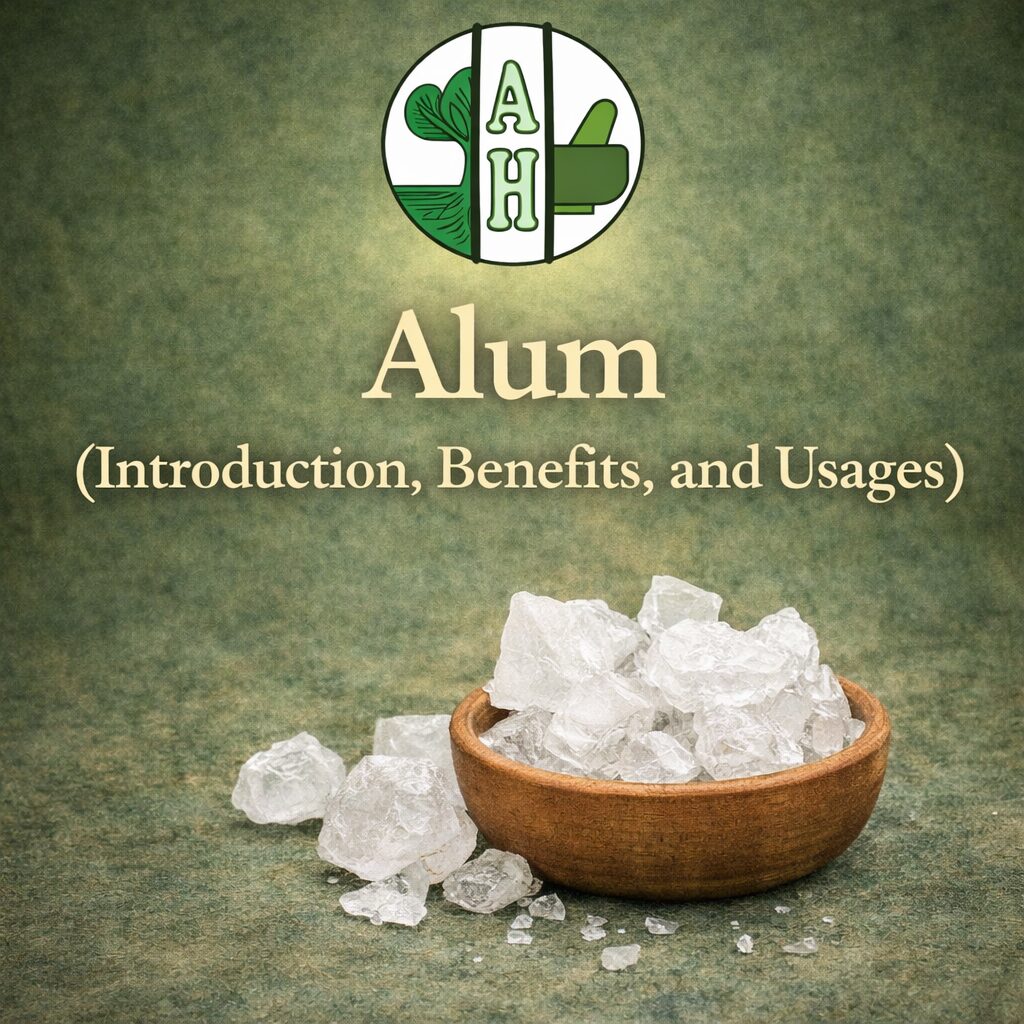
Alum (Introduction, Benefits, and Usages)
There’s a certain fascination that comes with minerals—earthy, unassuming, yet quietly transformative. Alum, or “Phitkari” as it is fondly known in India, has been quietly part of human wellness practices for centuries, often hiding in plain sight in homes, temples, and traditional medicine cupboards. Its crystalline gleam catches the eye, but it is its profound healing properties that have kept it revered across generations. For many, Alum evokes memories of a grandmother’s remedies, a subtle pinch to stop minor bleeding, or a cooling foot soak after a sweltering day. It is not just a mineral; it is a bridge between ancient wisdom and contemporary holistic living.
Across India and beyond, Alum has been a silent companion in both ritual and wellness. From the riverbeds of the Himalayas to the arid soils of Rajasthan, this mineral has been harvested, purified, and employed to maintain health, hygiene, and vitality. While modern science delves into its chemical composition, Ayurveda has long recognized Alum’s capacity to restore balance, pacify excess heat, and support the body’s innate healing intelligence. In an era of synthetic solutions and fast fixes, Alum reminds us that nature’s subtle gifts—handled with respect—can be astonishingly potent.
What Is Alum?
Alum is a naturally occurring mineral, primarily potassium aluminum sulfate, known for its astringent, antiseptic, and cooling properties. In appearance, it forms translucent, crystalline clusters that glisten like tiny frozen droplets of water. Belonging to the alums family, it is often found in cubic or octahedral crystal shapes. Its botanical associations are minimal since it is a mineral rather than a plant, but it is frequently linked with herbal preparations in Ayurvedic and Unani traditions.
In India, Alum goes by various regional names reflecting its deep cultural integration. In Hindi and Sanskrit, it is called Phitkari; in Tamil, it is known as Vellai Phitkari; in Telugu, Nalla Phitkari; Kannada speakers call it Bili Phitkari; in Gujarati, it is Sirka Phitkari; Bengali households refer to it as Phitkori, and Punjabi tradition also embraces Phitkari. Globally, it is often recognized simply as Potash Alum or Aluminum Sulfate, and it remains a staple in folk medicine, cosmetics, and even culinary practices for its preservative properties.
Alum grows naturally in mineral-rich regions and is primarily harvested from sedimentary deposits or as a byproduct of certain volcanic rocks. Cultivation in a traditional sense involves careful purification processes—often involving grinding, boiling, and crystallization—to ensure the mineral is free from impurities before being used for medicinal purposes.
Alum in History and Culture
The historical footprint of it is both fascinating and extensive. Ayurvedic texts like the Charaka Samhita, Sushruta Samhita, and Bhavaprakasha Nighantu describe Alum’s astringent, cooling, and cleansing properties. Sushruta particularly recommends its use in wound healing, dental care, and controlling hemorrhage, reflecting its enduring practical significance. In Bhaishajya Ratnavali, Alum is celebrated for its use in Kashaya karma (astringent action) and as a stabilizer in certain herbal formulations.
Beyond Ayurveda, It held a revered place in trade and culture. In medieval India, it was a valuable commodity in the spice and mineral trade, traveling along caravan routes alongside herbs, salt, and precious stones. Temples often used Alum for ritual purification of sacred waters and utensils, and households relied on it to preserve pickles, cleanse teeth, and soothe minor skin irritations. There are even anecdotes from Mughal texts noting its use in cosmetics and deodorants, highlighting its dual role in hygiene and aesthetics.
Ayurvedic Properties
In Ayurvedic terms, it is considered Kashaya Rasa (astringent taste), Rooksha (dry) and Laghu (light) in Guna (qualities), with Sheeta Virya (cooling potency) and Katu Vipaka (pungent post-digestive effect). It is primarily Kapha and Pitta pacifying, helping to balance excess heat and fluid retention. Its key actions, or Karma, include Shodhana (cleansing), Sthambhana (astringent/pain and bleeding control), Sthira Rakta Sangrahana (hemostatic—stopping blood flow), and Tvachya (skin-benefiting).
Active Compounds and Modern Research
It’s medicinal properties arise from its bioactive constituents, primarily aluminum sulfate, potassium sulfate, and trace minerals like iron and silica. Modern research has validated many traditional claims: studies have confirmed its antimicrobial, antiviral, and hemostatic activity, supporting its historical use in dental care, wound management, and skin applications. Researchers have also explored Alum’s potential as a natural preservative and its efficacy in cosmetic formulations, bridging the gap between Ayurveda and contemporary science.
Benefits of Alum
Wound Healing and Bleeding Control
One of it’s most celebrated uses is its ability to stop minor bleeding and accelerate wound healing. Ayurvedic texts describe its Sthambhana karma (astringent action), which contracts tissues and seals small cuts or abrasions. Modern studies corroborate this, highlighting Alum’s hemostatic properties that reduce blood loss and provide a protective layer over wounds, preventing infection.
Oral Health and Dental Care
It has been a mainstay in traditional oral hygiene for centuries. Its astringent and antibacterial qualities help tighten gums, reduce inflammation, and combat halitosis. Many households still use a pinch of Alum dissolved in water as a mouth rinse, which in modern research has been found effective against common oral pathogens, supporting healthy gums and teeth.
Skin Purification and Acne Control
Ayurveda recommends it for its Tvachya (skin-benefiting) action. Its antimicrobial and astringent nature makes it ideal for treating acne, reducing excess oil, and soothing minor irritations. Applied externally as a paste or in steam, Alum can cleanse pores and balance skin oil production, a benefit increasingly recognized in dermatological studies.
Digestive Support
It is traditionally used to manage digestive disturbances, particularly those associated with Kapha imbalances. In powdered or decoction form, it can support digestion, reduce bloating, and assist in controlling mild acidity or fermentation in the stomach. Its Kashaya Rasa (astringent taste) helps regulate digestive secretions and tone the mucosa.
Cooling and Anti-Inflammatory Effects
With Sheeta Virya (cooling potency), Alum pacifies excess Pitta, reducing internal heat and inflammation. It has been applied externally for sunburns, rashes, and inflammatory skin conditions, aligning with modern observations of its soothing effect on irritated tissues.
Hair Care and Scalp Health
It is known for maintaining scalp hygiene and strengthening hair roots. Applied as a rinse or paste, it can reduce dandruff, control microbial growth, and enhance the overall health of hair follicles. Its traditional use in Ayurvedic shampoos and tonics finds resonance in today’s natural hair care formulations.
Respiratory and Throat Relief
It’s antimicrobial properties extend to the throat and respiratory tract. Gargling with a mild Alum solution is said to relieve Kaphaja (mucus-related) cough, throat irritation, and mild infections. Studies have shown that Alum’s astringent and antibacterial qualities can help maintain throat hygiene and reduce microbial load.
Water Purification
A lesser-known but vital application of it is in water purification. Its coagulating properties help settle impurities, making water safer for consumption—a practice rooted in practical Ayurveda and still widely used in rural communities.
Classical Ayurvedic Formulations
It features prominently in several classical formulations. Drakshadi Phitkari Taila is used for topical skin applications and minor wounds. Phitkari Churna is commonly prescribed for oral hygiene and digestive support. In Kshara Phitkari preparations, it serves as a cleansing agent for ulcers and infections, showcasing its versatility across internal and external applications.
How to Use Alum
Churna (Powder)
It can be used internally in very small quantities (usually 50–100 mg) mixed with honey or water to support oral hygiene or digestion. Honey serves as the ideal Anupana (vehicle), balancing Alum’s astringency and enhancing absorption.
Kwath (Decoction)
A mild Alum decoction prepared with boiling water can be used for gargles to relieve throat irritation or minor oral infections. Typically, 1–2 grams of it is dissolved in 100–150 ml water, allowed to cool, and used 2–3 times daily.
Topical Paste
Alum powder mixed with rose water or aloe vera gel forms a soothing paste for acne, rashes, or minor wounds. Apply a thin layer to the affected area and rinse after 10–15 minutes.
Steam Therapy
For respiratory congestion or sinus issues, Alum-infused steam can provide relief. Boil water with a small pinch of Alum and inhale the steam, which helps reduce mucus and microbial presence in the nasal passages.
Raw/Direct Application
Externally, small crystals of it can be gently applied to minor cuts or abrasions to stop bleeding and disinfect the site. Care should be taken to avoid open wounds with extensive exposure or sensitive skin.
Dosage and Safety
For adults, it is generally used in very small amounts—50 mg to 200 mg for internal applications, depending on the form and purpose. It is not recommended during pregnancy or lactation without professional guidance. People with kidney issues, gastrointestinal ulcers, or aluminum sensitivities should exercise caution. Alum can interact with certain medications, particularly those affecting blood pH or mineral balance, so consultation with a qualified Ayurvedic practitioner is strongly advised before regular use.
Shop Section
If you are looking to bring the healing power of it into your daily wellness routine, Ayurvedaholic is your trusted destination for authentic Ayurvedic products. The platform carries a wide range of products from India’s most reputable Ayurvedic brands including Patanjali, Dabur, Baidyanath, and Kottakkal.
👉 Shop All Ayurvedic Products — Ayurvedaholic
Alum is more than a mineral; it is a reminder of the subtle wisdom embedded in nature. In every household remedy, every soothing paste, and every cleansing rinse, it connects us to centuries of Ayurvedic tradition. Even in today’s fast-paced life, Alum invites us to pause, honor simplicity, and embrace natural wellness.
Disclaimer
The information in this article is for educational purposes only and does not constitute medical advice, diagnosis, or treatment. Always consult a qualified Ayurvedic practitioner or healthcare professional before using any herb or formulation, especially if you are pregnant, breastfeeding, or on medication. Individual results may vary. Ayurvedaholic does not claim to diagnose, treat, cure, or prevent any disease.
References
- Charaka Samhita, Sutra Sthana, Chapter 26
- Bhavaprakasha Nighantu, Sphatika (Alum / Fitkari) Entry
- Dutta S., De S.P., Bhattacharya S.K. — In vitro antimicrobial activity of potash alum. Indian Journal of Medical Research, 1996; 104: 157–159 — View on PubMed
- Rafieian N. et al. — Efficacy of alum for treatment of recurrent aphthous stomatitis: A randomized double-blind placebo-controlled clinical trial. Caspian Journal of Internal Medicine, 2016; 7(3): 201–205 — View on PubMed — View Full Text on PMC
- Kim B.H. et al. — An Experimental Study of the Anti-oxidant and Anti-inflammatory Effects of Alum and Burnt Alum. Journal of Pharmacopuncture, 2012; 15(2): 11–14 — View on PMC
- Bhardwaj A. et al. — Comparative Evaluation of the Effect of Alum and Herbal Mouthrinses on Plaque Inhibition in Children: A Randomized Clinical Trial. International Journal of Clinical Pediatric Dentistry, 2021 — View on PMC
Add comment