
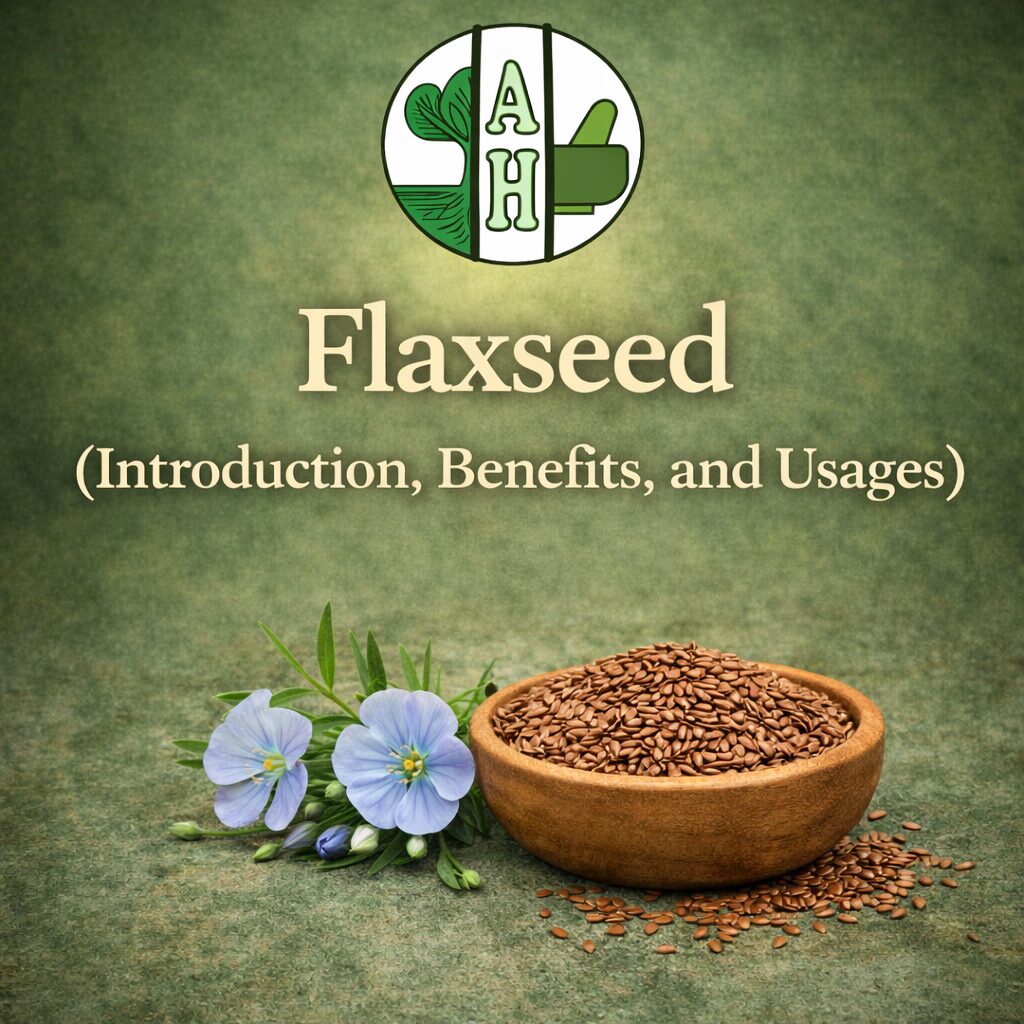
Flaxseed (Introduction, Benefits, and Usages)
There’s a quiet magic in tiny seeds. Among them, flaxseed—small, glossy, and golden-brown or deep amber—holds centuries of wisdom, silently nurturing those who include it in their daily lives. Imagine the ancient kitchens of Indian households, where medicinal powders and seeds were sprinkled into warm porridge or steeped into decoctions, offering nourishment not just to the body, but to the mind and spirit. Flaxseed, known for its subtle nutty taste, has been one such humble yet powerful ally in Ayurveda, bridging the wisdom of the past with the demands of modern wellness.
Today, as the world grapples with chronic inflammation, digestive irregularities, and cardiovascular concerns, flaxseed has resurfaced as a superstar of functional nutrition. While modern science celebrates its omega-3 fatty acids and lignans, Ayurveda has long appreciated its unique qualities—balancing doshas, lubricating the digestive tract, and supporting overall vitality. Whether you sprinkle it on your morning smoothie or include it in a classical Ayurvedic churna, flaxseed carries a story that spans cultures, centuries, and continents.
For anyone curious about herbs that offer both preventive and restorative support, flaxseed is more than a pantry ingredient; it is a gentle, daily reminder of nature’s intelligence. Its journey from ancient Sanskrit texts to contemporary health journals is a testament to its enduring relevance.
What Is Flaxseed?
Flaxseed, botanically known as Linum usitatissimum, belongs to the Linaceae family. The plant itself is slender, with delicate blue flowers that sway in the breeze, producing small seed capsules that contain these nutrient-dense seeds. Flax is cultivated widely in temperate regions, thriving in India’s northern plains, as well as in Canada, Europe, and parts of the United States. Its adaptability and resilience have made it a staple crop for both food and fiber throughout history.
In English, it is commonly called flaxseed or linseed, while in India, it goes by various regional names: Alsi in Hindi, Alasi in Telugu, Alsi in Gujarati, Thogari in Kannada, and Alashi in Bengali and Punjabi. Classical Sanskrit texts refer to it as Tila-madhu, reflecting its ancient medicinal recognition. This rich tapestry of names hints at flaxseed’s pervasive presence across cultures and cuisines, each appreciating its subtle, nourishing properties.
Flaxseed in History and Culture
Flaxseed’s story stretches back thousands of years. It finds mention in classical Ayurvedic texts such as Charaka Samhita and Bhavaprakasha Nighantu, where it is lauded for its snehana (oleating/lubricating) and basti-vidhya (supporting urinary and bowel health) qualities. Ancient physicians recognized flaxseed as a gentle yet effective herb for balancing Vata and promoting medhya (brain and nervous system health).
Historically, flaxseed was not just a food or medicine but a traded commodity of considerable importance. In medieval India, it was exchanged alongside spices, sesame, and other seeds, appreciated not only for its culinary versatility but also for its health-promoting properties. Flax fibers were used to weave cloth, while the seeds and oils found their way into ritualistic offerings, daily tonics, and even sacred Ayurveda preparations, demonstrating the herb’s multifaceted role in Indian society.
Ayurvedic Properties
According to Ayurveda, It is Rasa (taste) madhura (sweet) and slightly tikta (bitter), Guna (qualities) guru (heavy), snigdha (unctuous), and mridu (soft), and Virya (potency) is ushna (warming). Its Vipaka (post-digestive effect) is sweet, making it particularly nourishing for the digestive system. Flaxseed pacifies Vata and Kapha doshas while potentially increasing Pitta in excess. Classical karma (actions) include snehana (lubrication), basti-vardhana (supporting urinary and bowel health), and medhya (nervine tonic), reflecting its holistic influence on body, mind, and digestion.
Active Compounds and Modern Research
Modern phytochemistry reveals why Ayurveda revered this humble seed. It is rich in alpha-linolenic acid (ALA), a plant-based omega-3 fatty acid, lignans with potent antioxidant activity, and dietary fiber, both soluble and insoluble. Studies have shown that flaxseed supports cardiovascular health, helps modulate blood sugar, and promotes gastrointestinal regularity. Research published in journals such as Nutrition Research and Phytotherapy Research corroborates traditional uses, validating flaxseed’s role in reducing cholesterol, supporting bowel function, and even providing mild hormonal balance in women through phytoestrogens.
Benefits of Flaxseed
Digestive Health: It’s high fiber content, particularly the mucilaginous soluble fiber, gently nourishes and lubricates the digestive tract. Ayurveda celebrates its snehana property, which soothes Vata disorders like constipation and dry stools. Modern studies confirm that regular intake improves bowel regularity, reduces bloating, and supports overall gut motility.
Heart and Circulatory Support: Traditional texts note flaxseed as a hridya (heart-supporting) herb. Its omega-3 fatty acids help pacify Vata in the circulatory channels, promoting smooth blood flow. Contemporary research links flaxseed consumption with reduced LDL cholesterol, improved arterial flexibility, and lower systemic inflammation, aligning seamlessly with ancient wisdom.
Hormonal Balance: It’s lignans act as phytoestrogens, gently modulating hormone levels. Ayurveda highlights its use for stanya vardhaka (supporting lactation) and reproductive health, particularly for women experiencing hormonal imbalances. Modern studies show potential benefits for menopausal symptoms and mild regulation of menstrual cycles.
Skin and Hair Nourishment: With its heavy, unctuous quality, It is nourishing for twak (skin) and kesha (hair). Regular consumption or topical application via flaxseed oil can soothe dryness, support elasticity, and enhance hair strength, offering a bridge between internal nutrition and external beauty—a principle deeply embedded in Ayurvedic self-care.
Anti-Inflammatory Properties: Ayurveda often prescribes it for joint and muscular discomfort, as its snigdha and ushna qualities pacify Vata, the dosha associated with pain and stiffness. Modern research supports this, demonstrating flaxseed’s anti-inflammatory effects in conditions like arthritis and metabolic inflammation.
Cognitive Support: It is considered medhya (brain tonic) in Ayurveda. Regular inclusion in the diet can support clarity, focus, and memory. Modern studies suggest that omega-3 fatty acids in flaxseed play a role in neuroprotection and maintaining cognitive function.
Weight and Metabolic Health: The combination of fiber and healthy fats in it helps regulate appetite and supports balanced blood sugar. Ayurveda recommends flaxseed for medohara (reducing excess fat tissue) in a holistic regimen, aligning with modern observations that it may aid weight management and metabolic flexibility.
Detoxification: It’s fiber and mild laxative action support ama-pachana (digestion of toxins), cleansing the digestive tract gently. Classical texts often use it in basti (enema) preparations for detoxifying the colon, a practice still echoed in therapeutic formulations today.
Classical Ayurvedic Formulations
IT appears in several classical formulations. Tila Taila (sesame and flaxseed oil) combines the benefits of both oils for joint health and Vata balance. Churna Prakshalana preparations often include flaxseed powder to promote gentle cleansing of the digestive tract. Kumari Ghrita and Bala Taila may use flaxseed alongside other supportive herbs to enhance the snehana (lubricating) effect and improve tissue nourishment. These formulations exemplify how flaxseed has been historically integrated for both daily wellness and targeted therapeutic benefits.
How to Use Flaxseed
Flaxseed Churna (Powder): Dry roast flaxseeds lightly and grind into a fine powder. Consume 1–2 teaspoons daily with warm water, milk, or honey as an anupana (vehicle). This method is excellent for digestive support and regularity.
Flaxseed Oil: Cold-pressed flaxseed oil can be taken internally, 1–2 teaspoons per day, preferably before meals. It pacifies Vata and supports skin, hair, and joint health. Topical application on dry skin or scalp provides additional nourishment.
Kwath (Decoction): Boil it in water to make a warm decoction. Drinking this decoction in the morning aids in mild detoxification and bowel lubrication. Adding a pinch of ginger or black pepper enhances Agni (digestive fire).
Raw Seeds: Sprinkling whole or slightly crushed seeds on salads, porridge, or yogurt retains their crunchy texture and ensures you receive their fiber and lignans intact. This method is convenient for daily nutrition.
Steam or Basti Preparations: In classical Ayurveda, It is incorporated in herbal steam treatments or basti (medicated enema) for targeted therapeutic effects, particularly for Vata disorders and joint discomfort.
Dosage and Safety
For adults, the general daily dosage of flaxseed powder is 1–2 teaspoons, or 1–2 teaspoons of cold-pressed oil. It is generally safe but should be avoided in excessive amounts during pregnancy, in individuals with bowel obstruction, or with known hypersensitivity. Those on anticoagulant therapy should consult a qualified practitioner, as flaxseed may have mild blood-thinning effects. Always seek guidance from a trained Ayurvedic physician for personalized dosage and preparation advice.
If you are looking to bring the healing power of it into your daily wellness routine, Ayurvedaholic is your trusted destination for authentic Ayurvedic products. The platform carries a wide range of products from India’s most reputable Ayurvedic brands including Patanjali, Dabur, Baidyanath, and Kottakkal.
👉 Shop All Ayurvedic Products — Ayurvedaholic
It reminds us that even the smallest seeds can carry the largest wisdom. By integrating it thoughtfully into daily routines, we honor centuries of Ayurvedic knowledge while embracing modern scientific insights. Its timeless relevance is a gentle invitation to nurture body, mind, and spirit with care and consistency.
Disclaimer
The information in this article is for educational purposes only and does not constitute medical advice, diagnosis, or treatment. Always consult a qualified Ayurvedic practitioner or healthcare professional before using any herb or formulation, especially if you are pregnant, breastfeeding, or on medication. Individual results may vary. Ayurvedaholic does not claim to diagnose, treat, cure, or prevent any disease.
References
- Charaka Samhita, Sutra Sthana, Chapter 26
- Bhavaprakasha Nighantu, Flaxseed (Atasi / Uma) Entry
- Rodriguez-Leyva D., Bassett C.M., McCullough R., Pierce G.N. — The cardiovascular effects of flaxseed and its omega-3 fatty acid, alpha-linolenic acid. Canadian Journal of Cardiology, 2010; 26(9): 489–496 — View on PubMed
- Parikh M., Maddaford T.G., Austria J.A., Aliani M., Netticadan T., Pierce G.N. — Dietary Flaxseed as a Strategy for Improving Human Health. Nutrients, 2019; 11(5): 1171 — View on PMC
- Goyal A. et al. — Pharmacological, nutraceutical, and nutritional properties of flaxseed (Linum usitatissimum): An insight into its functionality and disease mitigation. PubMed, 2023 — View on PubMed
- Ayurvedaholic — Authentic Ayurvedic Products Online — ayurvedaholic.com


Add comment