
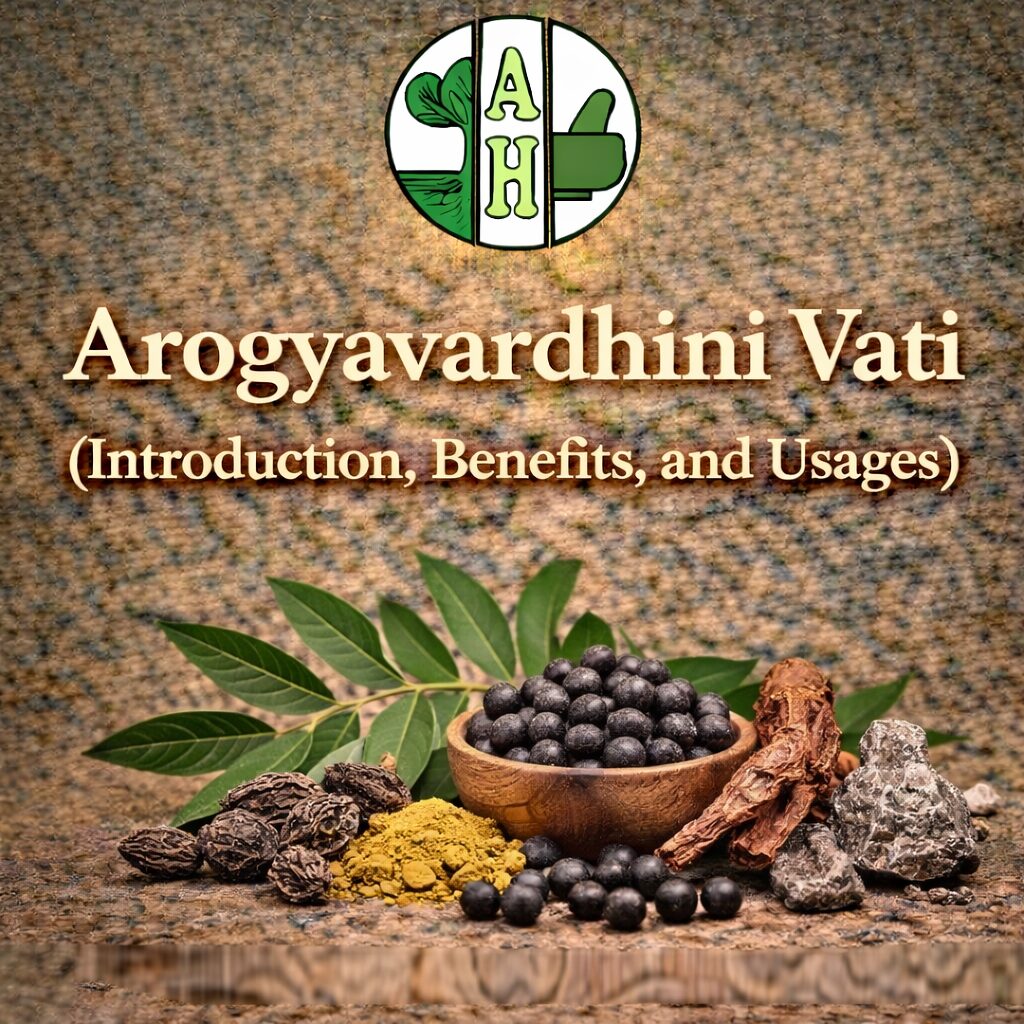
Arogyavardhini Vati (Introduction, Benefits, and Usages)
There’s a quiet magic in Ayurveda that often goes unnoticed by those unfamiliar with its living tradition — a magic that isn’t loud or flashy, but deeply rooted in observation, metabolism, and balance. Arogyavardhini Vati is one such time‑honored herbal formulation: a compound tablet that isn’t just a remedy, but a companion to digestive harmony, detoxification, and overall well‑being. It evokes memories of kitchen conversations in India, where grandmothers whispered about “good digestion brings life”; this vati (tablet) was one of those trusted allies in maintaining that balance.
In today’s world, where stress, irregular eating patterns, processed foods, and environmental toxins have become normal, Arogyavardhini Vati reconnects us to traditional wisdom. It’s not merely a supplement — it is a synthesis of botanical intelligence and classical Ayurvedic insight, designed to kindle the inner fire (agni), help the body assimilate nutrients more efficiently, and maintain ama‑free (undigested metabolic waste) physiology. For seekers of natural health solutions, its relevance continues to grow.
What Is Arogyavardhini Vati?
Arogyavardhini Vati is a classical Ayurvedic herbal formulation — not a single herb — composed of carefully selected plant and mineral ingredients processed according to traditional methods. The name itself comes from Sanskrit: Arogya (health), vardhini (that which enhances or promotes), and vati (tablet), collectively suggesting “that which enhances health.” This venerable formulation is found in several Ayurvedic compendia and has been used for centuries to support digestive function and systemic detoxification.
Although not a botanical plant with a single scientific taxonomy like Withania somnifera (Ashwagandha), the ingredients in Arogyavardhini Vati are drawn from herbs and minerals recognizable in Ayurvedic pharmacopoeia. These include Kutki (Picrorhiza kurroa), Haritaki (Terminalia chebula), Daruharidra (Berberis aristata), Momordica charantia (Karela), and processed forms of metals like Shuddha Parada (purified mercury) and Shuddha Gandhaka (purified sulfur) — each purified and combined with herbal juices to mitigate toxicity and enhance efficacy.
Across India, it carries many names and regional identities. In Hindi, it is still simply known as Arogyavardhini Vati; in Tamil, one might hear Arokiyavardhini Podi; in Telugu and Kannada communities, it’s often referred to similarly, with slight phonetic differences. Sanskrit texts have long documented its composition and therapeutic rationale, binding it firmly to the classical Ayurvedic worldview.
Arogyavardhini Vati in History and Culture
Arogyavardhini Vati has a rich lineage in classical Ayurvedic literature, frequently cited in texts like Charaka Samhita and Bhavaprakasha Nighantu for its role in digestive disorders and systemic purification. Ancient physicians recognized that many imbalances stemmed from impaired digestive fire (mandagni) and the subsequent formation of ama — sticky, toxic residues of incomplete digestion. Arogyavardhini Vati was developed precisely to address these foundational concerns.
Historically, this formulation was a staple in the physician’s pantry, used not only in day‑to‑day imbalances but also as an adjunct in managing metabolic syndromes — long before contemporary medicine identified these patterns. Trade routes across India carried its ingredients: Himalayan herbs for their potency, mountain barks for their bitter detoxifying essence, and minerals processed through ritual‑based purification methods. Ayurvedic practitioners revered this formulation for combining digestive support with liver and metabolic cleansing capabilities in a single, elegant tablet.
Ayurvedic Properties
In Ayurvedic terms, Arogyavardhini Vati has a predominantly bitter (tikta) and pungent (katu) rasa (taste), light to mobile qualities (laghu, ruksha), and a hot potency (ushna virya). Its post‑digestive effect (vipaka) is pungent, which helps kindle digestive fire and encourage metabolic flow. It primarily pacifies kapha and vata doshas, while transiently increasing pitta due to its heating nature. The key Ayurvedic actions (karmas) include dipana (enhancing digestive fire), pachana (digesting toxins), virechana (mild purgation), and shodhana (cleansing).
Active Compounds and Modern Research
Modern phytochemical analyses of several constituent herbs in Arogyavardhini Vati reveal bioactive compounds like picrosides in Kutki, berberine in Daruharidra, and hydrolyzable tannins in Haritaki. These constituents demonstrate antioxidant, hepatoprotective, and digestive enhancing properties, which align with their traditional uses. While comprehensive clinical research specifically on Arogyavardhini Vati as a single formulation is limited, studies on individual components support their roles in liver function, gut health, and metabolic balance — affirming the wisdom of classical combinations.
Benefits of Arogyavardhini Vati
Supports Digestive Fire and Metabolism
At the heart of its usage, Arogyavardhini Vati is renowned for strengthening agni — the digestive fire that Ayurveda regards as the master regulator of health. By enhancing digestive efficiency, this formulation helps the body break down food more completely, reducing bloating, sluggishness, and discomfort. People with irregular appetite or weak digestion often find that regular use brings steadiness and enthusiasm for meals, signaling deeper metabolic harmony.
Cleanses and Balances Metabolic Toxins (Ama)
When digestion falters, ama — a sticky metabolic waste — accumulates, contributing to systemic sluggishness. Arogyavardhini Vati’s bitter and pungent herbs support the breakdown and elimination of these toxins, gently nudging the body toward a cleaner internal milieu. Regularizing bowel movements and reducing the sensation of heaviness after meals are practical reflections of this deeper cleansing action.
Supports Liver and Biliary Function
Several herbs in this formulation — particularly Kutki and Daruharidra — are traditionally associated with liver support. They help ensure that the liver’s essential detoxification pathways function smoothly, which is vital given today’s exposure to environmental and dietary burdens. Many Ayurvedic practitioners prescribe Arogyavardhini Vati as part of liver‑balancing protocols to restore digestive and metabolic equilibrium.
Helps Maintain Healthy Cholesterol Levels
From an Ayurvedic perspective, imbalanced kapha and poor digestive fire contribute to unhealthy lipid accumulation. The bitter, detoxifying nature of this formulation, combined with its metabolic stimulating effects, supports healthy cholesterol levels. While contemporary research on the entire formulation is emerging, the individual herbs in it have shown promising effects on lipid metabolism, reinforcing its traditional use.
Supports Healthy Skin and Complexion
In Ayurveda, skin health is deeply connected to digestion and metabolic purification. When ama is cleared and digestive fire is robust, the skin reflects this balance with improved tone and clarity. Arogyavardhini Vati’s detoxifying and digestive measures often translate into a reduction of certain periodic flare‑ups and a more radiant complexion over time.
Gentle Detoxification and Elimination
Unlike harsh purgatives, this formulation provides a balanced support for regular elimination without stripping the body of essential strength (bala). Its use under guidance encourages natural cleansing cycles that align with digestive rhythms, making it suitable for many individuals seeking a gentle detox rather than aggressive purging.
Balances Kapha and Vata Doshas
Those with dominant kapha imbalances — characterized by heaviness, congestion, and sluggishness — often experience relief with Arogyavardhini Vati because of its light, dry, and pungent qualities. Likewise, its support of digestive fire helps balance erratic vata patterns that contribute to irregular appetite and discomfort, bringing a grounding steadiness to metabolism.
Supports Weight Management When Combined With Diet and Lifestyle
While not a weight‑loss pill, the formulation’s ability to enhance digestion and improve metabolic turnover can complement mindful dietary practices and physical activity. By helping the body utilize nutrients more fully and reduce internal stagnation, it supports a healthier relationship with food and metabolic regulation.
Classical Ayurvedic Formulations
Arogyavardhini Vati itself is a classical rasayana (rejuvenative) formulation, but it also appears as a component or reference in broader detoxification protocols. Arogyavardhini Rasa is a related classical preparation often used for deeper systemic purification. Other formulations like Kalyanaka Ghrita support similar goals of nutrient assimilation and metabolic balance, while Triphala Churna complements digestive regularity and elimination. Each of these has its own traditional indications and is chosen by practitioners based on individual constitution and imbalance.
How to Use Arogyavardhini Vati
Arogyavardhini Vati is most commonly taken in tablet form, as originally intended. A typical adult dosage ranges from 125 mg to 250 mg (1–2 tablets) twice daily, taken after meals with warm water, plain water, or warm herbal teas to aid digestion. For those with very weak digestion, starting with the lower end of the dose is advised.
Another method is combining the tablets with warm decoctions (kwath), such as ginger or coriander tea, which enhances its digestive and detoxifying qualities. Some practitioners recommend taking Arogyavardhini Vati with a spoonful of honey or warm water as an anupana (vehicle) to balance its pungency and support assimilation.
For external support, formulations like herbal steam therapy with digestive supporting herbs can be used on the abdomen to complement internal use, though this is typically recommended under practitioner guidance. In specific metabolic or skin‑related imbalances, combinations with Triphala decoction or herbal oils like Triphala Ghrita may be advised for systemic nourishment.
Dosage and Safety
While it is widely used, its heating nature makes it unsuitable for everyone in high doses. Standard adult dosage is 125–250 mg twice daily after meals, but this should always be personalized. Pregnancy and lactation are generally considered contraindications due to its internal detoxifying and potentially stimulating effects. Individuals with pitta dominance or active ulcers should use caution, as the formulation’s heat can aggravate symptoms. Because it contains traditionally processed minerals, it is wise to consult a qualified Ayurvedic practitioner before beginning use and to discuss any current medications to ensure no interactions or sensitivities arise.
If you are looking to bring the healing power of Arogyavardhini Vati into your daily wellness routine, Ayurvedaholic is your trusted destination for authentic Ayurvedic products. The platform carries a wide range of products from India’s most reputable Ayurvedic brands including Patanjali, Dabur, Baidyanath, and Kottakkal.
👉 Shop All Ayurvedic Products — Ayurvedaholic
Disclaimer
The information in this article is for educational purposes only and does not constitute medical advice, diagnosis, or treatment. Always consult a qualified Ayurvedic practitioner or healthcare professional before using any herb or formulation, especially if you are pregnant, breastfeeding, or on medication. Individual results may vary. Ayurvedaholic does not claim to diagnose, treat, cure, or prevent any disease.
References
- Charaka Samhita, Sutra Sthana, Chapter 26
- Bhavaprakasha Nighantu, Haritakyadi Varga
- Bhaishajya Ratnavali, Vatavyadhi Chikitsa
- Healthline : Arogyavardhini
- Ask Ayurveda
Add comment