
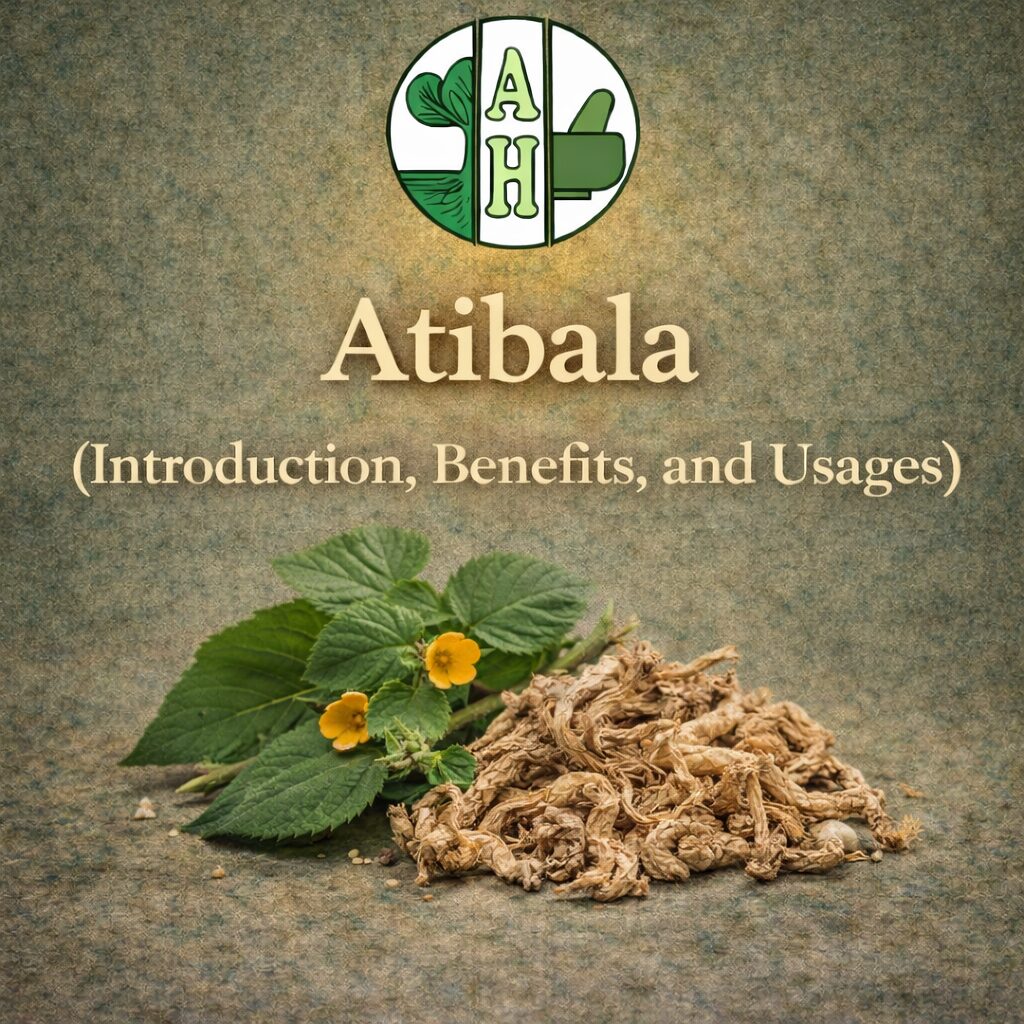
Atibala (Introduction, Benefits, and Usages)
There are herbs in Ayurveda that whisper ancient stories — carried on the breeze of monsoon evenings, spoken of in village homes, sung about by elders around the hearth. Atibala is one such herb. To the uninitiated, it may appear as a humble shrub with golden blossoms swaying by the roadside. But to an Ayurvedic healer, Atibala embodies resilience, nourishment, and deep-rooted wisdom. There’s a warmth about this plant — a sense that it carries generations of healing within its fibers, waiting to be rediscovered in the rhythm of our modern lives.
In a world racing toward synthetic quick‑fixes, Atibala anchors us back to time‑tested, nature‑borne healing. Its presence shifts the conversation from hurried symptom suppression to rooted balance, reminding us that health is not a destination but a gentle unfolding. In these pages, let’s walk together into the world of Atibala — its identity, its story, and its enduring place in our quest for well‑being.
What Is Atibala?
Atibala is the classical Ayurvedic name for the plant Abutilon indicum (L.) Sweet, a member of the Malvaceae family — the same family that gifts us with hibiscus and other beloved medicinal plants. This herb often presents as a sprawling shrub, adorned with soft, golden‑yellow blossoms and covered in fine hairs that catch the sun like flecks of gold. Its root, leaves, stem, bark, flowers, and seeds all hold distinct therapeutic virtues in traditional practice.
Native to the tropical and subtropical regions of India and surrounding Asian landscapes, Atibala thrives in open fields, along pathways, and near water sources. It’s a familiar sight from the plains of Rajasthan to the humid plains of Bengal, a botanical friend that grows generously without demanding much — perhaps a metaphor for its way of giving back to us. Regionally, it wears many names: in Hindi and Sanskrit it’s Atibala, while in English it’s commonly called Indian Mallow. Across South India, folk names vary, reflecting the plant’s widespread cultural embrace.
Atibala in History and Culture
Ayurveda’s treasure trove of plant wisdom — from Bhavaprakasha Nighantu to the esteemed Ayurvedic Pharmacopoeia of India — acknowledges Atibala as a versatile medicinal herb. Classical texts describe it as an herb that soothes, strengthens, and brings balance to the doshas, particularly Vata and Pitta when they are out of harmony. Its use spans ancient fever remedies, tonics for nervous system support, and poultices for wounds, revealing a legacy that reaches far beyond mere tradition.
Historical accounts from rural India speak of young mothers steeping the plant’s roots into nourishing decoctions for postpartum recuperation, and elders brewing leaf infusions to ease joint discomfort or persistent coughs. It was not merely medicine — it was part of everyday life, woven into the fabric of family rituals and seasonal health routines.
Ayurvedic Properties
In Ayurveda’s living language of taste and effect, Atibala possesses a sweet taste (madhura rasa) with cooling potency (shita virya) and a sweet post‑digestive effect (madhura vipaka). Its qualities are nourishing (snigdha), light (laghu), and somewhat unctuous (snigdha guna), helping to balance both Vata and Pitta doshas while gently pacifying Kapha. Traditionally, its principal karma (actions) include Vayasthapana (promoting strength and longevity), Rasayana (rejuvenation), and Shothahara (reducing inflammation) — a combination that speaks to its depth as a daily wellness ally.
Active Compounds and Modern Research
Modern phytochemical studies on Atibala’s fruits and seeds reveal a rich spectrum of bioactive compounds including phenols, flavonoids, saponins, proteins, and carbohydrates — constituents known for their antioxidant and therapeutic potential. Scientific investigations in laboratory settings have supported the herb’s anti‑inflammatory effects, validating what Ayurvedic practitioners have known for centuries — that this humble mallow contains compounds capable of modulating inflammatory pathways in the body.
Benefits of Atibala
Digestive Support and Mild Laxative Action
Ayurveda often turns to Atibala when the digestive fire feels timid or the gut feels sluggish. The herb’s gentle, sweet, and cooling nature supports healthy digestion without overstimulating the system. In traditional practice, a warm decoction of the roots or seeds helps pacify Vata‑related gas and bloating while promoting smooth bowel movements. This harmonizing influence on the digestive tract is echoed in ethnobotanical studies documenting its use for colic and dyspepsia.
Soothes Inflammation and Joint Discomfort
Both classical texts and modern research recognize Atibala’s role in easing inflammation. In Ayurvedic terms, it contributes to Shothahara (reducing swelling) and Shula‑hara (alleviating pain). Modern anti‑inflammatory studies confirm that extracts of Abutilon indicum show measurable reductions in inflammatory markers in animal models, providing a scientific lens through which to view this ancient therapy.
Nervine Tonic and Rejuvenative Qualities
Atibala’s cooling, nourishing nature lends itself beautifully as a Rasayana — a rejuvenative herb that supports the nervous system and overall vitality. In Ayurvedic practice, the root decoction is used as a tonic for nervous exhaustion and general debility, offering calm strength without sedation.
Respiratory Support
Traditional uses include employing leaf and root decoctions to ease cough, bronchial irritation, and respiratory congestion. The soothing, cooling effect of the herb makes it supportive for irritated mucous membranes — a reason why it often appears in formulations targeting the respiratory tract.
Skin and Wound Healing
The cooling and astringent aspects of Atibala make it a time‑trusted ally for irritated skin, minor wounds, and ulcers. Poultices made from crushed leaves can be applied externally to aid healing, while internal use supports detoxification and tissue repair.
Urinary System Comfort
In Ayurveda, the plant’s Shita Virya helps pacify excess heat and inflammation in the urinary tract. It’s been traditionally used in cases of urinary discomfort and mild irritative symptoms, evidencing its broad role in systemic balance.
Classical Ayurvedic Formulations
In the rich pharmacopeia of Ayurveda, Atibala features in classical preparations such as Atibala Taila, an herbal oil used for joint and nerve support, and Atibala Rasayana, a rejuvenative tonic enhancing vitality and strength. These formulations harness the herb’s nutritive and soothing properties, often combining it with complementary herbs for deeper systemic support.
How to Use Atibala
Churna (Powder)
A fine powder of dried root or seeds can be taken 1/2–1 teaspoon mixed with warm water or honey, ideally in the morning or evening. Honey (Madhu) as an anupana (vehicle) enhances nourishment and absorption.
Kwath (Decoction)
Simmer 10–15 grams of dried root or leaves in 2–3 cups of water until reduced by half. Strain and sip this warm decoction throughout the day for digestion or inflammatory discomfort.
Oil (Taila)
Atibala‑infused herbal oil can be gently warmed and applied externally to sore joints, temples (for tension relief), or over the chest during respiratory irritation. Apply as needed, followed by gentle massage.
Fresh Juice
Freshly extracted leaves or root juice (5–10 ml) mixed with water can support detoxification and soothe mucous membranes.
Steam Inhalation
Add a handful of boiled leaves to hot water and inhale the vapor to ease nasal and bronchial irritation — a simple, time‑honored respiratory support.
For individualized dosage and combinations, always consult an Ayurvedic practitioner, especially when herbs are used therapeutically.
Dosage and Safety
While Atibala is generally considered safe in traditional use, a typical adult dosage is 1/2–1 teaspoon of churna or 10–20 ml of decoction per day. Those who are pregnant, breastfeeding, or on prescription medications should exercise caution and seek guidance from a qualified Ayurvedic physician. Herbs can interact with pharmaceuticals, and individual constitution (prakriti) should always be considered in therapeutic use.
Shop Section
If you are looking to bring the healing power of Atibala into your daily wellness routine, Ayurvedaholic is your trusted destination for authentic Ayurvedic products. The platform carries a wide range of products from India’s most reputable Ayurvedic brands including Patanjali, Dabur, Baidyanath, and Kottakkal.
👉 Shop All Ayurvedic Products — Ayurvedaholic
Disclaimer
The information in this article is for educational purposes only and does not constitute medical advice, diagnosis, or treatment. Always consult a qualified Ayurvedic practitioner or healthcare professional before using any herb or formulation, especially if you are pregnant, breastfeeding, or on medication. Individual results may vary. Ayurvedaholic does not claim to diagnose, treat, cure, or prevent any disease.
References
- Bhavaprakasha Nighantu, Haritakyadi Varga
- The Ayurvedic Pharmacopoeia of India, Part 1, Volume 1
- Abutilon indicum — Wikipedia — View on Wikipedia
- Bolleddu R. et al. — “Pharmacognostical and phytochemical studies of Atibala (Abutilon indicum) fruit.” AYU, 2021 — View on PubMed
- Tripathi P. et al. — “Anti-inflammatory activity of Abutilon indicum extract.” Nat Prod Res, 2012 — View on PubMed
Add comment