
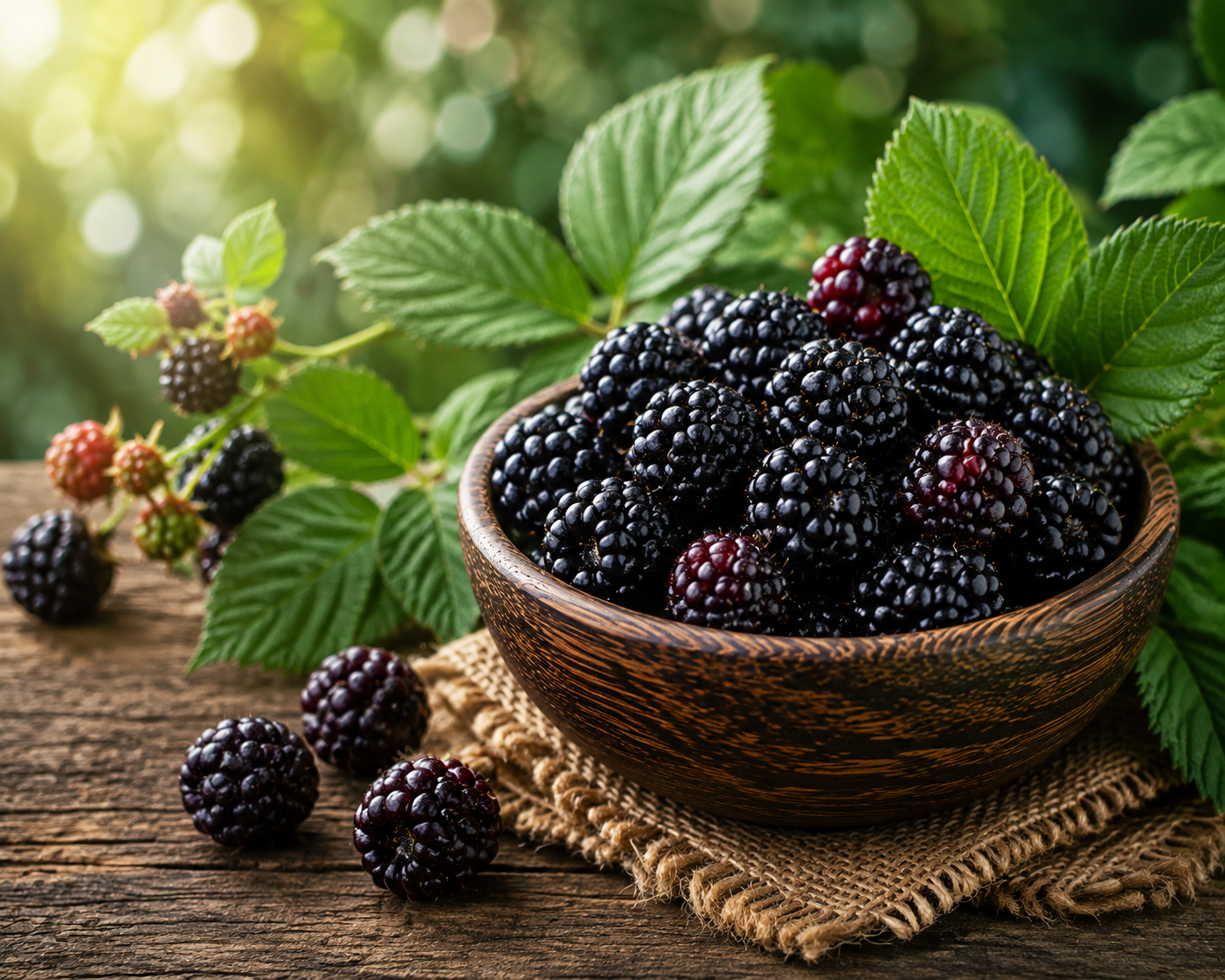
Blackberry (Introduction, Benefits, and Usages)
Blackberry benefits make Rubus fruticosus one of the most nutritionally dense wild fruits in the world — rich in anthocyanins, vitamin C, vitamin K, and fibre, with strong antioxidant, anti-inflammatory, antimicrobial, and cognitive-protective properties. Used for centuries across European, Asian, and Native American traditional medicine, blackberries are both a delicious food and a genuinely effective herbal remedy. See Wikipedia: Blackberry. For related berry medicines, explore Jamun and Strawberry.
What Is Blackberry? A Complete Introduction
Origin and History of Blackberry
Blackberries (Rubus fruticosus aggregate — a group of hundreds of microspecies) grow wild across Europe, North America, and Asia on thorny brambles. They have been gathered as food and medicine since prehistoric times. European folk medicine traditionally used blackberry leaves for diarrhoea, mouth ulcers, and sore throats — applications supported by the high tannin content. Native American tribes used blackberry root and leaf preparations for similar digestive and wound-healing applications. Today, cultivated varieties are grown commercially worldwide, but wild blackberries retain the highest phytonutrient content.
Key Compounds and Nutritional Profile
Blackberries are exceptional sources of anthocyanins — cyanidin-3-glucoside and cyanidin-3-rutinoside — the deep purple-black pigments responsible for most antioxidant and anti-inflammatory activity. They provide 35 mg of vitamin C per 100g, significant vitamin K, manganese, and 5g of dietary fibre per 100g. The leaves contain ellagitannins and gallotannins with potent astringent, antimicrobial, and anti-diarrhoeal properties. Ellagic acid (also in the fruit) is a polyphenol with documented anticancer, antiviral, and anti-inflammatory activity. See Wikipedia: Ellagic acid.
Top Health Benefits of Blackberry
Blackberry Benefits for Immunity and Overall Health
Blackberry anthocyanins provide some of the highest antioxidant activity of any fruit — ORAC scores consistently place blackberries among the top 10 most antioxidant-rich foods. These compounds reduce oxidative stress, inhibit inflammatory NF-kB signalling, protect LDL cholesterol from oxidation (reducing cardiovascular risk), and have direct immune-modulating effects. The vitamin C content supports white blood cell function and collagen synthesis. The prebiotic fibre feeds beneficial gut bacteria — Lactobacillus and Bifidobacterium — that are fundamental to immune regulation.
Blackberry for Skin, Hair, and Beauty
Blackberry’s combination of anthocyanins, ellagic acid, and vitamin C makes it genuinely effective for skin health. Anthocyanins protect against UV-induced skin damage and inhibit collagen-degrading matrix metalloproteinases. Ellagic acid has shown UV photoprotection in skin cell studies. Vitamin C drives collagen synthesis. Blackberry seed oil — extracted from the seeds — is rich in omega-3 and omega-6 fatty acids with excellent skin absorption, making it an effective moisturising and anti-ageing topical treatment for face, body, and hair.
Medicinal Properties of Blackberry
How Blackberry Works as a Natural Remedy
The anti-inflammatory mechanism involves NF-kB inhibition by anthocyanins — reducing cytokine production across multiple inflammatory pathways. The antimicrobial activity comes from ellagitannins and phenolic acids that disrupt bacterial membranes and inhibit bacterial adhesion to mucosal surfaces. The anti-diarrhoeal mechanism of blackberry leaf is tannin astringency — tannins bind to intestinal mucosal proteins, tighten loose tissue, and reduce fluid secretion into the gut. The cognitive protection seen in population studies is attributed to anthocyanin’s ability to cross the blood-brain barrier and reduce neuroinflammation.
Blackberry in Ayurveda and Traditional Medicine
While Rubus fruticosus isn’t a classical Ayurvedic herb, Rubus species are used in regional Indian traditional medicine. The fruit’s sweet-astringent taste makes it Pitta-reducing and cooling in Ayurvedic terms. The leaf’s strong tannin content gives it Grahi (absorptive) and Stambhaka (astringent) qualities — classical actions for diarrhoea, bleeding, and wound healing. This parallels European folk use almost exactly. In Native American medicine, blackberry root bark was a strong anti-diarrhoeal medicine — also reflecting the tannin content.
How to Use Blackberry — Practical Usages
Blackberry in Food, Tea, and Cooking
Eat fresh blackberries raw for maximum anthocyanin content — cooking reduces polyphenol levels. Add to smoothies, yoghurt, porridge, and salads daily. Blackberry leaf tea: 1–2 teaspoons dried leaves steeped 10–15 minutes in hot water — astringent, tannic tea used for diarrhoea, mouth ulcers, and sore throat (gargle). Blackberry shrub (fruit vinegar drink) preserves flavour and some polyphenols while providing a refreshing medicinal beverage. Frozen blackberries retain most of their nutritional value and are an excellent year-round option.
Blackberry as a Supplement or Topical Application
Blackberry extract capsules (standardised to anthocyanin content) provide concentrated antioxidant support. Blackberry seed oil applied topically to skin and hair delivers omega fatty acids, vitamin E, and ellagic acid for moisturising and anti-ageing benefit. For wound healing and skin inflammation, a blackberry leaf poultice (crushed fresh leaves applied to skin) uses tannin astringency to reduce inflammation and promote tissue repair — a traditional European wound remedy with supporting scientific rationale.
Side Effects and Precautions of Blackberry
- Vitamin K: significant vitamin K content can interact with warfarin — maintain consistent intake and monitor INR
- Tannin absorption: high blackberry leaf tea intake can reduce iron absorption — separate from iron-rich meals or iron supplements by 2 hours
- Blood sugar: fibre and polyphenols slow glucose absorption, which is beneficial for most people but monitor if on insulin or blood sugar medication
- Wild harvesting: don’t pick roadside blackberries that may have been sprayed with pesticides or herbicides
Frequently Asked Questions About Blackberry
What are the main blackberry benefits for health?
Key blackberry benefits: exceptional antioxidant protection from anthocyanins (among the highest of any food), anti-inflammatory action via NF-kB inhibition, cardiovascular protection through LDL oxidation prevention, cognitive protection and reduced dementia risk (population studies), immune support from vitamin C, gut health via prebiotic fibre, bone health via vitamin K, antimicrobial activity from ellagitannins, and anti-diarrhoeal action from leaf tannins.
Are blackberries good for skin?
Yes. Blackberry anthocyanins protect skin from UV damage and prevent collagen breakdown. Vitamin C drives collagen synthesis. Ellagic acid has UV photoprotective properties in skin cell studies. Blackberry seed oil applied topically provides omega-3/6 fatty acids and vitamin E for deep moisturising. Eating blackberries daily supports skin health from the inside; blackberry seed oil addresses it from the outside. Both approaches together provide comprehensive skin protection and repair.
How to use blackberry leaf in traditional medicine?
Blackberry leaf in traditional medicine: steep 1–2 teaspoons dried leaf as tea for diarrhoea, or gargle for sore throat and mouth ulcers. The tannin content is the active principle — astringent, antimicrobial, and anti-inflammatory. Fresh leaves can be crushed as a poultice for minor wounds and skin inflammation. European herbalism also used blackberry leaf tea for heavy menstrual bleeding (tannin haemostatic action). The root bark is a stronger preparation for severe diarrhoea.
How many blackberries should I eat daily?
A daily cup (100–150g) of fresh or frozen blackberries provides a meaningful therapeutic dose of anthocyanins, vitamin C, vitamin K, and fibre. This level of intake is associated with cardiovascular and cognitive protective effects in population studies. Consistency matters more than quantity — daily moderate intake is more beneficial than occasional large amounts. Frozen blackberries retain most nutritional content and are a convenient daily option.
Can blackberries help with weight management?
Yes, through several mechanisms. The high fibre content (5g per 100g) promotes satiety and slows gastric emptying, reducing overeating. The polyphenols improve insulin sensitivity and reduce fat cell formation (adipogenesis) in cell studies. Blackberries are relatively low in calories (43 kcal per 100g) while being nutrient-dense and satisfying. Regular blackberry consumption is associated with better metabolic markers in population studies — lower BMI, waist circumference, and blood sugar.
Blackberry benefits are among the most accessible in herbal nutrition — buy them fresh in summer, frozen year-round, and use the leaf as medicinal tea. This is a plant medicine you can eat for breakfast. The anthocyanin and ellagic acid content rivals expensive supplements. Add blackberries to your daily routine and you’re getting one of nature’s most potent antioxidant combinations in the most enjoyable possible form.

Add comment