
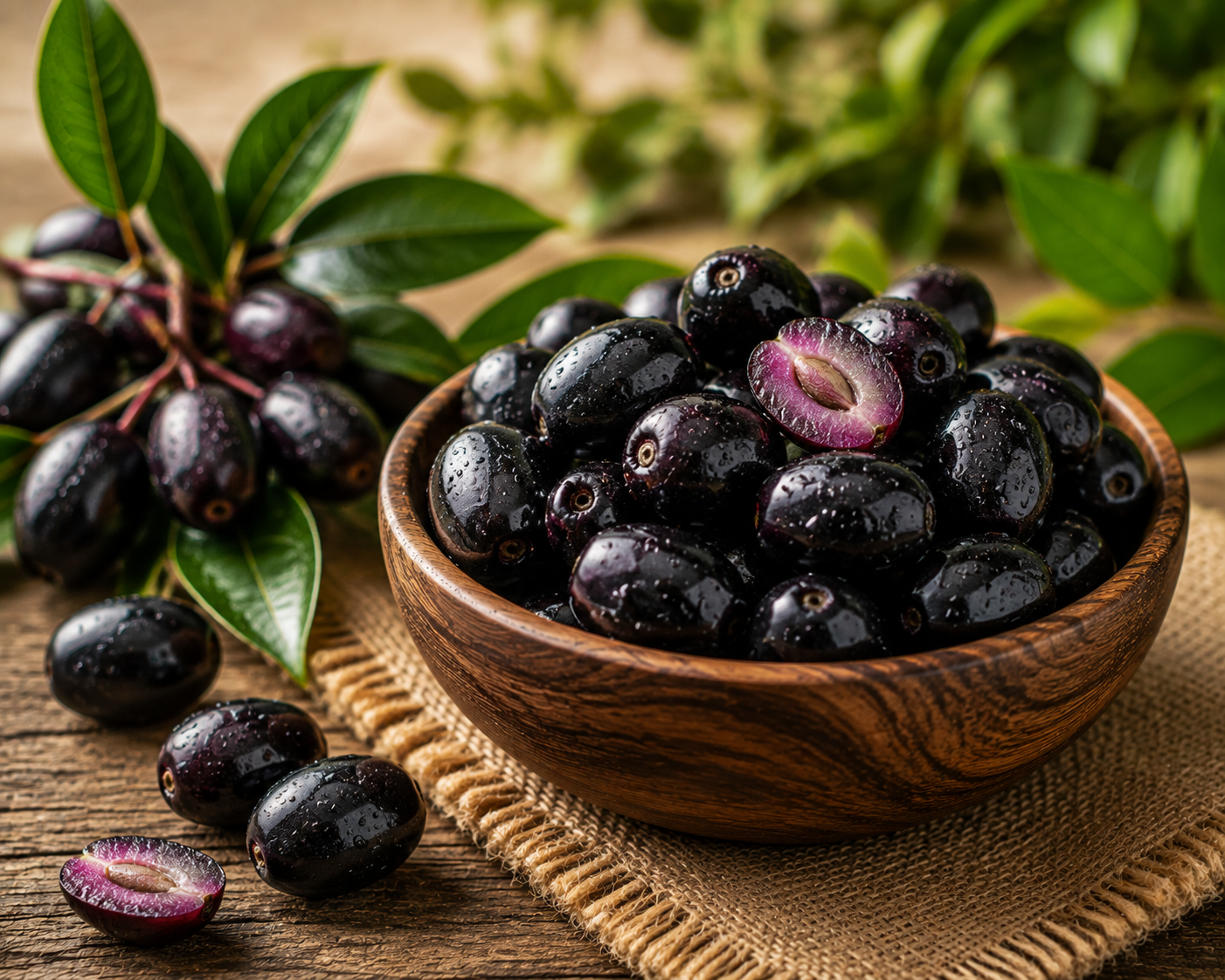
Jamun (Introduction, Benefits, and Usages)
Jamun benefits for blood sugar management are among the most documented of any Ayurvedic fruit medicine — Syzygium cumini (Java plum, Indian blackberry, Black plum) has been used to manage diabetes in Ayurveda for over 2,000 years, and modern clinical research has consistently validated this application. The seeds, bark, fruit pulp, and leaves all contain active hypoglycaemic compounds. See Wikipedia: Syzygium cumini. For related anti-diabetic herbs, explore Gudmar and Karela.
What Is Jamun? A Complete Introduction
Origin and History of Jamun
Jamun (Syzygium cumini) is a large tropical evergreen tree native to the Indian subcontinent and Southeast Asia — now cultivated throughout the tropics. It’s deeply woven into Indian culture: the subcontinent was historically called “Jambudvipa” (land of the Jambu/Jamun tree). The deep purple-black fruits appear in summer (May to August) and are a beloved seasonal treat across India. In Ayurveda, Jambu (Jamun) is described in the Charaka Samhita and Sushruta Samhita for Prameha (diabetes-like metabolic conditions), Atisara (diarrhoea), and Raktapitta (bleeding disorders). The seeds, bark, and leaves were the medicinal parts; the fruit was a food-medicine combination. Traditional physicians in India, Sri Lanka, and Southeast Asia have used Jamun seeds for diabetes management for millennia.
Key Compounds in Jamun
Jamun’s medicinal properties come from a diverse array of phytochemicals distributed across its parts.
Seeds: jamboline (a glycoside that inhibits starch digestion), ellagic acid, gallic acid, and iambosine — these are the primary antidiabetic compounds.
Fruit pulp: anthocyanins (cyanidin-3-glucoside, delphinidin, malvidin), flavonoids, and ellagic acid providing antioxidant and anti-inflammatory activity.
Bark: tannins (betulinic acid, friedelin, epicatechin) with astringent and antidiarrhoeal properties.
Leaves: quercetin, myricetin, and flavone glycosides with antimicrobial and anti-inflammatory properties. The seed’s jamboline specifically inhibits alpha-glucosidase and alpha-amylase (the enzymes that convert starch to glucose), reducing post-meal blood sugar elevation. See Wikipedia: Ellagic acid.
Top Health Benefits of Jamun
Jamun Benefits for Blood Sugar and Overall Health
Jamun benefits for diabetes management are its most-studied and best-evidenced application. Multiple clinical trials demonstrate that Jamun seed powder supplementation significantly reduces fasting blood glucose, post-meal blood glucose, and HbA1c in type 2 diabetics over 8–12 weeks. A systematic review confirmed hypoglycaemic activity across multiple human and animal studies. The mechanisms are multi-pronged: jamboline inhibits starch-digesting enzymes reducing glucose absorption from meals; the seeds’ compounds improve insulin sensitivity; and the fruit’s anthocyanins have independent anti-inflammatory benefits relevant to diabetes complications. The antioxidant polyphenols in Jamun’s anthocyanins provide cardiovascular and anti-inflammatory protection relevant to diabetic complications.
Jamun for Digestion, Liver, and Skin
Jamun’s astringent tannins make it effective for diarrhoea and dysentery — this is its second most-classical application in Ayurveda. The bark decoction is particularly effective for acute diarrhoea through tannin-mediated protein precipitation that reduces intestinal secretions and slows gut motility. The fruit’s organic acids stimulate digestive enzyme secretion and improve appetite.
For liver health: Jamun’s ellagic acid and anthocyanins provide hepatoprotective activity — animal studies show Jamun extracts significantly reduce liver enzyme elevation in chemically-induced liver damage.
For skin: the anthocyanins and polyphenols provide antioxidant protection against UV-induced oxidative damage, and Jamun paste has traditional use for acne and skin brightening.
Medicinal Properties of Jamun
How Jamun Works as a Natural Remedy
The blood-sugar mechanism: jamboline (from seeds) competitively inhibits alpha-glucosidase — the intestinal enzyme that breaks oligosaccharides into glucose for absorption. This is the same mechanism as the antidiabetic drug acarbose. By slowing glucose release from starch, post-meal blood sugar peaks are reduced and flattened. Simultaneously, ellagic acid and gallic acid improve insulin sensitivity at the cellular level through PPAR-gamma pathway activation. The anti-diarrhoeal mechanism: bark tannins bind to intestinal mucosal proteins, forming a protective astringent layer that reduces mucus and fluid secretion into the gut lumen while tightening the epithelial barrier. The result is reduced stool water content and normalised motility.
Jamun in Ayurveda and Traditional Medicine
In Ayurveda, Jambu (Jamun) is classified as Kashaya (astringent), Tikta (bitter), Madhura (sweet-fruit) in taste, Sheeta (cooling) in potency, and Laghu (light) in quality. It balances Pitta and Kapha while slightly increasing Vata in excess. Classical indications include Prameha (diabetes and urinary disorders), Atisara (diarrhoea), Raktapitta (bleeding disorders — due to astringent haemostatic properties), and Kasa (cough — bark decoction). The seeds (Jambu Beeja) are the primary medicinal part for diabetes — dried, powdered, and taken before meals. The bark is used for oral health as a gargle, and externally for skin conditions. Compare with Gudmar — another primary Ayurvedic anti-diabetic herb with complementary mechanisms.
How to Use Jamun — Practical Usages
Jamun Seed Powder for Blood Sugar
Jamun seed powder for diabetes: dry Jamun seeds in shade after removing the outer green coating, then grind to a fine powder. Take 3–6g (approximately ½–1 teaspoon) of seed powder with warm water 30 minutes before meals, twice daily. This is the dose used in clinical trials showing significant HbA1c reduction. Alternatively, Jamun seeds are available as standardised supplements from Ayurvedic manufacturers.
Fresh fruit during season: eat 15–20 Jamun fruits after meals during season (May–August) for blood sugar management.
Bark decoction for diarrhoea: boil 10g of Jamun bark in 200ml water until reduced to 100ml; strain and drink twice daily for acute diarrhoea.
Jamun as a Supplement
Jamun seed extract supplements are widely available from Ayurvedic brands including Himalaya, Dabur, Organic India, and Patanjali. Look for standardised extracts with documented jamboline content. The seed powder is more economical and as effective as extracts — collect seeds during Jamun season, dry thoroughly, and grind for year-round use. For year-round blood sugar management, Jamun seed powder is typically combined with other anti-diabetic herbs in classical formulations — such as Nyagrodhadi Churna or Vasanta Kusumakar Rasa — for comprehensive management. Always monitor blood glucose regularly when using Jamun alongside diabetes medications — the additive effect can cause hypoglycaemia.
Side Effects and Precautions of Jamun
- Hypoglycaemia risk: Jamun seed powder has significant blood glucose-lowering activity — if taken alongside metformin, insulin, or other antidiabetic medications, blood sugar may drop too low; monitor glucose and adjust medications with your doctor’s guidance
- Constipation: the astringent tannins can cause constipation with excessive or prolonged use; maintain adequate fluid intake and balance with fibre
- Avoid on empty stomach: eating raw Jamun fruit on an empty stomach can cause nausea and stomach upset — always eat after or with meals
- Pregnancy: avoid medicinal doses of Jamun seed during pregnancy — the hypoglycaemic and uterine effects are not well-studied in pregnancy; moderate fruit consumption is fine
Frequently Asked Questions About Jamun
What are the main Jamun benefits for health?
Key Jamun benefits: blood glucose reduction through alpha-glucosidase inhibition and insulin sensitisation (multiple clinical trial evidence), anti-diarrhoeal and gut-astringent action from bark tannins, antioxidant protection from fruit anthocyanins, hepatoprotective effects from ellagic acid and polyphenols, anti-inflammatory activity relevant to diabetic complications, oral health benefits from astringent bark gargle, skin antioxidant and antimicrobial benefits, and haemostatic properties for bleeding conditions in Ayurvedic use.
How does Jamun help control blood sugar?
Jamun controls blood sugar through three complementary mechanisms: (1) jamboline in seeds inhibits alpha-glucosidase and alpha-amylase — the enzymes that digest starch into glucose — reducing post-meal glucose absorption; (2) ellagic acid and gallic acid activate insulin signalling pathways improving cellular glucose uptake; (3) the anti-inflammatory anthocyanins reduce chronic low-grade inflammation that drives insulin resistance in type 2 diabetes. This multi-mechanism approach explains why clinical trials show Jamun effective for both fasting glucose and HbA1c reduction. The seeds are far more potent than the fruit pulp for this application.
Is Jamun good for the liver?
Yes — Jamun has well-documented hepatoprotective properties in animal studies. Ellagic acid and the fruit’s anthocyanins reduce liver enzyme elevation (ALT, AST) in chemically-induced liver damage models. The antioxidant compounds protect liver cells from oxidative stress, a primary driver of non-alcoholic fatty liver disease (NAFLD). Eating seasonal Jamun fruit provides meaningful hepatoprotective polyphenols. For liver conditions, Jamun combines well with other hepatoprotective Ayurvedic herbs like Kutaki and Kalmegh.
What is the difference between Jamun fruit and Jamun seed?
The fruit pulp provides anthocyanins, vitamin C, and antioxidants — primarily food-medicine benefits for cardiovascular health, skin, and general antioxidant protection. The seeds are the primary medicinal part for diabetes — they contain jamboline and other compounds at concentrations far higher than the pulp that specifically target blood glucose. For anti-diarrhoeal use, the bark is most effective. For oral health, the bark decoction as a gargle. The fruit is eaten seasonally as food; the seeds are dried and powdered for year-round medicinal use. Both are valuable but serve different therapeutic purposes.
What is the correct Jamun seed powder dosage?
Clinical trial dosages for Jamun seed powder: 3–6g (approximately ½–1 teaspoon) twice daily, 30 minutes before meals, with warm water. This is the dose range showing significant HbA1c and fasting glucose reduction in published human trials. Begin at 3g twice daily and assess blood glucose response before increasing. When used alongside diabetes medications, start with 3g once daily and closely monitor blood glucose — hypoglycaemia risk requires careful dose management and medication adjustment in consultation with your physician.
Jamun benefits make this seasonal fruit-and-seed medicine one of Ayurveda’s most evidence-validated interventions for type 2 diabetes. During Jamun season, eat the fruits daily. After season, use dried seed powder before meals. Combine with lifestyle modifications — reduced refined carbohydrate intake, regular walking, stress management — and Jamun becomes part of a genuinely effective natural approach to blood sugar management. The evidence base is solid, the safety profile is good, and the tradition is over 2,000 years old.

Add comment