
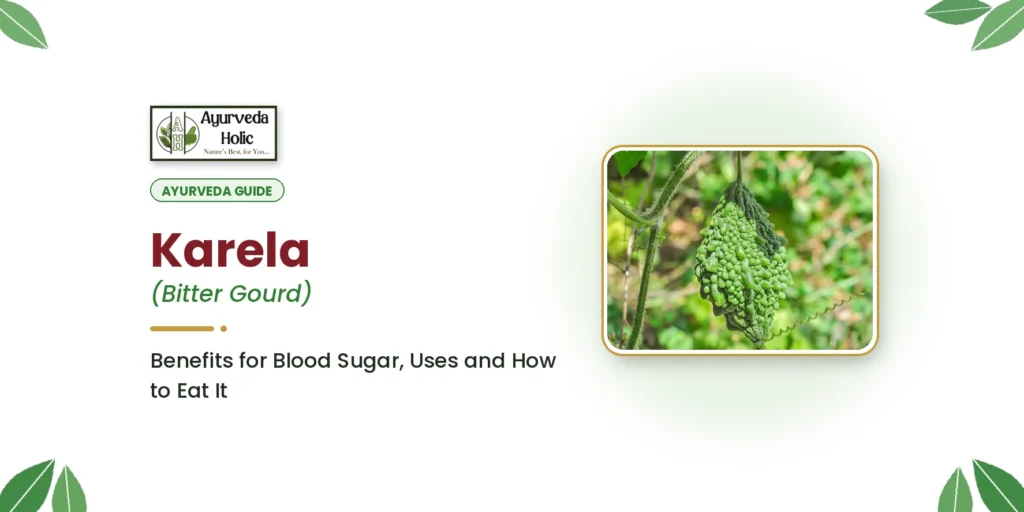
Short answer. Karela, or bitter gourd, is the bitter green vegetable Indian homes swear by for blood sugar. The best-known karela benefits are a small effect on blood sugar, plus fibre and vitamins. Research shows a modest effect at best. It doesn’t replace diabetes medicines. And if you take them, karela juice or capsules can add to their effect. So check your sugar and tell your doctor.
Every family has someone pushing karela juice on them. Is it worth the bitterness? Partly. Here’s what karela can do, what it can’t, and how to eat it without making a face.
What karela is
Karela is a ridged green gourd with a sharp bitter taste. It’s cooked as sabzi, stuffed (bharwa) and as crispy chips.
| Feature | Detail |
|---|---|
| Botanical name | Momordica charantia |
| Common names | Karela, bitter gourd, bitter melon |
| Part used | Fruit. Also seeds and leaves |
| Ayurvedic nature | Bitter, pungent, light |
| Dosha | Reduces Kapha and Pitta |
Karela in classical texts
Classical texts call it karavellaka. They describe it as bitter, pungent, light and heating. It’s used to kindle digestion and to clear Kapha and Pitta. It’s also used for prameha, a group of urinary disorders that includes diabetes. Plus skin problems, worms and fever. Mostly, it’s eaten as a vegetable. Juice and powder came later.
Karela benefits
- Blood sugar. It contains compounds like charantin and polypeptide-p. Some small trials show a modest drop in sugar. Others show little.
- Digestion. The bitterness is used to wake up appetite and digestion.
- Nutrition. Fibre, vitamin C, folate and minerals.
- Skin. Ayurveda uses bitter foods for heat-related skin problems.
Be realistic about diabetes
Karela can be a good part of a diabetes-friendly diet. The evidence doesn’t support using it instead of medicine. Your overall diet, exercise, weight, sleep and prescribed treatment matter far more.
How to eat karela
- Stir-fry (sabzi). Slice thin. Rub with salt and turmeric. Rest it for a while, then squeeze out the bitter juice. Stir-fry with onion and spices.
- Bharwa karela. Fill with spiced besan or onion, then pan-roast.
- Karela chips. Thin slices, baked or air-fried with spices.
- Karela onion fry. Thin rings cooked with onion and jeera till crisp.
- In dal. Small pieces added to moong dal.
- Juice. Start with a little, diluted. Don’t drink big glasses.
Karela vs other vegetables for blood sugar
| Vegetable | Why it helps |
|---|---|
| Karela | Bitter compounds traditionally used for sugar. Low calorie |
| Methi leaves | Fibre. The seeds are studied for blood sugar |
| Lauki | Very low calorie, easy to digest |
| Green leafy vegetables | Fibre, minerals, low carb |
| Tinda and tori | Light, low-calorie gourds |
Products with karela
These Patanjali formulas list karela among several bitter herbs, with gudmar and jamun seed.
| Product | Form |
|---|---|
| Patanjali Divya Madhunashini Vati | Tablets |
| Patanjali Divya Madhu Kalp Vati | Tablets |
| Patanjali Divya Madhugrit | Tablets |
Safety with diabetes medicines
- Low sugar risk. Karela juice, capsules and sugar formulas can add to metformin, insulin or sulfonylureas. Watch for shakiness, sweating or confusion.
- Check your sugar more often when you start. Tell your doctor.
- Never stop or cut diabetes medicines on your own.
Who should avoid concentrated karela
- Pregnant women. Skip juice, seeds and supplements.
- People trying to conceive. Ask your doctor first.
- Children. No concentrated juice or seeds.
- People with G6PD deficiency. The seeds can cause problems.
- A sensitive stomach. Large amounts can cause pain and loose motions.
Cooked karela in normal amounts is fine for most people.
Common mistakes
- Downing big glasses of juice on an empty stomach.
- Deep-frying it, which piles on calories.
- Eating lots of the seeds.
- Stopping diabetes medicine because of karela.
Frequently asked questions
What are the main karela benefits?
It’s a nutritious vegetable, traditionally used for blood sugar and digestion.
Is karela juice good for diabetes?
It may nudge blood sugar down a little. It doesn’t replace your medicines. Check your sugar and tell your doctor.
How much karela juice is safe?
Start small and diluted. Large amounts can upset your stomach, and push sugar too low with medicines.
Can pregnant women eat karela?
Cooked karela in normal amounts is generally fine. Avoid juice, seeds and supplements.
How do I reduce karela’s bitterness?
Rub the slices with salt and turmeric, let them rest, and squeeze out the juice before cooking.
Is karela good for weight loss?
It’s very low in calories. It fits well in a weight-loss diet when cooked with little oil.
Can children eat karela?
Yes, cooked, in normal portions. No concentrated juice.
Shop: Patanjali Divya Madhunashini Vati · Patanjali Divya Madhugrit
This article is for general information and isn’t medical advice. Don’t change diabetes medicines without your doctor.
Header photo of Karela by Joydeep, via Wikimedia Commons, licensed CC BY-SA 3.0.


