
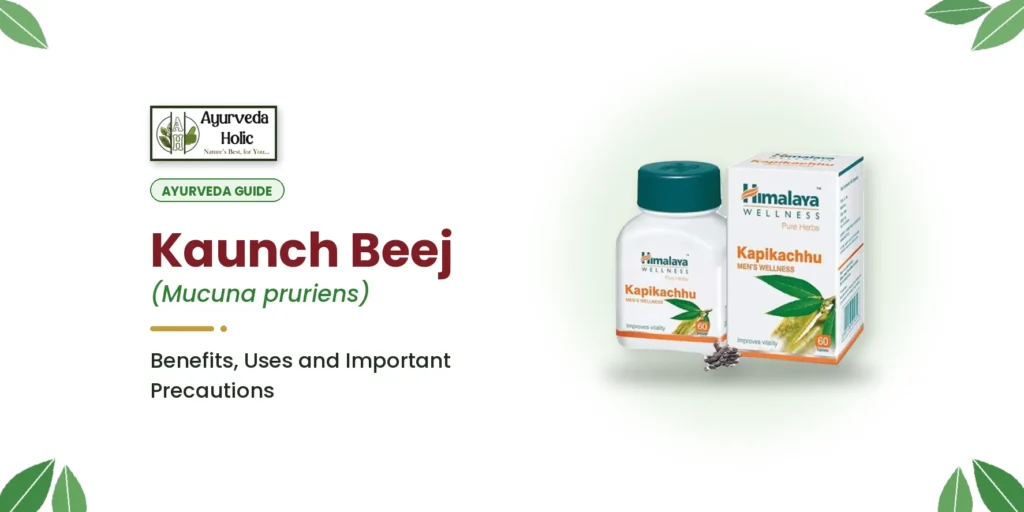
Short answer. Kaunch beej, or kapikachhu, is the seed of a climbing bean plant. Ayurveda uses it for men’s reproductive health, stamina, strength and nerve-related Vata problems. Here’s the catch. The seeds naturally contain L-dopa, the same compound in Parkinson’s medicines. So kaunch beej can clash with medicines for Parkinson’s, depression and blood pressure. Use only purified (shuddh) powder or ready-made formulas.
Kaunch beej is one of the few herbs with an active compound you can actually name. That’s both its strength and its risk. Here’s how to use it sensibly.
What kaunch beej is
Kaunch is a fast-growing climber. Its pods are covered in fine golden hairs that itch like crazy. Kapikachhu literally means “the one that makes monkeys itch”. The seeds inside are purified before use, traditionally by boiling them in milk.
| Feature | Detail |
|---|---|
| Botanical name | Mucuna pruriens |
| Common names | Kaunch, konch, kapikachhu, atmagupta, velvet bean |
| Part used | Purified seeds |
| Ayurvedic nature | Sweet, bitter, heavy, oily, heating |
| Dosha | Reduces Vata. Increases Kapha |
Kaunch beej in classical texts
Classical texts call kapikachhu a vajikarana herb. That means it’s used for virility and fertility. It’s also called balya, or strengthening. It’s in classical preparations like Vanari Gutika, and in loads of modern vitality formulas. Boiling the seeds in milk is meant to cut irritants and make them easier to digest.
Kaunch beej benefits in Ayurveda
- Men’s reproductive health. Sperm quality, stamina and libido.
- Strength and muscle.
- Nerve-related Vata problems. Including tremor, in classical texts.
- Mood and motivation. Linked today to its L-dopa.
What research says
- Male fertility. Small studies in men with low or sluggish sperm found better semen results after a few months. Most didn’t have a placebo group.
- Stress. Some studies report lower stress markers.
- Parkinson’s disease. Mucuna has been studied as a natural source of L-dopa. Doses vary a lot between products. It’s strictly for a neurologist to manage.
Why L-dopa matters
Your brain turns L-dopa into dopamine. That’s why kaunch beej can affect mood, motivation and movement. It’s also why it can interact with Parkinson’s, psychiatric and BP medicines. Products differ widely in how much L-dopa they contain. So stick to the label dose.
Products that contain kaunch beej
| Product | Form |
|---|---|
| Patanjali Shuddh Konch Beej Churna | Purified seed powder |
| Himalaya Kapikachhu | Tablets |
| Patanjali Divya Youvnamrit Vati | Tablets with ashwagandha and safed musli |
| Patanjali Amrit Rasayan | Rasayana jam |
How kaunch beej is taken
- Shuddh churna. With warm milk, at the pack dose.
- Tablets and formulas. At the label dose.
- Never raw seeds. And never touch the hairy pods.
How to choose a product
- Pick purified (shuddh) churna or a branded tablet.
- Check the label lists Mucuna pruriens.
- Walk away from unlabelled powders sold for “instant power”.
Who should avoid it or ask a doctor first
- Parkinson’s disease, or on levodopa or carbidopa. Don’t take it without your neurologist. It adds to your medicine.
- Antidepressants, antipsychotics or BP medicines. Especially MAO inhibitors.
- A history of psychosis, mania or melanoma.
- Diabetes. It may lower blood sugar. Check more often.
- Pregnancy and breastfeeding. Avoid it.
- Before surgery. Stop it two weeks ahead.
Side effects can include nausea, bloating, headache, a racing heart and poor sleep. Stop and see a doctor if they happen.
Common mistakes
- Using raw seeds, or handling the itchy pods.
- Stacking several vitality products.
- Expecting results in days. Studies ran for months.
When to see a doctor
Fertility trouble, erection problems and low energy can have medical causes. Think diabetes, thyroid problems, heart disease or low testosterone. Get checked if they don’t settle. After a year of trying for a baby, see a fertility specialist as a couple.
Frequently asked questions
What are the main kaunch beej benefits?
Ayurveda uses it for men’s reproductive health, stamina, strength and nerve-related Vata problems.
Is kapikachhu the same as kaunch beej?
Yes. Kapikachhu is the Sanskrit name.
Can I take kaunch beej with Parkinson’s medicine?
Not without your neurologist’s approval. Its L-dopa adds to your medicine.
Can women take kaunch beej?
It’s traditionally used mostly for men. Women should ask an Ayurvedic doctor first, and avoid it in pregnancy.
How long does kaunch beej take to work?
Fertility studies ran for about three months. Review it with your practitioner after that.
Does kaunch beej increase testosterone?
Small studies report changes. The evidence is limited. See a doctor if you think yours is low.
Can kaunch beej be combined with ashwagandha?
They’re often paired in vitality formulas like Youvnamrit Vati. Take them as ready products, at the label dose.
Shop: Patanjali Shuddh Konch Beej Churna · Himalaya Kapikachhu
This article is for general information and isn’t medical advice. Talk to a doctor before use if you take any regular medicines.


