
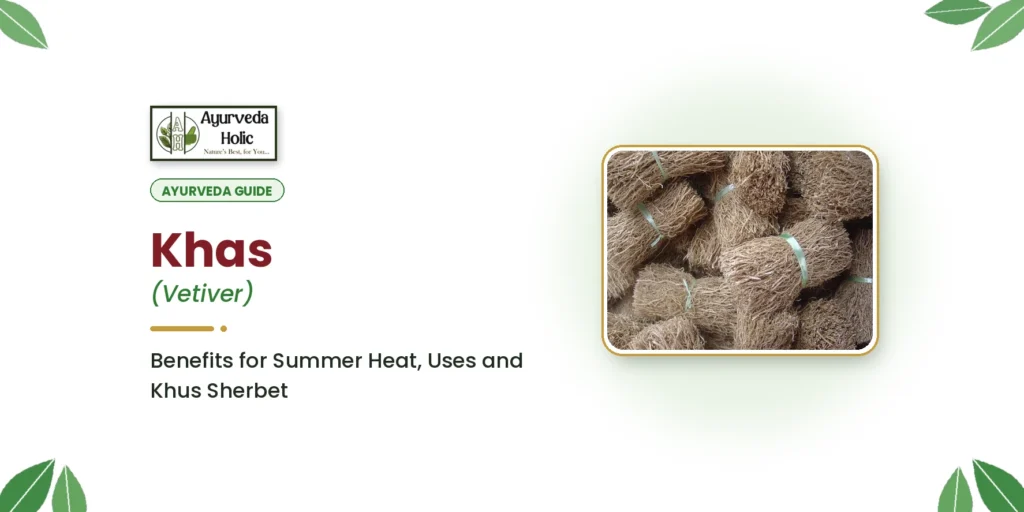
Short answer. Khas, also called khus, vetiver or usheer, is a fragrant grass root. It’s one of Ayurveda’s most cooling herbs. The traditional khas benefits are relief from summer heat and thirst, burning urination, heavy sweating and heat rashes. Indian homes use it as khus water, khus sherbet and those cooling mats on the cooler. It’s gentle and safe for most people.
That earthy smell from a wet cooler mat on a hot afternoon? That’s khas. Ayurveda has used the same root for centuries to cool the body from the inside. Here’s how.
What khas is
Khas is a tall, clumping grass with deep, fragrant roots. The roots are dried and used whole, powdered, or distilled into a woody oil called ruh khus. It’s a prized perfume ingredient. The roots also hold soil so well that khas is planted to stop erosion.
| Feature | Detail |
|---|---|
| Botanical name | Chrysopogon zizanioides (Vetiveria zizanioides) |
| Common names | Khas, khus, vetiver, usheer, ushira |
| Part used | Root |
| Ayurvedic nature | Bitter, sweet, cooling |
| Dosha | Reduces Pitta. Also balances Kapha |
Usheer in classical texts
Charaka lists usheer among herbs that ease burning (dahaprashamana) and thirst (trishnanigrahana). It’s a key part of Shadanga Paniya, the classical water given during fever, with musta, sandalwood, dry ginger and other herbs. It’s also used in cooling pastes, oils and bath mixes.
Khas benefits in Ayurveda
- Summer heat and thirst. As a cooling drink.
- Burning urination. In cooling formulas.
- Heavy sweating and body odour. In bath water and powders.
- Heat rashes and Pitta skin problems.
- Calm. Vetiver oil is popular in aromatherapy for its grounding smell.
What research says
Lab studies show vetiver oil has antimicrobial and antioxidant effects. Some animal studies hint at calming effects. There are no good human trials of khas for heat problems. So its benefits are mainly traditional. Its value for the soil is proven, though. The roots can grow metres deep.
How to make khus water
- Rinse a small handful of dried khas roots well.
- Put them in a clay pot or jug of drinking water.
- Leave overnight somewhere cool.
- Sip it through the next day. Swap in fresh roots every few days.
Add a few mint leaves or a squeeze of lemon if you like.
Other ways to use khas
- Khus sherbet. Dilute a little khus syrup in cold water. Store syrups are mostly sugar. Keep it occasional.
- Khus mats. Hang wet mats on windows or coolers for cool, scented air.
- Bath water. Soak a few roots in your bath.
- Face pack. Khas powder with sandalwood and rose water for heat rashes. Patch test first.
- Hair rinse. Khus water as a final rinse in summer.
Products with khas (usheer)
| Product | Form |
|---|---|
| Patanjali Divya Usirasava | Asava with usira, padma, manjishtha and draksha |
| Patanjali Divya Mahamanjisthadi Kwath | Liquid kwath that lists khas among many herbs |
Usirasava contains a little natural alcohol from fermentation.
Beating summer heat the Ayurvedic way
- Drink plenty of water, coconut water, buttermilk and khus water.
- Eat cooling foods like cucumber, watermelon, gourds and mint.
- Go easy on fried, spicy and very salty food.
- Stay out of the midday sun. Wear loose cotton.
Who should be careful
- Diabetes. Skip sugary khus syrups. Plain khus water is fine.
- Pregnancy and breastfeeding. Khus water in normal amounts is fine. Ask your doctor before asavas.
- Vetiver essential oil. Always dilute it on skin. Never swallow it.
Common mistakes
- Drinking sugary khus syrup daily instead of plain khus water.
- Putting undiluted vetiver oil on the skin.
- Using dusty, unwashed roots.
Heatstroke is an emergency
Get urgent help for a high body temperature, confusion, fainting, hot dry skin or vomiting in the heat. Move the person somewhere cool, and cool them down while you wait.
Frequently asked questions
What are the main khas benefits?
Ayurveda uses it to cool the body in summer, ease thirst and burning urination, and cut heavy sweating.
Is khus the same as vetiver?
Yes. Khus, khas, usheer and vetiver are all the same root.
Is khas the same as khus-khus (poppy seed)?
No. Khus-khus is poppy seed, used in cooking. Khas here means vetiver root. Totally different plant.
Is khus sherbet healthy?
It’s cooling, but most syrups are loaded with sugar. Plain khus water is the better daily pick.
Can children drink khus water?
Yes, if it’s made with clean roots and safe drinking water.
Can khas help with burning urination?
It’s used in cooling drinks for that. Burning with fever or blood needs a doctor. It could be an infection.
Does khus help with sleep?
Vetiver’s earthy smell is popular for relaxing. The evidence for sleep is limited.
Shop: Patanjali Divya Usirasava
This article is for general information and isn’t medical advice. Get urgent care for signs of heatstroke.
Header photo of Khas by David Monniaux, via Wikimedia Commons, licensed CC BY-SA 3.0.


