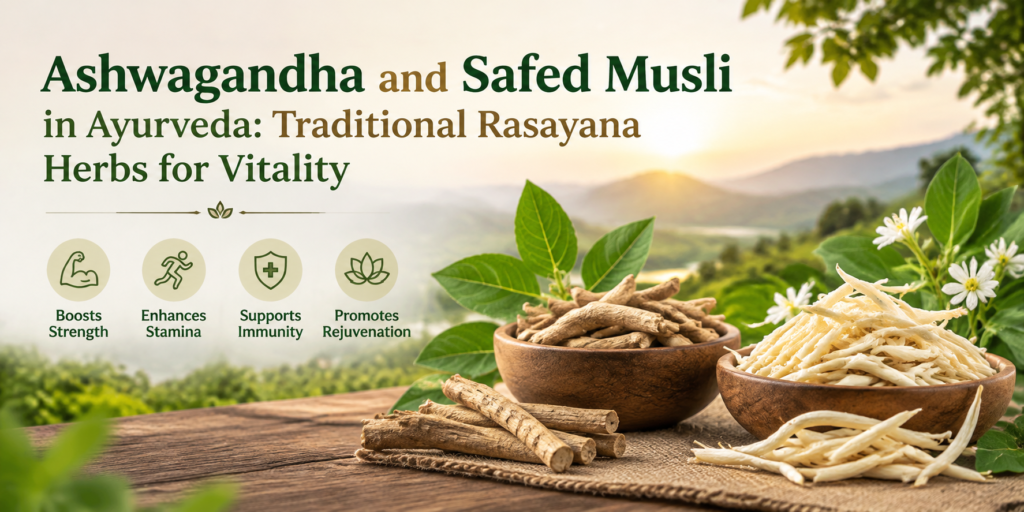
Pick up almost any Ayurvedic men’s vitality product and you will find two names on the ingredient list: Ashwagandha and Safed Musli. They are paired so often that many people assume they are one herb, or that they do the same thing. They are different plants with different characters, and that is exactly why they work well together in the traditional view.
Ashwagandha
Ashwagandha (Withania somnifera) is a small shrub whose root has been used in Ayurveda for thousands of years. The name means “smell of a horse”, which refers both to the smell of the fresh root and to the traditional belief that it gives the strength of a horse.
In Ayurvedic terms, Ashwagandha is:
- Balya, strength-giving
- Rasayana, rejuvenating
- Vajikarana, supportive of male vitality
- warming in potency (Ushna Virya) and calming to Vata and Kapha
Traditionally it is used for weakness, fatigue, stress, poor sleep and recovery after illness. Our full Ashwagandha guide goes deeper.
Safed Musli
Safed Musli (Chlorophytum borivilianum) is a small plant whose white, finger-like tuberous roots are dried and powdered. It grows wild in parts of central and western India and is now widely cultivated.
In Ayurvedic practice it is used as:
- Vrishya or Vajikarana, supporting vitality and reproductive health in men
- Balya, strength-giving
- sweet in taste and cooling in potency, nourishing and building in nature
A small but useful detail: classical texts describe a herb called Musali, which is generally identified as Kali Musli (Curculigo orchioides). Safed Musli became popular later in Ayurvedic and folk practice as a related nourishing tonic. Both appear in modern formulas.
Ashwagandha and Safed Musli benefits: why they are combined
The pairing makes sense when you put their qualities side by side.
| Ashwagandha | Safed Musli | |
|---|---|---|
| Potency | Warming | Cooling |
| Main traditional role | Strength, stress, sleep, Rasayana | Nourishment, vitality, Vajikarana |
| Dosha effect | Calms Vata and Kapha | Calms Vata and Pitta |
| Character | Adaptogenic, steadying | Building, nourishing |
Ashwagandha helps the body handle stress and fatigue. Safed Musli nourishes and builds. One is warming and the other cooling, so together they are considered more balanced than either alone. That is the logic behind formulas such as Rajasthan Herbal Mood On Capsule, which combines both with Shilajit and Gokshura. Our Mood On Forever Capsule guide covers that product in detail.
Forms you can buy
- Powders (churna): taken with warm milk, often at night. Options include Patanjali Divya Ashwagandha Churna and Patanjali Swet Mushli Churna.
- Capsules and tablets: easier to dose consistently, such as Patanjali Ashwagandha Capsule and Himalaya Organic Ashwagandha.
- Paks and avalehas: traditional sweet preparations, such as Patanjali Musli Pak.
- Combination capsules: blends like Mood On or Patanjali Youvan Gold Capsule that combine several vitality herbs.
Milk is the classical anupana (carrier) for both herbs, as it is considered to carry their nourishing effect.
What research says
Ashwagandha has more human research behind it than most Ayurvedic herbs. Several small clinical trials have looked at stress, sleep, and muscle strength in men doing resistance training, with encouraging results. The studies are small and short, so they are a starting point rather than final proof.
Safed Musli has much less human research. Most published work is from laboratory and animal studies. Its use rests mainly on tradition.
Safety
Both herbs are widely used, but “herbal” does not mean “risk-free”.
- Pregnancy and breastfeeding: avoid Ashwagandha, and do not use either without medical advice.
- Thyroid conditions: Ashwagandha may affect thyroid hormone levels. Check with your doctor if you take thyroid medicine.
- Liver: a small number of liver injury cases have been reported with Ashwagandha supplements. Stop and see a doctor if you notice yellow eyes or skin, dark urine or severe tiredness.
- Autoimmune conditions: check with your doctor first.
- Sedatives, blood pressure and diabetes medicines: Ashwagandha may add to their effects.
- Before surgery: stop Ashwagandha about two weeks before, or as your doctor advises.
Safed Musli is generally considered gentle, but if you have diabetes, a heart condition or take regular medicines, speak to your doctor before starting any vitality supplement.
Physician advice
If you are dealing with persistent tiredness, low stamina or reduced libido, see a doctor before reaching for supplements. These can be signs of anaemia, thyroid problems, diabetes, sleep problems or depression, which need proper diagnosis. An Ayurvedic physician can then help you choose the right herb, form and dose for your constitution.
Frequently asked questions
Can Ashwagandha and Safed Musli be taken together?
Yes, they are commonly combined in Ayurvedic formulas. Follow the dose on the pack or your physician’s advice.
What are the benefits of Safed Musli?
In Ayurveda it is traditionally used to support strength, nourishment and vitality, especially in men.
When should I take Ashwagandha and Safed Musli?
Powders are traditionally taken with warm milk, often at night. Capsules are usually taken after meals as directed on the pack.
Are there side effects?
Both are usually well tolerated. Ashwagandha can cause stomach upset in some people and is not suitable in pregnancy. People with thyroid or liver conditions, or who take regular medicines, should check with a doctor.
This article describes the traditional use of Ayurvedic herbs for general information. It is not medical advice. Consult a qualified practitioner before starting any herbal supplement.