
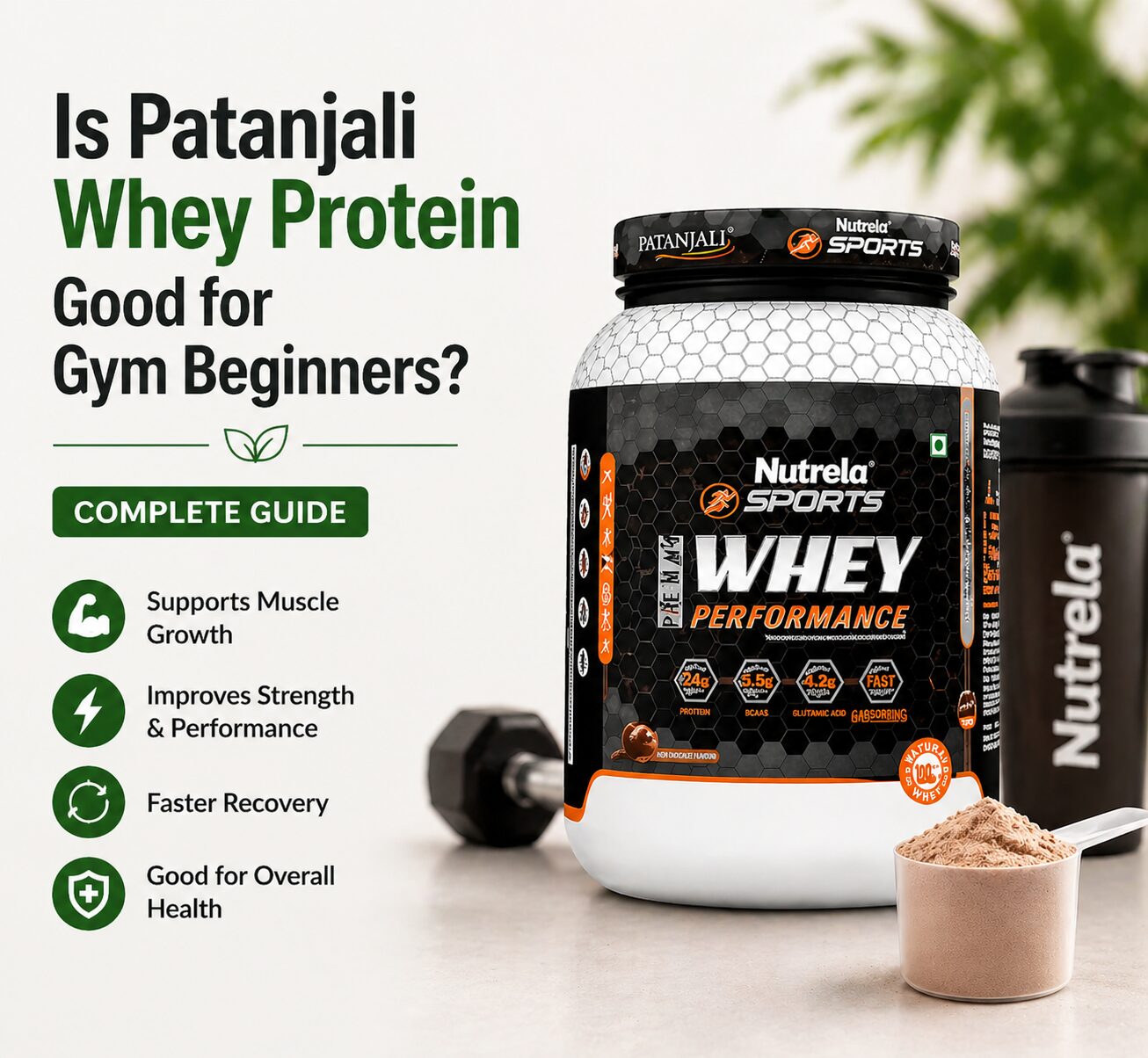
Is Patanjali Whey Protein Good for Gym Beginners? Complete Guide
Starting a gym routine is exciting but often overwhelming — especially when it comes to choosing supplements. One of the most popular choices for beginners is whey protein, a supplement designed to help meet daily protein needs and support muscle growth. With many options available, Patanjali Nutrela Whey Protein stands out as a locally manufactured, affordable choice. In this guide, we explore whether it’s a suitable option for gym beginners, its benefits, nutritional profile, usage tips, precautions, and honest insights to help you make a practical decision.
Disclaimer: This article is for informational purposes only and does not replace professional medical or fitness advice. Consult a qualified healthcare provider or nutritionist before starting any supplement regimen.
What Is Whey Protein & Why Beginners Need It
Whey protein is a high‑quality milk‑derived protein that contains all nine essential amino acids. It is quickly absorbed by your body and commonly used in protein supplements to assist muscle repair and growth after workouts. For beginners who are starting strength training or resistance workouts, whey protein can help ensure they reach their daily protein goals, which is crucial for muscle recovery and growth.
Beginners might find it challenging to consume adequate protein through food alone — especially when protein needs increase with exercise. Whey protein is a convenient and fast way to supplement daily intake without preparing multiple high‑protein meals.
About Patanjali Nutrela Whey Protein
Patanjali Nutrela Whey Protein is a whey powder under the Nutrela Sports range by Patanjali. It is formulated to provide a rich source of protein, BCAAs (branched‑chain amino acids), glutamine, and bio‑fermented vitamins and enzymes, which are said to help with digestion and performance. It’s marketed as a “clean” whey protein with a focus on natural nutrition, zero added sugar, and herbal extracts.
The product typically contains around 20–24g of protein per scoop, plus varying levels of BCAAs and glutamine, depending on variant — concentrate or isolate blend.
Benefits of Patanjali Whey Protein for Beginners
1. Supports Muscle Growth and Recovery
Resistance training — even at beginner levels — causes microscopic muscle damage. Whey protein supplies essential amino acids, especially leucine, which triggers muscle protein synthesis, the process that helps muscles repair and grow stronger. Consuming whey protein within 30–60 minutes after a workout can support this recovery process.
The combination of whey, BCAAs, and glutamine helps speed up muscle recovery, reduce workout soreness, and improve strength gains over time.
2. Easy to Digest and Convenient
Whey protein is rapidly absorbed compared with other protein sources like whole eggs or meats, making it ideal for beginners whose digestive systems may not yet be used to high‑protein diets. Since Patanjali Nutrela claims bio‑fermented digestive enzymes, it may be gentler on the stomach for many users.
For beginners who struggle to eat multiple protein‑rich meals daily, a simple whey shake mixed with water or milk can help bridge the gap efficiently.
3. Helps Meet Daily Protein Goals
Starting a gym routine increases your protein needs — especially if your goal is to build muscle. Most fitness experts recommend 1.2–2.2 grams of protein per kilogram of body weight daily for active adults, depending on goals. Whey protein supplements make this target easier to hit.
If your regular diet lacks protein (common among students or busy professionals), Patanjali Whey can help you hit your numbers and support consistent progress.
4. Affordable and Accessible
Compared with imported whey brands, Patanjali Nutrela Whey Protein shows competitive pricing in the Indian market, making it attractive for beginners not ready to invest heavily in supplements. It’s also widely available online and in local stores, which adds to convenience.
How to Use Patanjali Whey for Beginners
Here are practical tips on how gym beginners can integrate whey protein effectively:
Post‑Workout Shake: Mix 1–2 scoops with water or milk immediately after exercise. This supports fast delivery of amino acids to muscles.
Between Meals: If your diet lacks protein, a whey shake between meals helps you reach daily goals.
Meal Supplement: Add whey to smoothies, oats, or yoghurt for added nutrition without extra cooking.
Safety & Side Effects Considerations
Whey protein is generally safe for most people in recommended amounts. However:
Lactose Sensitivity: Some whey variants (especially whey concentrate) contain lactose, which may cause bloating in sensitive individuals.
Daily Calories: Extra calories from shakes should be accounted for in your diet plan, especially if fat loss is a goal.
Quality & Purity: Always purchase from reputable sellers and check for FSSAI certification to avoid counterfeit products.
As with any supplement, consult your healthcare provider, especially if you have kidney or liver conditions, food allergies, or digestive issues.
Things Beginners Should Know
Not a Magic Fix: Whey protein supports your diet — it doesn’t replace a balanced meal plan. Whole food sources like eggs, chicken, lentils, and dairy should still form the foundation of nutrition.
Training Matters: Protein works best when paired with consistent resistance training and progressive overload.
Hydration: Drinking water throughout the day helps digestion and nutrient transport.
Is Nutrela Whey Protein Worth It for Beginners?
For gym beginners, Patanjali Nutrela Whey Protein can be a worthwhile supplement due to its natural focus, protein content, digestibility, and price point. It helps beginners meet protein goals, recover faster, and stay consistent with their routine.
However, product quality varies across batches and personal experiences may differ — some users note texture, taste, and mixability preferences. Always combine supplement use with a nutrient‑rich diet and well‑structured workout plan for best results.
Conclusion
Patanjali Nutrela Whey Protein can be a good starting supplement for gym beginners aiming to build muscle, improve recovery, and meet protein needs conveniently. It is affordable, widely available, and provides essential amino acids needed to support early fitness progress.
Always consult a healthcare professional and consider personal dietary needs before starting supplementation. Focus first on consistent workouts and balanced meals, with whey protein used as a practical support tool — not a replacement for real food.

Add comment