
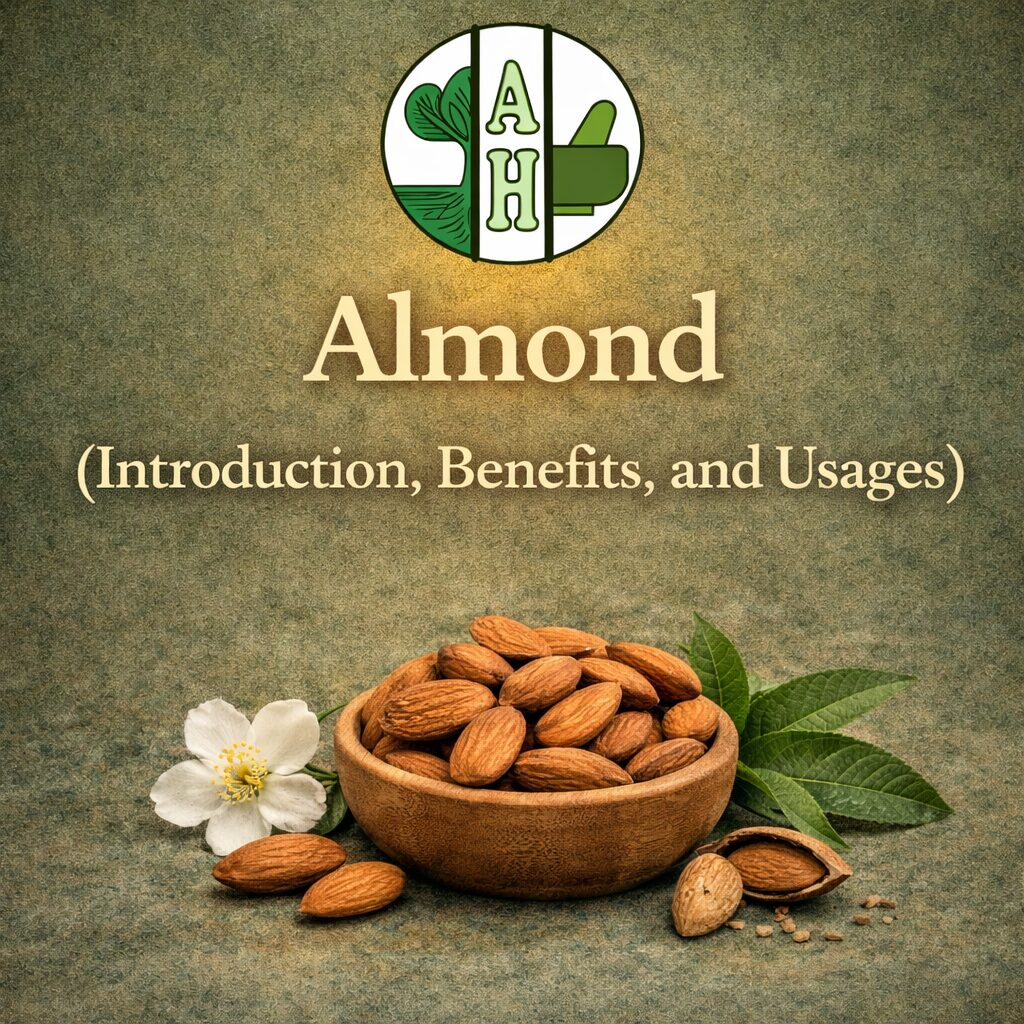
Almond (Introduction, Benefits, and Usages)
There is something deeply comforting about the simple act of cracking open an almond. The subtle snap of its shell, the soft, creamy texture that greets your palate, and the gentle, nutty aroma—all of it speaks of centuries of human care, cultivation, and reverence. In India, almonds have been cherished not merely as a snack but as a sacred gift of nourishment, a bridge between culinary delight and holistic wellness. From the ancient courts of kings to the humble kitchens of village households, almonds have quietly carried their legacy, grounding themselves in culture, medicine, and everyday life.
Beyond their sensory appeal, almonds embody a philosophy of gentle nourishment. Ayurveda, the timeless science of life, has long recognized almonds (Vajikapriya in Sanskrit) as more than just a food—they are a source of vitality (ojas), mental clarity, and longevity. In today’s world, where processed foods dominate our plates and stress clouds our minds, it remind us of the simple, natural remedies our ancestors relied upon. They are small seeds of sustenance, yet they carry an extraordinary depth of healing.
Even in modern nutrition, they are celebrated as a powerhouse of health. Packed with healthy fats, proteins, vitamins, and minerals, they resonate perfectly with both ancient wisdom and contemporary science. Incorporating it into your daily routine is not just a dietary choice—it is a conscious step towards balancing body, mind, and spirit.
What Is Almond?
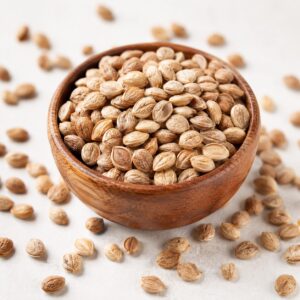
It, botanically known as Prunus amygdalus, belongs to the Rosaceae family, the same family as peaches, cherries, and apricots. It is a small, deciduous tree that typically grows up to 10 meters, producing delicate white to pale pink blossoms before yielding its prized nut. The almond itself is technically a drupe, with a hard shell encasing the edible seed we commonly consume.
Native to the Middle East and Central Asia, almonds have found their way across continents, flourishing in Mediterranean climates and the temperate zones of India. In India, they are widely cultivated in regions like Himachal Pradesh, Jammu & Kashmir, and parts of Rajasthan, where altitude and soil conditions favor their growth. Theyare known by several names: in Hindi, they are Badaam; in Tamil, Badam; Telugu, Badamu; Kannada, Badaamu; Gujarati, Badam; Bengali, Badam; Punjabi, Badam; and in classical Sanskrit, they are referred to as Vajikapriya (beloved for vitality). Internationally, they are simply “almond,” a word derived from the Old French almande.
Almond in History and Culture
It have been treasured across civilizations for millennia. In Ayurveda, classical texts such as the Charaka Samhita and Sushruta Samhita extol almonds for their rejuvenating (Rasayana) properties and their ability to strengthen the body and mind. The Bhavaprakasha Nighantu describes almonds as medhya (enhancing intellect) and balya (strength-promoting), emphasizing their gentle yet profound influence on both physical and mental vitality.
Historically, this were more than sustenance—they were a mark of cultural and spiritual significance. In Indian royal kitchens, they were a key ingredient in tonics and sweets designed for vigor and longevity. Traders from Persia and the Middle East carried it along the Silk Road, spreading not only their flavor but also their medicinal reputation. Religious rituals often included it as offerings, symbolizing prosperity, health, and the nurturing of ojas (vital essence). Even today, gifting it during weddings or festivals is seen as an emblem of blessings, health, and prosperity.
Ayurvedic Properties
From an Ayurvedic perspective, almonds are predominantly Madhura Rasa (sweet taste), Snigdha and Guru Guna (unctuous and heavy qualities), with Ushna Virya (warming potency) and Madhura Vipaka (sweet post-digestive effect). They pacify Vata and Pitta doshas while potentially aggravating Kapha if consumed in excess. Key Ayurvedic actions (Karma) of almonds include Medhya (enhances intellect), Balya (strengthening), Rasayana (rejuvenating), and Brimhana (nourishing and filling).
Active Compounds and Modern Research
They are rich in monounsaturated fats, vitamin E, magnesium, riboflavin, and dietary fiber. They contain bioactive compounds such as polyphenols, flavonoids, and phytosterols that contribute to cardiovascular health, antioxidative activity, and neuroprotection. Modern studies have validated many traditional uses of almonds: research shows their potential in improving lipid profiles, supporting cognitive function, and even regulating blood sugar levels, bridging the wisdom of Ayurveda with contemporary nutrition science.
Benefits of Almond
Enhances Cognitive Function
Ayurveda has long recognized almonds as Medhya (intellect-promoting), supporting memory and focus. Modern studies corroborate this, suggesting that the vitamin E and polyphenols in it may help reduce oxidative stress in the brain, supporting neuroprotection and improved cognitive performance over time. Regular consumption may enhance alertness, mental clarity, and overall brain health.
Supports Heart Health
It, with their heart-healthy monounsaturated fats and phytosterols, align with the Ayurvedic principle of balancing doshas through nourishment. Scientific research indicates that it can help reduce LDL cholesterol while maintaining or even improving HDL cholesterol, promoting cardiovascular wellness and reducing the risk of atherosclerosis.
Strengthens Bones and Joints
In Ayurvedic terms, almonds are Balya (strengthening), particularly for bone and muscle tissue. Their rich content of magnesium, phosphorus, and calcium contributes to skeletal health, supporting joint flexibility and reducing the risk of osteoporosis, especially in aging populations.
Promotes Skin Radiance
They are considered Twak-prasadaka (enhancing skin complexion) in classical texts. Vitamin E and essential fatty acids nourish the skin from within, improving texture, hydration, and elasticity. Almond oil, applied topically, is revered for soothing dryness, reducing fine lines, and promoting a natural glow.
Supports Digestive Health
Though heavy (Guru) in quality, when soaked or ground, they aid digestion by gently lubricating the intestines and supporting nutrient absorption. In Ayurveda, they are often paired with warm milk or honey to strengthen the digestive fire (Agni) without aggravating Vata.
Boosts Immunity and Vitality
They are quintessential Rasayanas, nurturing Ojas—the subtle essence of vitality and immunity. Regular consumption helps maintain energy, resilience against infections, and overall stamina, making them a staple in seasonal tonics and rejuvenating herbal blends.
Balances Blood Sugar Levels
While sweet in taste, it have a low glycemic index and may help stabilize postprandial blood glucose levels. Modern research shows that including it in meals can improve glycemic response, complementing the Ayurvedic approach of mindful, balanced eating for metabolic harmony.
Supports Weight Management
Paradoxically, despite being energy-dense, it can assist in maintaining healthy body weight. The fiber and protein content help promote satiety, reducing overeating, while their thermogenic effect aligns with Ushna Virya in Ayurveda, supporting metabolism.
Classical Ayurvedic Formulations
It feature prominently in several time-honored preparations. Sthira Vajikaran Taila, an herbal oil with almonds and other rejuvenating herbs, is used for vitality and stamina. Bala Vata Churna, a powdered herbal blend containing it, supports strength and nervous system health. Medhya Rasayana preparations, such as Brahmi-Amla-Vajikapriya Churna, harness the cognitive-enhancing effects of almonds alongside other neuroprotective herbs.
How to Use Almond
Raw Almonds
Soaked overnight, they are easier to digest and ideal for morning consumption. Typically, 5–10 soaked they are recommended, optionally paired with warm milk (ksheera) or honey for enhanced nourishment.
Almond Churna (Powder)
Ground it can be mixed with herbal powders or milk to create a Rasayana drink. A common dosage is 5–10 grams of almond powder with warm milk or honey as an anupana (vehicle), consumed once or twice daily.
Almond Oil
Almond oil (Taila) is highly prized for topical use and massage. Warmed and gently massaged into the body, it nourishes the skin, supports joint health, and pacifies Vata. For infants or adults, 5–10 ml per massage session is typical.
Almond Kwath (Decoction)
Though less common, a decoction made by boiling it with herbs like Ashwagandha or Shatavari can provide a warming, nourishing tonic. Standard preparation involves 5–7 soaked almonds per 200 ml water, simmered and consumed warm.
Almond-Based Herbal Concoctions
It can be combined with other Ayurvedic herbs such as Brahmi, Ashwagandha, or Amla in powders, tonics, or milk preparations to amplify cognitive, digestive, or rejuvenative effects. This method ensures synergistic benefits, respecting classical Rasayana principles.
Dosage and Safety
For adults, the typical daily dosage of it is 5–10 soaked nuts or 5–10 grams of almond powder. Almond oil may be used topically in quantities of 5–10 ml per session. They are generally safe, but individuals with nut allergies should avoid them. Excess consumption may aggravate Kapha and lead to digestive heaviness. Pregnant women and those with specific metabolic or digestive conditions should consult a qualified Ayurvedic practitioner before regular use, especially in concentrated forms or medicated formulations.
Shop Section
If you are looking to bring the healing power of it into your daily wellness routine, Ayurvedaholic is your trusted destination for authentic Ayurvedic products. The platform carries a wide range of products from India’s most reputable Ayurvedic brands including Patanjali, Dabur, Baidyanath, and Kottakkal.
👉 Shop All Ayurvedic Products — Ayurvedaholic
They are more than a humble nut—they are a story of nourishment that spans centuries, bridging the wisdom of Ayurveda with the science of modern nutrition. Whether enjoyed in milk, oil, or powder, they invite us to slow down, savor, and honor our body’s innate need for gentle, sustained nourishment. In the rhythm of modern life, almonds remain a timeless companion, grounding us in health, vitality, and mindful living.
Disclaimer
The information in this article is for educational purposes only and does not constitute medical advice, diagnosis, or treatment. Always consult a qualified Ayurvedic practitioner or healthcare professional before using any herb or formulation, especially if you are pregnant, breastfeeding, or on medication. Individual results may vary. Ayurvedaholic does not claim to diagnose, treat, cure, or prevent any disease.
References
- Charaka Samhita, Edited by Vaidya Yadavji Trikamji Acharya, Chaukhambha Surbharati Prakashan, Varanasi, 2010.
- Sushruta Samhita, Edited by Kaviraj Ambikadutta Shastri, Chaukhambha Sanskrit Sansthan, Varanasi, 2007.
- Bhavaprakasha Nighantu, Pandit Kashinath Shastri, Chaukhambha Bharati Academy, 2011.
- Bhaishajya Ratnavali, Acharya Govind Das, Motilal Banarsidass, 2006.
- Easy Ayurveda – Almond (Badam) Benefits, https://www.easyayurveda.com
- Ayur Times – Almond: Health Benefits & Ayurvedic Uses, https://www.ayurtimes.com
- Planet Ayurveda – Badam (Almond), https://www.planetayurveda.com
- Netmeds – Almond Nutritional Information, https://www.netmeds.com
- Dabur – Ayurvedic Herbs & Formulations, https://www.dabur.com
- PharmEasy – Health Benefits of Almonds, https://pharmeasy.in
- Chen, C.Y., et al. “Almonds and cardiovascular health.” Nutrition Reviews, 2020; 78(7): 548–562.
- Berryman, C.E., et al. “Nuts and cognitive health.” Frontiers in Nutrition, 2019; 6: 124.
- Jenkins, D.J., et al. “Almonds and glycemic control.” Diabetes Care, 2018; 41(7): 1404–1411.
- Ayurvedaholic — Authentic Ayurvedic Products Online — ayurvedaholic.com

Add comment