
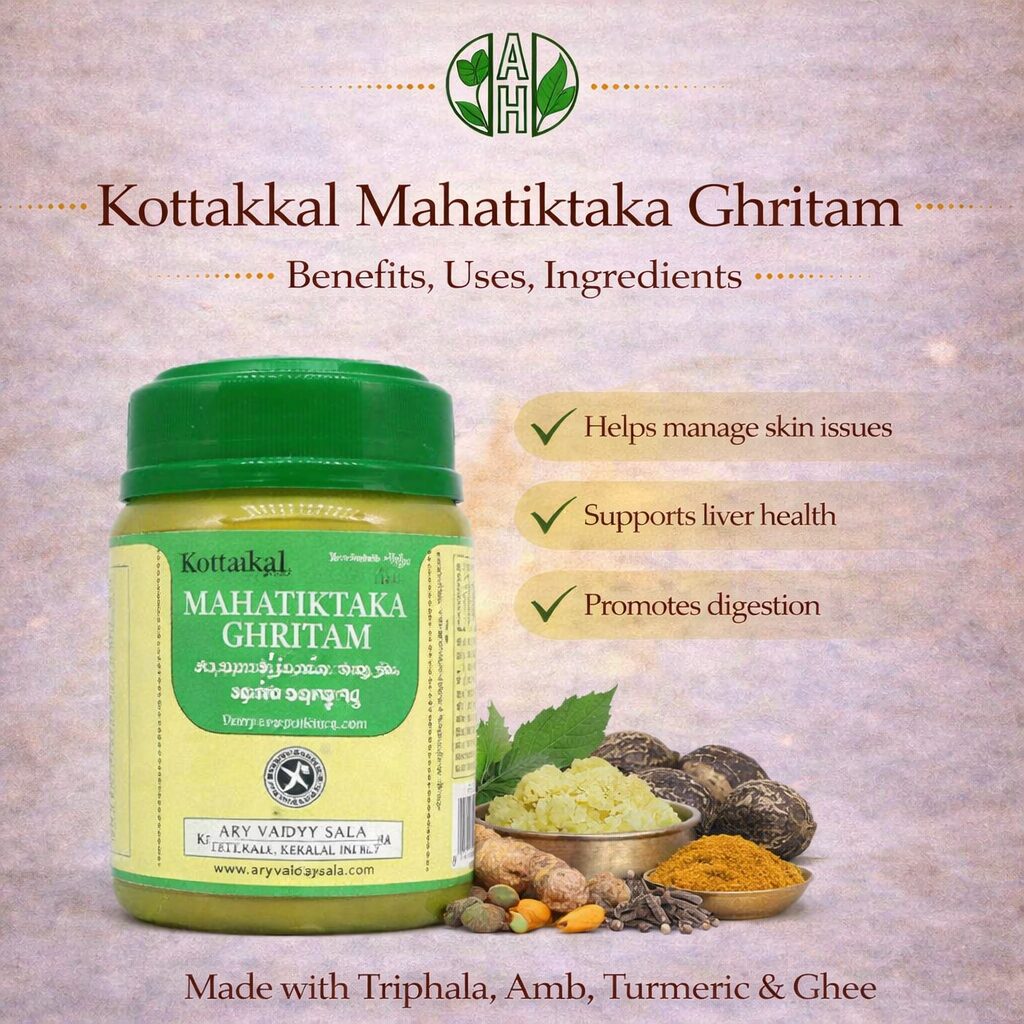
Kottakkal Mahatiktaka Ghritam: Benefits, Uses & Ingredients
What Is Kottakkal Mahatiktaka Ghritam?
The name itself tells the story: Maha means “great,” tiktaka means “bitter,” and ghritam means “clarified butter (ghee).” Together, Kottakkal Mahatiktaka Ghritam is a “great bitter medicated ghee” — a powerful classical preparation described in texts such as the Ashtanga Hridayam and Charaka Samhita.
In Ayurveda, ghrita (ghee) is considered the finest vehicle for carrying medicinal herbs deep into bodily tissues (dhatus). The bitter herbs processed into this ghee work synergistically to cleanse the liver, purify the blood, cool excess Pitta dosha, and address chronic, stubborn skin conditions.
The Kottakkal formulation is manufactured under strict classical guidelines, ensuring the active phytochemicals of each herb are properly absorbed into the ghee base through a traditional process of repeated boiling and straining.
Key Ingredients Kottakkal Mahatiktaka Ghritam & Their Actions
Mahatiktaka Ghritam contains a rich blend of bitter, cooling, and blood-purifying herbs. For detailed monographs on each herb, visit Herbal Arcade.
Guduchi — Tinospora cordifolia Immunomodulator and Rasayana herb. Reduces inflammation, supports liver function, and purifies the blood (Rakta shodhana). One of Ayurveda’s most celebrated adaptogens.
Nimba (Neem) — Azadirachta indica One of Ayurveda’s most powerful skin herbs. Antibacterial, antifungal, and deeply bitter — a cornerstone for skin and blood disorders. Pacifies both Pitta and Kapha.
Patola — Trichosanthes dioica Bitter and cooling. Pacifies Pitta, relieves burning sensations, and is classic for skin diseases and fever. Widely used in Kushtha (skin disease) formulas.
Vasa (Malabar Nut) — Adhatoda vasica Cooling and expectorant. Reduces Pitta and Kapha, supports respiratory health, and helps with bleeding disorders. Also used in eye and skin conditions.
Kiratatikta — Swertia chirata Intensely bitter liver tonic. Reduces fever, detoxifies the liver, and manages chronic skin conditions tied to Pitta excess. A key herb in jaundice management.
Triphala — Haritaki, Bibhitaki, Amalaki The classic three-fruit combination for systemic detox. Supports digestion, skin tone, and elimination of ama (toxins) accumulated in deeper tissues.
Daruharidra — Berberis aristata Berberine-rich herb with strong antimicrobial and hepatoprotective properties. Used extensively for jaundice, skin infections, and eye disorders.
Vidanga — Embelia ribes Potent antiparasitic and carminative. Clears intestinal pathogens that often underlie chronic skin conditions, restoring gut-skin axis balance.
Katuka (Kutki) — Picrorhiza kurroa Powerful liver-protective bitter herb. Reduces hepatic inflammation and restores bile flow. Essential in Pitta-type conditions involving the liver.
Manjistha — Rubia cordifolia A premier blood-purifying herb in Ayurveda. Particularly effective in inflammatory skin conditions, uterine health, and lymphatic congestion.
Sariva — Hemidesmus indicus Cooling and demulcent. Balances Pitta and Vata, supports kidney function, and is used in skin conditions, urinary disorders, and chronic fever.
Go Ghrita (Cow’s Ghee — Base) The therapeutic vehicle. Carries all herbal actives deep into the tissues. Itself Ojas-building, cooling, and nourishing to all seven dhatus.
Benefits of Kottakkal Mahatiktaka Ghritam
🩸 Blood Purification (Rakta Shodhana) The bitter herbs collectively purify the Rakta dhatu (blood tissue), removing ama and Pitta aggravations that manifest as skin eruptions, redness, and burning sensations.
🌿 Chronic Skin Disorders Highly indicated for Kushtha (skin diseases) including psoriasis, eczema, dermatitis, chronic urticaria, and other Pitta-Kapha skin conditions. The combination of neem, guduchi, and kiratatikta makes it especially effective for long-standing conditions resistant to topical treatment.
🫁 Liver & Gall Bladder Support Herbs like Katuka, Kiratatikta, and Daruharidra are classical hepatoprotectives. This ghritam supports healthy bile secretion, liver enzyme normalisation, and recovery from jaundice (Kamala).
🔥 Pitta Pacification Ideally suited for individuals with excess Pitta — characterised by inflammation, acidity, burning sensations, hot temper, and skin flare-ups. The ghee base amplifies the cooling, bitter action of all constituent herbs.
🛡️ Immune Modulation Guduchi and Triphala act as immunomodulators, helping the body mount appropriate immune responses while reducing chronic, low-grade inflammation underlying many skin and metabolic conditions.
🧠 Neurological & Psychological Balance Some classical texts indicate use in Unmada (mental disorders) and Apasmara (epilepsy), as ghee-based formulations are deeply nourishing to the nervous system and Majja dhatu (nerve tissue).
👁️ Eye & Oral Health When used as gandusha (oil pulling) or applied near the eyes, it is indicated for eye infections, conjunctivitis, and oral ulcers associated with Pitta excess.
🌡️ Fever & Infection Management The broad antimicrobial action of neem, daruharidra, and patola makes this useful as an adjunct in managing chronic recurring fevers and infections with a Pitta basis.
Kottakkal Mahatiktaka Ghritam Uses & Therapeutic Indications
According to classical Ayurvedic texts and modern clinical practice, this formulation is primarily indicated for:
- Kushtha (Skin Diseases) — Psoriasis, eczema, chronic dermatitis, lichenification, and non-healing wounds
- Vatarakta (Gout & Inflammatory Joint Disease) — Where blood vitiation leads to joint inflammation and uric acid accumulation
- Pandu (Anaemia / Pallor) — Particularly liver-related anaemia where impaired Rakta production is the root cause
- Kamala (Jaundice) — Both infective and obstructive forms, supported by the hepatoprotective herbs in this formula
- Visarpa (Herpes / Erysipelas) — Spreading skin eruptions with burning, redness, and fever
- Prameha (Urinary Disorders / Diabetes-related conditions) — As a supportive formulation addressing metabolic imbalances
- Arshas (Haemorrhoids) — Particularly bleeding haemorrhoids rooted in Pitta vitiation
How It Is Used
Mahatiktaka Ghritam is typically administered orally as Snehapana (internal oleation therapy), often as part of a Panchakarma protocol before Virechana (therapeutic purgation). It is consumed on an empty stomach in the early morning with warm water, under the guidance of an Ayurvedic physician.
External application (Lepa) on affected skin areas, inclusion in medicated enemas (Anuvasana Basti), or use as a nasal medication (Nasya) are also documented classical uses depending on the condition being treated.
Kottakkal Mahatiktaka Ghritam Dosage & Method of Administration
Always consult a qualified Ayurvedic physician before beginning any ghrita therapy. General guidelines:
| Context | Dose | Timing | Vehicle (Anupana) |
|---|---|---|---|
| General oral use | 5–10 g (1–2 tsp) | Early morning, empty stomach | Warm water |
| Snehapana (Panchakarma) | Physician-titrated, escalating | Early morning, fasting | Warm water or decoction |
| Post-meal (digestive support) | 2.5–5 g | After meals | Warm milk |
| Children (under supervision) | 1–3 g | Morning | Warm water |
⚠️ Precautions: Avoid during pregnancy, in individuals with severely impaired digestion (Mandagni), or during active respiratory infections. Not recommended alongside heavy, fried, or incompatible foods. Use under supervision if managing diabetes or taking anticoagulant medications.
Why Choose Kottakkal’s Formulation?
Arya Vaidya Sala, Kottakkal — established in 1902 — is one of the oldest and most respected Ayurvedic manufacturing institutions in the world. Their classical preparations are made strictly according to ancient textual references, with in-house herb cultivation, traditional copper vessels, and strict GMP-compliant quality controls.
The authenticity of raw material sourcing, the precision of the traditional ghrita paka (ghee-cooking) process, and the complete absence of artificial additives make Kottakkal the trusted choice among Ayurvedic practitioners worldwide.
Kottakkal Mahatiktaka Ghritam vs. Mahatriphala Ghritam
These two formulations are sometimes confused. While both are bitter medicated ghees, they have distinct focuses.
Mahatiktaka Ghritam is primarily indicated for skin disorders, blood purification, liver health, and Pitta-vitiated conditions. Its chief herbs are neem, guduchi, kiratatikta, and patola, targeting Rakta and Rasa dhatu.
Mahatriphala Ghritam is primarily for eye disorders (Netra roga) and visual health. Triphala forms its base with additional herbs focused on the sense organs and Alochaka Pitta — the Pitta sub-type governing vision.
Conclusion
Kottakkal Mahatiktaka Ghritam stands as one of Ayurveda’s most sophisticated formulations for chronic, deep-seated conditions rooted in Pitta and blood vitiation. Its combination of powerful bitter herbs — each validated by centuries of clinical use — delivered in the bioavailable vehicle of cow’s ghee makes it uniquely effective where modern interventions often fall short.
Whether you are managing a stubborn skin condition, recovering liver health, or undergoing a Panchakarma protocol, this classical ghrita deserves serious consideration — always under the guidance of a trained Ayurvedic practitioner who can tailor the therapy to your unique constitution.
Add comment