
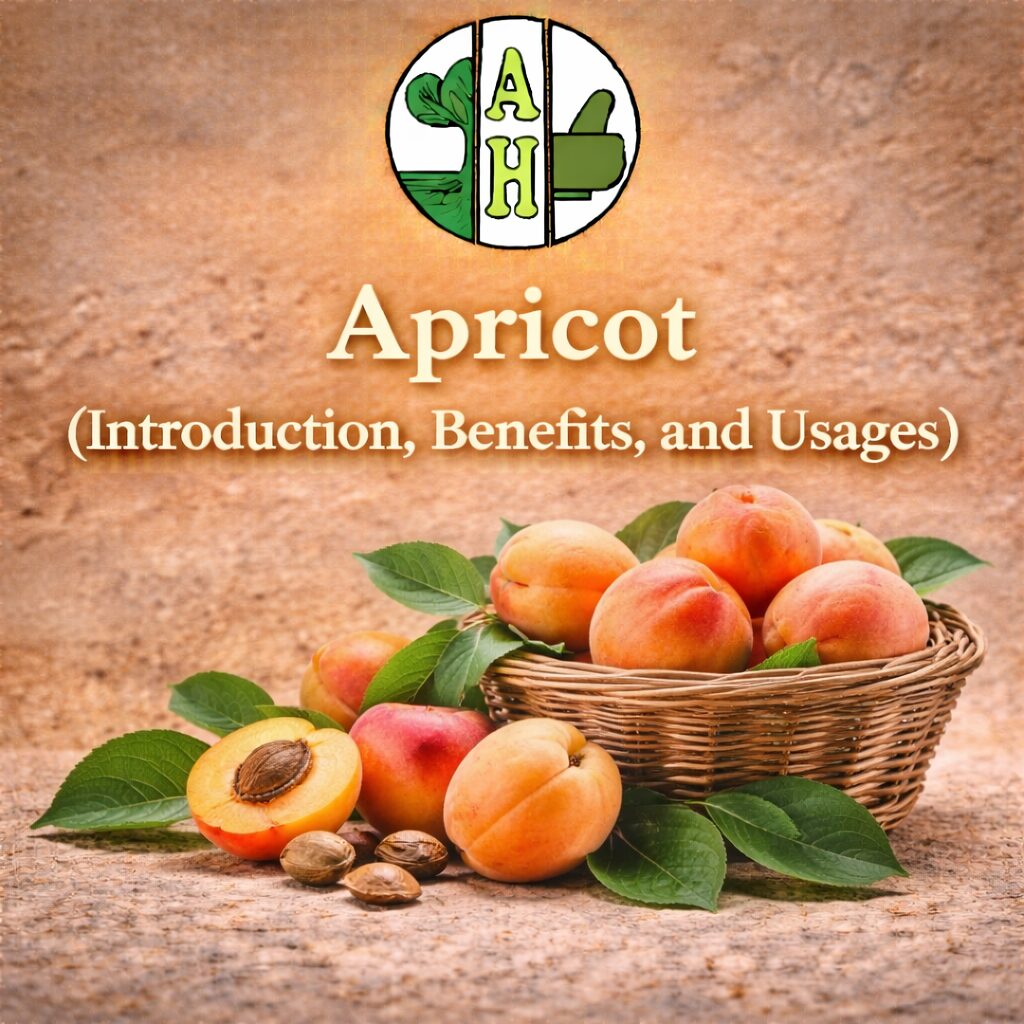
Apricot (Introduction, Benefits, and Usages)
There’s something almost poetic about biting into a sun‑warmed apricot — that gentle rush of sweet juice, the golden hue glowing between your fingers, and that whisper of ancient orchards carried on the breeze. For many of us in India, apricots evoke memories of hillside estates in Himachal and Kashmir, of markets brimming with khubani and jardalu, and of seasonal delights that feel both humble and luxurious. But beyond its nectar‑sweet flavour, apricot is a plant with a story — one that bridges culinary joy, herbal wisdom, and centuries of traditional use.
While today we delight in apricots as a nutritious fruit, Ayurvedic scholars and traditional healers have long valued this humble stone fruit for its nourishing and balancing qualities. Whether enjoyed fresh, dried, pressed into oils, or transformed into medicinal preparations, apricot presents a vivid example of how food and medicine can live in harmony. In our modern world, where chronic stress, digestive imbalance, and inflammatory conditions are all too common, looking back at such time‑tested gifts of nature can offer not just wellness, but connection — to land, to tradition, and to our own inner rhythms.
What Is Apricot?
Apricot refers most commonly to the fruit and tree known botanically as Prunus armeniaca L., a member of the Rosaceae (rose) family that also includes plums, peaches, and cherries. The apricot tree is a small, deciduous tree, typically 8–12 metres tall, bearing tender white to pinkish blossoms in spring, followed by tender, golden orange drupes with a single hard seed at their core. The fruit’s skin is smooth to slightly velvety, and its flesh ranges from pale yellow to deep orange, often tinged with red on the sun‑exposed side.
Apricots likely originated in Central Asia and China, spreading along ancient trade routes through Persia to the Mediterranean and beyond. Today they thrive in temperate climates, especially in regions with clear winters and warm summers — conditions found in the foothills of the Himalayas as well as in parts of Europe, West Asia, and North America. Locally in India, they are celebrated as khubani in Hindi, jardalu in many northern dialects, and are known variously in regional languages reflecting their widespread cultural embrace.
Apricot in History and Culture
Though apricot per se is not one of the most frequently cited medicinal plants in core classical Ayurvedic texts such as Charaka Samhita or Ashtanga Hridayam, its use in traditional medicine and dietetics finds echoes in later compendia and regional Ayurvedic practice. South Asian herbal traditions have long combined apricot fruit and kernel with other herbs to balance digestion, nourish deep tissues (dhatus), and support respiratory comfort. Ancient routes of trade brought this gentle fruit into contact with diverse cultures, blending Persian, Chinese, and Indian herbal knowledge. Beyond Ayurveda, apricot kernel properties illuminate a fascinating tapestry of use across Persia, China, and Arabia — where the tree symbolised health and learning.
In Chinese lore, for example, apricot groves became metaphors for education and physicianly wisdom — a testament to the plant’s association with healing. While this narrative lies outside Indian canon, it reflects a shared global reverence for apricot’s healing potential, one that intersects with Ayurvedic sensibilities about nourishment and balance.
Apricot Ayurvedic Properties
Ayurveda speaks of apricot as having a predominantly madhura (sweet) taste (rasa), with laghu (light) and snigdha (unctuous) qualities (guna), a cooling (sheeta) potency (virya), and sweet post‑digestive effect (vipaka). Its soothing nature gently pacifies Vata and Pitta doshas, making it supportive for dry, rough, or inflammatory tendencies when taken in balanced amounts. Prime herbal actions (karma) include rasayana (rejuvenative), balya (strengthening), and grahi (aiding digestion and nutrient assimilation).
Active Compounds and Modern Research
Modern phytochemical studies reveal that apricots are rich in carotenoids, phenolics, flavonoids, and antioxidants such as beta‑carotene and lutein, contributing to their vibrant colour and health‑promoting properties. These compounds are associated with antioxidant, anti‑inflammatory, and cardioprotective effects. Research also highlights bioactive components in the kernels and fruit that may offer immunomodulatory, antimicrobial, and anticancer potential, although some kernel constituents like amygdalin require careful use due to toxicity at high doses.
Benefits of Apricot
Supports Digestive Harmony
Apricot fruit is high in dietary fibre, which gently stimulates peristalsis — the wave‑like motion of the bowel — helping to prevent constipation and support elimination. This aligns beautifully with the Ayurvedic concept of rechanatvam (laxative action), particularly beneficial when Vata dosha is out of balance. By supporting regular bowel movements, apricots help reduce digestive discomfort and promote a healthy gut environment.
Antioxidant and Anti‑Inflammatory Wellness
Rich in beta‑carotene, flavonoids, and phenolic acids, apricots help neutralise free radicals and reduce oxidative stress — a root factor in chronic inflammation. Modern studies indicate that extracts from apricot kernels can stabilise cell membranes and may assist in reducing inflammation in experimental models of colitis, offering a scientific lens to support centuries‑old traditional uses.
Heart and Circulatory Support
The combination of potassium, antioxidants, and dietary fibre in apricot supports heart health by helping regulate blood pressure and lipid profiles. Ayurveda appreciates such foods that nourish Rakta dhatu (blood tissue), calm excess Pitta heat, and foster balanced circulation without aggravating metabolic heat — a harmony that translates into overall cardiovascular wellbeing.
Immune‑Strengthening Nourishment
The vitamin C, beta‑carotene (a precursor of vitamin A), and micronutrient ensemble in apricots provide gentle immune support. These nutrients contribute to the resilience of mucous membranes and cellular defence mechanisms, helping the body’s innate immunity respond to environmental challenges.
Eye and Skin Vitality
Apricot’s beta‑carotene content directly supports eye health by contributing to vitamin A levels, essential for good vision and mucous membrane integrity. In Ayurvedic thought, such nourishment also enhances ojas — the subtle essence of vitality — which manifests outwardly in radiant skin and bright eyes.
Gentle Respiratory Support
Traditional uses of apricot kernels and leaf decoctions include support for mild cough and bronchial discomfort, informing how the plant’s soothing properties can be part of a broader respiratory care approach when combined with supportive herbs.
Balancing Vata and Pitta
With its cooling potency and sweet post‑digestive effect, apricot helps soothe dry, rough, and warm imbalances — typical of aggravated Vata and Pitta — making it useful in diets designed to bring harmony to these doshas. Its light, soothing nature nourishes tissues without burdening digestion.
Classical Ayurvedic Formulations
Though apricot is not a core ingredient in ancient Ayurvedic classics like Charaka Samhita or Sushruta Samhita, Ayurvedic practitioners have incorporated apricot parts into formulations such as Kumari‑Apricot Avaleha (a herbal jam blending nourishing fruits for Vata balance) and apricot‑infused Taila (medicated oils) focused on skin and joint support. Herbal decoctions combining apricot with cooling herbs like Yashtimadhu (licorice) offer calming effects for both digestion and respiratory comfort.
How to Use Apricot
Fresh Fruit Daily
Enjoy 2–3 medium ripe apricots (khubani) fresh in the morning or afternoon. Eating them whole lets you benefit from both soluble and insoluble fibres, gently aiding digestion and nourishing the body with micronutrients.
Soaked Dried Apricots (Jardalu)
Soak 4–5 dried apricots overnight in warm water. Consume in the morning to awaken digestion and help regularise bowel movements while providing sustained energy throughout the day.
Apricot Kernel Powder or Decoction
Only use sweet apricot kernels in powdered form, 1–2 grams per day with warm water or honey. Bitter kernels may contain higher levels of amygdalin and should be processed or used with expert guidance. A gentle decoction of kernels with herbs like licorice (Yashtimadhu) can support mild respiratory discomfort.
Apricot Kernel Oil for Skin and Massage
Warm 5–10 ml of cold‑pressed apricot kernel oil and use as a skin massage oil or as a base for therapeutic Abhyanga. Its unctuous, cooling qualities nourish the skin and soothe dryness.
Leaf or Flower Decoction
Boil fresh or dried apricot leaves in water for 10 minutes and strain to make a gentle cleansing decoction. Sip this warm to support digestion and soft respiratory comfort.
Dosage and Safety
For adults, fresh apricots can be enjoyed routinely in servings of 2–3 pieces per day, and dried apricots 4–5 pieces, ideally soaked to enhance digestibility. Kernel powder of sweet varieties is used in small doses (1–2 g daily). Bitters or excess consumption of apricot kernels carries risk due to amygdalin, which can release cyanide in the body — caution in pregnancy, childhood, and with certain medications is essential. Always consult a qualified Ayurvedic practitioner before medicinal use, especially if you have specific health conditions or take prescription medicines.
Shop Section
If you are looking to bring the healing power of Apricot into your daily wellness routine, Ayurvedaholic is your trusted destination for authentic Ayurvedic products. The platform carries a wide range of products from India’s most reputable Ayurvedic brands including Patanjali, Dabur, Baidyanath, and Kottakkal.
👉 Shop All Ayurvedic Products — Ayurvedaholic
Whether you’re enjoying sun‑ripened apricots at breakfast or gently massaging skin with apricot kernel oil at twilight, this golden fruit offers more than flavor — it invites you into a tradition of nourishment, healing, and mindful living.
References
- Charaka Samhita, Sutra Sthana, Chapter 26
- Bhavaprakasha Nighantu, Haritakyadi Varga
- Bhaishajya Ratnavali, Volume 2, Vatavyadhi Chikitsa — View on Internet Archive
- Al-Soufi M. et al. — “Nutritional and Therapeutic Benefits of Apricot and Its Underutilized Parts.” Molecules, 2022 — View on PubMed
- Minaiyan M. et al. — “Anti-inflammatory effect of Prunus armeniaca L. (Apricot) kernel extract.” Research in Pharmaceutical Sciences, 2014 — View on PMC
Disclaimer
The information in this article is for educational purposes only and does not constitute medical advice, diagnosis, or treatment. Always consult a qualified Ayurvedic practitioner or healthcare professional before using any herb or formulation, especially if you are pregnant, breastfeeding, or on medication. Individual results may vary. Ayurvedaholic does not claim to diagnose, treat, cure, or prevent any disease.

Add comment