
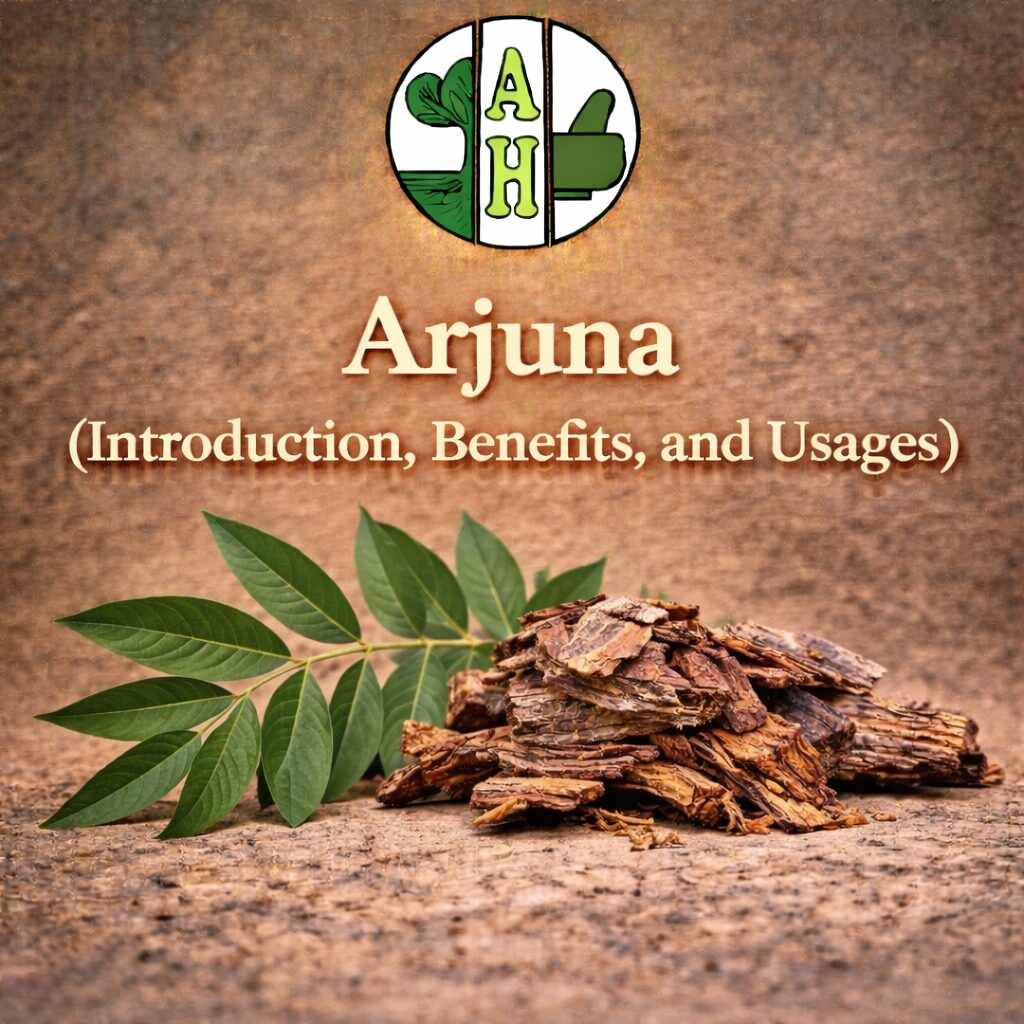
Arjuna (Introduction, Benefits, and Usages)
There’s a moment in every Ayurvedic student’s journey when a teacher hands them a piece of Terminalia arjuna bark and simply says, “This is the heart‑tree.” That moment is less about memorizing a name and more about feeling a connection — the way generations of healers felt the pulse of this tree and its profound resonance with the human heart. If you’ve ever stood beneath the rippling branches of an Arjuna tree along a riverbank in India, you’ll sense its ancient presence — sturdy, expansive, life‑giving. In Ayurveda, Arjuna isn’t just an herb; it’s a symbol of strength, endurance, and the timeless wisdom of natural healing that still matters in our modern world.
In an age where cardiovascular health challenges are skyrocketing and stress wears on the heart in unseen ways, the story of Arjuna feels especially relevant. People today are searching for time‑tested, natural approaches that honor the body’s innate intelligence — not quick fixes, but deep‑acting allies that support vitality. Arjuna’s elegant bark has served this role for centuries, nurtured through tradition, and increasingly validated by science. Its journey from the riverbanks of ancient India into contemporary wellbeing practices is a compelling bridge between tradition and evidence‑based healing.
What Is Arjuna?
Terminalia arjuna (Roxb. ex DC.) belongs to the Combretaceae family, a genus of trees that thrive along riverbanks and in moist soils across the Indian subcontinent. Known for its rugged trunk and spreading canopy, Arjuna can reach heights of 20–25 meters, with smooth grey bark that peels in thin flakes and small pale yellow flowers that appear each spring.
In English, this tree is often called the Arjuna tree or white marudah, and in regional Indian languages it carries names like अर्जुन (Hindi), Marudam (Tamil/Telugu), Arjun (Gujarati/Punjabi), Svetavaha (Sanskrit), and many others that reflect its deep integration into local cultures.
Arjuna in History and Culture
The legacy of Arjuna in Ayurveda is found throughout classical literature. Ancient healers described its bark as a hridya — heart‑nourishing — remedy, often used to balance the body’s vital forces and strengthen the hridaya (heart). Its inclusion in traditional texts like Charaka Samhita and Bhavaprakasha Nighantu points to its longstanding repute in practice and scholarship. Over centuries, Arjuna was prized not only for its therapeutic merits but also as a symbol of resilience and balance — its very wood echoing the steadiness of a matured heart amidst the flow of life’s waters.
Beyond Ayurveda, Arjuna’s bark was traded among early herbalists far beyond India’s borders, valued for healing wounds, improving vigor, and addressing chronic ailments that touched communities thousands of miles apart. Its cultural significance extends from traditional riverbank ceremonies to plant lore among tribal healers, each honoring the tree not just as medicine, but as a living heritage of wellbeing.
Ayurvedic Properties
Classic dravya guna (herb quality) texts describe Arjuna’s bark as having a kashaya (astringent) taste, rooksha (dry) and laghu (light) qualities, with sheeta (cold) potency and katu (pungent) post‑digestive effect. In Ayurvedic dosing, it primarily pacifies Kapha and Pitta doshas. Its principal actions (karmas) include hridya (cardiotonic), raktapittahara (reducing blood imbalance), and vranahara (wound healing).
Active Compounds and Modern Research
Arjuna’s therapeutic power comes from a rich tapestry of phytochemicals. Its bark is abundant in tannins, flavonoids, triterpenoid saponins (like arjunic acid and arjunolic acid), and antioxidants such as gallic and ellagic acids. These compounds contribute to its cardioprotective, anti‑inflammatory, antioxidant, and lipid‑lowering actions — mechanisms increasingly backed by scientific research.
Clinical and experimental studies highlight how Arjuna extracts support heart muscle strength, improve cardiovascular performance, and may help reduce oxidative stress — making it one of Ayurveda’s most studied herbs in modern cardiology contexts.
Benefits of Arjuna
Heart Support and Strengthening
One of Arjuna’s most cherished roles in Ayurveda is as a hridaya — heart‑nourishing herb. Its bark helps strengthen the myocardium (heart muscle), supporting efficient contraction and better cardiac output — benefits that echo in both traditional practice and clinical observations. Modern research suggests that these effects arise from its flavonoids and triterpenoids, which may improve blood flow and reduce symptoms associated with coronary insufficiency.
Cardioprotective and Antioxidant Action
The heart’s resilience is not just about strength but about protection against daily wear and tear. Arjuna’s rich antioxidant profile helps neutralize free radicals and reduce oxidative stress in the cardiovascular system. These actions are fundamental in preventing lipid peroxidation, a process linked with atherosclerosis and aging of the arteries.
Cholesterol Balance and Lipid Metabolism
Ayurveda describes medohara herbs as those that support healthy fat metabolism, and Arjuna fits this beautifully. It aids in balancing cholesterol levels by supporting the metabolism of LDL (“bad” cholesterol), which is one of the key steps in maintaining arterial and heart health.
Blood Pressure Regulation
Traditionally, Arjuna is used to support stable blood pressure by balancing vascular tension and circulation. Its influence on smooth muscle and vascular tone helps maintain healthier blood pressure levels — a benefit often sought by those managing cardiovascular risk factors.
Anti‑Inflammatory and Tissue Healing
Inflammation underlies much of chronic disease. Arjuna’s bioactive constituents possess calming, anti‑inflammatory properties that contribute to healing stressed tissues, including blood vessels and skin wounds. This capacity has roots in Ayurvedic wisdom and is increasingly validated in scientific settings.
Supports Healthy Recovery from Stress
In Ayurveda, the heart is closely tied to manas (mind and emotions). Arjuna’s grounding nature supports greater physical and emotional resilience, helping the body adapt to stress more gracefully — a subtle but powerful aspect of its overall heart‑supporting effects.
Classical Ayurvedic Formulations
Several revered Ayurvedic formulations incorporate Arjuna for its balancing and heart‑strengthening properties:
- Arjuna Ksheera Paka – A milk decoction of Arjuna bark used to nourish the heart and restore strength.
- Arjunarishta – A fermented herbal tonic combining Arjuna and other supportive herbs for heart vitality.
- Pushyanuga Churna – A digestive and blood‑supporting powder with Arjuna as one of its components.
- Prabhakar Vati – A classical tablet formulation supportive in cardiac and respiratory conditions.
How to Use Arjuna
Churna (Powder)
Traditional Arjuna bark powder can be taken in doses of 3–6 g per day, mixed with warm water or decoction — an approach that supports heart health and overall vigor.
Kwath (Decoction)
Boil 10–15 g of Arjuna bark in water and reduce to 50–100 ml. Strain and sip warm in the morning or evening. This form brings out the herb’s deeper phytochemicals.
Arjuna Ksheera Paka
Prepare by boiling bark powder with milk — typically 20–30 ml of decoction with milk — to soothe and strengthen tissues, especially in chronic weakness.
Capsules or Extracts
Standardized Arjuna extracts (often 250–500 mg twice daily) are widely available and convenient, particularly when monitoring cardiovascular health with a practitioner’s guidance.
Topical Applications
Arjuna paste can be applied to wounds and ulcers to support local healing, thanks to its astringent and antimicrobial actions highlighted in classical practice.
Dosage and Safety
For adults, typical Arjuna powder usage ranges from 3–6 g daily, while standardized extracts often fall within 500 mg twice daily under qualified supervision.
Arjuna is generally well‑tolerated but should be used with caution by those on anticoagulant medications or those with significant liver or kidney issues, as it may influence clotting and blood pressure. Pregnant and nursing women should consult a qualified Ayurvedic practitioner before use, as safety data in these groups is limited.
Shop Section
If you are looking to bring the healing power of Arjuna into your daily wellness routine, Ayurvedaholic is your trusted destination for authentic Ayurvedic products. The platform carries a wide range of products from India’s most reputable Ayurvedic brands including Patanjali, Dabur, Baidyanath, and Kottakkal.
👉 Shop All Ayurvedic Products — Ayurvedaholic
In your journey toward balanced wellbeing, Arjuna stands as both a guardian and a guide — reminding us that strength and resilience emerge not from force, but from harmony with nature’s wisdom. Allow this timeless herb to support your heart in ways that are deeply rooted in tradition, yet vibrantly alive in today’s world.
References
- Charaka Samhita, Sutra Sthana, Chapter 26
- Bhavaprakasha Nighantu, Haritakyadi Varga
- Bhaishajya Ratnavali, Volume 2, Vatavyadhi Chikitsa — View on Internet Archive
- Terminalia arjuna — Wikipedia — View on Wikipedia
- Ramesh P. & Palaniappan A. — “Terminalia arjuna, a Cardioprotective Herbal Medicine.” Pharmaceuticals (Basel), 2023 — View on PubMed
- Amalraj A. & Gopi S. — “Medicinal properties of Terminalia arjuna.” J Tradit Complement Med, 2016 — View on PubMed
Disclaimer
The information in this article is for educational purposes only and does not constitute medical advice, diagnosis, or treatment. Always consult a qualified Ayurvedic practitioner or healthcare professional before using any herb or formulation, especially if you are pregnant, breastfeeding, or on medication. Individual results may vary. Ayurvedaholic does not claim to diagnose, treat, cure, or prevent any disease.

Add comment