
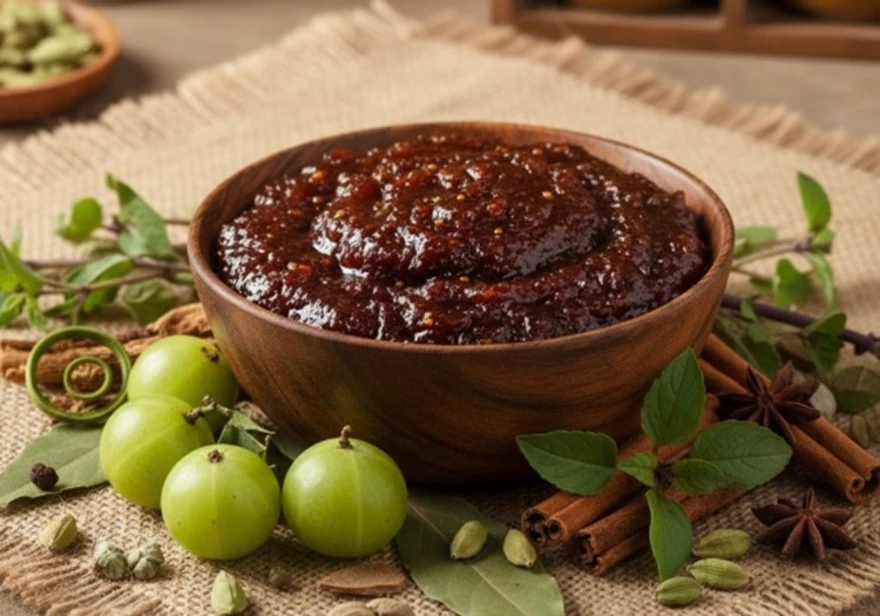
Chyawanprash (Introduction, Benefits, and Usages)
Chyawanprash benefits have been documented in Ayurvedic medicine for over 2,500 years — making it one of the most ancient and continuously used medicinal formulations in human history. This dark, jam-like herbal preparation is built on Amla (Phyllanthus emblica) as its foundation — the highest natural source of vitamin C known — combined with 35–50 additional herbs, ghee, honey, and sugar into a comprehensive Rasayana (rejuvenative tonic) that supports immunity, respiratory health, energy, and longevity. In this guide, you’ll learn what’s actually in it, why it works, and how to use it intelligently. See Wikipedia: Chyawanprash. For related Ayurvedic tonics, explore Ashwagandha and Giloy.
What Is Chyawanprash? A Complete Introduction
Origin and History of Chyawanprash
The name Chyawanprash comes from the sage Chyawan (Chyavana), who according to Ayurvedic legend used this formulation to restore his youth and vitality. The recipe appears in the Charaka Samhita (one of Ayurveda’s two foundational texts, compiled around 400–200 BCE) — making it among the oldest documented compound herbal formulations in existence. The base recipe has remained essentially unchanged for over 2,000 years, which itself reflects remarkable clinical consistency across generations of Ayurvedic practice.
Key Compounds and Nutritional Profile
Amla (Indian gooseberry, Phyllanthus emblica) is the quantitatively dominant ingredient and the pharmacological foundation of Chyawanprash — providing exceptionally high, heat-stable vitamin C (largely as emblicanin and punigluconin complexes rather than simple ascorbic acid), ellagitannins, flavonoids, and superoxide dismutase. The heat stability of Amla’s vitamin C is critical — most vitamin C degrades at cooking temperatures, but Amla’s tannin-bound form survives the cooking process used in Chyawanprash preparation. Other key ingredients include Pippali (enhances bioavailability), Ashwagandha, Shatavari, Brahmi, Bala, Bilva, Agnimantha, Shyonaka, Gambhari, Patala, and numerous other herbs — typically 35–50 total depending on the manufacturer’s recipe.
Top Health Benefits of Chyawanprash
Chyawanprash Benefits for Immunity and Overall Health
Chyawanprash’s most documented and consistently reproduced benefit is immune enhancement. Multiple randomised controlled trials have shown significant increases in NK (natural killer) cell activity, lymphocyte proliferation, and immunoglobulin levels with regular Chyawanprash use. A clinical study found that children taking Chyawanprash had significantly fewer respiratory infections, lower infection duration, and reduced antibiotic use compared to controls over a 6-month period. The Amla-based vitamin C provides direct antioxidant immune support; the Pippali enhances absorption of all other bioactives; and the Rasayana herbs collectively provide adaptogenic and tonic effects that build immune resilience over time.
Chyawanprash for Skin, Hair, and Beauty
The exceptionally high Amla vitamin C content in Chyawanprash directly stimulates collagen synthesis — the structural protein that keeps skin firm and elastic. Regular consumption is associated with improved skin texture, reduced oxidative skin damage, and slower appearance of age-related skin changes. The antioxidant ellagitannins from Amla provide direct UV protection and reduce oxidative skin ageing.
For hair, the combination of Amla (classically the most important Ayurvedic hair herb), Brahmi, and nourishing herbs like Shatavari and Ashwagandha in Chyawanprash supports hair follicle health, reduces premature greying (Amla is traditionally used specifically for this), and strengthens hair from the roots through improved nutritional status.
Medicinal Properties of Chyawanprash
How Chyawanprash Works as a Natural Remedy
Chyawanprash works through multiple simultaneous mechanisms that make it genuinely different from single-herb supplements. The Pippali enhances bioavailability of all co-administered compounds — this is pharmacologically sophisticated design, not accident. The Rasayana herbs (Ashwagandha, Shatavari, Bala) provide adaptogenic action that reduces cortisol, improves energy metabolism, and builds physical resilience. The respiratory herbs (Pippali, Vanshlochan, Pushkarmool) specifically strengthen lung tissue and improve respiratory function.
Research on individual ingredients and on the composite formula confirms: antioxidant activity significantly higher than individual herbs alone, immunomodulatory effects on both innate and adaptive immunity, significant hepatoprotective action from the Amla base, and metabolic improvements including blood sugar modulation and lipid management. See Wikipedia: Phyllanthus emblica (Amla).
Chyawanprash in Ayurveda and Traditional Medicine
In Ayurveda, Chyawanprash is classified as a Rasayana — the highest category of medicinal preparation, aimed at preventing disease, promoting longevity, enhancing intelligence, and maintaining youthful vitality. The Charaka Samhita specifically says Chyawanprash “promotes longevity, kindles the digestive fire, improves memory and intelligence, frees from disease, rejuvenates old age, prevents cough, breathlessness, and fever.” These classical claims align remarkably well with what modern clinical research actually documents.
How to Use Chyawanprash — Practical Usages
Chyawanprash in Food, Tea, and Cooking
Standard dose for adults: 1–2 teaspoons (5–10 grams) once or twice daily. For children (3–12 years): 1/2–1 teaspoon daily. The traditional method is to eat Chyawanprash directly from the spoon and follow with warm milk — the fat in the milk enhances absorption of the fat-soluble compounds, and the warmth supports the Kapha-managing properties. It can also be spread on bread, mixed into warm (not hot) milk, or stirred into oatmeal. Don’t add it to boiling liquid — excessive heat degrades the vitamin C and aromatic compounds.
Chyawanprash as a Supplement or Topical Application
Chyawanprash is primarily an oral preparation. Choose products from established Ayurvedic manufacturers with GMP certification and ingredient transparency — the quality and quantity of Amla, the use of genuine vs. substitute herbs, and the processing method significantly affect therapeutic potency. Sugar-free versions using honey or jaggery are available for diabetics. Take consistently every day — Chyawanprash works cumulatively as a Rasayana, not as a quick fix. A minimum 2–3 month course shows meaningful results; traditionally it’s taken year-round.
Side Effects and Precautions of Chyawanprash
- Diabetes: traditional Chyawanprash contains sugar — use sugar-free versions; even these contain Amla which mildly lowers blood sugar (monitor accordingly)
- Weight management: contains ghee and sugar — account for these calories if managing weight; a teaspoon has approximately 30–40 calories
- Kapha imbalance: the sweet, heavy base can aggravate Kapha in spring and in people prone to congestion — reduce to once daily in these conditions
- Pregnancy: generally considered safe in traditional use; consult Ayurvedic physician for specific guidance
- Allergies: contains multiple herb ingredients — people with known plant allergies should check ingredient lists
Frequently Asked Questions About Chyawanprash
What are the main Chyawanprash benefits for health?
The most clinically documented Chyawanprash benefits are immune enhancement (reduced infection frequency and severity), respiratory health improvement, energy and stamina building through adaptogenic herbs, skin health through Amla vitamin C and antioxidants, cognitive support through Brahmi and other nervous system tonics, and general anti-ageing and vitality-building effects as a Rasayana preparation.
When is the best time to take Chyawanprash?
Morning on an empty stomach, followed by warm milk after 10–15 minutes, is the classical recommendation. This timing supports digestion and allows full absorption before meals. Some people take it twice daily — morning and evening — for enhanced effect. Avoid taking immediately before strenuous exercise or in hot weather conditions where its warming properties might cause discomfort.
Is Chyawanprash good for children?
Yes — it’s one of the few Ayurvedic preparations specifically recommended for children in classical texts. Clinical studies have been conducted specifically in children showing reduced respiratory infections and enhanced immunity. Give 1/2–1 teaspoon daily to children aged 3–12. It’s sweet and jam-like, making it palatable for most children. It’s particularly valuable during winter and monsoon seasons when respiratory infections are common.
How to use Chyawanprash for immunity?
Take 1–2 teaspoons daily consistently for at least 2–3 months during and after infection-prone seasons. Pair with adequate sleep, vitamin D, and reduced sugar intake for synergistic immune support. Don’t take it only when you feel a cold coming — it’s a preventive Rasayana that builds immune capacity over time, not an acute treatment for active infection.
Which Chyawanprash brand is best?
Look for GMP-certified manufacturers, full ingredient transparency, authentic Amla as the primary ingredient (check it appears first or near first in the ingredient list), and avoidance of artificial colours, flavours, or excessive sugar. Established companies with long track records in classical Ayurvedic manufacturing are generally more reliable than new brands with marketing-heavy positioning. Sugar-free versions using honey are preferred if you have any blood sugar concerns.
Chyawanprash benefits are among the best-documented of any Ayurvedic preparation — from centuries of clinical tradition to modern randomised controlled trials confirming immunity enhancement. It’s one of the simplest, safest, and most comprehensive ways to build genuine health resilience over time. Take it daily, consistently, and think of it as maintenance nutrition for your immune system and vitality rather than an acute remedy. The 2,500-year track record suggests that’s exactly what it is.

Add comment