
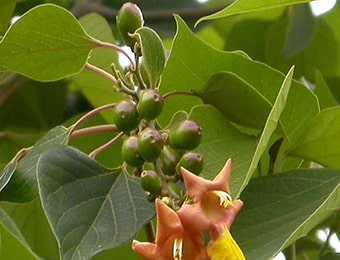
Gambhari (Introduction, Benefits, and Usages)
Gambhari benefits are rooted in its position as one of the most important herbs in the Dashmula (ten roots) formulation and as a significant Vata-balancing, nourishing, and hepatoprotective medicinal tree in classical Ayurveda. Gmelina arborea – the white teak or Kashmir tree (Gambhari in Sanskrit, Gamari in Hindi) – is a large deciduous tree whose roots, bark, fruits, and leaves have distinct and well-documented therapeutic applications spanning liver protection, tonic/adaptogenic action, anti-inflammatory benefits, and wound healing. See Wikipedia: Gmelina arborea. For related Dashmula herbs, explore Dashmularishta.
What Is Gambhari? A Complete Introduction
Origin and History of Gambhari
Gambhari (Gmelina arborea) is a fast-growing deciduous tree native to South and Southeast Asia – distributed across India (particularly the Deccan plateau, the Himalayan foothills, and central forests), Sri Lanka, Myanmar, Thailand, and Malaysia. It belongs to the Lamiaceae family (mint family) – sharing some phytochemical characteristics with other medicinally important Lamiaceae members. In classical Ayurveda, Gambhari (also spelled Gamhari or Shri Parni in some texts) is one of the Brihat Panchamula – the five large roots that form the first half of the Dashmula combination. The Charaka Samhita classifies Gambhari roots among the most important Brimhana (nourishing) and Vata-pacifying medicinal plants, and the fruits are described as nutritive, sweet, and cooling.
Key Compounds and Active Profile
Gambhari contains an interesting array of phytochemicals across its different parts. The roots and root bark contain iridoid glycosides including gmelofuran, gmelinin, and arboside – compounds with anti-inflammatory and hepatoprotective activity. The wood and bark contain cerberine and luteolin. The leaves provide flavones and phenolic acids with antioxidant and anti-inflammatory properties. The fruits contain alkaloids and terpenes including premnazole (with analgesic and anti-inflammatory activity). Lignans in the heartwood have demonstrated antitumour activity in research. See Wikipedia: Iridoid glycoside.
Top Health Benefits of Gambhari
Gambhari Benefits for Immunity and Overall Health
Gambhari’s hepatoprotective properties are among its most research-validated benefits. Multiple studies have found Gambhari root and bark extracts significantly protect liver cells from toxin-induced damage, reducing liver enzyme elevation (AST, ALT) and preventing histological liver damage in experimental models – effects comparable to standard hepatoprotective reference drugs (silymarin). This aligns with the classical Ayurvedic use of Gambhari for Kamala (jaundice and liver conditions) and Panduroga (anaemia with liver involvement). The tonic and adaptogenic properties of Gambhari – making it a component of Dashmula – reflect its Brimhana (nourishing) action on multiple body tissues, with particular affinity for Rasa, Rakta, and Mamsa Dhatu.
Gambhari for Skin, Hair, and Beauty
Gambhari leaf preparations have traditional applications for skin conditions in Indian and Southeast Asian folk medicine. The flavone and phenolic acid content provides anti-inflammatory and antioxidant skin protection. The fruit pulp has been used topically as a cooling, nourishing application for burning skin conditions and in post-sun exposure care. The bark preparations have demonstrated wound healing promotion in research – accelerating epithelialisation and collagen deposition. For hair, Gambhari root decoction is used in Ayurvedic hair care preparations for strengthening and promoting hair growth – the tonic, Vata-reducing properties support follicle health.
Medicinal Properties of Gambhari
How Gambhari Works as a Natural Remedy
The iridoid glycosides in Gambhari roots inhibit NF-kB (nuclear factor kappa B) – the master transcription factor controlling inflammatory gene expression – reducing inflammatory cytokine production including TNF-alpha, IL-6, and IL-1beta. This multi-target anti-inflammatory mechanism explains both the anti-arthritis and hepatoprotective effects (liver inflammation plays a central role in hepatotoxic injury). The analgesic properties of premnazole and related compounds from Gambhari fruits act through opioid pathway modulation, consistent with the traditional use of Gambhari fruit preparations for pain management. Antidiabetic properties have been demonstrated in Gambhari leaf extracts through alpha-glucosidase inhibition and enhanced insulin secretion.
Gambhari in Ayurveda and Traditional Medicine
In Ayurveda, Gambhari is classified as sweet, bitter, and astringent in taste, cooling in potency, and heavy and unctuous in quality. It’s specifically Vata-Pitta reducing and Brimhana (nourishing). Classical Ayurvedic indications include Kamala (jaundice/liver conditions), Panduroga (anaemia), Vatarakta (gout), Jwara (fever), Kshata (wasting diseases), and as one of the Brihat Panchamula for general Vata-balancing and strength-promoting applications. The Ashtanga Hridayam specifically describes Gambhari as having Tridosha-pacifying properties when prepared appropriately. It’s a component of important classical formulations including Dashmularishta, Dashmula Kwatha, and Chyawanprash variants. Pairs well with Gokshura in Laghu Panchamula combination.
How to Use Gambhari – Practical Usages
Gambhari in Decoction and Internal Use
Gambhari root or bark decoction (Kwatha): boil 10-15g of root/bark in 400ml water, reduce to 100ml, strain and drink twice daily for liver support, joint conditions, and as a general tonic. The fruit (when available) can be eaten fresh as a cooling, nourishing fruit. Gambhari is most effectively used as part of classical Ayurvedic compound formulations – particularly Dashmularishta and Dashmula Kwatha – rather than as a single herb, because the Dashmula combination’s synergistic effect is greater than any individual component. Always consult an Ayurvedic physician for appropriate formulation selection based on your specific condition and constitution.
Gambhari as a Supplement or Topical Application
Gambhari powder (churna) made from dried root or bark, 3-5g twice daily with warm water or honey, is the standard oral preparation for liver conditions and as a tonic. For topical wound healing, fresh Gambhari leaf paste applied directly to wounds promotes healing – a traditional Indian folk medicine application supported by wound healing research. Gambhari is available through Ayurvedic herb suppliers and classical Ayurvedic pharmacy formulations. In contemporary integrative Ayurvedic practice, it’s most commonly encountered as a component of compound formulations rather than standalone preparations.
Side Effects and Precautions of Gambhari
- Generally well-tolerated: Gambhari has an excellent classical safety profile and is used for debilitated patients, children, and the elderly in Ayurveda – indicating good tolerability across populations
- Pregnancy: classified as Garbhasthapana (embryo-stabilising) in some classical texts; generally considered safe in culinary-medicinal amounts, but high supplemental doses should be discussed with a physician during pregnancy
- Kapha conditions: the heavy, unctuous nature may be inappropriate in people with excessive Kapha (congestion, obesity, sluggish digestion) – use cautiously and with digestive support herbs
Frequently Asked Questions About Gambhari
What are the main Gambhari benefits?
Key Gambhari benefits: hepatoprotective action protecting liver cells from toxin-induced damage (comparable to silymarin in research models), Vata-balancing tonic and nourishing effects as part of Dashmula, anti-inflammatory activity through NF-kB inhibition relevant for arthritis and inflammatory conditions, analgesic properties from fruit alkaloids, wound healing promotion, antipyretic effects for fever management, and Brimhana (tissue nourishment) properties for debility and weakness.
What is Gambhari’s role in Dashmula?
Gambhari is one of the Brihat Panchamula – the five large tree roots forming the first half of the Dashmula (ten roots) combination. It contributes primarily Brimhana (nourishing), hepatoprotective, and Vata-Pitta-balancing properties to the combination. The Dashmula formulation is greater than the sum of its parts – each of the ten roots addresses a specific aspect of Vata disorder, respiratory health, or tissue nourishment, creating a synergistic anti-inflammatory and tonic combination that has been validated in postpartum, respiratory, and musculoskeletal clinical applications through Dashmularishta research.
Is Gambhari good for liver health?
Yes – research on Gambhari root and bark extracts confirms hepatoprotective activity at both the cellular level (reducing liver enzyme elevation) and tissue level (preventing histological liver damage from hepatotoxins). The clinical indication in classical Ayurveda for Kamala (jaundice and liver conditions) is directly supported by this pharmacological evidence. For liver health support, Gambhari is typically used in combination with other hepatoprotective Ayurvedic herbs like Katuki and Bhumi Amla, or as part of Dashmularishta, rather than alone.
Gambhari benefits reflect its quiet importance in Ayurvedic classical medicine – it’s not a flashy single-herb star like Ashwagandha or Turmeric, but it’s one of ten foundational herbs in the Dashmula combination that has been supporting postpartum recovery, respiratory health, and musculoskeletal wellbeing in Ayurvedic practice for 2,000 years. Appreciate Gambhari through the classical formulations that feature it, and understand that its hepatoprotective and tonic properties represent genuine pharmacological action validated by modern research.
Add comment