
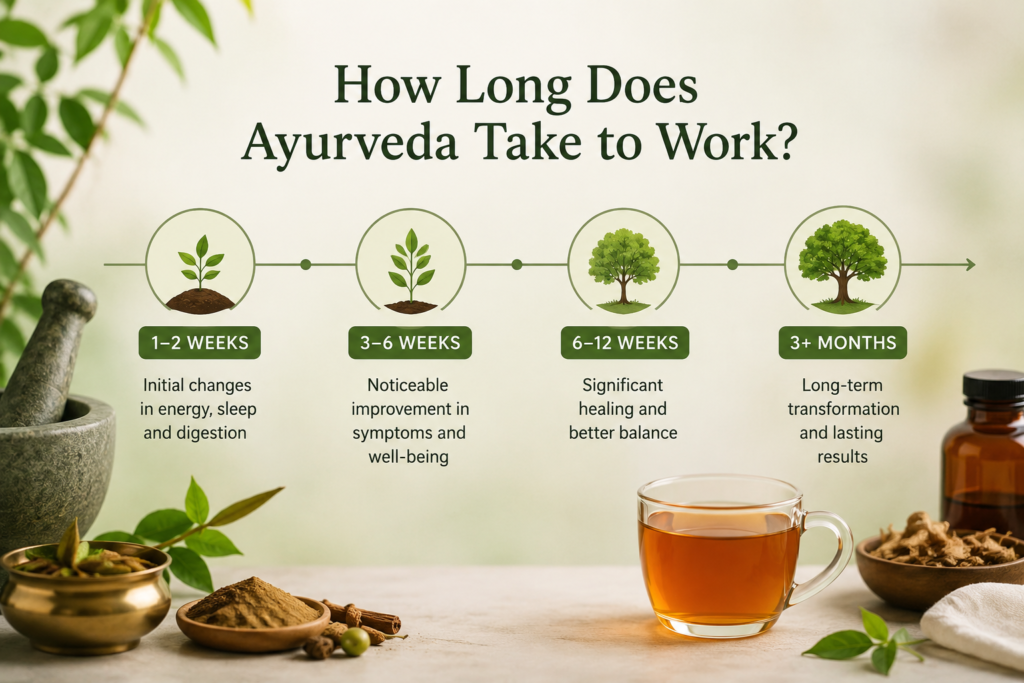
“How long does Ayurveda take to work?” is one of the most common — and most reasonable — questions from anyone starting out. The honest answer: it depends on what you are treating. Some things shift in days; deep, chronic patterns take months. Understanding these realistic timelines is the single best way to avoid the disappointment that makes people quit too early. Here is what to actually expect.
Why Ayurveda works gradually
Ayurveda aims to correct the cause of a problem — a doshic imbalance, weak digestion, accumulated Ama — rather than just silence the symptom. Rebalancing the body is more like tending a garden than flipping a switch: it works with your physiology over time. That is its strength (benefits tend to last) and the reason it asks for patience. Expecting it to act like a painkiller is the commonest mistake.
Realistic timelines
| What you’re treating | Typical timeline |
|---|---|
| Simple digestive upset, mild symptoms | Days to 1–2 weeks |
| Everyday complaints (sleep, energy, mild pain) | 2–4 weeks |
| Chronic conditions (joints, skin, hormonal) | 6–12 weeks for clear change |
| Deep-seated or long-standing imbalance | 3–6 months, sometimes longer |
| Lifestyle & routine benefits | Often felt in 1–2 weeks, deepen over months |
What speeds it up (and slows it down)
- Consistency — daily practice matters more than intensity; missed doses reset progress.
- Diet and lifestyle — herbs work far faster alongside the right food, sleep and routine.
- How long the problem existed — recent issues clear faster than decades-old patterns.
- Product quality — a genuine, well-made remedy works; a poor one will not, however long you wait.
- Correct diagnosis — the right remedy for your imbalance works; a mismatched one does not.
Timelines for common goals
- Better digestion: often improves within 1–2 weeks of kindling Agni and eating warm, regular meals.
- Sleep and stress: calmer sleep in 1–2 weeks with herbs like Ashwagandha; fuller benefit over 4–8 weeks.
- Joint pain: a first response in 2–3 weeks, clear change by 6–8 for chronic cases.
- Skin conditions: often slower — weeks to a few months, as skin reflects deeper tissue change.
- Weight and metabolism: gradual over 6–8 weeks alongside diet and movement.
Why people quit too early
Most “Ayurveda didn’t work for me” stories share a pattern: someone tried a remedy for a week or two, expecting a drug-like effect, and stopped just before it would have started helping. Because Ayurveda works on the cause, the early phase can feel like nothing is happening even as the ground shifts underneath. Knowing the realistic timeline — and tracking small changes — is what carries you through that quiet early period to the point where the benefits become obvious.
How to track your progress
Because change is gradual, keep a simple record rather than relying on memory. Note your main symptoms weekly — a 0–10 score, sleep quality, energy, digestion — and compare across weeks. Small, steady improvement is exactly what success looks like in Ayurveda, and a log lets you see it when day-to-day it feels invisible. Also watch general markers: a cleaner tongue, lighter mornings and steadier energy show the underlying picture improving.
When to reassess
Give a remedy a fair trial — usually 6–8 weeks for a chronic issue — before judging it. If your tracked measures show no change at all in that time, that is a genuine signal to reassess rather than push on: check the product is genuine, the diet is supporting it, and the diagnosis fits, ideally with a practitioner. Patience is a virtue in Ayurveda, but so is knowing when to change course.
Frequently asked questions
How long does Ayurveda take to work?
It depends on the issue: days to two weeks for simple complaints, 2–4 weeks for everyday ones, 6–12 weeks for chronic conditions, and months for deep-seated imbalance.
Why is Ayurveda so slow?
It corrects the underlying cause rather than masking symptoms, which takes time — but the benefits tend to last. It works faster alongside good diet, sleep and routine.
How do I make Ayurveda work faster?
Be consistent, support it with the right diet and lifestyle, use genuine products, and make sure the remedy matches your actual imbalance. These make the biggest difference.
When should I give up on a remedy?
Give a fair trial — about 6–8 weeks for chronic issues. If your tracked measures show no change, reassess the product, diet and diagnosis rather than continuing indefinitely.
The bottom line
Ayurveda works gradually because it corrects causes, not just symptoms — days for simple issues, weeks for everyday ones, and months for deep, chronic patterns. Support it with consistency, good diet and lifestyle, and genuine products; track your progress; and give a fair trial before judging. Set realistic expectations, and you are far more likely to stick with it long enough to see it work.
Related reading
- Ayurvedic Medicine for Beginners
- Prakriti vs Vikriti Explained
- Digestive Fire (Agni): How to Boost It
Disclaimer
This article is for general information and educational purposes only and is not medical advice. Do not delay medical care for serious or worsening symptoms while waiting for a remedy to work. Always consult a qualified doctor or registered Ayurvedic practitioner when managing a health condition.