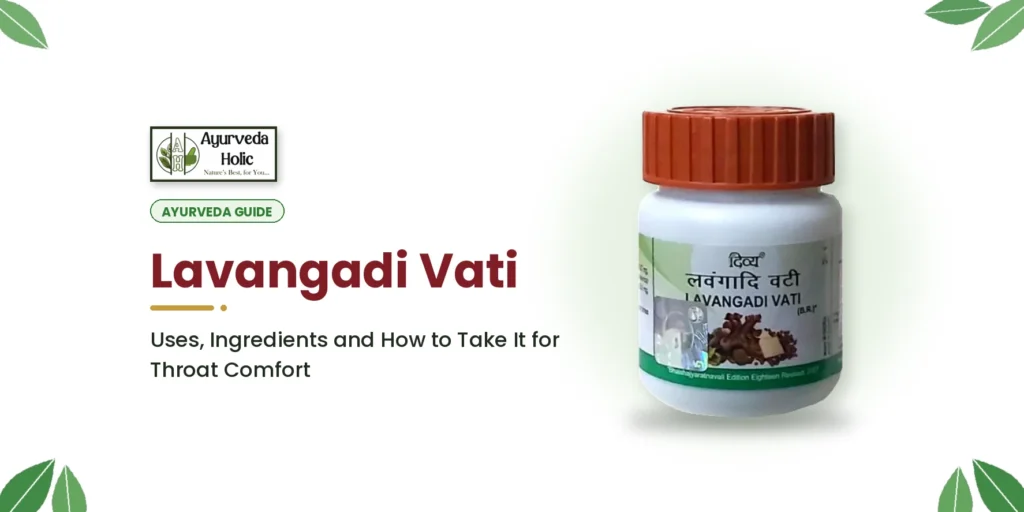
Short answer. Lavangadi Vati is a small tablet made mainly with clove, black pepper and baheda. You suck it slowly, like a lozenge. Ayurveda uses it to soothe a tickly, scratchy throat and a cough with mucus. Take it at the pack dose. See a doctor if a cough lasts over three weeks, or comes with fever, breathlessness or blood.
Long before lozenges came in packets, Indian families chewed a clove for a sore throat. Lavangadi Vati is the classical, measured version of that same habit. Here’s how to use it.
What Lavangadi Vati is
Lavang is clove. Adi means “and others”. So the name just means “the clove formula”. It’s one of Ayurveda’s classic throat and mouth preparations. Lots of families keep a strip at home for winter.
Here’s what Patanjali Divya Lavangadi Vati lists on our product page.
| Ingredient | Common name | Traditional role |
|---|---|---|
| Laung | Clove | Warming, numbing. Throat and mouth comfort |
| Kali mirch | Black pepper | Warming. Clears mucus |
| Baheda | Bibhitaki | Astringent. Used for the throat and Kapha |
| Khair saar | Catechu (kattha) | Astringent. In mouth and throat formulas |
| Babool | Acacia | Astringent. For gums and throat |
Check the pack for the full list.
Lavangadi Vati uses (traditional)
- A tickly, scratchy throat. Especially in the cold season.
- A cough with mucus. The warming spices help loosen phlegm.
- A hoarse voice. After a cold, or too much talking.
- Fresh breath and comfy gums.
Clove contains eugenol, which numbs a little. That’s why clove lozenges feel soothing. These are traditional uses. It doesn’t treat infections.
What research says
Eugenol has numbing and antimicrobial effects. Dentists use it. There’s very little research on Lavangadi Vati itself. Most sore throats are viral and clear up on their own. So think of it as soothing support, along with rest and warm fluids.
How to take it
- Suck, don’t swallow. Let it dissolve slowly so it coats your throat.
- Dose. As printed on the pack, or as your doctor says.
- No water for a bit afterwards.
- A few days. While your throat’s irritated. Not as a daily habit.
Home care that helps
- Gargle with warm salt water a few times a day.
- Sip warm water, soups and herbal tea.
- Steam with a few tulsi leaves for a blocked nose.
- Rest your voice.
Lavangadi Vati vs other throat remedies
| Remedy | Form | Good for | Notes |
|---|---|---|---|
| Lavangadi Vati | Tablet to suck | Tickly throat, cough with mucus | Warming, clove-based |
| Sitopaladi churna | Powder with honey | Dry cough, hot sore throat | Milder. Contains sugar |
| Honey and ginger | Home remedy | Mild cough | Not for babies under one |
| Salt-water gargle | Home remedy | Sore throat | Safe and cheap |
| Steam with tulsi | Home remedy | Blocked nose | Careful with hot water |
Who finds it useful
- Teachers, singers and anyone who talks all day.
- People who catch a cold every winter.
- Smokers with a morning cough. Though quitting is the real fix.
- Travellers. It’s small and easy to carry.
Who should avoid it
- Acidity or mouth ulcers. Clove and pepper can sting.
- Pregnant women and children. Ask a doctor first.
- Clove allergy.
Common mistakes
- Sucking lots of tablets a day. It can irritate the mouth.
- Using it for weeks instead of seeing a doctor about a lasting cough.
- Giving it to small children, who could choke.
When a sore throat needs a doctor
- A cough that’s lasted over three weeks. In India, that should be checked for TB.
- High fever, or fever that lasts beyond three days
- Trouble swallowing or breathing
- Blood in your phlegm
- White patches on the tonsils with fever
Frequently asked questions
What is Lavangadi Vati used for?
To soothe an irritated throat and a cough with mucus, and to freshen the mouth.
How should I take Lavangadi Vati?
Suck it slowly and let it dissolve. Follow the pack dose.
Can I swallow Lavangadi Vati?
It’s made to be sucked so it coats your throat. Swallowing it whole loses that effect.
Is Lavangadi Vati good for a dry cough?
It’s warming and better for a cough with mucus. For a dry, burning cough, ask your vaidya about something milder.
Can children take Lavangadi Vati?
Only if a doctor says so, and only children old enough to suck a tablet safely.
Is Lavangadi Vati safe for people with diabetes?
Some throat tablets contain sugar. Check the label, and ask your doctor if unsure.
Shop: Patanjali Divya Lavangadi Vati · Patanjali Sitopaladi Churna · Patanjali Swasari Pravahi
This article is for general information and isn’t medical advice. See a doctor for a persistent cough, or before giving it to children.


