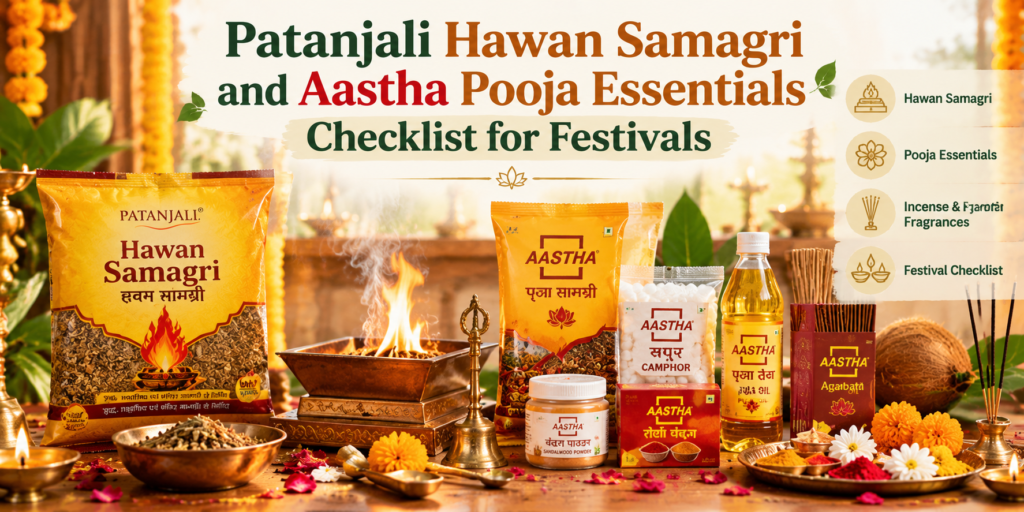
Indian festivals bring families together through prayers, pujas and traditional rituals. Whether you are preparing for Diwali, Navratri, a housewarming ceremony or a family havan, arranging the required puja samagri in advance can make the occasion more organised and peaceful.
One of the most common preparations is collecting the items needed for hawan, including hawan samagri, ghee, suitable fuel, a Hawan Kund and other ritual accessories. Depending on the occasion, you may also need dhoop, kapoor, diya, cotton wicks, flowers, roli, chawal and other pooja essentials.
If you are searching for Patanjali hawan samagri, this guide will help you prepare a festival-wise checklist, understand the purpose of commonly used items, store them properly and choose suitable products from Ayurvedaholic.
The exact requirements vary according to the festival, family tradition and instructions followed during the ceremony. Use this guide as a practical checklist, and confirm any specialised offerings with your priest or the person guiding your puja.
Festival-Wise Hawan Samagri and Pooja Checklist
Different festivals involve different rituals. A simple daily puja may need only a few basic items, while a traditional hawan requires additional materials and appropriate fire-safety arrangements.
The following checklist covers commonly used items; it is not a mandatory list for every ceremony.
Diwali Puja
Commonly prepared items
- Diya, cotton wicks and suitable oil or ghee
- Kapoor and dhoop
- Roli, chawal and flowers
- Puja thali and water vessel
- Hawan Kund, samagri and prescribed offerings if hawan is part of the ceremonyNavratri Puja
Commonly prepared items
- Kalash and water
- Roli, chawal, flowers and prasad
- Diya, cotton wicks and incense
- Kapoor and other offerings required by the family tradition
- Hawan samagri and a suitable kund if the puja includes hawanGriha Pravesh (Housewarming)
Commonly prepared items
- Hawan Kund and suitable stand
- Hawan samagri, ghee and prescribed fuel
- Lota, spoons, plates and glasses
- Flowers, rice and other items specified by the priestDaily Puja and Small Family Ceremonies
Commonly prepared items
- Diya and cotton wicks
- Kapoor, dhoop or agarbatti
- Flowers, roli and chawal
- A small puja plate and water vessel
- Additional offerings according to the occasion
These lists are starting points, not fixed rules. For example, a Diwali Lakshmi Puja does not necessarily require a hawan, and the samagri for a Navratri havan may differ from that used for a housewarming ceremony.Hawan Samagri, Ghee, Cups and Other Essentials
Knowing the purpose of each item makes it easier to prepare for a ceremony without buying unnecessary materials.
Hawan samagri
Hawan samagri is a mixture used as an offering during the fire ritual. Its composition can vary between products and traditions. Always read the package details and follow the instructions given for the ceremony.

Patanjali Aastha Hawan Samagri — 250 g
A packaged option for traditional hawan offerings. Check the ingredient declaration and whether the quantity is sufficient for your planned ceremony.
Listed price: ₹69; MRP ₹70 when checked. Prices can change.
View Hawan Samagri on Ayurvedaholic
Ghee and suitable fuel
Ghee is used for offerings in many hawan traditions. The quantity and timing of offerings depend on the prescribed ritual.
Suitable dry wood or samidha may also be required. Use only fuel appropriate for the kund and ceremony. Never burn treated wood, plastic, packaging or other household waste.
Ghee and fuel are not necessarily included in a hawan accessory kit, so check what you already have and what your ceremony requires.
Kapoor
Kapoor, commonly known as camphor, is used in many Hindu pujas and aarti rituals. It may also be specified in some hawan procedures.
Keep it stored securely away from children and heat sources. Use it only in an appropriate holder or ritual setup, and exercise caution around open flames.

Patanjali Aastha Bhimseni Kapoor — 25 g
A camphor product listed in Ayurvedaholic’s puja and aroma range.
Listed price: ₹79; MRP ₹80 when checked.
Dhoop and agarbatti
Dhoop and agarbatti are used during many pujas to provide fragrance as part of the devotional setting. They are not substitutes for hawan samagri and do not need to be burned continuously throughout a ceremony.
Choose the type that suits your ritual and personal preferences. Use incense in a stable holder, maintain ventilation and avoid excessive smoke, particularly around children and people with respiratory sensitivities.
Havan cups and sambrani cups
Ready-made cups can be convenient for certain devotional or aromatic rituals, but different products are designed for different uses. Check the manufacturer’s instructions before lighting them, and do not assume that an incense cup can replace a traditional hawan kund.

Patanjali Aastha Sambrani Cup — 12 pieces
A ready-to-use cup product listed in Ayurvedaholic’s aroma category.
Listed price: ₹97; MRP ₹100 when checked.
View Sambrani Cups on Ayurvedaholic

Patanjali Aastha Havan Cup Kapoor Tulsi
Another cup-format product in the puja range. Check its specific instructions and intended use before lighting.
Listed price: ₹115; MRP ₹120 when checked.
View Havan Cup on Ayurvedaholic
Prices above are the amounts displayed in the listings when checked, not guaranteed current prices. Verify the selected product, pack size and checkout amount before ordering.
Cups, plates and water vessels
A puja kit may include plates, a lota, spoons and glasses to help organise the ceremony. These accessories are useful for arranging offerings and keeping ritual materials separate.
Check the kit contents before buying individual pieces. You may already have suitable utensils at home, and the exact accessories required depend on your family’s practice.
How to Organise Your Festival Pooja Preparation
A simple preparation routine can save time and help you avoid last-minute shopping.
Make a list based on the occasion
Begin by identifying the ceremony you are preparing for. A regular puja may need only a diya, cotton wicks, flowers, roli, chawal and incense. A hawan requires additional items, such as a suitable kund, samagri, prescribed fuel and offerings.
If a priest is conducting the ceremony, ask for the required list in advance. This helps you avoid buying items that are not needed.
Separate reusable items from consumables
Reusable accessories may include:
- Hawan Kund and stand
- Plates, spoons and lota
- Puja thali and other suitable utensils
Consumables may include:
- Hawan samagri
- Ghee and prescribed fuel
- Cotton wicks
- Kapoor, dhoop and agarbatti
- Flowers and other offerings
Keep these categories separate on your shopping list. It will help you see what you already own and what needs replenishing.
Prepare the items the day before
Arrange the required materials in a clean, dry place before the festival. Check the package labels and ensure you have enough of each item for the intended ritual.
If a hawan is planned, prepare a suitable location and review the fire-safety arrangements in advance. Do not wait until the ceremony begins to discover that the space is unsuitable for an open flame.
How to Store Hawan Samagri and Pooja Essentials
Proper storage helps protect ritual materials from moisture, dust, accidental spills and damage.
Store dry samagri in sealed containers
Keep hawan samagri in its original packaging or a clean, dry, airtight container where appropriate. Store it away from moisture, direct sunlight and strong household odours.
Check the packaging for storage instructions and any recommended period of use. Discard materials that appear mouldy, damp or contaminated.
Keep ghee and other consumables separate
Store ghee according to the instructions on its container. Keep it away from the hawan kund, matches, lighters and other heat sources until it is needed.
Do not return used or contaminated material to the original container.
Store kapoor, dhoop and incense safely
Keep camphor, dhoop, agarbatti and related products in their original packaging in a cool, dry place away from children and pets.
These products should be kept away from open flames and other ignition sources when not in use. Do not leave burning incense unattended.
Clean reusable accessories after the ceremony
Allow the kund and utensils to cool completely before handling them. Remove ash safely, clean the accessories according to their material and dry them thoroughly before storage.
Do not place hot ash or embers in plastic bins or combustible containers. Make sure everything is fully cool before packing it away.
How to Choose a Genuine Hawan Kit and Pooja Essentials
When buying puja products, focus on the actual contents, product identification and packaging rather than relying solely on promotional descriptions.
Check the product name and contents
Confirm whether you are purchasing a Hawan Kit, Hawan Samagri, a cup-format product or another puja accessory.
For a kit, review the list of included items. Do not assume that a kit containing a kund and utensils also includes ghee, wood or consumable samagri.
Review the packaging and seller information
Look for clear product details, the manufacturer’s information and an intact package. For packaged consumables, check the batch details and any expiry or best-before information provided.
Keep your invoice and order confirmation in case you need to contact the seller about an incorrect or damaged item.
Choose products for the ritual you intend to perform
A ready-made hawan kit may be convenient for households that want reusable accessories in one package. Someone preparing only for aarti or a simple puja may need a smaller selection of items instead.
Choose according to the actual requirements of the ceremony, available space and the instructions followed by your family or priest.
Patanjali Aastha Hawan Kit on Ayurvedaholic

Patanjali Aastha Hawan Kit
A set of reusable hawan accessories
₹2,080
Listed MRP: ₹2,300 when checked.
The listing describes a Hawan Kund, stand, plates, lota, diya, spoons and glasses.
View Patanjali Aastha Hawan Kit on Ayurvedaholic
If you need consumable offerings as well, you can review the Patanjali Aastha Hawan Samagri, Patanjali Aastha Sambrani Cup and Patanjali Aastha Havan Cup Kapoor Tulsi listings on Ayurvedaholic.
Check the exact contents and current price of each product before ordering. A hawan kit is a collection of ritual accessories; it should not be treated as a complete package of all the consumables required for every festival.
Frequently Asked Questions
1. What is included in Patanjali Aastha Hawan Samagri?
The exact ingredients depend on the product’s declared formulation. Check the package for the ingredient list and quantity rather than assuming that every hawan samagri mixture contains the same materials.
2. Is hawan samagri included in the Patanjali Aastha Hawan Kit?
The Ayurvedaholic listing focuses on reusable accessories such as the Hawan Kund, stand, plates, lota, diya, spoons and glasses. Check the current product description to confirm whether any consumable materials are included.
3. What is the difference between a hawan cup and hawan samagri?
Hawan samagri is a mixture used as an offering during a traditional fire ritual. A hawan cup is a ready-made cup-format product with its own intended use and instructions. They should not automatically be treated as interchangeable.
4. Can I use the same samagri for Diwali and Navratri?
Some materials may be used for both occasions, but the required offerings depend on the particular puja and family tradition. Follow the relevant ritual instructions rather than assuming that every ceremony requires the same items.
5. How should hawan samagri be stored?
Keep it dry, clean and protected from moisture. Store it in its original packaging or a suitable sealed container, away from direct heat and strong household odours. Follow any storage instructions on the pack.
6. Is it safe to perform hawan indoors?
An indoor hawan involves fire and smoke risks. Never conduct it in a closed or poorly ventilated room. Choose a suitable location, follow applicable building rules, keep combustible items away and never leave the fire unattended.
7. Where can I buy Patanjali hawan samagri and pooja essentials?
You can review the Patanjali Aastha Hawan Kit and related samagri and cup-format products on Ayurvedaholic. Check the listed contents, pack size and current price before ordering.
Conclusion
Preparing for a festival puja or hawan becomes easier when you know which items are required and which materials you already have. A festival-wise checklist helps you organise hawan samagri, ghee, kapoor, dhoop, cotton wicks, utensils and other pooja essentials without unnecessary last-minute shopping.
The most important step is to match your purchases to the ritual you intend to perform. A reusable hawan kit can help organise the accessories, while samagri and other consumables may need to be purchased separately.
If you are looking for Patanjali hawan samagri, explore the relevant products on Ayurvedaholic, including the Patanjali Aastha Hawan Kit, Hawan Samagri and Sambrani Cups.
Before ordering, verify the current price, packaging and contents. During the ceremony, follow your family’s religious traditions and make fire safety, ventilation and responsible storage part of your preparation.