
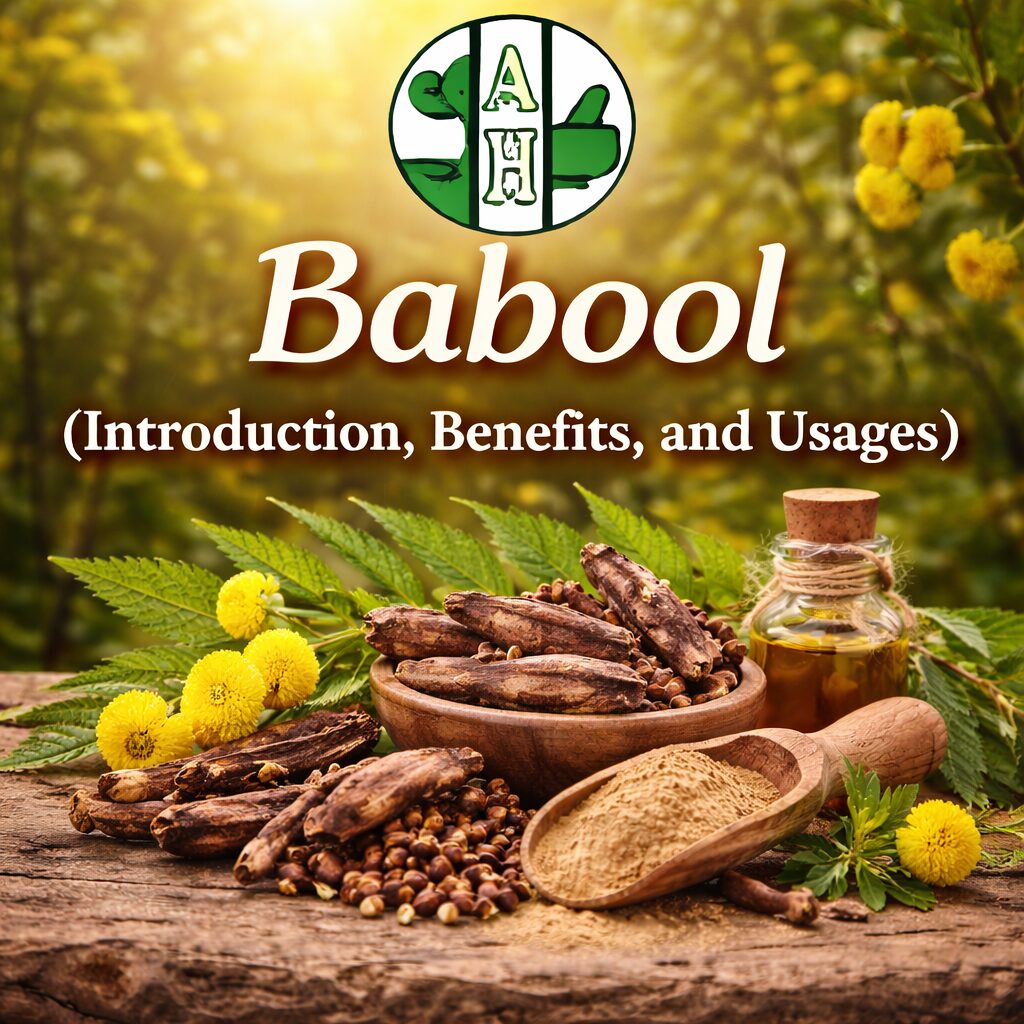
Babool (Introduction, Benefits, and Usages)
There’s a certain magic in the sunny, arid landscapes of India and Africa — a place where the Babool tree stands tall with its golden blooms dancing in the dry breeze. For countless generations, this unassuming tree has been more than just a part of the scenery; it has been a companion in health and healing. I still remember strolling through the dusty lanes of Rajasthan as a child, watching elders snap off tender Babool twigs to use as traditional toothbrushes — a simple act that seems ordinary, yet carries millennia of wisdom.
Today, as the world reels under the weight of chronic lifestyle disorders and pollution‑linked ailments, many of us are rediscovering ancient allies like Babool — not as relics of the past, but as living, breathing medicines that speak directly to our bodies’ innate healing rhythms. With its deep roots in Ayurvedic practice, Babool is an herb whose story intertwines botany, culture, and human wellbeing in every branch and leaf.
What Is Babool?
Babool, botanically known as Acacia nilotica (synonym Acacia arabica), is a thorny tree belonging to the Fabaceae family — the same plant family that gives us legumes and pulses. Its striking yellow globular flowers and long, constricted pods are easily recognizable in tropical and subtropical regions, where it thrives in dry, well‑drained soils. Today the species is classified under the genus Vachellia nilotica, though Acacia nilotica is still widely used in Ayurvedic and herbal literature.
This resilient tree is native to Africa but has become naturalized across India, Pakistan, and Southeast Asia, flourishing in regions with intense sunlight and minimal rainfall. Traditionally known by many names depending on region and language — Babool in Hindi, Kikar in Punjabi, Babala in Marathi, Baval in Gujarati, Babhula in Bengali, and Velutha Karuvelan in Malayalam — it’s clear that Babool is not just a plant but a cultural presence woven into the fabric of local life.
Babool in History and Culture
Though Babool does not receive as much poetic homage as sandalwood or tulsi in classical Ayurvedic texts, it has long been celebrated in regional nighantus (Sanskrit lexicons of medicinal plants) such as Sodhala Nighantu and Kaiyyadeva Nighantu, where its bark, pods, and gum are described with therapeutic qualities and uses.
Across the Indian subcontinent, Babool has played a role in everyday folk medicine — from acting as a natural toothbrush for oral hygiene to serving as an astringent decoction for digestive troubles. Whether used by travellers in the desert to cleanse their mouths or by village healers to aid wound healing, the tree connects human wellbeing to the landscape in a deeply rooted, lived way.
Ayurvedic Properties
Ayurveda describes Babool with a Kashaya (astringent) rasa (taste) that gives it the ability to draw tissues together and reduce excessive secretions. Its virya (potency) is sheeta (cooling), and its vipaka (post‑digestive effect) is katu (pungent), indicating its action in transforming and assimilating in the digestive system. Babool primarily pacifies Kapha and Pitta doshas, while its astringent and dry gunas (qualities) make it useful in managing excess moisture and inflammation. Traditional Ayurvedic words for its actions include stambhana (tissue tightening), shoshana (absorbing), and sangrahi (holding and consolidating).
Active Compounds and Modern Research
Modern science supports what ancient practitioners intuitively recognized: Babool is rich in tannins, flavonoids (like quercetin and kaempferol), polyphenols, and glycosides — all contributing to its pharmacological virtues. Over 150 phytochemicals have been identified across different parts of the plant, each lending potential therapeutic value.
Recent research highlights Babool’s hypoglycemic, anti‑inflammatory, and neuroprotective potential, demonstrating enzyme‑inhibiting activity that may help manage blood sugar and reduce inflammation. Moreover, other scientific studies have shown its antimicrobial, antioxidant, and antiparasitic actions, validating its traditional use for infections and wound care.
Benefits of Babool
Supports Oral & Dental Health
Ayurveda has long revered Babool twigs as natural dental tools — gentle yet effective. Its astringent and antimicrobial properties help reduce plaque, calm inflamed gums, and address bad breath. Whether chewed as a fresh twig or used as a powdered bark in toothpaste, Babool’s interaction with oral microbes speaks to the ancient wisdom of using nature’s own toothbrush.
Aids Digestive Balance
Babool’s Kashaya taste and sheeta potency make it a soothing herbal ally for digestive ailments like diarrhea, dysentery, and mild gastritis. The astringent quality helps reduce excess intestinal secretions and supports healthier stool consistency, while its antimicrobial components may help calm dysbiotic microbes.
Promotes Healthy Skin & Wound Healing
Across rural India and Africa, Babool bark and leaf pastes have been applied to minor wounds, burns, and skin irritations. Its antibacterial and antioxidant constituents help keep microbial infection at bay while soothing inflammation — a botanical first aid kit in every branch.
Balances Blood Sugar & Inflammation
Emerging research shows that Babool extracts may help inhibit enzymes involved in carbohydrate breakdown — a promising sign for glucose management. Combined with its anti‑inflammatory potential, this positions Babool as a supportive herb for metabolic wellbeing and chronic low‑grade inflammation.
Respiratory Comfort
Traditional use of Babool includes gargling its decoction for sore throats and coughs, leveraging its cooling, anti‑inflammatory, and antimicrobial character to soothe irritated airways. While clinical evidence is still evolving, the empirical use speaks to its calming effect on respiratory mucosa.
Antioxidant Protection
The polyphenols and flavonoids in Babool act as free‑radical scavengers, contributing to cellular protection against oxidative stress. This antioxidant capacity supports overall vitality and may reduce the burden of environmental stressors on cells.
Supports Women’s Reproductive Health
In Ayurveda, Babool decoctions are traditionally given for conditions like leucorrhoea (pradara) and menstrual discomfort, where its astringent and cooling qualities help harmonize excess discharge and inflammation in reproductive tissues.
Classical Ayurvedic Formulations
Babool appears in classical Ayurvedic preparations such as Dasanakanti Churna — an herbal tooth powder used for dental hygiene — and Trayodashang Guggulu, which supports musculoskeletal health, where Babool’s astringent roots help bind herbs and enhance therapeutic synergy. Additionally, the bark decoction is used in Khadiradi Gutika as a supportive ingredient in cough management therapies.
How to Use Babool
Churna (Powder)
Grind dried Babool bark into a fine powder. Take 3–6 grams twice daily with warm water after meals. Best when combined with honey or warm water to ease digestion.
Kwath (Decoction)
Use 10–15 grams of bark in 240 ml of water. Simmer until reduced to 50–60 ml, strain, and take 2–3 times daily to support digestion and oral health.
Chewing Fresh Twig
Chew fresh, tender twigs for dental hygiene — a timeless Ayurvedic practice. Always rinse mouth with warm water afterward.
Topical Paste
Make a paste of fresh leaves or bark with water or ghee for wound care. Apply gently and wash off after a cooling effect.
Infused Oil Steam
Add a handful of Babool bark powder to hot water, inhale the steam gently to ease respiratory irritation — a simple, soothing therapy.
Dosage and Safety
For most adults, 3–6 grams of Babool powder or 50–100 ml of decoction daily is safe when taken with meals. However, Babool’s high tannin content can be astringent and may cause mild digestive discomfort if overused. Individuals with anemia, pregnant or breastfeeding women, and those on concurrent medications should consult a qualified Ayurvedic practitioner before use. If you experience persistent digestive irritation, discontinue use and seek healthcare guidance.
Shop Section
If you are looking to bring the healing power of Babool into your daily wellness routine, Ayurvedaholic is your trusted destination for authentic Ayurvedic products. The platform carries a wide range of products from India’s most reputable Ayurvedic brands including Patanjali, Dabur, Baidyanath, and Kottakkal.
👉 Shop All Ayurvedic Products — Ayurvedaholic
Babool’s ancient wisdom reminds us how nature’s intelligence continues to offer gentle support in a fast‑paced world — guiding us back to balance with every bark and blossom. Let this humble tree be a reminder of how deeply our wellbeing is rooted in the earth’s own rhythms, and how Ayurveda continues to illuminate the path toward holistic health.
References
- Charaka Samhita, Sutra Sthana, Chapter 26
- Bhavaprakasha Nighantu, Haritakyadi Varga
- Sodhala Nighantu, Oushadhi Varga
- Vachellia nilotica (Babool) — Wikipedia — View on Wikipedia
- Hafez LO. et al. — “The Acacia (Vachellia nilotica): Traditional Uses and Recent Advances on Its Pharmacological Attributes.” Nutrients, 2024 — View on PubMed
- Rauf A. et al. — “Hypoglycemic, anti-inflammatory, and neuroprotective potentials of crude methanolic extract from Acacia nilotica L.” Food Sci Nutr, 2024 — View on PubMed
Disclaimer
The information in this article is for educational purposes only and does not constitute medical advice, diagnosis, or treatment. Always consult a qualified Ayurvedic practitioner or healthcare professional before using any herb or formulation, especially if you are pregnant, breastfeeding, or on medication. Individual results may vary. Ayurvedaholic does not claim to diagnose, treat, cure, or prevent any disease.
Add comment