
Castor Oil (Introduction, Benefits, and Usages)
Castor oil benefits have been known for over 4,000 years — used by ancient Egyptians as a lamp fuel and skin salve, by Ayurvedic physicians as one of their most important therapeutic oils, and by modern herbalists as a topical remedy for everything from constipation to hair growth. But how much of this reputation is deserved? Quite a lot of it, actually. This guide covers what castor oil really does, the science behind it, and how to use it safely. See Wikipedia: Castor oil. For related Ayurvedic oils, explore Coconut Oil and Sesame Oil.
What Is Castor Oil? A Complete Introduction
Origin and History of Castor Oil
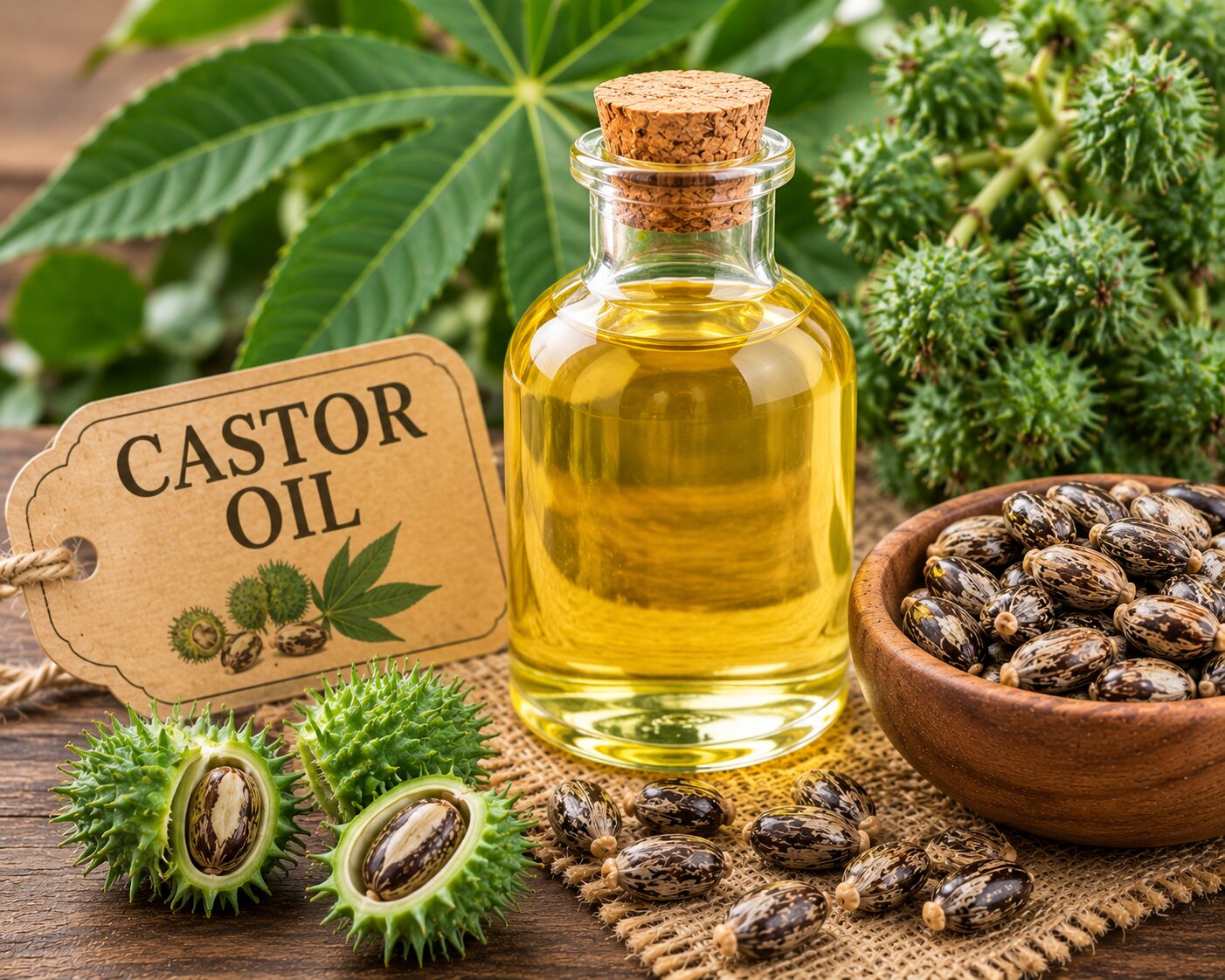
Castor oil is pressed from the seeds of Ricinus communis, a plant native to tropical East Africa that now grows throughout tropical and subtropical regions worldwide. Despite the notoriety of ricin (a toxic protein in the seeds), the cold-pressed oil is safe and contains no ricin. The pressing process separates the oil completely from the ricin-containing protein fraction.
In Ayurveda, castor oil (Eranda Taila) has been one of the most important therapeutic oils for over 2,000 years — used as a laxative, anti-inflammatory, and Vata-pacifying oil in both internal and external preparations. Modern pharmaceutical applications include castor oil as an excipient (inactive ingredient) in drug formulations, as a labour-inducing agent, and as a component in industrial lubricants.
Key Compounds and Nutritional Profile
Castor oil’s unique medicinal properties come primarily from ricinoleic acid — an unusual hydroxylated fatty acid that accounts for 85–95% of the oil. Ricinoleic acid is found almost exclusively in castor oil among common oils. It’s responsible for castor oil’s laxative action (through prostaglandin EP3 receptor activation in the intestinal mucosa), its anti-inflammatory effects, and its distinctive thick, viscous texture.
The oil also contains oleic acid, linoleic acid, stearic acid, and minor amounts of vitamin E. The high ricinoleic acid content makes castor oil behave very differently from other vegetable oils both pharmacologically and physically.
Top Health Benefits of Castor Oil
Castor Oil Benefits for Immunity and Overall Health
Research has found that castor oil pack application (packs applied to the abdomen) increases lymphocyte counts — white blood cells essential for immune function. A 1999 study showed castor oil packs applied for 2 hours significantly increased lymphocyte production compared to placebo packs. The lymphatic system connection is central to traditional castor oil pack use for immune and detoxification support.
Ricinoleic acid’s prostaglandin activity also has anti-inflammatory effects — reducing inflammatory cytokines in tissue when applied topically. This explains why castor oil packs are effective for menstrual pain, ovarian cysts, and abdominal inflammation in traditional and naturopathic medicine.
Castor Oil for Skin, Hair, and Beauty
Castor oil’s thick consistency and high ricinoleic acid content make it exceptionally effective as a skin moisturiser and wound healer. Research confirms it forms an effective barrier on skin, prevents moisture loss, promotes wound healing, and has antimicrobial activity against common skin pathogens. It’s one of the most studied natural wound-healing agents — and was used in pharmaceutical wound dressings before cheaper synthetic alternatives became available.
For hair, castor oil is one of the most popular natural treatments for hair growth and thickness — and while large clinical trials are lacking, the ricinoleic acid’s prostaglandin activity (prostaglandins regulate hair follicle cycling) and scalp antimicrobial effects provide plausible mechanisms. Consistent topical application to the scalp and hair for at least 3 months is typically needed to assess results.
Medicinal Properties of Castor Oil
How Castor Oil Works as a Natural Remedy
Internally, castor oil is a stimulant laxative — ricinoleic acid activates EP3 prostaglandin receptors in the small intestinal mucosa, triggering increased fluid secretion and smooth muscle contractions that move stool through the bowel. This mechanism is well-understood and is why castor oil produces reliable, forceful bowel movements within 2–6 hours of ingestion. It’s not a gentle laxative — it’s effective but should not be used regularly.
Topically, the mechanism involves direct anti-inflammatory action of ricinoleic acid on prostaglandin receptors in tissues, antimicrobial effects, and physical barrier protection of skin. Castor oil packs work through transdermal absorption of ricinoleic acid into underlying tissues and lymphatics. See Wikipedia: Ricinoleic acid.
Castor Oil in Ayurveda and Traditional Medicine
In Ayurveda, Eranda (castor) is the primary herb for Vata disorders. Internal castor oil (Eranda Taila) is used for Vata-type constipation, joint pain, lower back pain, and neurological conditions. It’s classified as hot, heavy, penetrating, and Vata-pacifying. Classical preparations include Gandharva Haritaki (castor oil with Haritaki for Vata constipation) and Eranda Pak (medicinal preparation for joint diseases).
External castor oil application (Abhyanga with castor oil) is specifically recommended for severe Vata conditions, dry skin, joint pain, and nerve pain. In Panchkarma, castor oil-based preparations are used in Basti (enema) therapy as part of deep Vata-pacification treatments. Pair with Ashwagandha internally for comprehensive Vata management.
How to Use Castor Oil — Practical Usages
Castor Oil in Food, Tea, and Cooking
Internal use (laxative): 15–60 ml of food-grade castor oil with warm water or juice on an empty stomach. Works within 2–6 hours. Not for regular use — only for occasional constipation relief or bowel preparation. Do not use castor oil internally without understanding its effects and ensuring there’s no intestinal obstruction.
Castor oil is not used in cooking — its unusual fatty acid composition makes it unsuitable as a cooking oil. Internal therapeutic use is strictly medicinal and should follow Ayurvedic or medical guidance on dosing.
Castor Oil as a Supplement or Topical Application
Hair: massage a small amount of castor oil into the scalp, leave for 2–4 hours (or overnight with a cap), then wash out. Do this 1–2 times weekly for at least 3 months. Skin: apply directly to dry patches, cracked heels, or minor wounds. Mix with a lighter carrier oil if the thick consistency is uncomfortable. Castor oil pack: soak a flannel cloth in castor oil, apply to the abdomen, cover with plastic, and apply a heat pad for 45–60 minutes. Use 3–4 times weekly for lymphatic, digestive, and liver support.
Side Effects and Precautions of Castor Oil
- Pregnancy: internal castor oil can induce uterine contractions — absolutely contraindicated in pregnancy except under medical supervision for post-term labour induction
- Intestinal obstruction: never take castor oil internally if intestinal obstruction is suspected
- Excessive internal use: can cause severe cramping, dehydration, and electrolyte imbalance — limit to occasional use
- Allergic reaction: test a small skin patch before extensive topical use — castor oil allergy is rare but possible
- Children: do not give castor oil internally to children without medical supervision
Frequently Asked Questions About Castor Oil
What are the main castor oil benefits?
The most documented castor oil benefits are: reliable constipation relief (stimulant laxative), wound healing and skin moisturisation, anti-inflammatory effects via ricinoleic acid, hair growth support (topical), lymphatic stimulation through packs, and joint/muscle pain relief when applied externally. It’s one of the few natural oils with diverse and well-mechanistically-explained therapeutic effects.
How to use castor oil for hair growth?
Apply castor oil to the scalp and massage for 10 minutes, then leave on for 2–4 hours before washing. Do this 1–2 times weekly. The key is consistency over 3–6 months — don’t expect results after 2 applications. Some people mix castor oil with a lighter oil (like coconut oil) for easier application and removal.
Is castor oil safe to take internally?
Cold-pressed food-grade castor oil is safe for occasional internal use as a laxative — but not for regular use. The maximum single dose for adults is typically 15–60 ml. Don’t use it for more than 1–2 days, and avoid it entirely during pregnancy, with intestinal obstruction, or in children without medical guidance.
What does castor oil do in Ayurveda?
In Ayurveda, castor oil (Eranda Taila) is the primary Vata-pacifying oil — used internally for Vata-type constipation, joint diseases, nerve pain, and debility, and externally for dry skin, joint inflammation, and in Panchkarma Basti therapy. It’s considered one of the most important single oils in the Ayurvedic pharmacopoeia.
Can castor oil packs really help detoxification?
There’s genuine scientific basis for castor oil packs supporting liver and lymphatic function — the documented increase in lymphocyte production and ricinoleic acid’s anti-inflammatory prostaglandin activity provide plausible mechanisms. While the word “detox” is often misused, castor oil packs over the liver area do have measurable physiological effects on immune and lymphatic function in the available research.
Castor oil benefits are genuine and diverse — from its millennia-old use in Ayurveda to its modern applications in pharmaceutical preparations. Used correctly, it’s one of the most therapeutically versatile oils available. Apply it to your scalp for hair growth, use a pack over the abdomen for lymphatic and liver support, or keep it as your go-to topical for wounds and dry skin. Just respect its potency when using it internally.



Add comment