
Gokshura (Introduction, Benefits, and Usages)
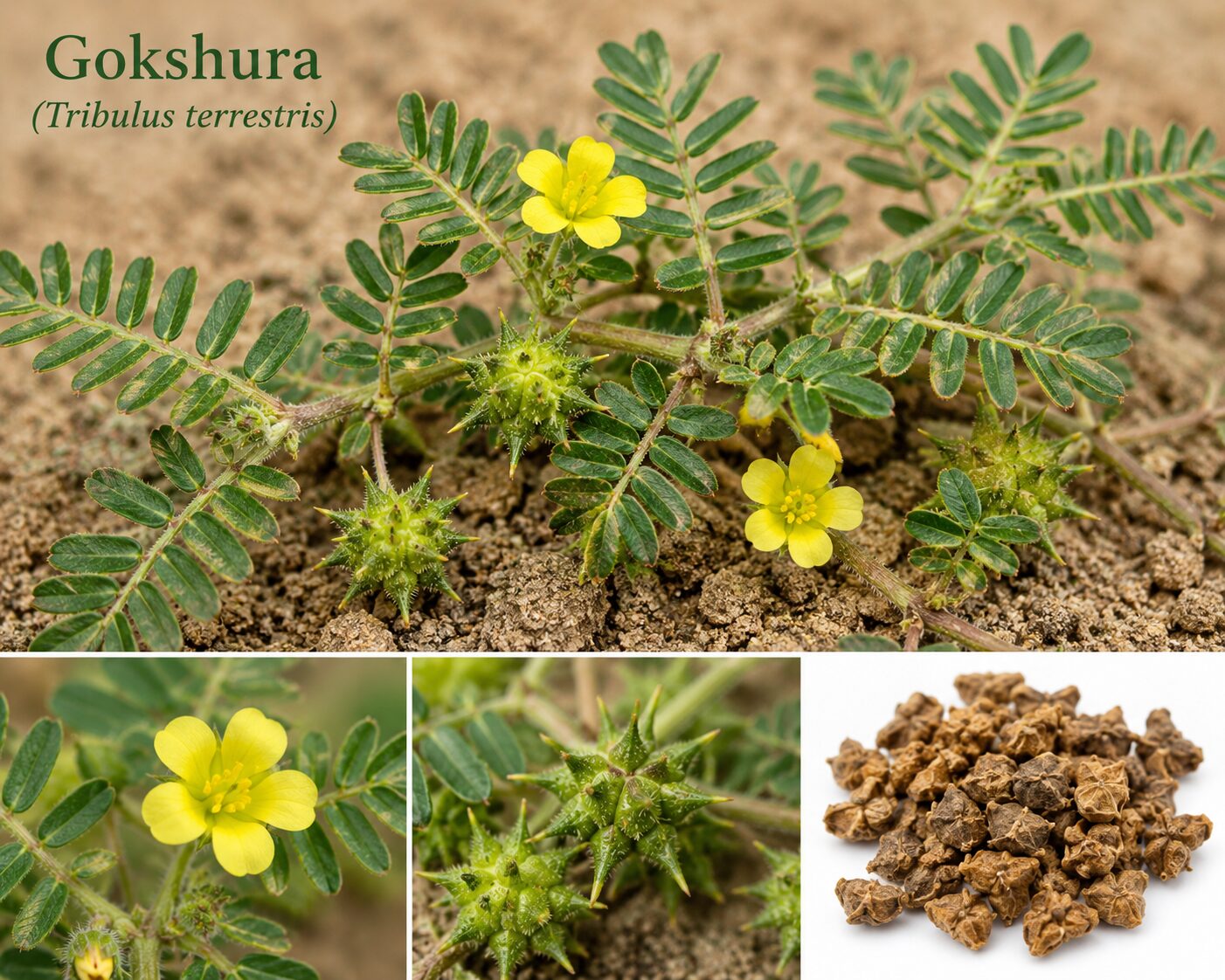
Gokshura benefits centre on urinary health, kidney protection, testosterone support, and anti-inflammatory action — making Tribulus terrestris one of Ayurveda’s most important herbs for the urinary system and male reproductive health. The Sanskrit name means “cow’s hoof,” describing the shape of the spiny fruit. It’s been used in Ayurvedic medicine for over 2,000 years and is now one of the most popular natural testosterone supplements globally. See Wikipedia: Tribulus terrestris. For related urinary herbs, explore Punarnava and Varuna.
What Is Gokshura? A Complete Introduction
Origin and History of Gokshura
Gokshura (Tribulus terrestris) — also called puncture vine or caltrop in English — is an annual plant found across warm temperate and tropical regions worldwide, from India and the Mediterranean to East Asia and Africa. It grows readily in dry, disturbed soils. In Ayurveda, Gokshura is described in the Charaka Samhita and Ashtanga Hridayam as one of the most important diuretic and urinary tonic herbs. It’s a key component of the Laghu Panchamula (five small roots) within the classical Dashmula formulation. In the past 30 years, its reputation as a “natural testosterone booster” has made it a major global supplement ingredient.
Key Compounds and Nutritional Profile
Gokshura’s primary bioactive compounds are steroidal saponins — particularly protodioscin, protogracillin, and terrestrosin. Protodioscin is the most studied, associated with LH stimulation and testosterone support. Flavonoids (kaempferol and quercetin) provide anti-inflammatory and antioxidant activity. Beta-sitosterol contributes anti-inflammatory and possible anti-BPH activity. The alkaloid harmine and various amides add further pharmacological complexity. See Wikipedia: Protodioscin.
Top Health Benefits of Gokshura
Gokshura Benefits for Immunity and Overall Health
Gokshura’s most consistently evidenced benefits are urinary. Multiple clinical studies confirm significant diuretic effects — increasing urine output while reducing urinary oxalate concentration. This combination directly addresses calcium oxalate kidney stone prevention. Clinical trials in kidney stone patients found Gokshura extract significantly reduced stone recurrence rates. For urinary tract infections, Gokshura’s diuretic flushing action and mild antimicrobial activity provide complementary support alongside conventional treatment.
The Ayurvedic classical use for Mutrakriccha (painful urination) and Asmari (urinary stones) is well supported by this mechanism — it’s one of the cleaner examples of traditional knowledge validated by modern pharmacology.
Gokshura for Skin, Hair, and Beauty
Gokshura’s anti-inflammatory flavonoids and potential hormonal balancing effects benefit acne-prone skin — acne is frequently hormonally driven, and hormonal normalisation can reduce sebum overproduction. The diuretic action also helps clear toxins that manifest as skin conditions. For hair health, the circulatory improvements and anti-androgenic effects (through beta-sitosterol’s 5-alpha-reductase inhibition) may reduce DHT-related hair thinning. It’s not a primary beauty herb, but hormonal balance is fundamental to skin and hair health.
Medicinal Properties of Gokshura
How Gokshura Works as a Natural Remedy
The diuretic mechanism involves direct renal tubular effects — reducing water and electrolyte reabsorption — plus increased renal blood flow, boosting urine volume while diluting stone-forming minerals. The testosterone mechanism (when it occurs) works through protodioscin’s stimulation of luteinising hormone (LH) from the pituitary, which signals Leydig cells to produce more testosterone. The cardiovascular effects include vasodilation through nitric oxide pathways and antiplatelet activity. Beta-sitosterol reduces 5-alpha-reductase and has direct anti-inflammatory effects on prostate tissue.
Gokshura in Ayurveda and Traditional Medicine
In Ayurveda, Gokshura is sweet, cooling, heavy, and unctuous — Vata and Pitta reducing. It has primary affinity for the urinary and reproductive systems. Classical indications include Mutrakriccha (dysuria), Asmari (kidney and urinary stones), Prameha (diabetes and urinary metabolic disorders), Vatarakta (gout), and male reproductive weakness. As part of the Laghu Panchamula, it contributes diuretic and Vata-balancing properties to Dashmula. The classical formulation Gokshuradi Guggulu uses Gokshura as the primary herb for urinary and kidney conditions.
How to Use Gokshura — Practical Usages
Gokshura in Food, Tea, and Cooking
Gokshura decoction (Kwatha): boil 10g of Gokshura fruit or root in 400 ml water, reduce to 100 ml, strain and drink twice daily. This is the standard Ayurvedic preparation for urinary conditions and kidney stones. Gokshura churna (powder) at 3–5g twice daily with warm water or milk is the conventional daily dose for urinary health, testosterone support, and as a general tonic. It’s not typically used as a food ingredient.
Gokshura as a Supplement or Topical Application
Standardised Tribulus terrestris extract (40–45% saponins, 200–450 mg daily) is the form used in most modern research. For testosterone and sexual health, 250–750 mg of standardised extract daily is the research dose range — allow 4–8 weeks to assess results. The key caveat: Gokshura appears most effective for testosterone support in men with documented deficiency rather than for enhancement above normal levels in healthy young men. It’s not a performance drug — it’s a hormonal restorative.
Side Effects and Precautions of Gokshura
- Blood pressure medication: Gokshura’s vasodilatory effects may potentiate antihypertensives — monitor blood pressure if combining
- Hormone-sensitive conditions: potential testosterone-raising effects mean caution is warranted in prostate cancer or androgen-sensitive BPH — discuss with a urologist
- Pregnancy: avoid — insufficient safety data and potential hormonal effects
- Hydration essential: the significant diuretic effect requires adequate fluid intake — ensure you’re drinking enough water, especially if you already have kidney disease
Frequently Asked Questions About Gokshura
What are the main Gokshura benefits for health?
Key Gokshura benefits: diuretic action and urinary tract health, kidney stone recurrence prevention through urinary oxalate reduction (strong evidence), testosterone support in men with documented deficiency, gout and joint inflammation relief, cardiovascular benefit through vasodilation and antiplatelet activity, BPH symptom reduction through beta-sitosterol, and classical Ayurvedic urinary tonic applications as part of Dashmula and Gokshuradi Guggulu.
Does Gokshura really increase testosterone?
The honest answer is: it depends on your baseline. Clinical trials in men with documented low testosterone consistently show significant increases in testosterone and LH with Gokshura/Tribulus supplementation. Studies in healthy men with normal testosterone show more variable results — some show modest increases, others no significant change. Current evidence suggests Gokshura restores testosterone levels toward the physiological normal in men whose levels are suboptimal, rather than elevating it above normal in healthy individuals.
Is Gokshura the same as Tribulus?
Yes — Gokshura is the Sanskrit name for Tribulus terrestris. Both names refer to the same plant. The Latin botanical name “Tribulus” and “Gokshura” (meaning cow’s hoof) describe the same species — named for the shape of its spiny fruit. In Ayurvedic texts, the fruit, root, and whole plant are used. In Western sports supplements, standardised aerial parts or fruit standardised to saponin content are most common.
How to use Gokshura in traditional medicine?
Gokshura in traditional medicine is used primarily as a decoction (Kwatha) for urinary conditions, as churna (powder) with warm milk as a male reproductive tonic, and as part of classical formulations including Gokshuradi Guggulu for kidney and urinary health and Dashmularishta for musculoskeletal conditions. In Chinese medicine, the equivalent herb Ji Li (Tribulus) is used for liver conditions, eye problems, and headache — a notably different application set reflecting differing diagnostic frameworks.
What is the best Gokshura dosage for men?
For urinary health: Gokshura churna 3–5g twice daily with warm water, or 10g decoction twice daily. For testosterone support: 250–750 mg of standardised extract (40–45% saponins) daily. Ayurvedic practitioners typically recommend taking Gokshura with warm milk in the evening for its tonic and restorative properties. Allow at least 4 weeks before assessing effect, and 8–12 weeks for hormonal applications.
Gokshura benefits are most reliably seen in its classical Ayurvedic urinary applications — the evidence for diuretic action and kidney stone prevention is consistent and strong. The testosterone and male reproductive benefits are real but most relevant for men with documented hormonal deficiency. Use Gokshura as part of classical formulations — Gokshuradi Guggulu and Dashmularishta — for the most time-tested and synergistically effective approach to urinary and reproductive health.

Add comment